Kirjojen hintavertailu. Mukana 11 244 527 kirjaa ja 12 kauppaa.

Kirjahaku

Etsi kirjoja tekijän nimen, kirjan nimen tai ISBN:n perusteella.

13 kirjaa tekijältä Mogg Morgan

Tantra Sadhana

Tantra Sadhana

Mogg Morgan

Mandrake of Oxford
2008
nidottu
A 'S dhana' is an instrument that leads to a particular goal. In Tantra, it is a technical term denoting worship or spiritual practice. Tantra S dhana is a collection of related instructional papers designed to aid the aspirant through a foundation S dhana. Some say effective S dhana requires an initiation (d ksh ) from a qualified guru. This book is designed to act as a taster and to provide a short body of work suitable for the period of about one lunar month. In addition, the author had added several useful appendices - including the previously unpublished Tantrik Knuckle Bone Oracle.
Tankhem

Tankhem

Mogg Morgan

Mandrake of Oxford
2004
nidottu
The Typhonian deity Seth was once worshipped in Ancient Egypt. Followers of later schools obliterated Seth's monuments, demonised and neglected his cult. A possible starting point in the quest for the 'hidden god' is an examination of the life of Egyptian King Seti I ('He of Seth') also known as Sethos. When looking for an astral temple that included all of the ancient Egyptian gods and goddesses, the temple of Seti I proved itself worthy of examination. Many secrets began to reveal themselves. The essence of the real philosophy of the Sethian and indeed what Satanism is, stems from the authors astral wanderings in this temple. The temple is a real place, and like any temple no part of its design is accidental. It is a record in stone and paint of the Egyptian wisdom. It also fits quite well with the Thelemic mythos and tells lots of interesting things about the ancient Seth cult -- if you have the eye to see it.
Bull of Ombos

Bull of Ombos

Mogg Morgan

Mandrake of Oxford
2005
nidottu
Naqada is a sleepy little town in Upper Egypt, that gives its name to a crucial period in the prehistory of Egypt. In 1895, William Matthew Flinders Petrie, the 'father' of Egyptian archaeology, stumbled upon a necropolis, belonging to a very ancient city of several thousand inhabitants. With Petrie's usual luck, he'd made yet another archaeological find of seismic proportions -- not just an ancient city a quarter the size of Ur in Mesopotamia, a rare enough find, but the capital of the earliest state established in Egypt! Petrie's fateful walk through the desert led him to a lost city, known to the Greeks as Ombos, the Citadel of Seth. Seth, the Hidden God, once ruled in this ancient place before it was abandoned to the sands of the desert. All this forbidden knowledge was quickly reburied in academic libraries, where its stunning magical secrets had lain, largely unrevealed, for more than a century -- until now.
Pan's Road

Pan's Road

Mogg Morgan

Mandrake of Oxford
2006
nidottu
The ancient hungry stones of Coptos in Upper Egypt have soaked up the stories of the inhabitants along with their blood. When archaeologists unearth a magician's box in the rubble of an ancient Egyptian tomb, it propels Jay into a supernatural journey across space and time. She merges with the mysterious Zenobia, a native of ancient Coptos. Zenobia and her family are fleeing from the advancing Roman armies that are returning to their Egyptian frontier bent on punishing its rebellious citizens. The only escape from the frying pan of Coptos is into the fire of the Eastern desert. Their journey on Pan's Road is fraught with new dangers but also new possibilities, as the protagonists are led to the heart of an ancient mystery in the lost city of Ombos -- Citadel of Seth, the Egyptian god of Chaos.
Ritual Year In Ancient Egypt

Ritual Year In Ancient Egypt

Mogg Morgan

Mandrake of Oxford
2010
nidottu
This book began life as an extended appendix to "Supernatural Assault in Ancient Egypt" where it provided additional information on the cosmic tides that ebb and flow through us as they did the ancient Egyptians. It concerns the ritual year and offers a conventional summary of the main principles of the ancient Egyptian calendar along with examples of seasonal rites. More radically it presents new material on the older Lunar calendar of the preformal times. Here too the author offers rites for a thirteen of the most archaic Egyptian 'neters' -- beginning with Seth, Sokar and Hathor. Over the millennia we have lost contact with these tides, and stand alienated from Nature. This first 'Eden' is restorable by a return to these ancient principles.
Supernatural Assault in Ancient Egypt

Supernatural Assault in Ancient Egypt

Mogg Morgan

Mandrake of Oxford
2011
nidottu
You're in your bed. It's dark, you hear footsteps coming up the stairs and into your room. There's someone there - a presence. They lie on you or beside you, gripping you tightly, crushing you into the bed. You can't move. There may be a sound, a grunt or a strange smell. Time passes, you are paralysed with fear. Eventually the entity changes, expanding or contracting, moving away from you, sinking to the floor. With a great effort of will you manage to move the tip of your finger, then the hand until movement returns to your whole body and the experience ends. You have been visited by the old 'hag'. Dreams, the real theatre or perhaps battlefield of magick, influenced by cosmic tides that ebb and flow through us as they did the Ancient Egyptians. Contents: Kiss of the Vampire / Origin of the Vampire Myth / Egyptian Psychology / Lucky and Unlucky / Supernatural Assault
Phi-neter: Power of the Egyptian Gods
Phi-Neter, means 'Power of the Gods'. In hieroglyphs this is represented by the hind-quarters of a leopard, a "Typhonian" creature, a predator who exemplifies the driving force of magick. In this book the author extends the core working material of Egyptian magick for himself and others to study and use. These techniques are manifest in the cult of Lord Seth - known as Typhon by the Greeks - and by all the other Gods of the Egyptian pantheon. The Egyptian magician wields a power that was ultimately created by the Gods for the use of anyone who wishes to do their work. It is the same underlying power whether manipulated by Gods, priests, aristocrats, the common people or even the criminal. Same power, different ends. "Ancient Egypt is an intellectual and spiritual world that is linked to our own by numerous strands of tradition." - Jan Assmann, The Mind of Egypt topics include: the false door; temple; abramelin; magick squares; aleister crowley; the heptagram; vowel song; cardinality; twilight language; seven charakteres for "deliverance"; ring of power; hermeticism; colour symbolism; number; egyptian "kabbalah"; hermeneia; the star goddess; the book of nuit; ephemeris of egyptian decans; books of the nightworld (duat); book of gates; egyptian liturgy; a greco-egyptian dice oracle; Short Invocations, prayers, valedictions, maledictions etc
Seth & The Two Ways

Seth & The Two Ways

Mogg Morgan

Mandrake of Oxford
2020
nidottu
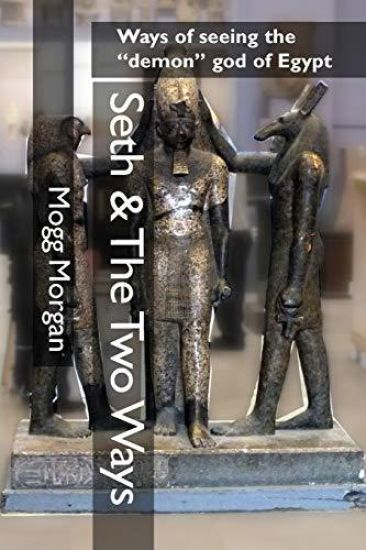
Seth is an ancient Egyptian deity, much maligned in popular, academic and theological thought. Up until fairly recently the only thing one needed to know about Seth was that he was the personification of evil and the prototype of the devil and Satan and all bad things in the world. He is the god who in one of the world's most ubiquitous myths, kills another god, his own brother Osiris no less, then usurps his role as king, persecuting the orphaned Horus who only survives to manhood, due to the cunning of his sorcerer mother Isis. Horus then overpowers Seth and ensures he gets his just deserts.The complete book will explore the mythos of the god and various ways of seeing him; these may even appear antithetical as is encapsulated in what is sometime known as "The Nagada Hypothesis" which stands in contrast to the consensus that Seth was always a malign deity.This fascicle comprises two complete sections of the book as presented at the Museum of Witchcraft & Magic, Boscastle, Cornwall, including the slides, many of them reproduced in colour.The Seven Spells of Nekhbet - a fantastic piece of battle magic in which the ancient Vulture Goddess enlists the power of Seth to protect Egypt's borders. The other is a discussion of Apophis, an ancient personification of evil, who is often confused with Seth. This section also includes a draft version of the Books for Overthrowing Apophis.cover: Horus & Seth blessing the King, Pharaoh Ramses III, from His mortuary temple at medinet Habu, Thebes (Luxor) Cairo Museum of Antiquities. ReconstructedThe author's previous books include: The Bull of Ombos; Tankhem: Seth & Egyptian Magick; Supernatural Assault in Ancient Egypt; The Ritual Year in Ancient Egypt & Phi-Neter: Power of the Egyptian Gods.
Egyptian Magick

Egyptian Magick

Mogg Morgan

Mandrake of Oxford
2020
nidottu
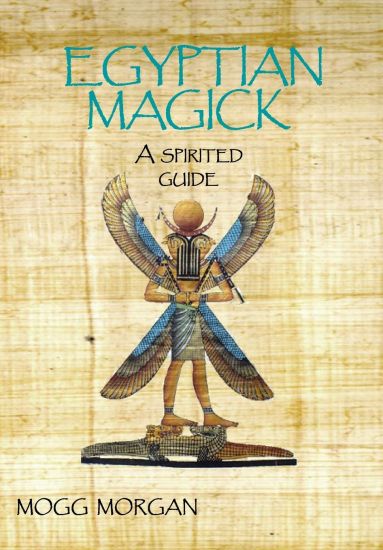
"Within its own 'world view' Egyptian Heka was of far more exalted significance than its Coptic descendant or Western approximation."Robert Ritner, The Mechanics of Ancient Egyptian Magical Practice 247Western magick is no longer an approximation; through practice and study it has recovered its memory. This magick is "Amoral and quintessentially effective" or to use the Egyptian term, it is called Akh, an effective or cunning power. This is a power to which gods, men, and all nature are subject. It was still the same force "whether used by god, king, priest, private individual, rebel or foreign enemy, whether hostile or beneficent, sanctioned or suppressed." Does this mean that one can use magick for bad things with impunity? Absolutely not, for one is punished for what one does rather for the means one used, which are just the natural laws of the universe. Ultimately all this magick is theurgy, literally the work of the gods. Ideally this becomes part of a practical theology by which the practitioner becomes, through "dynamic resonance" the image of the gods or divine forces he or she emulates. Thus the ultimate aim of the magician is knowledge and transcendence. So here is an authoritative guide aimed at those who actually want to practice this magick. The scholarly reader may also find the experimental theurgy a useful perspective. Essentially a compilation and revision, bringing together with some revision, all of the material and core ideas on the Egyptian magical religion from previous books, presenting them here as a complete working system. Topics including openings, initiations, imaginal realms, basic techniques and applications through a ritual year of the gods.
Egyptian Magick

Egyptian Magick

Mogg Morgan

Mandrake of Oxford
2020
sidottu
"Within its own 'world view' Egyptian Heka was of far more exalted significance than its Coptic descendant or Western approximation."Robert Ritner, The Mechanics of Ancient Egyptian Magical Practice 247Western magick is no longer an approximation; through practice and study it has recovered its memory. This magick is "Amoral and quintessentially effective" or to use the Egyptian term, it is called Akh, an effective or cunning power. This is a power to which gods, men, and all nature are subject. It was still the same force "whether used by god, king, priest, private individual, rebel or foreign enemy, whether hostile or beneficent, sanctioned or suppressed." Does this mean that one can use magick for bad things with impunity? Absolutely not, for one is punished for what one does rather for the means one used, which are just the natural laws of the universe. Ultimately all this magick is theurgy, literally the work of the gods. Ideally this becomes part of a practical theology by which the practitioner becomes, through "dynamic resonance" the image of the gods or divine forces he or she emulates. Thus the ultimate aim of the magician is knowledge and transcendence. So here is an authoritative guide aimed at those who actually want to practice this magick. The scholarly reader may also find the experimental theurgy a useful perspective. Essentially a compilation and revision, bringing together all of the material and core ideas on the Egyptian magical religion from previous books, presenting them here as a complete working system. Topics including openings, initiations, imaginal realms, basic techniques and applications through a ritual year of the gods.
Demonic Calendar ancient Egypt

Demonic Calendar ancient Egypt

Mogg Morgan

Mandrake of Oxford
2021
nidottu
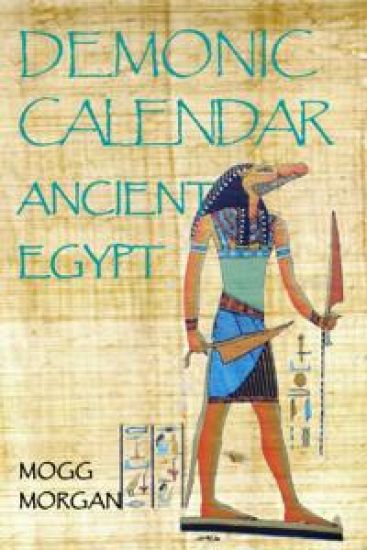
The ancient Egyptians divided the year into 36 weeks of ten days duration, hence "decan" from Greek "ten". The iconography of the decans predates that of all famous European books of magick such as the Testament of Solomon or the Goetia. But one thing all these spirits have in common is their malign character. Each decan is ruled over by particular stars, rising in succession over the course of a year. These can be observed rising on the eastern horizon just before dawn. You and I were born into this intricate web of stars. The 36 decans are in effect an earlier Egyptian equivalent of the later Greek system of twelve zodiacal signs. The twelve culminating decans are also the equivalent of the twelve "houses".All information needed to use this calendar either in ritual or for prognostications is included, as well as an ephemeris as well as information on how it is compiled, in case you want to make your own. I'm not sure anyone has previously called these personifications of the decans, demons, but that is what they plainly are. To use the title of a recent groundbreaking academic conference, these are "demon things" and there are actually far more images of them in ancient Egyptian iconography than there are the well known deities.
Egyptian Genesis of the Nephilim

Egyptian Genesis of the Nephilim

Mogg Morgan

MANDRAKE OF OXFORD
2024
pokkari
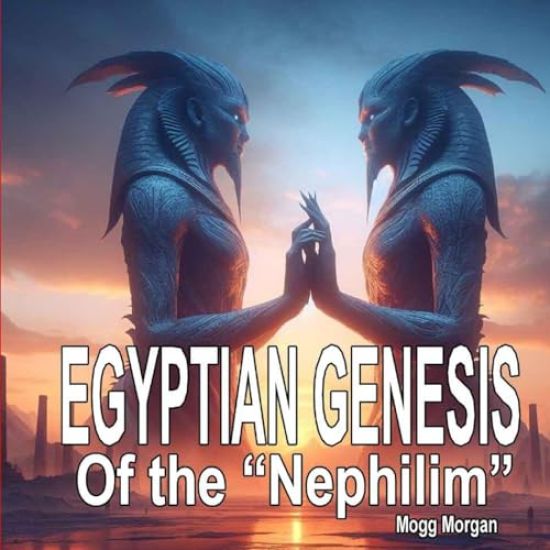
"The Nephilim were in the (land) earth in those days, and also after that, when the sons of God came unto the daughters of men, and they bare children to them: the same were the mighty men that were of old, the men of renown." (Bible, American Standard Version)Beresheet, the first word of the Bible means 'In the beginning'. Thus begins the foundation myth of the ancient Hebrews, including the account of their long sojourn in the land of the ancient Egyptians. The earliest parts of this narrative are full of strange things, including, famously, and very early on, a terse mention of the Nephilim, a class of supernatural entities, who erupt into the text only to disappear again almost as soon as they appear.It was always assumed that this part of the myth originated somewhere within the mesopotamian myth cycles, either from Sumerian or Babylon. No one had, as far as I know, been asked, as I was, to explore if it might have some sort of basis in Egyptian mythology. So this was where I started, with what seemed to be the Elephant in the room: could the Nephilim and the events that surround them, have any resonance in Egypt?And, much to my surprise, I found an Egyptian equivalent of the Nephilim. Deep mythology is what I call those very old stories that have no real home but seem global and part of the consciousness of all humanity. And as is often the case with comparative and deep mythology, one tradition illuminates many others.So here are the fruits of that research, heavily illustrated and I hope an engaging and popular account based on Egyptian primary sources. Read the stories of Egypt' ancient giants. What are we to make of all this and perhaps more importantly, what can we do with it intellectually, philosophically, magically. You should find some answers in these contents: The Bible Story, Lilit and the Giants.Miniaturization; The Flood from Egyptian sources. Apophis; The Fallen and Richat. Books of Names, Demons, Manetho, and the survivors. Plato's Atlantis; The Seriadic Land; The Old Chronicle and the Submerged Ones. Egyptian Star Maps; The Problem of Evil and the Female Shebtiw. The Underworld of the Soul; The Osireion and Becoming a Giant. The Giant and the Dwarf; The Apet and the Ancestors under the Floor. Appendix: The Horoi