Kirjojen hintavertailu. Mukana 11 717 486 kirjaa ja 12 kauppaa.

Kirjahaku

Etsi kirjoja tekijän nimen, kirjan nimen tai ISBN:n perusteella.

11 kirjaa tekijältä Mohammad Gholi Majd

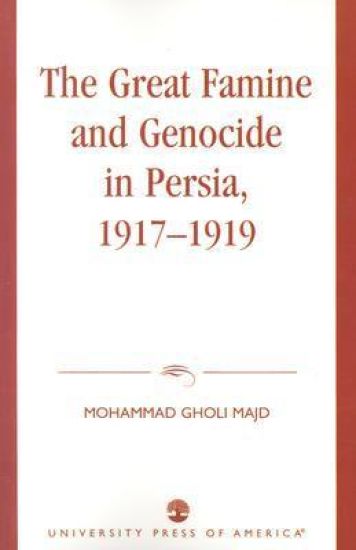
The Great Famine and Genocide in Persia, 1917-1919

The Great Famine and Genocide in Persia, 1917-1919

Mohammad Gholi Majd

University Press of America
2003
nidottu
As many as eight to ten million Persians perished because of starvation and disease during the famine of 1917-1919, making it the greatest calamity in Persia's history. In this book, Mohammad Gholi Majd argues that Persia was the greatest victim of World War One and also the victim of possibly the worst genocide of the twentieth century. Using U.S. State Department records, as well as Persian and British sources, Majd describes and documents a veritable holocaust about which practically nothing has been written. It is the first book in Majd's World War I trilogy.
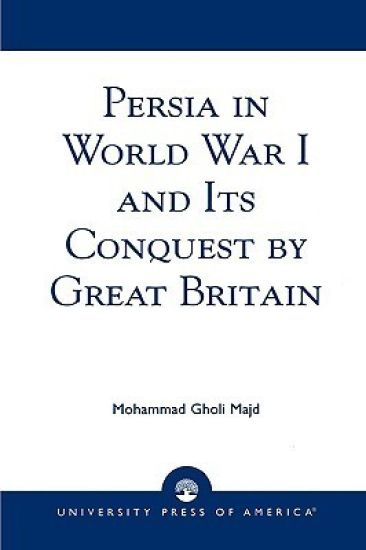
Persia in World War I and Its Conquest by Great Britain

Persia in World War I and Its Conquest by Great Britain

Mohammad Gholi Majd

University Press of America
2003
nidottu
Using U.S. State Department archives, Persian sources, and memoirs of British military officers, Majd provides an outline of military, diplomatic, and political events in Persia during 1914-1918. Persia in World War I and Its Conquest by Great Britain describes Persia's failure to gain recourse at Versailles, alleging that Persia was a loser both in war and peace. It is the second book in Majd's World War I triology.
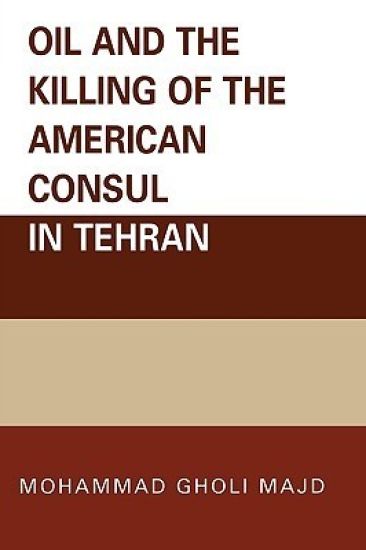
Oil and the Killing of the American Consul in Tehran

Oil and the Killing of the American Consul in Tehran

Mohammad Gholi Majd

University Press of America
2006
nidottu
In the wake of World War I, British attempts to exclude American oil companies from Iraq and Persia caused serious strains in Anglo-American relations. In May 1921 an 'oil entente' was reached that granted American oil companies an 'open door' and 'equal opportunity' in Iraq, and in return America acknowledged British domination of Persia and monopoly of its oil. This entente was soon tested when Persians gave an oil concession to the Sinclair Oil Company of New York and tried to rid themselves of the recently installed Pahlavi dictatorship. It was in the midst of this unrest, in May of 1924, that American Vice-Consul Robert Imbrie arrived in Tehran. Almost immediately after his arrival, Imbrie began sending reports to Washington that were highly critical of the British policies in Persia. On July 18, 1924, Imbrie was brutally murdered in Tehran, supposedly by a mob of religious fanatics. To save face and avoid international complications, the U.S. government accepted the Persian government's version of the killing. In this detailed examination of Anglo-American, American-Persian, and Anglo-Persian relations, author Mohammad Gholi Majd argues that Imbrie was in fact the victim of a conspiracy. Using records of the U.S. Department of State, this text examines how the murder enabled Britain to maintain its monopoly of Persian oil and further consolidate the Pahlavi dictatorship. The killing of Imbrie ultimately facilitated the consummation of the Anglo-American oil entente.
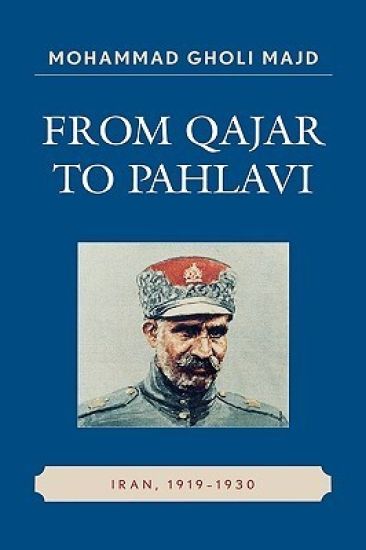
From Qajar to Pahlavi

From Qajar to Pahlavi

Mohammad Gholi Majd

University Press of America
2008
nidottu
The 1920s saw the creation of numerous new monarchies and regimes in the Middle East. This book gives a detailed history of the new regime change in Iran in the 1920s. Using U.S. State Department archives, Mohammad Gholi Majd first describes the overthrow of the Qajar dynasty, which ruled Iran since the 1790s, and its replacement by the Pahlavi monarchy in 1925. He then describes the consolidation of the new regime and suppression of the opposition between 1926 and 1930. By 1931, resistance to the Pahlavi regime and the harsh response thereto set the stage for a long struggle between the Pahlavi monarchy and the Ulama that ended with the Islamic Revolution in 1979. This book is the first detailed and documented history of Iran during 1919-1930 in the English language.
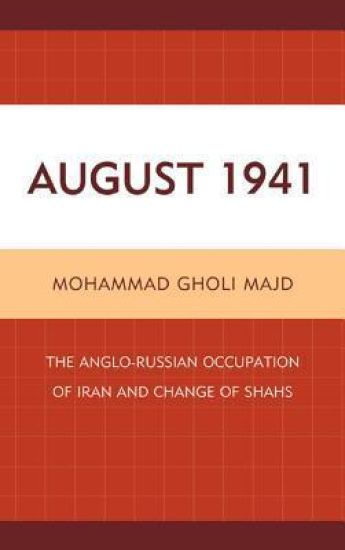
August 1941

August 1941

Mohammad Gholi Majd

University Press of America
2012
sidottu
Coming shortly after the British occupation of Iraq and the German invasion of Russia, the Anglo-Russian occupation of Iran secured a vital route for supplies to Russia and assured British control of the oilfields. To save the Pahlavi regime, Reza Shah was replaced by his son and Iranians were given a “New Deal.” The Allied occupation thus ushered in a brief period of democratic freedoms. Having described the rise of Reza Shah in a previous work, Majd completes the story by describing his downfall. The author has made an extensive search of the widely scattered U.S. diplomatic and military records and these are supplemented by reports in the The New York Times, The Washington Post, and The Chicago Daily Tribune, as well as other press accounts. More than seventy years later, this interesting story has remained untold. August 1941 is the first detailed and documented account of the affair.
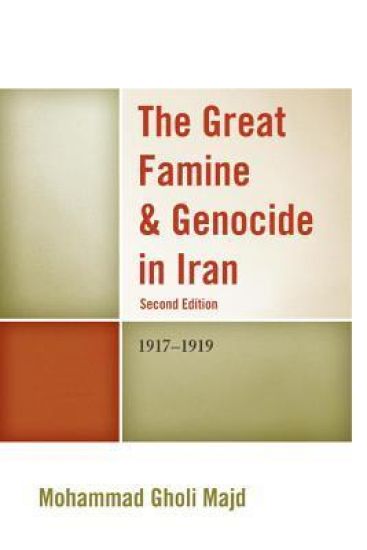
The Great Famine & Genocide in Iran

The Great Famine & Genocide in Iran

Mohammad Gholi Majd

University Press of America
2013
nidottu
At least 8–10 million Iranians out of a population of 18–20 million died of starvation and disease during the famine of 1917–1919. The Iranian holocaust was the biggest calamity of World War I and one of the worst genocides of the 20th century, yet it remained concealed for nearly a century. The 2003 edition of this book relied primarily on US diplomatic records and memoirs of British officers who served in Iran in World War I, but in this edition these documents have been supplemented with US military records, British official sources, memoirs, diaries of notable Iranians, and a wide array of Iranian newspaper reports. In addition, the demographic data has been expanded to include newly discovered US State Department documents on Iran’s pre-1914 population. This book also includes a new chapter with a detailed military and political history of Iran in World War I. A work of enduring value, Majd provides a comprehensive account of Iran’s greatest calamity.
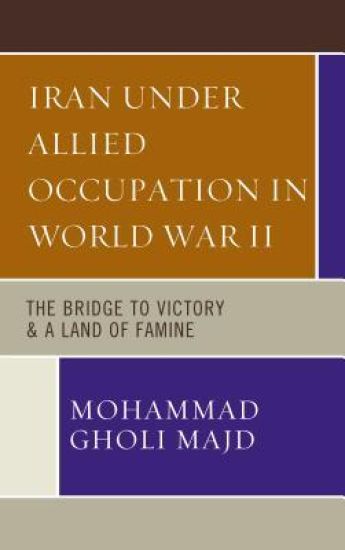
Iran Under Allied Occupation In World War II

Iran Under Allied Occupation In World War II

Mohammad Gholi Majd

University Press of America
2016
sidottu
Occupied Iran in World War II became the most important supply route to Russia and source of fuel to the Allies. Having pledged to meet Iran’s “minimum needs”, the Allies commandeered the means of transport, seized food and fuel, severely restricted imports, forced Iran to print money, brought Polish refugees from Russia, and initially did little to contain the chaos and insecurity. The resulting famine and typhus epidemic of 1942-43 had claimed 4 million lives amounting to a quarter of the population. This was in addition to the 8-10 million lost in the Great Famine of 1917-19. Iran’s 1944 population was the same as 1900, a perfect case of a Malthusian Catastrophe. Having previously described the World War I famine, and using US diplomatic, military, and intelligence records, as well as primary British sources, Majd completes the task by also telling the story of the World War II Iranian famine.
A Victorian Holocaust

A Victorian Holocaust

Mohammad Gholi Majd

Hamilton Books
2017
sidottu
The death by famine of tens of millions of human beings in Asia and Africa during the Victorian era (1837–1901) is “the secret history of the nineteenth century” about which Western history books contain nothing. The Great Famine of 1869–1873 in Iran took 10–12 million lives, or two-thirds of the population, and is part of this secret history. While the famines that ravaged China and India during 1876 to 1902 have received some recent scrutiny, the precursor of these cataclysmic famines, the Great Famine of 1869–1873 in Iran, has remained practically unknown. This study is the first monograph on the subject in the English language. This famine in Iran killed on a scale similar to the 1876–79 famine in China, which has been called the worst to afflict the human species. This study is based on British diplomatic reports and semi-official sources, European travel accounts, Persian documents and writings, British and American newspapers, and the reports by American missionaries who witnessed the famine. These sources enable one to provide a chronological and numerical account of the death and suffering as the famine spread from the southern and central regions to the rest of the country. The population statistics and rich micro-level data on famine losses in rural and urban areas indicate that during the nearly five years of famine, two-thirds of the population had perished. Not until 1910 did Iran come close to recovering its 1869 population. Soon after, Iran was plunged into the Great Famine of 1917–19, which claimed another 8–10 million, and again the 1942–43 famine and typhus epidemic that carried off an additional 4 million persons. In the seventy-five year span of 1869–1944, Iran had suffered three famines that had taken 25 million lives. Iran’s 1944 population of 10–12 million was unchanged from 11 million recorded in 1841, a perfect case of a Malthusian catastrophe. It is difficult to find another country in which a century of population growth had been wiped out by famine. Having previously described and quantified the 1917–19 and 1942–43 famines, Majd does the same for the 1869–73 famine. This book is the third of a trilogy on famines in Iran during the last 150 years.
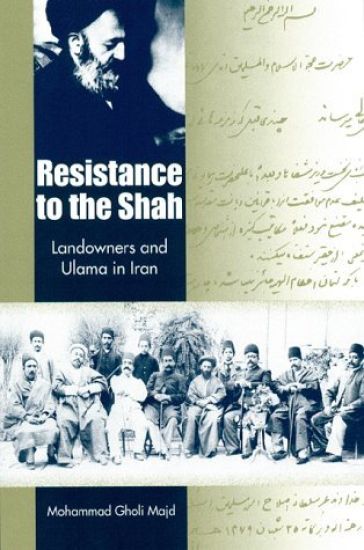
Resistance to the Shah

Resistance to the Shah

Mohammad Gholi Majd

University Press of Florida
2000
sidottu
An examination of land policy under in Iran under the two Pahlavi shahs from 1925 to 1979. It explores the social and economic consequences of their policies, and their impact on the popular uprisings of 1962-3, which many scholars regard as the beginning of the Islamic Revolution.
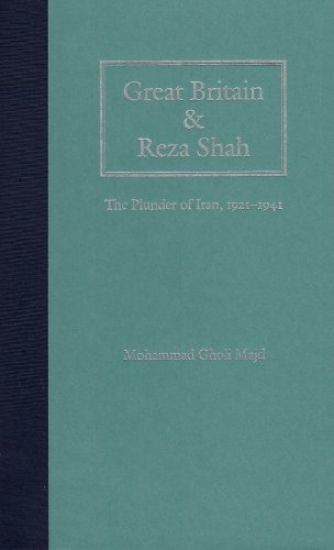
Great Britain and Reza Shah

Great Britain and Reza Shah

Mohammad Gholi Majd

University Press of Florida
2001
sidottu
Using recently declassified US State Department archives, Mohammed Gholi Majd describes the rampant tyranny and destruction of Iran in the decades between the two world wars in a sensational yet thoroughly scholarly study that will rewrite the political and economic history of the country. The book begins with the British invasion of Iran in April 1918 and ends with the Anglo-Russian invasion in August 1941. Though historians are aware of the events that ensued, until now they have had no written evidence of the dreadful magnitude of the activities. Majd documents how the British brought to power an obscure and semi-literate military officer, Reza Khan, who was made shah in 1925. Thereafter, Majd shows, Iran was subjected to a level of brutality not seen for centuries. He also documents the financial plunder of the country during the period: records show that Reza Shah looted the bulk of Iran's oil revenues on the pretext of buying arms, amassing at least $100 million in his London bank accounts and huge sums in New York and Switzerland. Not even Iran's ancient crown jewels were spared. In contrast to incomplete and unreliable British records for the period, the recently declassified archives and bank records that Majd uses encompass a wide range of political, social, military and economic matters. A work with immense implications, this book will correct the myth in Iranian history that the period 1921-41 was one of unqualified progress and reform.
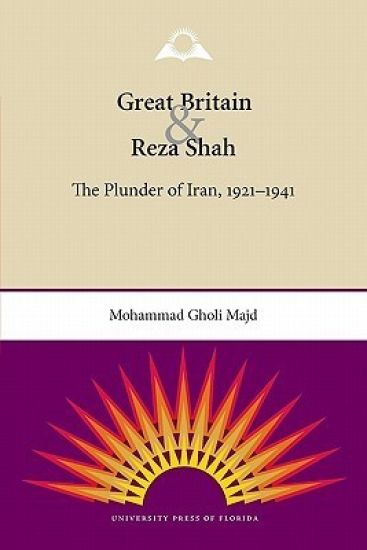
Great Britain and Reza Shah

Great Britain and Reza Shah

Mohammad Gholi Majd

University Press of Florida
2011
nidottu
Using recently declassified U.S. State Department archives, Mohammad Gholi Majd describes the rampant tyranny and destruction of Iran in the decades between the two world wars in a sensational yet thoroughly scholarly study that will rewrite the political and economic history of the country.The book begins with the British invasion of Iran in April 1918 and ends with the Anglo-Russian invasion in August 1941. Though historians are aware of the events that ensued, until now they have had no written evidence of the dreadful magnitude of the activities. Majd documents how the British brought to power an obscure and semi-illiterate military officer, Reza Khan, who was made shah in 1925. Thereafter, Majd shows, Iran was subjected to a level of brutality not seen for centuries. He also documents the financial plunder of the country during the period: records show that Reza Shah looted the bulk of Iran's oil revenues on the pretext of buying arms, amassing at least $100 million in his London bank accounts and huge sums in New York and Switzerland. Not even Iran's ancient crown jewels were spared.In contrast to incomplete and unreliable British records for the period, the recently declassified archives and bank records that Majd uses encompass a wide range of political, social, military, and economic matters. A work with immense implications, this book will correct the myth in Iranian history that the period 1921-41 was one of unqualified progress and reform.