Kirjojen hintavertailu. Mukana 11 699 587 kirjaa ja 12 kauppaa.

Kirjahaku

Etsi kirjoja tekijän nimen, kirjan nimen tai ISBN:n perusteella.

23 kirjaa tekijältä Mohammad Hashim Kamali

Crime and Punishment in Islamic Law

Crime and Punishment in Islamic Law

Mohammad Hashim Kamali

Oxford University Press Inc
2019
sidottu
In Crime and Punishment in Islamic Law: A Fresh Interpretation, Mohammad Kamali considers problems associated with and proposals for reform of the hudud punishments prescribed by Islamic criminal law, and other topics related to crime and punishment in Shariah. He examines what the Qur'an and hadith say about hudud punishments, as well as just retaliation (qisas), and discretionary punishments (ta'zir), and looks at modern-day applications of Islamic criminal law in 15 Muslim countries. Particular attention is given to developments in Malaysia, a multi-religious society, federal state, and self-described democracy, where a lively debate about hudud has been on-going for the last three decades. Malaysia presents a particularly interesting case study of how a reasonably successful country with a market economy, high levels of exposure to the outside world, and a credible claim to inclusivity, deals with Islamic and Shariah-related issues. Kamali concludes that there is a significant gap between the theory and practice of hudud in the scriptural sources of Shariah and the scholastic articulations of jurisprudence of the various schools of Islamic law, arguing that literalism has led to such rigidity as to make Islamic criminal law effectively a dead letter. His goal is to provide a fresh reading of the sources of Shariah and demonstrate how the Qur'an and Sunnah can show the way forward to needed reforms of Islamic criminal law.
Shariah and the Halal Industry

Shariah and the Halal Industry

Mohammad Hashim Kamali

Oxford University Press Inc
2021
sidottu
The rapid expansion of the halal industry and its markets has occurred not only in the heavily Islamic regions of Southeast Asia and the Middle East, but also in more unexpected countries such as Turkey, Japan, and South Korea, plus many others around the world. Yet despite both the increasing number of practicing Muslims and the demand for halal products worldwide, a base of scholarship on the subject has never emerged. The industry has been more market driven rather than knowledge driven. As such, industry operators have frequently drawn attention to the absence of such an authoritative text, one that would elucidate the shariah credibly of halal as well as its market presence. Mohammad Hashim Kamali's Shariah and the Halal Industry is designed to fill this gap. The first of its kind in the English language, the book is written in an accessible and reader-friendly style by a world-renowned authority on Islamic law and jurisprudence. The book serves as a reference on the shariah foundations of halal and meets the needs not only of industry operators and decision-makers, but also of students, scholars of Islam, and the many practicing Muslims who are customers of the halal industry across the globe. The book can also serve to educate the general public and non-specialist readers on Islam and shariah law at-large.
Goals and Purposes of Shariah

Goals and Purposes of Shariah

Mohammad Hashim Kamali

OXFORD UNIVERSITY PRESS INC
2025
sidottu
In Islamic law, maqasid--literally meaning goals, purposes, or objectives--signify the intent behind the rulings (ahkam) of shariah. When not explicitly mentioned in the Qur'an, hadith, or fiqh texts, maqasid can be identified through rational enquiry and interpretation. Important as they are, the maqasid have historically been marginalised in the fiqh literature. Scholars have maintained that a Muslim must follow the ahkam of shariah and not question the purposes behind them, and have therefore been reluctant to engage in the maqasid. Although some scholars from various schools of Islamic law wrote on the maqasid, the subject remained in the sidelines of usul al-fiqh until the 1980s, when maqasid commanded renewed scholarly attention and interest. This volume offers a theoretical examination of maqasid as well as an analysis of its function in contemporary Islamic law, the first of its kind available in the English language. Mohammad Hashim Kamali, one of the most influential scholars of Islamic law living today, first explores the concept, history of development, methods of identification, and methodological aspects of the maqasid, before turning to a discussion of the application of maqasid to matters of contemporary significance. An exhaustive examination of the dynamic history and contemporary uses of maqasid, Goals and Purposes of Shariah is essential reading for anyone interested in current debates in Islamic law.
A Textbook of Hadith Studies

A Textbook of Hadith Studies

Mohammad Hashim Kamali

Islamic Foundation
2009
pokkari
A Textbook of Hadith Studies provides an academic introduction to the Hadith, or the teachings of the Prophet Muhammad, which are second only to the Qur'an (Koran) in their authoritativeness within Islamic tradition. Suitable for university courses and all serious students of Islam, the topics surveyed include Hadith methodology, Hadith literature, the history of Hadith compilation and documentation, and the methods of Hadith criticism (al-jarh wa al-ta'dil) and classification.
A Textbook of Hadith Studies

A Textbook of Hadith Studies

Mohammad Hashim Kamali

Islamic Foundation
2009
sidottu
A Textbook of Hadith Studies provides an academic introduction to the Hadith, or the teachings of the Prophet Muhammad, which are second only to the Qur'an (Koran) in their authoritativeness within Islamic tradition. Suitable for university courses and all serious students of Islam, the topics surveyed include Hadith methodology, Hadith literature, the history of Hadith compilation and documentation, and the methods of Hadith criticism (al-jarh wa al-ta'dil) and classification.Mohammad Hashim Kamali, born in Afghanistan in 1944, was a professor of Islamic Law and Jurisprudence at the International Islamic University in Malaysia, and dean of the International Institute of Islamic Thought and Civilization (ISTAC) from 1985–2007. He is currently chairman and CEO of the International Institute of Advanced Islamic Studies, Malaysia. He is also on the international advisory boards of eleven academic journals published in Malaysia, the United States, Canada, Kuwait, India, Australia, and Pakistan. Professor Kamali has addressed over 120 national and international conferences, and has published sixteen books and over 110 academic articles. His books include The Principles of Islamic Jurisprudence, Freedom of Expression in Islam, and Islamic Commercial Law: An Analysis of Futures and Options.
Freedom of Expression in Islam

Freedom of Expression in Islam

Mohammad Hashim Kamali

The Islamic Texts Society
1997
sidottu
In recent years the subject of freedom of expression has become a topic of heated debate. 'Freedom of Expression in Islam' offers the first and only detailed presentation in English of freedom of expression from both the legal and moral perspectives of Islam. This work is a pioneering attempt in examining both the evidence on freedom of expression in the sources of the 'Shari'a' and the limitations, whether moral, legal or theological, that Islam imposes on the valid exercise of this freedom. 'Freedom of Expression in Islam' is informative not only on the subject of the possibilities of freedom of expression within Islam, but also on the cultural tradition of Islam and its guidelines on social behaviour. 'Freedom of Expression in Islam' is part of a series dedicated to the fundamental rights and liberties in Islam and should be read in conjunction with 'The Dignity of Man: An Islamic Perspective' and 'Freedom, Equality and Justice in Islam'.
Freedom of Expression in Islam

Freedom of Expression in Islam

Mohammad Hashim Kamali

The Islamic Texts Society
1997
nidottu
In recent years the subject of freedom of expression has become a topic of heated debate. 'Freedom of Expression in Islam' offers the first and only detailed presentation in English of freedom of expression from both the legal and moral perspectives of Islam. This work is a pioneering attempt in examining both the evidence on freedom of expression in the sources of the 'Shari'a' and the limitations, whether moral, legal or theological, that Islam imposes on the valid exercise of this freedom. 'Freedom of Expression in Islam' is informative not only on the subject of the possibilities of freedom of expression within Islam, but also on the cultural tradition of Islam and its guidelines on social behaviour. 'Freedom of Expression in Islam' is part of a series dedicated to the fundamental rights and liberties in Islam and should be read in conjunction with 'The Dignity of Man: An Islamic Perspective' and 'Freedom, Equality and Justice in Islam'.
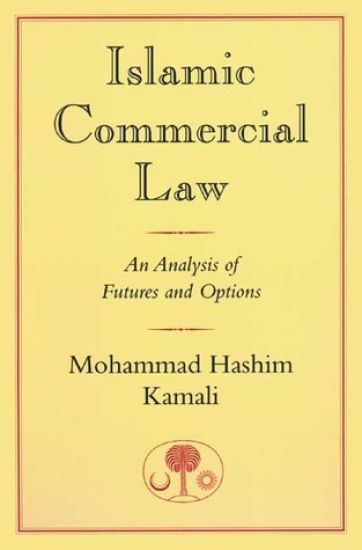
Islamic Commercial Law

Islamic Commercial Law

Mohammad Hashim Kamali

The Islamic Texts Society
2001
nidottu
Islamic Commercial Law: An Analysis of Futures and Options focuses on options and futures as trading tools and explores their validity from an Islamic point of view. Futures and options are a completely new phenomenon which has no parallel in Islamic commercial law. After reviewing the existing rules of Islamic law of contract and verifying their relevance or otherwise to futures trading, the author, Professor M H Kamali, advances a new perspective on the issue of futures and options based on an interpretation of the Qur'an and the Sunnah and referring to the principle of maslaha (consideration of public interest) as enshrined in the Sharia. Islamic Commercial Law consists of three parts. Part One is devoted to the description of futures trading and the understanding of operational procedures of futures and futures markets; Part Two investigates the issue of permissibility of futures trading in Islamic law and the underlying questions of risk-taking and speculation, which are of central concern to the topic. Part Three is devoted to an analysis of options. This work will be of use to anyone working on Islamic law, comparative law or working in Islamic banking.
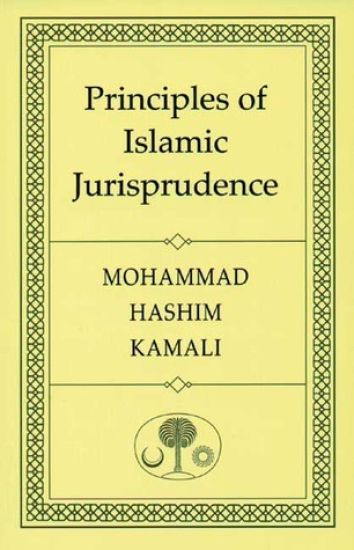
Principles of Islamic Jurisprudence

Principles of Islamic Jurisprudence

Mohammad Hashim Kamali

The Islamic Texts Society
2003
nidottu
This third edition of the best-selling title 'Principles of Islamic Jurisprudence' has been completely revised and substantially enlarged. In this work, Prof Kamali offers us the first detailed presentation available in English of the theory of Muslim law ('usul al-fiqh'). Often regarded as the most sophisticated of the traditional Islamic disciplines, Islamic jurisprudence is concerned with the way in which the rituals and laws of religion are derived from the Qur'an and the 'Sunna' - the precedent of the Prophet. Written as a university textbook, 'Principles of Islamic Jurisprudence' is distinguished by its clarity and readability; it is an essential reference work not only for students of Islamic law, but also for anyone with an interest in Muslim society or in issues of comparative jurisprudence.
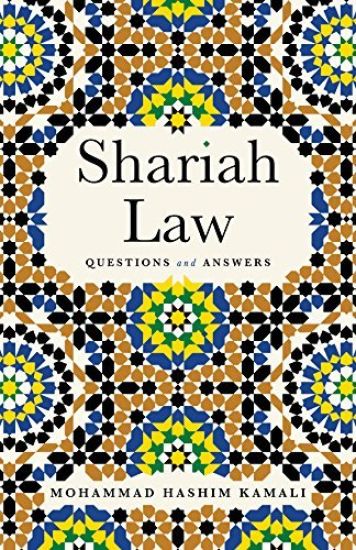
Shariah Law

Shariah Law

Mohammad Hashim Kamali

Oneworld Publications
2017
nidottu
Shariah law is a subject that is misunderstood and misrepresented by many in the West. More than simply a system of law, it is concerned with a set of values and rules that are essential to the understanding and practice of Islam. In this volume, Mohammad Hashim Kamali, a world-renowned expert on Shariah, adopts a question-and-answer format to provide a clear introduction to its most salient aspects. Extending from the sources of Shariah in the Qur’an, hadith and the legal maxims of Islamic law to the discussion of issues such as freedom of religion, gender equality and human rights, Shariah Law: Questions and Answers connects the theoretical aspects of the law with how it is applied in the world today. At once scholarly and accessible, it is sure to be a vital resource for students, teachers and general readers, addressing as it does a range of contemporary concerns, including jihad, democracy, the environment, genetic engineering, human cloning, euthanasia and abortion.
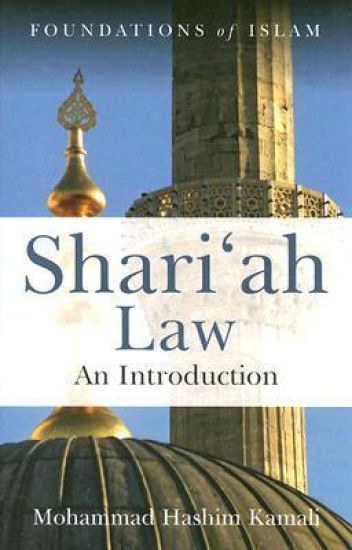
Shari'ah Law

Shari'ah Law

Mohammad Hashim Kamali

Oneworld Publications
2008
nidottu
Providing a comprehensive and accessible examination of Shari’ah Law, this well considered introduction examines the sources, characteristic features, and schools of thought of a system often stereotyped for its severity in the West. In a progressive and graduated fashion, Mohammad Hashim Kamali discusses topics ranging from juristic disagreement to independent reasoning. Also broaching more advanced topics such as the principle of legality and the role and place of Shari’ah-oriented policy, Kamali controversially questions whether Islam is as much of a law-based religion as it has often been made out to be. Complete with a bibliography and glossary, and both a general index and an index of Arabic quotations, this wide-ranging exploration will prove an indispensable resource for Islamic students and scholars, and an informative guide to a complex topic for the general reader.
The Dignity of Man

The Dignity of Man

Mohammad Hashim Kamali

The Islamic Texts Society
2002
nidottu
"The Dignity of Man: An Islamic Perspective" is the first volume in Prof M. H. Kamali's Fundamental Rights and Liberties in Islam Series. In "The Dignity of Man", Prof M. H. Kamali demonstrates how Islam considers the dignity of man to be the foundation for all humanity's rights and liberties. The author sets out the proclamations on human dignity found in the Qur'an and then discusses topics pertaining to or resulting from human dignity: the physical and spiritual nobility of man; God's love for humanity; the sanctity of life; and the necessity for freedom, equality and accountability. Finally, Prof M. H. Kamali examines the measures that the Sharia has taken to protect human dignity and to promote it in social interaction. The discussion is here presented in the light of the debate on the universality of human rights as enshrined in the Universal Declaration of Human Rights. "The Dignity of Man" goes a long way towards exploring an alternative to Western concepts of human rights and can be read in conjunction with the other six volumes in Prof M H Kamali's Fundamental Rights and Liberties in Islam Series.
Freedom, Equality and Justice in Islam

Freedom, Equality and Justice in Islam

Mohammad Hashim Kamali

The Islamic Texts Society
2002
nidottu
In 'Freedom, Equality and Justice in Islam', M H Kamali presents the reader with an analysis of the three concepts of freedom, equality and justice from an Islamic point of view and their manifestations in the religious, social, legal and political fields. The author discusses the evidence to be found for these concepts in the Qur'an and 'Sunna', and reviews the interpretations of the earlier schools of law. The work also looks at more recent contributions by Muslim jurists who have advanced fresh interpretations of freedom, equality and justice in the light of the changing realities of contemporary Muslim societies. 'Freedom, Equality and Justice in Islam' is part of a series dedicated to the fundamental rights and liberties in Islam and should be read in conjunction with 'The Dignity of Man: An Islamic Perspective and Freedom of Expression in Islam.'
Freedom, Equality and Justice in Islam

Freedom, Equality and Justice in Islam

Mohammad Hashim Kamali

The Islamic Texts Society
2002
sidottu
In 'Freedom, Equality and Justice in Islam', M H Kamali presents the reader with an analysis of the three concepts of freedom, equality and justice from an Islamic point of view and their manifestations in the religious, social, legal and political fields. The author discusses the evidence to be found for these concepts in the Qur'an and 'Sunna', and reviews the interpretations of the earlier schools of law. The work also looks at more recent contributions by Muslim jurists who have advanced fresh interpretations of freedom, equality and justice in the light of the changing realities of contemporary Muslim societies. 'Freedom, Equality and Justice in Islam' is part of a series dedicated to the fundamental rights and liberties in Islam and should be read in conjunction with 'The Dignity of Man: An Islamic Perspective and Freedom of Expression in Islam.'
The Dignity of Man

The Dignity of Man

Mohammad Hashim Kamali

The Islamic Texts Society
2002
sidottu
"The Dignity of Man: An Islamic Perspective" is the first volume in Prof M. H. Kamali's Fundamental Rights and Liberties in Islam Series. In "The Dignity of Man", Prof M. H. Kamali demonstrates how Islam considers the dignity of man to be the foundation for all humanity's rights and liberties. The author sets out the proclamations on human dignity found in the Qur'an and then discusses topics pertaining to or resulting from human dignity: the physical and spiritual nobility of man; God's love for humanity; the sanctity of life; and the necessity for freedom, equality and accountability. Finally, Prof M. H. Kamali examines the measures that the Sharia has taken to protect human dignity and to promote it in social interaction. The discussion is here presented in the light of the debate on the universality of human rights as enshrined in the Universal Declaration of Human Rights. "The Dignity of Man" goes a long way towards exploring an alternative to Western concepts of human rights and can be read in conjunction with the other six volumes in Prof M H Kamali's Fundamental Rights and Liberties in Islam Series.
Equity and Fairness in Islam

Equity and Fairness in Islam

Mohammad Hashim Kamali

The Islamic Texts Society
2005
sidottu
"Equity and Fairness in Islam" is the first work in the English language to deal specifically with the subjects of equity and fairness in Islamic law. Prof M. H. Kamali relates these concepts to the Islamic legal notion of "istihsan", thus taking these concepts back to their origin in the Qur'an, the sayings of the Prophet Muhammad and the era of the Companions of the Prophet in the first two centuries of Islam.---"Equity and Fairness in Islam" is divided into two parts. In Part One, Prof M. H. Kamali explores equity and its applications, especially as a basis for the formulation of Islamic law, comparing it with other concepts essential for law making such as general consensus (ijma), analogical reasoning (qiyas) and considerations of public interest (maslaha). Equity and fairness are then looked at from the points of view of three of the schools of law: the Hanafi, the Maliki and the Hanbali. In Part Two, Prof M. H. Kamali attempts to apply the concepts of equity and fairness to certain issues of contemporary concern and especially to commercial transactions. The issues raised here are related to Islamic banking, sale transactions, charitable endowments, pensions funds and other long-term saving accounts.---The concluding part of the "Equity and Fairness in Islam" deals with the relationship between the concepts of equity and fairness, and the goals and objectives of Islamic law, and how these two concepts can work as instruments for securing the objectives of Islamic law. "Equity and Fairness in Islam" can be read in conjunction with other Prof M. H. Kamali's titles, especially "Islamic Commercial Law".
Equity and Fairness in Islam

Equity and Fairness in Islam

Mohammad Hashim Kamali

The Islamic Texts Society
2005
nidottu
"Equity and Fairness in Islam" is the first work in the English language to deal specifically with the subjects of equity and fairness in Islamic law. Prof M. H. Kamali relates these concepts to the Islamic legal notion of "istihsan", thus taking these concepts back to their origin in the Qur'an, the sayings of the Prophet Muhammad and the era of the Companions of the Prophet in the first two centuries of Islam.---"Equity and Fairness in Islam" is divided into two parts. In Part One, Prof M. H. Kamali explores equity and its applications, especially as a basis for the formulation of Islamic law, comparing it with other concepts essential for law making such as general consensus (ijma), analogical reasoning (qiyas) and considerations of public interest (maslaha). Equity and fairness are then looked at from the points of view of three of the schools of law: the Hanafi, the Maliki and the Hanbali. In Part Two, Prof M. H. Kamali attempts to apply the concepts of equity and fairness to certain issues of contemporary concern and especially to commercial transactions. The issues raised here are related to Islamic banking, sale transactions, charitable endowments, pensions funds and other long-term saving accounts.---The concluding part of the "Equity and Fairness in Islam" deals with the relationship between the concepts of equity and fairness, and the goals and objectives of Islamic law, and how these two concepts can work as instruments for securing the objectives of Islamic law. "Equity and Fairness in Islam" can be read in conjunction with other Prof M. H. Kamali's titles, especially "Islamic Commercial Law".
The Right to Life, Security, Privacy and Ownership in Islam

The Right to Life, Security, Privacy and Ownership in Islam

Mohammad Hashim Kamali

The Islamic Texts Society
2008
sidottu
"The Right to Life, Security, Privacy and Ownership in Islam" is the fifth volume in Prof M. H. Kamali's "Fundamental Rights and Liberties in Islam Series". In this volume, Prof M. H. Kamali addresses the most basic of all the fundamental rights and liberties-a person's right to life, personal security, privacy, and ownership-from the perspective of Islam, as found in the Qur'an, and the obligations of Sharia.---Prof M. H. Kamali begins "The Right to Life, Security, Privacy and Ownership in Islam" with the right to life. The discussion of this fundamental right includes: the sanctity of life, unintentional killing, murder, the death penalty and compensations for victims, abortion, suicide, and euthanasia. Chapter Two discusses the right to security and includes: the security against unlawful arrest, the right to fair treatment, the right to counsel, freedom from aggression and torture. In Chapter Three, Prof Kamali expounds on a person's right to privacy, the privacy of one's home, confidential correspondence, and immunity against invasion of privacy in the forms of interception of correspondence, eavesdropping and other such violations. Finally, in Chapter Four, Prof M. H. Kamali concludes "The Right to Life, Security, Privacy and Ownership in Islam" with the discussion of the right of ownership, legitimate and illegitimate means of acquisition, and the restrictions that the Sharia imposes on the exercise of this right including taxation, inheritance and bequests.
The Right to Life, Security, Privacy and Ownership in Islam

The Right to Life, Security, Privacy and Ownership in Islam

Mohammad Hashim Kamali

The Islamic Texts Society
2008
nidottu
Exploring the ideas of human rights according to the laws of Islam, this discussion examines the sanctity of life, murder, unintentional killing, the death penalty, abortion, suicide, and euthanasia. The arguments are introduced by Qur'anic quotations and prophetic anecdotes and include practical examples of both medieval and contemporary applications. Relevant to the current international interest of multicultural perspectives on human rights, this analysis also covers security against unlawful arrest, freedom from torture, immunity against invasion of privacy, and restrictions imposed by the Shari'a on the exercises of these rights.
The Right to Education, Work and Welfare in Islam

The Right to Education, Work and Welfare in Islam

Mohammad Hashim Kamali

The Islamic Texts Society
2011
sidottu
Discussing rights and liberties in Islam, this examination focuses on three connected and complementary areaseducation, work, and welfareand how each is treated in the Qur an. The Prophet and Pious Caliphs are used as examples as the bookargues that the educated are more likely to enter the workforce and contribute to the community. Touching upon various topics, including the institutionalization of learning, the role of governments, and the responsibility to care for individuals in need, this record offers an understanding of human rights from an Islamic perspective. Those interested in Islamic Studies, law, and philosophy will be particularly intrigued."