Kirjojen hintavertailu. Mukana 12 595 353 kirjaa ja 12 kauppaa.

Kirjahaku

Etsi kirjoja tekijän nimen, kirjan nimen tai ISBN:n perusteella.

5 kirjaa tekijältä Mohammad Salama

God’s Other Book

God’s Other Book

Mohammad Salama

University of California Press
2024
pokkari
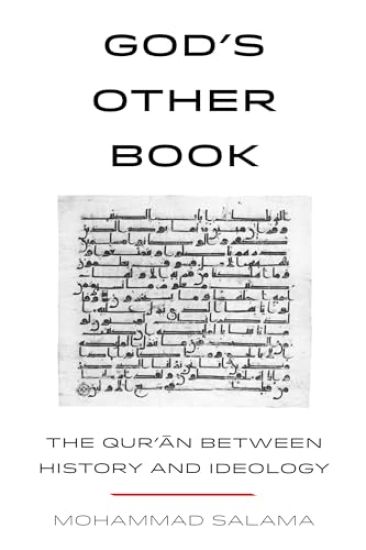
A free ebook version of this title is available through Luminos, University of California Press’s Open Access publishing program. Visit www.luminosoa.org to learn more. In God’s Other Book, Mohammad Salama presents a powerful critique of the ways we study and analyze early Islam and its sacred text, filling a glaring hole in our understanding of this formative environment. Interrogating the ideological framework of late antiquity, Salama exposes hidden assumptions that prevent scholars from truly placing Islam in its sociohistorical and cultural milieu. He offers an alternative theoretical and practical model focused on pre-Islamic Arabic cultural production. Foregrounding the indigenous Arab community of seventh-century Hijaz, Salama demonstrates how the Qur'an played an organic role in commenting on, interacting with, and taking sides concerning matters of ethnicity, ethics, dress codes, and social habits. Only with renewed attention to the Qur'an itself can Western readers engage ethically with Islamic studies and with the cultures and traditions of those who live according to another book.
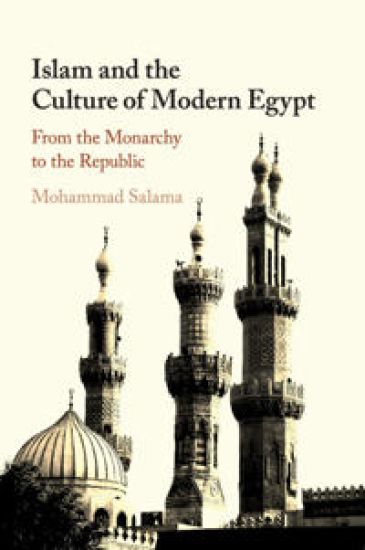
Islam and the Culture of Modern Egypt

Islam and the Culture of Modern Egypt

Mohammad Salama

Cambridge University Press
2020
pokkari
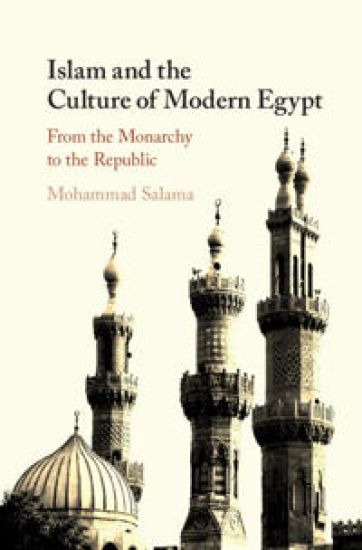
Telling a new story of modern Egypt, Mohammad Salama uses textual and cinematic sources to construct a clear and accessible narrative of the dynamics of Islam and culture in the first half of the twentieth century. The conflict between tradition and secular values in modern Egypt is shown in a stimulating and challenging new light as Salama bridges analysis of nationalism and its connection to Islamism, and outlines the effects of secular education versus traditional Islamic teaching on varied elements of Egyptian society. These include cultural production, politics, economic, identity, and gender relations. All of this helps to discern the harbingers that led to Egypt's social transition from the monarchy to the republic and opens the possibility of Islam as an inspiring and inspirational force. This illuminating, provocative and informative study will be of use to anyone interested in the period, whether general readers, students, or researchers.
Islam and the Culture of Modern Egypt

Islam and the Culture of Modern Egypt

Mohammad Salama

Cambridge University Press
2018
sidottu
Telling a new story of modern Egypt, Mohammad Salama uses textual and cinematic sources to construct a clear and accessible narrative of the dynamics of Islam and culture in the first half of the twentieth century. The conflict between tradition and secular values in modern Egypt is shown in a stimulating and challenging new light as Salama bridges analysis of nationalism and its connection to Islamism, and outlines the effects of secular education versus traditional Islamic teaching on varied elements of Egyptian society. These include cultural production, politics, economic, identity, and gender relations. All of this helps to discern the harbingers that led to Egypt's social transition from the monarchy to the republic and opens the possibility of Islam as an inspiring and inspirational force. This illuminating, provocative and informative study will be of use to anyone interested in the period, whether general readers, students, or researchers.
The Qur'an and Modern Arabic Literary Criticism

The Qur'an and Modern Arabic Literary Criticism

Mohammad Salama

Bloomsbury Academic
2019
nidottu
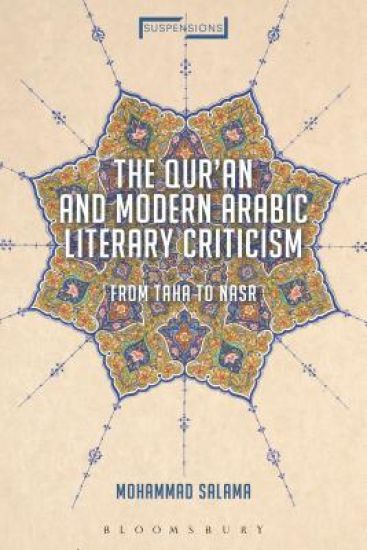
In The Qur’an and Modern Arabic Literary Criticism, Mohammad Salama navigates the labyrinthine semantics that underlie this sacred text and inform contemporary scholarship. The book presents reflections on Quranic exegesis by explaining - and distinguishing between - interpretation and explication. While the book focuses on Quranic and literary scholarship in twentieth-century Egypt from Taha Husayn to Nasr Hamid Abu Zayd, it also engages with an immense tradition of scholarship from the classical period to the present, including authors such as Abu ‘Ubayda, Ibn ‘Abbas, al-Razi, and al-Tabari.Salama argues that, over the centuries, the Arabic language experienced semantic and phonological shifts, creating a lacuna in understanding the Qur’an and bringing contemporary readers under the spell of hermeneutical and parochial interpretations. He demonstrates that while this lacuna explains much of the intellectual poverty of traditionalist approaches to Quranic exegesis, the work of the modern Egyptian school of academics marks a sharp departure from the programmed conservatism of Islamist and Salafi exegetics. Through analyses of the writings of these intellectuals, the author shows that a fresh look at the sources and a revolutionary attempt to approach the Qur’an could render tradition itself an impetus for an alternative aesthetics—contextual, open, and unfolding.
The Qur'an and Modern Arabic Literary Criticism

The Qur'an and Modern Arabic Literary Criticism

Mohammad Salama

Bloomsbury Academic
2018
sidottu
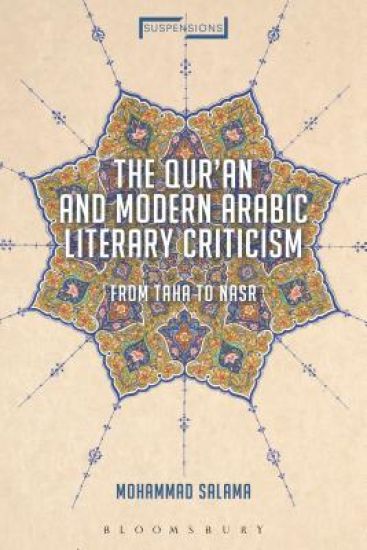
In The Qur’an and Modern Arabic Literary Criticism, Mohammad Salama navigates the labyrinthine semantics that underlie this sacred text and inform contemporary scholarship. The book presents reflections on Quranic exegesis by explaining - and distinguishing between - interpretation and explication. While the book focuses on Quranic and literary scholarship in twentieth-century Egypt from Taha Husayn to Nasr Hamid Abu Zayd, it also engages with an immense tradition of scholarship from the classical period to the present, including authors such as Abu ‘Ubayda, Ibn ‘Abbas, al-Razi, and al-Tabari.Salama argues that, over the centuries, the Arabic language experienced semantic and phonological shifts, creating a lacuna in understanding the Qur’an and bringing contemporary readers under the spell of hermeneutical and parochial interpretations. He demonstrates that while this lacuna explains much of the intellectual poverty of traditionalist approaches to Quranic exegesis, the work of the modern Egyptian school of academics marks a sharp departure from the programmed conservatism of Islamist and Salafi exegetics. Through analyses of the writings of these intellectuals, the author shows that a fresh look at the sources and a revolutionary attempt to approach the Qur’an could render tradition itself an impetus for an alternative aesthetics—contextual, open, and unfolding.