Kirjojen hintavertailu. Mukana 11 717 486 kirjaa ja 12 kauppaa.

Kirjahaku

Etsi kirjoja tekijän nimen, kirjan nimen tai ISBN:n perusteella.

4 kirjaa tekijältä Monica Chiu

Show Me Where It Hurts

Show Me Where It Hurts

Monica Chiu

Pennsylvania State University Press
2023
sidottu
In Show Me Where It Hurts, Monica Chiu argues that graphic pathography—long-form comics by and about subjects who suffer from disease or are impaired—re-vitalizes and re-visions various negatively affected corporeal states through hand-drawn images. By the body and for the body, the medium is subversive and reparative, and it stands in contradistinction to clinical accounts of illness that tend to disembody or objectify the subject.Employing affect theory, spatial theory, vital materialism, and approaches from race and ethnic studies, women and gender studies, disability studies, and comics studies, Chiu provides readings of recently published graphic pathography. Chiu argues that these kinds of subjective graphic stories, by virtue of their narrative and descriptive strengths, provide a form of resistance to the authoritative voice of biomedicine and serve as a tool to foster important change in the face of social and economic inequities when it comes to questions of health and healthcare. Show Me Where It Hurts reads what already has been manifested on the comics page and invites more of what demands expression.Pathbreaking and provocative, this book will appeal to scholars and students of the medical humanities, comics studies, race and ethnic studies, disability studies, and women and gender studies.
Filthy Fictions

Filthy Fictions

Monica Chiu

AltaMira Press,U.S.
2004
sidottu
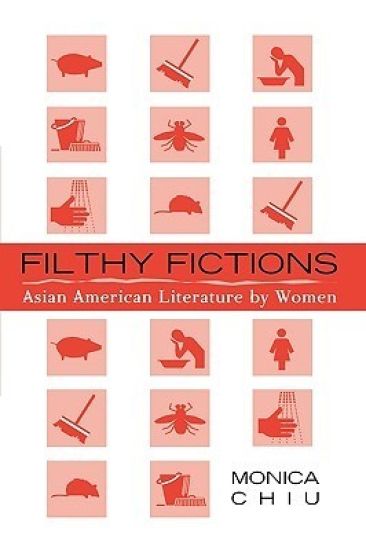
Filthy Fictions addresses Asian American literature by women to explore and explode the sedimented and solidified meanings we have created about "Asian Americans" and "dirt" through dialogues that not only cross disciplinary and institutional formations and borders, but also question the very borders and territories upon which these arguments may be founded. Expertly questioning the construction of the ethnic body, the book discusses critical discourses in ethnic and feminist studies around the topic of identity (re)production and transnational representation.
Filthy Fictions

Filthy Fictions

Monica Chiu

AltaMira Press,U.S.
2004
nidottu
Filthy Fictions addresses Asian American literature by women to explore and explode the sedimented and solidified meanings we have created about 'Asian Americans' and 'dirt' through dialogues that not only cross disciplinary and institutional formations and borders, but also question the very borders and territories upon which these arguments may be founded. Expertly questioning the construction of the ethnic body, the book discusses critical discourses in ethnic and feminist studies around the topic of identity (re)production and transnational representation.
Scrutinized!

Scrutinized!

Monica Chiu

University of Hawai'i Press
2014
sidottu
Chang-rae Lee’s Native Speaker, Kerri Sakamoto’s The Electrical Field, Don Lee’s Country of Origin, Mohsin Hamid’s The Reluctant Fundamentalist, Susan Choi’s A Person of Interest. These and a host of other Asian North American detection and mystery titles were published between 1995 and 2010. Together they reference more than a decade of Asian North America monitoring that includes internment, campaign financing, espionage, and post-9/11 surveillance. However, these works are less concerned with solving crimes than with creating literary responses to the subtle but persistent surveillance of raced subjects.Monica Chiu reveals how Asian North American novels’ fascination with mystery, detection, spying, and surveillance is a literary response to anxieties over race. According to Chiu, this allegiance to a genre that takes interruptions to social norms as its foundation speaks to a state of unease at a time of racial scrutiny.Scrutinized! is broadly about oversight and insight. The race policing of the past has been subsumed under post-racism—an oversight (in the popular nomenclature of race blindness) that is still, ironically, based on a persistent visual construction of race. Readers first revisit Oriental visions, or Asian stereotypes, and then encounter official documentation on major events, such as the Japanese American and Japanese Canadian internment. The former visions, which endure, and the latter documents, diplomatically forgotten, shape how Asian subjects were and are scrutinized and to what effect.