Kirjojen hintavertailu. Mukana 11 244 527 kirjaa ja 12 kauppaa.

Kirjahaku

Etsi kirjoja tekijän nimen, kirjan nimen tai ISBN:n perusteella.

17 kirjaa tekijältä Morris Panych

7 Stories

7 Stories

Morris Panych

Talonbooks
1990
pokkari
In this fast-paced, sophisticated and hilarious play, a man contemplating suicide on a seventh-storey building ledge confronts the stories of the people who live inside the building. These "seven stories" lead to a charming and surprising ending. Cast of 2 women and 3 men.
The Ends of the Earth

The Ends of the Earth

Morris Panych

Talonbooks
1993
pokkari
Frank, having dedicated his life to the unremarkable, and Walker, paranoid since being struck by lighting at age three, attempt to flee from each other and end up following each other instead. They find themselves in a run-down hotel operated by deaf and misdirected Willy and blind Alice, who has a murderous dislike for visitors. Morris Panych's brilliant tale reminds us all that fear can become a self-fulfilling prophecy.
Other Schools of Thought

Other Schools of Thought

Morris Panych

Talonbooks
1994
pokkari
Other Schools of Thought is a collection of three unique plays that allow adult audiences to reflect on their past and young audiences to reflect on their future. With stark sets and minimalist presentational styles, they leave no room for condescension--for dismissal of "adult concerns" by the young. In their treatment of sexuality, substance abuse, AIDS and identity crises, these plays open up the common ground between young adults and old children, mapping the personal uncertainties unleashed by everyone's contemplation of life's "big questions." They are ruthlessly honest enough to permit us to see that adult responses of young people to the questions of their future. If these plays are "plays for young adults," they are so only in the sense that Romeo and Julietis a play for young adults.
Lawrence & Holloman

Lawrence & Holloman

Morris Panych

Talonbooks
1998
pokkari
Lawrence and Holloman, a hapless nerd and a loquacious salesman, meet by chance. From this fleetingly irritating and insignificant encounter, the viciously murderous and incredulously bizarre plot emerges into the full-blown twilight of what appear to be their insignificant and meaningless lives. And it is this very absence of significance and meaning in the lives of the characters which produces both the mindless evil and the greeting-card redemption that give them their shape. This is a universe in which Camus meets Dali, where Goya meets Disney, where gunshots and bathtub drownings, disillusion and dismemberment become the Seventh Seal of the Grey Flannel set.
Earshot

Earshot

Morris Panych

Talonbooks
2001
pokkari
Doyle has a very funny problem: he hears too much. He can hear the most intimate details of the lives of everyone living in his apartment building. He can tell the temperature of a young neighbour's bath water by the resonance of her pipes; he knows where the old lady's lost teeth are by the way they rattle in their glass when her appliances turn on; he can hear letters of rejection slip from slackened fingers and settle to the ground like the crashing leaves of autumn. Doyle blames his hyper-sensitive condition on a physical abnormality, on a birth defect in his ears. But we are not so sure. Paralysing Doyle with a cacophony of detail and minutiae, Earshot offers us the gift of a comic Hamlet--a perfectly dark comedy for the information age.
Girl in the Goldfish Bowl

Girl in the Goldfish Bowl

Morris Panych

Talonbooks
2003
pokkari
As Morris Panych's latest comedy opens, we hear Iris, a precocious girl of ten, saying: "These are the last few days of my childhood." The death of her goldfish, Amal, she is sure, has been announced by the air-raid sirens during the day's school drill. For Iris, there remain a few more days of life in a universe that is inherently ordered, where the spirit of her departed and ritually interred goldfish can, of course, be re-incarnated in a lost and amnesiac drifter given to rhetorical questions of seemingly deep philosophical import. Iris's terminally depressed parents, trapped within the nostalgic desires of their own lost youth, are oblivious to how the child's eye view of their daughter works and what it sees. They remember too well their own loss of innocence as they abandoned themselves to the existential chaos of adulthood. The middle-aged family boarder has spent years in a frustrated search for any kind of gratification, immediate or otherwise, at the Legion after a full day's work in the fish cannery.It is into the goldfish bowl of this dysfunctional family of lethargic piranhas, existential bottom-feeders and aggressive guppies that the audience peers with incredulity, acute recognition, hysterical laughter, and an overwhelming sense of the creative healing power of the imagination. Cast of three women and two men. Winner of the 2004 Governor General's Award for Drama.
The Dishwashers

The Dishwashers

Morris Panych

Talonbooks
2005
pokkari
Of all our contemporary urban myths none is more absurd than the fiction of the "classless society," and Morris Panych's latest comedy penetrates ruthlessly to the shock and horror of the residue of hardened pesto soiling its porcelain heart. Haplessly determined to have his own miserable authority vindicated, chief dishwasher Dressler presides over the steam-choked basement of an up-scale restaurant, a place of seamless existential drudgery so utterly remote from the light of day that its wage-slaves have no contact with anyone outside. Spouting an indiscriminate cornucopia of working-class ethic, an interminable babble of pride of craft, Marxist rhetoric and the virtues of individual entrepreneurship as celebrated by Ayn Rand, Dressler tyrannizes his co-workers relentlessly. Unfortunately, both the "old hand" Moss and the "new guy" Emmett fail utterly to see things his way as they stubbornly and inexplicably pursue both their rejection of and aspiration to join "the folks upstairs."
What Lies Before Us

What Lies Before Us

Morris Panych

Talonbooks
2007
pokkari
Two-time Governor General's Award-winning playwright Morris Panych has done with What Lies Before Us the almost unthinkable: he has turned Waiting for Godot into a comedy while simultaneously heightening rather than minimizing the profound existential questions it asks. But this play is no mere parody of a theatre classic, nor is it a "history play." The roots of Panych's comedy extend to the confrontation of Shakespeare's "rude mechanicals" with their "educated betters," and to the fundamentally and hilariously irreconcilable differences between the world views of Don Quixote and Sancho Panza. The English Mr. Keating and the Scottish Mr. Ambrose are assistant surveyors camped in the Rocky Mountains with Mr. Wing, their Chinese coolie, starving as they wait for "the Major," an American adventurer, to show up and lead their railroad survey party in the nation-building enterprise called Canada.Of course, the Major never shows up, leaving the rude and uneducated Keating and the disillusioned and highly schooled Ambrose to engage in an increasingly absurd hair-splitting and sidesplitting dialogue about the meaning of life, and both of them utterly frustrated in their ongoing attempts to communicate with Wing, who speaks only Cantonese. Heightening our sense of the darkly comic is that we know things are not going to end well: Keating is dying of rabies he got from a squirrel bite, and Ambrose is about to succumb to a gangrenous broken leg, which no one can quite bring himself to cut off. Functioning as both a comic foil to Keating and Ambrose, and an incomprehensible chorus to the audience (unless it understands Cantonese), Wing is about to have the last word. Finally understood, translated into English through a trick of stagecraft, Wing's final speech completely inverts the play with a devastatingly poignant version of the events we have just witnessed.
Benevolence

Benevolence

Morris Panych

Talonbooks
2008
pokkari
Fastidious and fussy shoe salesman by day and secretive aspiring film screenwriter by night, Oswald Eichersen's dreams of success are as grandly inflated as his self-esteem is hopelessly deficient. Just outside Eichersen's place of work, street person Terence Lomy has sat encamped for two years--an indelible fixture on the sidewalk with a cardboard sign round his neck with the word "hungry" scribbled on it in a hapless hand. One day, on an irrational impulse, having ignored the beggar for years, Eichersen gives Lomy a hundred dollar bill, setting into motion a series of ironic and completely unanticipated events that will change both of their lives forever. But it's not only Eichersen and Lomy that are changed by this irrational act of generous empathy. Through a hilarious series of bizarre encounters in the porn theatre that Lomy--a beguiling trickster who dares to claim it is actually he who has something of value to offer Eichersen--has chosen for a series of "rendezvous" with his benefactor, Eichersen finds himself in an unwanted relationship with a reformed hooker, as sexless a companion as his former longtime girlfriend with an irritating fetish for small dogs.As he helplessly witnesses his entire life disintegrate, only to be co-opted and appropriated by everyone around him, Eichersen ends up abandoned and penniless, on the lam for a murder he didn't commit, absurdly preparing a lecture on Benevolence for the sole patron of the dark and dingy theatre of his nightmares. Full of excruciatingly comic twists and turns of both fate and manipulative, perhaps even malicious intent, this dark comedy of "trading places" resonates with a cascade of uncomfortable truths about how we see (or don't see) the people we live with every day. Benevolence premiered at Tarragon Theatre in Toronto on September 24, 2007.
Still Laughing

Still Laughing

Morris Panych

Talonbooks
2010
pokkari
The universal mark of good satire is still to make audiences laugh at the worst traits in human nature. Here, in his own words, is how Morris Panych updated these three great comedy classics from a century ago: The Government Inspector is peopled with the most duplicitous, under-handed and shifty characters ever to appear in literature; yet, they are funny. "I made the lead character Khlestakov and his companion Osip former members of an acting troupe, to open up the fourth wall of the theatre. Inspired by Gogol himself, who has the characters speak to the audience directly in the last scene, this is not really a post-modern indulgence, but part of a long theatrical tradition of direct audience address. "There are certain literary subjects that hardly change over time; sex isn't one of them. Take Viagra and cosmetic surgery, for example. These are fertile subjects for absurd comedy particular to our time. With Hotel Peccadillo, I wanted to play up, but also comment on the notion of hypocrisy as it relates to in?delity--the play was written a hundred years ago, without the hind-sight of Feydeau's own death from syphilis.To that end, I made the author the landlord of his bordello--to include him in the farce, to heighten the irony. "In changing Schnitzler's The Amorous Adventures of Anatol from a 1902 Austrian play to a 2007 Canadian one, the most important decision I made was to have all the female characters played by one actress. Because of this, the audience becomes complicit in a casting trick: knowing that for Anatol, all women are the same. While it's a truism that much as people appear to change throughout history, their essential human nature does not, in this play Anatol becomes the only victim of our elaborate theatrical illusion."
The Trespassers

The Trespassers

Morris Panych

Talonbooks
2010
pokkari
The Trespassers unfolds over the course of a few weeks in a town in the middle of nowhere--not small enough to be a quaint place or large enough to be in any way an interesting one. They once had a sawmill here, which was a going concern before it was shut down in a labour dispute, and it now crowns a sort of half-town, gutted of its reason for being. Fifteen-year-old Lowell is no average teenager--and his grandfather, Hardy, is no conventional role model. Whether urging the boy to pilfer peaches from an abandoned orchard, arranging for his sexual initiation with the town's sole remaining prostitute, or teaching him the importance of gambling, Hardy is the despair of Lowell's born-again mother, Cash. But how far into forbidden territory has Lowell actually ventured? An unapologetic anarchist, Hardy may once have owned the abandoned orchard at the heart of the town where he and Lowell spend much of their time trespassing, discussing capitalism and the finer points of the Ten Commandments, as if ethics were nothing more than a game of poker where we win or lose not because of what's in the hand we've been dealt, but because of how we play it with what's in our heads.Torn between his grandfather's atheism and his mother's Christian fundamentalism, Lowell begins to understand that things are not what they seem in what is left of this town. When inspector Milton shows up to investigate a mysterious murder, Lowell's skills at shaping the truth to protect both himself and those he cares about are put to the ultimate test: shall he plea bargain, or stick to the truth as he understands it? As Hardy once pointed out to him, "There's something in between lying and not lying. It's called a story."
Gordon

Gordon

Morris Panych

Talonbooks
2011
pokkari
Gordon was always an odd little child, given his penchant for setting the neighbours' sheds on fire with their pets locked inside and his fascination with the funeral rituals at the church across the way. Home-schooled in the evenings within the bounds of a somewhat limited curriculum of drunken impromptu kitchen renovations and wife beatings in the resultant ruins by his father Gord, a man of troglodyte imagination and boundless determination for self-replication, his namesake son dedicates himself to these subjects with a kind of limitless and inarticulate awe. Something sinister and permanent involving the stairs to the basement seems to have happened to Gordon's mother at a formative stage of his development, narrowing the scope of his education even further and leaving him at somewhat Oedipal loose ends. As the steel mill shuts down and everyone in town moves away, Gordon's father urges him to attend an institution of higher learning.Educated by a legal system that provides him with free room and board in an institution dedicated solely to freshman tutorials in applied criminology conducted by its post-graduate students, Gordon's vocabulary grows by leaps and bounds, as do his natural gifts for sociopathic rhetoric, fatuous rationalization and reductive logic. Upon graduation, Gordon sets out to build an innovative business with his former cellmate Carl. This ambition is not without its bloody-handed transactions and awkward issues about where to file the evidence. Then there's the question of what to do about the pregnant and vulnerably sullen Deirdre, who spends an unusual amount of time worrying about her nails and calculating the pathetic hourly wages that Gordon and Carl's sins bring in.
Vigil

Vigil

Morris Panych

Talonbooks
2012
pokkari
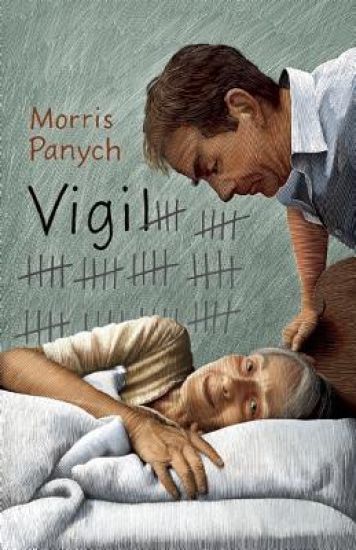
Since Morris Panych's classic black comedy Vigil premiered in 1996, it has been produced throughout North America, the United Kingdom, and Europe, including a 2009 Off-Broadway production, which opened to rave reviews, a run as Auntie & Me in London and, in 2011, shows at the Mark Taper Forum in Los Angeles and the American Conservatory Theater in San Francisco, where Panych directed Academy Award--winner Olympia Dukakis opposite Marco Barricelli in the lead role. This updated edition incorporates changes to scenes and dialogue that have been part of the play's evolution over the past fifteen years, as well as a new playwright's note. Vigil is about a man returning -- after thirty years -- to sit with a female relative on her deathbed. Kemp, the protagonist, is an extremely self-centered and shallow person who uses acid wit and seemingly callous indifference to cover up the profound discomfort he experiences upon finding himself part of a deathwatch. Kemp's problem is: she's not dying fast enough.Through Kemp's own errors and inattentiveness, the visit that he thinks will take a day or two stretches into a year, and he finds himself caring for his long-forgotten aunt Grace against his will. Gallows humor and Kemp's diatribes on humanity and mortality fuel this delightfully dark narrative, but it is Grace's economical contributions to the dialogue (she's a woman of few words) that give this play its weight and profundity. A play of mistaken identity, twisted circumstance and surprising turns, it is deliciously absurd, incredibly funny and poignantly tender. This is one Vigil worth keeping. Cast of 1 woman and 1 man.
In Absentia

In Absentia

Morris Panych

Talonbooks
2013
pokkari
Four seasons after her husband Tom's disappearance, Colette remains emotionally paralyzed, isolated in a country cottage. She waits in anguish, not knowing whether he is dead or alive, but clinging to hope. A young stranger in a jean jacket waves to her from the frozen lake -- a sign? She emerges to give him her husband's parka -- strangely, the boy has a likeness to Tom. What is the stranger's connection to her geologist husband, kidnapped more than a year before by leftist guerrillas in Colombia? How does this slyly seductive young stranger happen to show up at her home in rural Ontario, thousands of miles away? He seems to know more about Colette than he should, and as he slowly insinuates himself into her life, Colette's attentive sister, Evelyn, and her helpful neighbor Bill become increasingly alarmed. Part mystery, part moving story of vanished love, In Absentia explores the notion of disappearance, articulated in very personal terms. Through the tough, time-shifting action of the play, Colette reflects on her marriage and past love, offering rich associative memories while also uncovering the hidden and inaccessible -- that which is made to disappear from view.Guilt and grief, infidelity and infertility, loss and longing are the deeper subjects Panych explores here. At the same time, the play examines the desire to make connections in life -- thoughts to deeds, intentions to outcomes -- in scenes often enlivened by the playwright's trademark humor. Cast of 3 men and 2 women.
The Shoplifters

The Shoplifters

Morris Panych

Talonbooks
2015
pokkari
In this riotously funny new comedy from Morris Panych, we meet Alma, a seasoned career shoplifter who prefers the five-finger discount over some lousy seniors' day deal. But it's not just an empty wallet that leads Alma to a life of petty crime - it's also her strong convictions about social justice and economic inequality. Along for the ride is Phyllis, Alma's frazzled accomplice who lacks her mentor's cool demeanour and snappy comebacks. It's Alma who does the talking when the pair is apprehended at the grocery store by Dom, an overzealous rookie security guard. Guided by the strictness of his born-again Christian belief, Dom is ready to handcuff the culprits and call the police, but his affable senior partner, Otto, intervenes with a more sympathetic view of the crime: "It's just a couple a steaks." As Alma, Phyllis, Dom, and Otto share their wildly different takes on the situation, complex views on morality and ethics begin to emerge. With its cast of oddball characters, Panych's comedy offers biting observations about society's haves and have-nots and how much they might actually have in common. Cast of 2 women and 2 men.
Sextet

Sextet

Morris Panych

Talonbooks
2016
pokkari
Music has long been considered beneficial in enhancing cognitive skills, and some have even suggested that music constitutes its own category of brain function; that it is, in fact, a separate and distinct type of thought. As is sex, which can produce, aside from children, complete dysfunction, confused mental activity -- even, quite possibly, a compromised immune system, and certainly, in many cases, complete and utter memory loss -- both before and after. It seemed only natural, then, for playwright Morris Panych to put these two types of human experience together into one play. After all, both take practice. This dark and steamy comedy explores the harmonies and dysfunctions of six sexually entangled musicians on an ill-fated winter tour. When a blizzard strands this sextet for an extra night, they have only their instruments, each other, and their secrets to keep them warm.