Kirjojen hintavertailu. Mukana 11 342 296 kirjaa ja 12 kauppaa.

Kirjahaku

Etsi kirjoja tekijän nimen, kirjan nimen tai ISBN:n perusteella.

25 kirjaa tekijältä Mortimer J. Adler

Adler's Philosophical Dictionary

Adler's Philosophical Dictionary

Mortimer J. Adler

Touchstone
1997
pokkari
Stimulating, engaging, and organized in an easy-to-use, A-to-Z format, Adler's Philosophical Dictionary is an ideal introduction to the history of the great ideas.The terms and concepts that have simulated thinkers from Aristotle onward come to life in the latest work by the man TIME magazine has called "America's philosopher for everyman." Is the human soul immortal? What does it mean to know something? What is the nature of erotic love? Adler examines these questions as well as many others with his trademark clarity, rigor, and common sense.
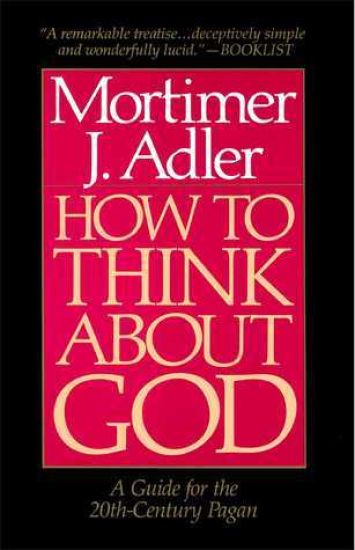
How to Think About God

How to Think About God

Mortimer J. Adler

Touchstone
1991
pokkari
Dr. Adler, in his discussion, extends and modernizes the argument for the existence of God developed by Aristotle and Aquinas. Without relying on faith, mysticism, or science (none of which, according to Dr. Adler, can prove or disprove the existence of God), he uses a rationalist argument to lead the reader to a point where he or she can see that the existence of God is not necessarily dependent upon a suspension of disbelief. Dr. Adler provides a nondogmatic exposition of the principles behind the belief that God, or some other supernatural cause, has to exist in some form. Through concise and lucid arguments, Dr. Adler shapes a highly emotional and often erratic conception of God into a credible and understandable concept for the lay person.
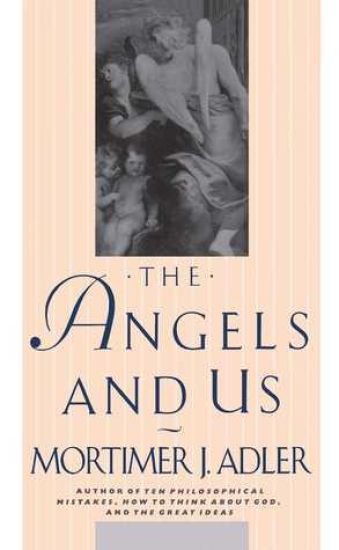
Angels and Us

Angels and Us

Mortimer J. Adler

Touchstone
1993
pokkari
Mortimer Adler has always been ahead of his time. In 1982, before the current revival of interest in angels, Dr. Adler published "The Angels and Us", an engaging look at the various images and hierarchies of angels (including guardian angels). Dr. Adler, the bestselling author of "Ten Philosophical Mistakes", "Aristotle for Everybody", and "The Great Ideas", speculates on the existence of angels; why Jews, Christians, and Muslims believe in angels, and the ways angels have been viewed as objects of religious belief and philosophical thought. This is a wonderfully enlightening work on the affinities between angels and human beings.
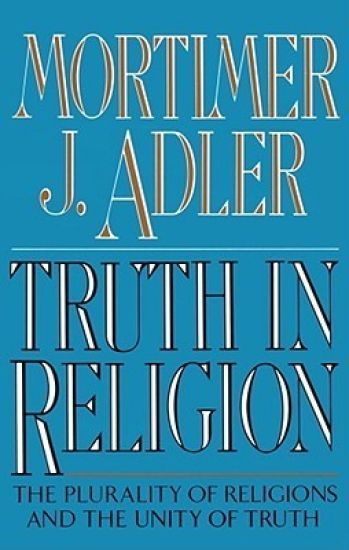
Truth in Religion

Truth in Religion

Mortimer J. Adler

Touchstone
1992
pokkari
Continuing his exploration of the philosophical questions and doubts plaguing civilization today, Dr. Mortimer J. Adler explores where the truth lies in religion and the effects of diversity among religions.Truth in Religion is the product of Dr. Mortimer J. Adler’s search for a resolution to the age-old conflict between logic and faith. Aiming to discover where the truth lies among the plurality of the world’s organized religion, Dr. Adler explores the philosophy of religion and its true meanings among civilization as dictated by the principle of the unity of truth.
Dialectic

Dialectic

Mortimer J. Adler

Routledge
2000
sidottu
First published in 2000. This is Volume I of eight in the International Library of Philosophy looking at the area pf philosophy of Mind an Language. Written in 1927, Dialectic is a convenient technical name for the kind of thinking which takes place when human beings enter into dispute, or when they carry on in reflection the polemical consideration of some theory or idea. This text is an attempt to examine the circumstances and conditions of controversy in order to understand what are its inescapable limitations, its intellectual traits and values.
Dialectic

Dialectic

Mortimer J. Adler

Routledge
2010
nidottu
First published in 2000. This is Volume I of eight in the International Library of Philosophy looking at the area pf philosophy of Mind an Language. Written in 1927, Dialectic is a convenient technical name for the kind of thinking which takes place when human beings enter into dispute, or when they carry on in reflection the polemical consideration of some theory or idea. This text is an attempt to examine the circumstances and conditions of controversy in order to understand what are its inescapable limitations, its intellectual traits and values.
Six Great Ideas

Six Great Ideas

Mortimer J. Adler

Touchstone
1997
pokkari
Each summer, Mortimer J. Adler conducts a seminar at the Aspen Institute in Colorado. At the 1981 seminar, leaders from the worlds of business, literature, education, and the arts joined him in an in-depth consideration of the six great ideas that are the subject of this book: Truth, Goodness, and Beauty - the ideas we judge by; and Liberty, Equality and Justice - the ideas we act on. The group discussions and conversations between Dr. Adler and journalist Bill Moyers were filmed for broadcast on public television, and thousands of people followed their exploration of these important ideas. Discarding the out-worn and off-putting jargon of academia, Dr. Adler dispels the myth that philosophy is the exclusive province of the specialist. He argues that "philosophy is everybody's business," and that a better understanding of these fundamental concepts is essential if we are to cope with the political, moral, and social issues that confront us daily.
Aristotle for Everybody

Aristotle for Everybody

Mortimer J. Adler

Simon Schuster
1997
pokkari
Offers an imaginative perspective on Aristotelian logic, presenting an exploration of nature, society, and man in light of commonplace events and reexamining concepts of body, mind, change, cause, part, whole, one, and many
Paideia Proposal

Paideia Proposal

Mortimer J. Adler

Touchstone
1998
pokkari
The Paideia Proposal is a system of liberal education intended for all children. It was a response to what Adler characterized as the United States' antidemocratic or undemocratic educational system, a holdover from the 19th century, when the understanding of basic human rights fell short of 20th century expectations. The Paidea Proposal was based upon the following assumptions: 1) All children are educable; 2) Education is never completed in school or higher institutions of learning, but is a lifelong process of maturity for all citizens; 3) The primary cause of learning is the activity of the child's mind, which is not created by, but only assisted by the teacher; 4) Multiple types learning and teaching must be utilized in education, not just teacher lecturing, or telling; and 5) A student's preparation for earning a living is not the primary objective of schooling. Adler stressed that the proposal is much more than just a return to the basic skills of reading, writing and arithmetic. It is not simply a return to the values of classical civilization, but a return to what is of enduring value. It is a democratic proposal intended for the education of all, and not an elitist program as some have alleged.
The Difference of Man and the Difference It Makes

The Difference of Man and the Difference It Makes

Mortimer J. Adler

Fordham University Press
1993
sidottu
In this classic work, Adler explores how man differs from all other things in the universe, bringing to bear both philosophical insight and informed scientific hypotheses concerning the biological and behavioral characteristics of mainkind. Rapid advances in science and technology and the abstract concepts of that influence on man and human value systems are lucidly outlined by Adler, as he touches on the effect of industrialization, and the clash of cultures and value systems brought about by increased communication between previously isolated groups of people. Among the other problems this study addresses are the scientific achievements in biology and physics which have raised fundamental questions about humanity's essential nature, especially the discoveries in the bilogical relatedness of all living things. Thrown into high relief is humanity's struggle to determine its unique status in the natual world and its value in the world it has created. Ultimately, Adler's work develops an approach to the separation between scientific and philosophical questions which stands as a model of thought on philosophical considerations of new scientific discoveries and its consequences for the human person.
The Difference of Man and the Difference It Makes

The Difference of Man and the Difference It Makes

Mortimer J. Adler

Fordham University Press
1993
pokkari
In this classic work, Adler explores how man differs from all other things in the universe, bringing to bear both philosophical insight and informed scientific hypotheses concerning the biological and behavioral characteristics of mainkind. Rapid advances in science and technology and the abstract concepts of that influence on man and human value systems are lucidly outlined by Adler, as he touches on the effect of industrialization, and the clash of cultures and value systems brought about by increased communication between previously isolated groups of people. Among the other problems this study addresses are the scientific achievements in biology and physics which have raised fundamental questions about humanity's essential nature, especially the discoveries in the bilogical relatedness of all living things. Thrown into high relief is humanity's struggle to determine its unique status in the natual world and its value in the world it has created. Ultimately, Adler's work develops an approach to the separation between scientific and philosophical questions which stands as a model of thought on philosophical considerations of new scientific discoveries and its consequences for the human person.
How to Think About War and Peace

How to Think About War and Peace

Mortimer J. Adler

Fordham University Press
1995
sidottu
Mortimer Adler writes in his introduction: "In thinking about war and peace, as in thinking about other basic practical problems, the man who brings general ideas and principles to bear upon particular problems and formulations has a unique advantage. He can make effective contact with the concrete and the immediate without losing a dispassionate vision of the universal and the timeless. He can exercise that critical detachment necessary for a thoughtful, rather than an emotional, judgement upon the conflicting policies which solicit his adherance." How to think About War and Peace discusses immediate issues in terms of eternal principles, viewing present problems in the large perspectives that history and philosophy can provide. This book engages in a timeless project not contingenton current events, but cumulated from a continuing history of the battle between war and peace. Written in the midst of the Second World War, Adler's purpose was not to proffer how to make peace after the end of the war, but rather to instruct how to think about peace and war and how to continue this process to maintain peace, or, how to effect its establishment.
How to Think About War and Peace

How to Think About War and Peace

Mortimer J. Adler

Fordham University Press
1995
pokkari
Mortimer Adler writes in his introduction: "In thinking about war and peace, as in thinking about other basic practical problems, the man who brings general ideas and principles to bear upon particular problems and formulations has a unique advantage. He can make effective contact with the concrete and the immediate without losing a dispassionate vision of the universal and the timeless. He can exercise that critical detachment necessary for a thoughtful, rather than an emotional, judgement upon the conflicting policies which solicit his adherance." How to think About War and Peace discusses immediate issues in terms of eternal principles, viewing present problems in the large perspectives that history and philosophy can provide. This book engages in a timeless project not contingenton current events, but cumulated from a continuing history of the battle between war and peace. Written in the midst of the Second World War, Adler's purpose was not to proffer how to make peace after the end of the war, but rather to instruct how to think about peace and war and how to continue this process to maintain peace, or, how to effect its establishment.
The Common Sense of Politics

The Common Sense of Politics

Mortimer J. Adler

Fordham University Press
1996
pokkari
The first edition of The Common Sense of Politics described itself as a "just in time tonic for those of us who have given up on common sense as well as on politics and can no longer see the connection between the two." One has only to scan the pages of this 1996 edition to recognize that this book is just as appropriate and important, if not more. With the development of a European Community, the upcoming American presidential election, and in light of the recent celebration of the U.N.'s 50th anniversary, it is crucial that we, as citizens of the world, approach politics with common sense and a universal desire to improve our institutions toward managing and administering to a greater mankind. This book, built upon universal principles of a politics of common sense and for the purpose of restoring faith in the reform and improvement of our institutions, is the way toward perfect society and toward the bettering of the condition of man on earth.
The Time of Our Lives

The Time of Our Lives

Mortimer J. Adler

Fordham University Press
1996
pokkari
Is it a good time to be alive? Is ours a good society to be alive in? Is it possible to have a good life in our time? And finally, does a good life consist of having a good time? Are happiness and "a good life" interchangeable? These are the questions that Mortimer Adler addresses himself to. The heart of the book lies in its conception of the good life for man, which provides the standard for measuring a century, a society, or a culture: for upon that turns the meaning of each man's primary moral right – his right to the pursuit of happiness. The moral philosophy that Dr. Adler expounds in terms of this conception he calls "the ethics of common sense," because it is as a defense and development of the common-sense answer to the question "can I really make a good life for myself?"
A Dialectic of Morals: Towards the Foundations of Political Philosophy
""A Dialectic of Morals: Towards the Foundations of Political Philosophy"" is a philosophical book written by Mortimer J. Adler. The book explores the foundations of political philosophy by examining the dialectic between morality and politics. Adler argues that morality is the foundation of political philosophy and that political philosophy cannot be understood without taking into account the moral principles that underlie it. The book is divided into three parts: the first part examines the nature of moral principles, the second part explores the relationship between morality and politics, and the third part discusses the implications of this relationship for political philosophy. The book is written in a clear and accessible style, making it an ideal introduction to political philosophy for students and general readers alike. Overall, ""A Dialectic of Morals"" is a thought-provoking and insightful exploration of the foundations of political philosophy.This is a new release of the original 1941 edition.This scarce antiquarian book is a facsimile reprint of the old original and may contain some imperfections such as library marks and notations. Because we believe this work is culturally important, we have made it available as part of our commitment for protecting, preserving, and promoting the world's literature in affordable, high quality, modern editions, that are true to their original work.