Kirjojen hintavertailu. Mukana 12 016 292 kirjaa ja 12 kauppaa.

Kirjahaku

Etsi kirjoja tekijän nimen, kirjan nimen tai ISBN:n perusteella.

4 kirjaa tekijältä Morton Weinfeld

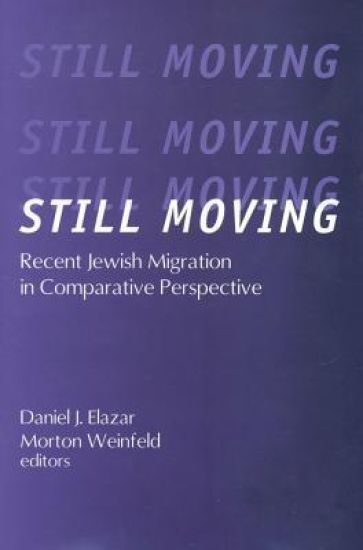
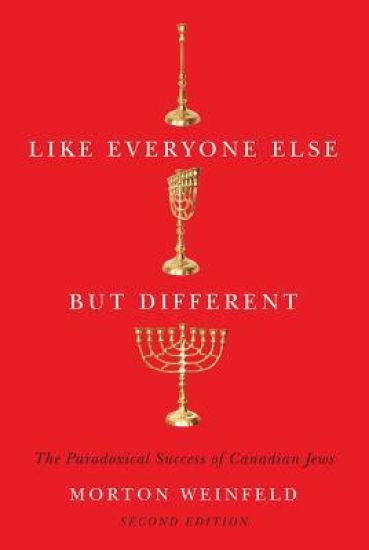
Like Everyone Else but Different

Like Everyone Else but Different

Morton Weinfeld

McGill-Queen's University Press
2018
sidottu
Liberal democratic societies with diverse populations generally offer minorities two usually contradictory objectives: the first is equal integration and participation; the second is an opportunity, within limits, to retain their culture. Yet Canadian Jews are successfully integrated into all domains of Canadian life, while at the same time they also seem able to retain their distinct identities by blending traditional religious values and rituals with contemporary cultural options. Like Everyone Else but Different illustrates how Canadian Jews have created a space within Canada’s multicultural environment that paradoxically overcomes the potential dangers of assimilation and diversity. At the same time, this comprehensive and data-driven study documents and interprets new trends and challenges including rising rates of intermarriage, newer progressive religious options, finding equal space for women and LGBTQ Jews, tensions between non-Orthodox and Orthodox Jews, and new forms of real and perceived anti-Semitism often related to Israel or Zionism, on campus and elsewhere. The striking feature of the Canadian Jewish community is its diversity. While this diversity can lead to cases of internal conflict, it also offers opportunities for adaptation and survival. Seventeen years after its first publication, this new edition of Like Everyone Else but Different provides definitive updates that blend research studies, survey and census data, newspaper accounts and articles, and the author’s personal observations and experiences to provide an informative, provocative, and fascinating account of Jewish life and multiculturalism in contemporary Canada.
Like Everyone Else but Different

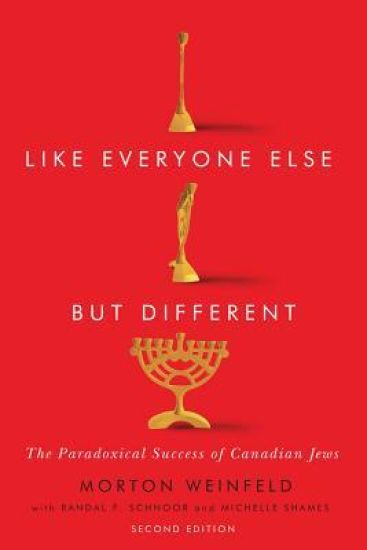
Like Everyone Else but Different

Morton Weinfeld

McGill-Queen's University Press
2018
nidottu
Liberal democratic societies with diverse populations generally offer minorities two usually contradictory objectives: the first is equal integration and participation; the second is an opportunity, within limits, to retain their culture. Yet Canadian Jews are successfully integrated into all domains of Canadian life, while at the same time they also seem able to retain their distinct identities by blending traditional religious values and rituals with contemporary cultural options. Like Everyone Else but Different illustrates how Canadian Jews have created a space within Canada’s multicultural environment that paradoxically overcomes the potential dangers of assimilation and diversity. At the same time, this comprehensive and data-driven study documents and interprets new trends and challenges including rising rates of intermarriage, newer progressive religious options, finding equal space for women and LGBTQ Jews, tensions between non-Orthodox and Orthodox Jews, and new forms of real and perceived anti-Semitism often related to Israel or Zionism, on campus and elsewhere. The striking feature of the Canadian Jewish community is its diversity. While this diversity can lead to cases of internal conflict, it also offers opportunities for adaptation and survival. Seventeen years after its first publication, this new edition of Like Everyone Else but Different provides definitive updates that blend research studies, survey and census data, newspaper accounts and articles, and the author’s personal observations and experiences to provide an informative, provocative, and fascinating account of Jewish life and multiculturalism in contemporary Canada.
Still Moving

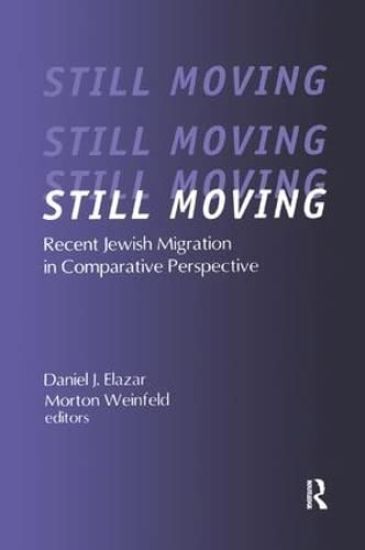
Still Moving

Morton Weinfeld

Routledge
2018
nidottu
The aftermath of World War II was a period of massive Jewish migration. More than a million Jews came to settle in the new state of Israel; hundreds of thousands moved to North America, Australia, and France, while tens of thousands resettled themselves elsewhere in Europe and the world. Emigration was, in turn, paralled by large-scale movement among second-generation Jews from the great urban centers to the suburbs. Until recently it has seemed as though the Jewish people had, in the words of the Bible, reached a situation of rest and landed inheritance. However, there is considerable evidence that Jews are still moving: from the former Soviet Union, to and from Israel, and within nations where they have been long resident. Still Moving examines the causes and character of contemporary migration in Israel and throughout the Diaspora.The contributors to this volume adopt a cross-cultural comparative approach. Part 1 establishes the context of the new migration globally with specific concentration on its effects on the institutions of Israeli democracy. Part 2 surveys immigration to Israel in the 1990s with particular emphasis on the wave of Russian emigres since the fall of the Soviet Union. Internal migration from rural to urban centers is also explored. Migration to the Diaspora is covered in part 3. The Jewish identity of Soviet Jews is compared to their American and Canadian counterparts. Economic performance and problems of multigenerational families among emigres are also treated, as are the controversies surrounding politically motivated emigration from Israel. Part 4 focuses on the changing nature of the Diaspora and its relations with Israel. Beyond its grounding in Jewish culture and history, Still Moving frames questions that are central to understanding contemporary migration in general: Does immigration accelerate or retard the abilities of host countries to restructure economically? How does greater ethnic diversity affect the social and cultural life of cities? What factors help immigrants integrate into the wider community? Does immigration contribute to the creation of a marginalized underclass? Still Moving will be essential reading for historians, sociologists, Jewish studies specialists, and policy analysts.
Still Moving

Still Moving

Morton Weinfeld

Transaction Publishers
2000
sidottu
The aftermath of World War II was a period of massive Jewish migration. More than a million Jews came to settle in the new state of Israel; hundreds of thousands moved to North America, Australia, and France, while tens of thousands resettled themselves elsewhere in Europe and the world. Emigration was, in turn, paralled by large-scale movement among second-generation Jews from the great urban centers to the suburbs. Until recently it has seemed as though the Jewish people had, in the words of the Bible, reached a situation of rest and landed inheritance. However, there is considerable evidence that Jews are still moving: from the former Soviet Union, to and from Israel, and within nations where they have been long resident. Still Moving examines the causes and character of contemporary migration in Israel and throughout the Diaspora.The contributors to this volume adopt a cross-cultural comparative approach. Part 1 establishes the context of the new migration globally with specific concentration on its effects on the institutions of Israeli democracy. Part 2 surveys immigration to Israel in the 1990s with particular emphasis on the wave of Russian emigres since the fall of the Soviet Union. Internal migration from rural to urban centers is also explored. Migration to the Diaspora is covered in part 3. The Jewish identity of Soviet Jews is compared to their American and Canadian counterparts. Economic performance and problems of multigenerational families among emigres are also treated, as are the controversies surrounding politically motivated emigration from Israel. Part 4 focuses on the changing nature of the Diaspora and its relations with Israel. Beyond its grounding in Jewish culture and history, Still Moving frames questions that are central to understanding contemporary migration in general: Does immigration accelerate or retard the abilities of host countries to restructure economically? How does greater ethnic diversity affect the social and cultural life of cities? What factors help immigrants integrate into the wider community? Does immigration contribute to the creation of a marginalized underclass? Still Moving will be essential reading for historians, sociologists, Jewish studies specialists, and policy analysts.