

Kirjahaku
Etsi kirjoja tekijän nimen, kirjan nimen tai ISBN:n perusteella.
85 kirjaa tekijältä Morusu Siva Sankar
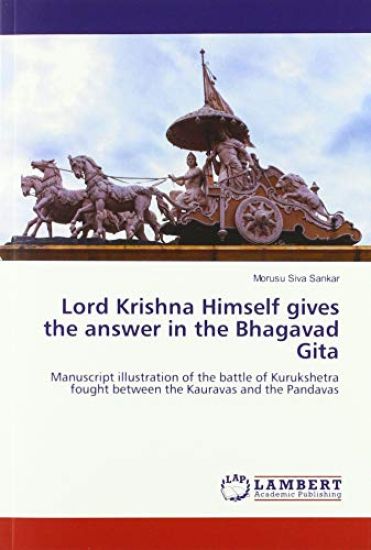
Lord Krishna Himself gives the answer in the Bhagavad Gita
Morusu Siva Sankar
Lap Lambert Academic Publishing
2019
nidottu
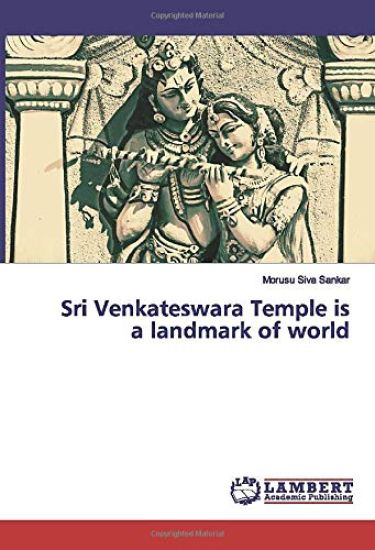
Sri Venkateswara Temple is a landmark of world
Morusu Siva Sankar
Lap Lambert Academic Publishing
2018
nidottu

Financial Analysis of the Tirupati Co Operative Bank Limited
Morusu Siva Sankar
LAP Lambert Academic Publishing
2012
pokkari
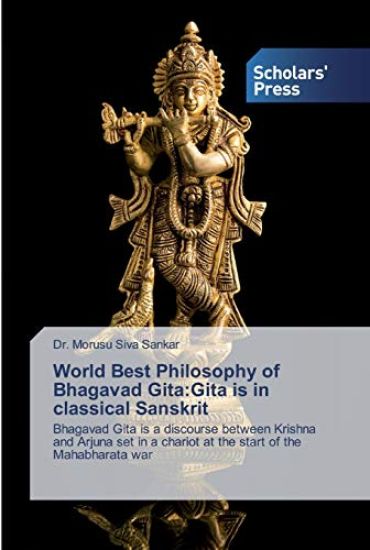
The Gita is set in a narrative framework of a dialogue between Pandava prince Arjuna and his guide and charioteer Krishna. At the start of the Dharma Yudhha (righteous war) between Pandavas and Kauravas, Arjuna is filled with moral dilemma and despair about the violence and death the war will cause. He wonders if he should renounce and seeks Krishna's counsel, whose answers and discourse constitute the Bhagadvad Gita. Krishna counsels Arjuna to "fulfill his Kshatriya (warrior) duty to uphold the Dharma" through "selfless action". The Krishna-Arjuna dialogue cover a broad range of spiritual topics, touching upon ethical dilemmas and philosophical issues that go far beyond the war Arjuna faces. The Bhagavad Gita presents a synthesis of Hindu ideas about dharma, theistic bhakti, and the yogic paths to moksha. The synthesis presents four paths to spirituality - jnana, bhakti, karma, and raja yogas. These incorporate ideas from the Samkhya-Yoga and Vedanta philosophies. Numerous commentaries have been written on the Bhagavad Gita with widely differing views on the essentials.


World Best Philosophy of Bagavath Geetha
Morusu Siva Sankar
LAP Lambert Academic Publishing
2019
pokkari
The name "Krishna" originates from the Sanskrit word Kṛṣṇa, which is primarily an adjective meaning "black", "dark", or "dark blue". The waning moon is called Krishna Paksha, relating to the adjective meaning "darkening". The name is also interpreted sometimes as "all-attractive". As a name of Vishnu, Krishna is listed as the 57th name in the Vishnu Sahasranama. Based on his name, Krishna is often depicted in idols as black- or blue-skinned. Krishna is also known by various other names, epithets, and titles that reflect his many associations and attributes. Among the most common names are Mohan "enchanter"; Govinda "chief herdsman", and Gopala "Protector of the 'Go', which means "Soul" or the cows". Some names for Krishna hold regional importance; Jagannatha, found in Puri Hindu temple, is a popular incarnation in Odisha state and nearby regions of eastern India.
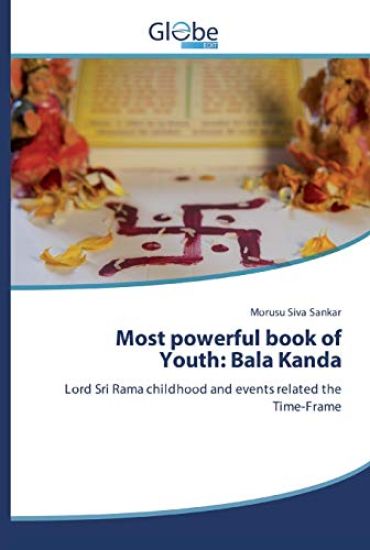

The financial system is a set of institutions, such as banks, insurance companies, and stock exchanges, that permit the exchange of funds. Financial systems exist on firm, regional, and global levels. Borrowers, lenders, and investors exchange current funds to finance projects, either for consumption or productive investments, and to pursue a return on their financial assets. The financial system also includes sets of rules and practices that borrowers and lenders use to decide which projects get financed, who finances projects, and terms of financial deals. Financial markets involve borrowers, lenders, and investors negotiating loans and other transactions. In these markets, the economic good traded on both sides is usually some form of money: current money (cash), claims on future money (credit), or claims on the future income potential or value of real assets (equity). These also include derivative instruments. Derivative instruments, such as commodity futures or stock options, are financial instruments that are dependent on an underlying real or financial asset's performance. In financial markets, these are all traded among borrowers, lenders, and investors.
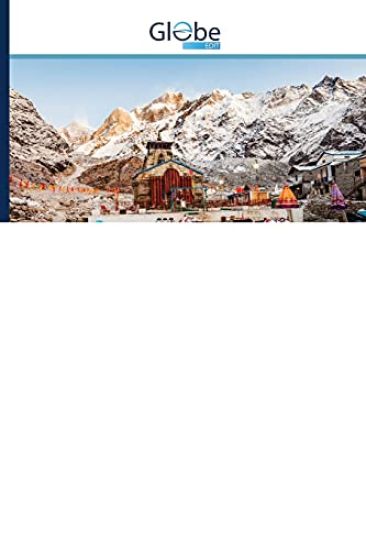
Brahma in Sanskrit are growth, expansion, and creation. In this way, Brahma is recognized as the God of creation. He is attributed to the creation of Brahmanda (entire universe) and all forms of life within it. So, he is also known as the Creator and the Director of the entire universe. It is said that Goddess Saraswati is the wife of Brahma. She is the God of knowledge and wisdom. Brahma is believed to be born from the Kamal (lotus), springing from Vishnu's Navi (navel) as he was laying on the great serpent in the milky ocean. Hence, he is also known as Nabhija (navel born) and Kanja (water born), according to Hindu doctrine. Growing from the lotus of Narayana, Brahma is the name, which creates the realm of the universe. He is a symbol of celestials and divine beings of all kinds of nature. Purusha Suktam of the Rigveda (Hymn 10.90) states that three main bodies of the Universe (Brahma, Vishnu, and Shiva) are indestructible and they are the subjects to creation, preservation, and dissolution of the whole universe. Narayana is the Sanskrit name given in the Upanishad, which means supreme lord. Narayana is the Para Brahma, one who creates unlimited universes.Brahma in Sanskrit are growth, expansion, and creation. In this way, Brahma is recognized as the God of creation. He is attributed to the creation of Brahmanda (entire universe) and all forms of life within it. So, he is also known as the Creator and the Director of the entire universe. It is said that Goddess Saraswati is the wife of Brahma. She is the God of knowledge and wisdom. Brahma is believed to be born from the Kamal (lotus), springing from Vishnu's Navi (navel) as he was laying on the great serpent in the milky ocean. Hence, he is also known as Nabhija (navel born) and Kanja (water born), according to Hindu doctrine. Growing from the lotus of Narayana, Brahma is the name, which creates the realm of the universe. He is a symbol of celestials and divine beings of all kinds of nature. Purusha Suktam of the Rigveda (Hymn 10.90) states that three main bodies of the Universe (Brahma, Vishnu, and Shiva) are indestructible and they are the subjects to creation, preservation, and dissolution of the whole universe. Narayana is the Sanskrit name given in the Upanishad, which means supreme lord. Narayana is the Para Brahma, one who creates unlimited universes.

Merchant Banking is the financial institution committed to the credit union, merger and acquisition services, fundraising, portfolio services, publicity, and new issues, consulting services, promotion of ventures and project funding for large companies, high net worth individuals, and multinationals of corporations throughout the world. The central purpose of the commercial banking industry is to make money, grow and modernize the sector, which essentially represents the country's overall economic growth. Basically, Merchant Banking is the combination of both consultation services and Banking. Merchant Banks mainly work with small businesses or startups that find difficulty in raising funds.Merchant Banking Services in India started with a Reserve Banking License issued in 1967 to the Grindlays bank. In 1983 they were much more popular, when the main market thrived, where the companies began to discuss a new issue. Commercial banking activities are organized and carried out in various ways. Organized as public limited companies and registered as private limited firms, they are organized by commercial banks and foreign finance development.
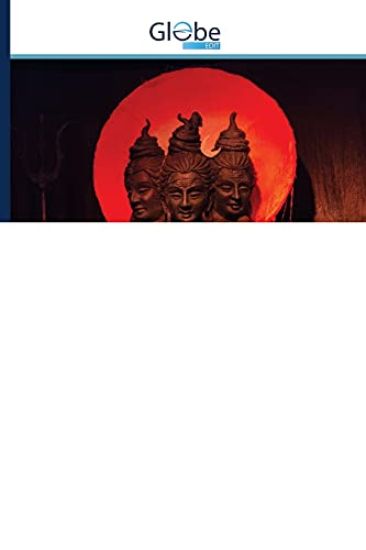
Lord Dattatreya, Dattā or Dattaguru, is a paradigmatic Sannyasi (monk) and one of the lords of Yoga, venerated as a Hindu god. In Maharashtra, Goa, Andhra Pradesh, Telangana, Karnataka, Gujarat, and Madhya Pradesh he is a syncretic deity, considered to be an avatar of the three Hindu gods Brahma, Vishnu and Shiva, collectively known as Trimurti. In other regions, and some versions of texts such as Garuda Purana, Brahma Purana and Sattvata Samhita, he is an avatar of Lord Vishnu. Several Upanishads are dedicated to him, as are the texts of the Vedanta-Yoga tradition in Hinduism. One of the most important texts of Hinduism, namely Avadhuta Gita (literally, "song of the free soul") is attributed to Dattatreya. Over time, Dattatreya has inspired many monastic movements in Shaivism, Vaishnavism and Shaktism, particularly in the Deccan region of India, South India, Gujarat, Madhya Pradesh, Rajasthan and Himalayan regions, where Shiva tradition has been strong. His pursuit of simple life, kindness to all, sharing of his knowledge and the meaning of life during his travels is reverentially mentioned in the poems by Tukaram, a saint-poet of the Bhakti movement.
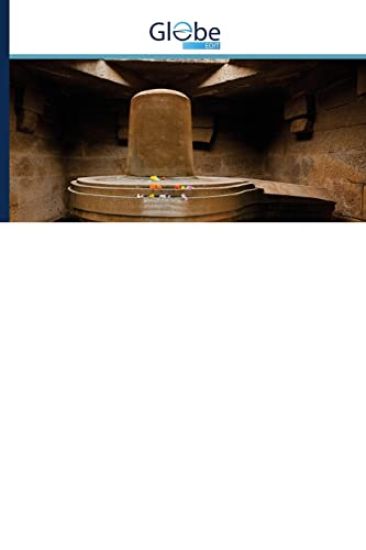
A Jyotirlinga or Jyotirlingam is a devotional representation of the Supreme God Shiva. Jyoti means 'radiance' and lingam the 'Image or Sign' of Shiva; Jyotir Lingam thus means the Radiant Sign of The Almighty Shiva. There are twelve traditional Jyotirlinga shrines in India.According to Śiva Mahāpurāṇa, once Brahma (the god of creation) and Vishnu (the form of God during Preservation) had an argument over supremacy of creation. To settle the debate, Supreme God Shiva pierced the three worlds appearing as a huge Infinite Pillar of Light, the Jyotirlinga, which later cooled into the Holy Mountain Annamalai (on which the Temple of Arunachaleshvara is located). Vishnu and Brahma split their ways to downwards and upwards respectively to find the end of the light in either direction. Brahma lied that he found out the end, while Vishnu conceded his defeat. This lie of Brahma angered Shiva making him curse Brahma that even though he is the creator of the universe he would not be worshipped. The jyotirlinga is the Supreme Siva, partless reality, out of which Shiva appeared in another Form, Lingodbhava.

Entrepreneurship is the creation or extraction of value. With this definition, entrepreneurship is viewed as change, generally entailing risk beyond what is normally encountered in starting a business, which may include other values than simply economic ones. More narrow definitions have described entrepreneurship as the process of designing, launching and running a new business, which is often similar to a small business, or as the "capacity and willingness to develop, organize and manage a business venture along with any of its risks to make a profit." The people who create these businesses are often referred to as entrepreneurs. While definitions of entrepreneurship typically focus on the launching and running of businesses, due to the high risks involved in launching a start-up, a significant proportion of start-up businesses have to close due to "lack of funding, bad business decisions, government policies, an economic crisis, lack of market demand, or a combination of all of these." In the field of economics, the term entrepreneur is used for an entity, which has the ability to translate inventions or technologies into products and services.


El libro más poderoso de la juventud: Bala Kanda
Morusu Siva Sankar
Ediciones Nuestro Conocimiento
2020
nidottu

Le livre le plus puissant de la jeunesse : Bala Kanda
Morusu Siva Sankar
Editions Notre Savoir
2020
nidottu


Najpot¿¿niejsza ksi¿ga m¿odo¿ci: Bala Kanda
Morusu Siva Sankar
Wydawnictwo Nasza Wiedza
2020
nidottu