Kirjojen hintavertailu. Mukana 11 342 296 kirjaa ja 12 kauppaa.

Kirjahaku

Etsi kirjoja tekijän nimen, kirjan nimen tai ISBN:n perusteella.

20 kirjaa tekijältä Moshe Idel

Kabbalah

Kabbalah

Moshe Idel

Yale University Press
1990
pokkari
In this prizewinning new interpretation of Jewish mysticism, Moshe Idel emphasizes the need for a comparative and phenomenological approach to Kabbalah and its position in the history of religion. Idel provides fresh insights into the origins of Jewish mysticism, the relation between mystical and historical experience, and the impact of Jewish mysticism on western civilization.“Idel’s book is studded with major insights, and innovative approaches to the entire history of Judaism, and mastery of it will be essential for all serious students of Jewish thought.”—Arthur Green, New York Times Book Review“Moshe Idel’s original, scholarly, and stimulating study of Kabbalah contains the promise of a masterwork.”—Elie Wiesel“Moshe Idel’s book can help the nonspecialized reader to reconsider the whole of Kabbalistic tradition in comparison with many aspects of contemporary thought.”—Umberto Eco“There can be no dispute about the importance and originality of Idel’s work. Offering a wealth of complementary insights to Gershom Scholem and his school, it will command a great deal of attention and serious discussion.”—Alexander Altmann
Messianic Mystics

Messianic Mystics

Moshe Idel

Yale University Press
2000
pokkari
In this stimulating book, one of the world’s leading scholars of Jewish thought examines the long tradition of Jewish messianism and mystical experience. Moshe Idel calls upon his profound knowledge of ancient and medieval texts and of Jewish, Christian, Islamic, and Eastern sources to uncover new perspectives on the nature and development of Jewish messianism. He shows that, contrary to Gershom Scholem’s view that mysticism and messianism are incompatible religious tendencies, they are in fact closely related spiritual phenomena. Messianism regularly emerges from mystical experiences, Idel contends.Exploring the interplay of Jewish messianism and mysticism from the twelfth through the eighteenth centuries, the book looks closely at pivotal figures and movements, including Abraham Abulafia, Sabbatai Sevi, and hasidism. Idel discerns three types of messianism—theosophical-theurgical, ecstatic, and talismanic—and through these demonstrates that Kabbalah, from the very beginning, was messianically oriented. He counters the common belief that messianism typically arises as a response to such calamities as the expulsion of the Jews from Spain in 1492 and shows that messiahs often gain great popularity in times of political tranquility. Idel also finds that Jewish messianic and mystical experience bears a much greater resemblance to Christian messianism than has been recognized before.
Kabbalah and Eros

Kabbalah and Eros

Moshe Idel

Yale University Press
2005
sidottu
In this book, the world’s foremost scholar of Kabbalah explores the understanding of erotic love in Jewish mystical thought. Encompassing Jewish mystical literatures from those of late antiquity to works of Polish Hasidism, Moshe Idel highlights the diversity of Kabbalistic views on eros and distinguishes between the major forms of eroticism.The author traces the main developments of a religious formula that reflects the union between a masculine divine attribute and a feminine divine attribute, and he asks why such an “erotic formula” was incorporated into the Jewish prayer book. Idel shows how Kabbalistic literature was influenced not only by rabbinic literature but also by Greek thought that helped introduce a wider understanding of eros. Addressing topics ranging from cosmic eros and androgyneity to the affinity between C. J. Jung and Kabbalah to feminist thought, Idel’s deeply learned study will be of consuming interest to scholars of religion, Judaism, and feminism.
Kabbalah in Italy, 1280-1510

Kabbalah in Italy, 1280-1510

Moshe Idel

Yale University Press
2011
sidottu
This sweeping survey of the history of Kabbalah in Italy represents a major contribution from one of the world's foremost Kabbalah scholars. The first to focus attention on a specific center of Kabbalah, Moshe Idel charts the ways that Kabbalistic thought and literature developed in Italy and how its unique geographical situation facilitated the arrival of both Spanish and Byzantine Kabbalah. Idel analyzes the work of three major Kabbalists—Abraham Abulafia, Menahem Recanati, and Yohanan Alemanno—who represent diverse schools of thought: the ecstatic, the theosophical-theurgical, and the astromagical. Directing special attention to the interactions and tensions among these forms of Jewish Kabbalah and the nascent Christian Kabbalah, Idel brings to light the rich history of Kabbalah in Italy and the powerful influence of this important center on the emergence of Christian Kabbalah and European occultism in general.
Absorbing Perfections

Absorbing Perfections

Moshe Idel

Yale University Press
2012
pokkari
In this wide-ranging discussion of Kabbalah—from the mystical trends of medieval Judaism to modern Hasidism—one of the world’s foremost scholars considers different visions of the nature of the sacred text and of the methods to interpret it. Moshe Idel takes as a starting point the fact that the postbiblical Jewish world lost its geographical center with the destruction of the temple and so was left with a textual center, the Holy Book. Idel argues that a text-oriented religion produced language-centered forms of mysticism. Against this background, the author demonstrates how various Jewish mystics amplified the content of the Scriptures so as to include everything: the world, or God, for example. Thus the text becomes a major realm for contemplation, and the interpretation of the text frequently becomes an encounter with the deepest realms of reality. Idel delineates the particular hermeneutics belonging to Jewish mysticism, investigates the progressive filling of the text with secrets and hidden levels of meaning, and considers in detail the various interpretive strategies needed to decodify the arcane dimensions of the text.
Hasidism

Hasidism

Moshe Idel

State University of New York Press
1995
pokkari
Approaches Hasidism as an important stage in Jewish mysticism, rather than as a mere reaction to or result of historical and social forces.
Old Worlds, New Mirrors

Old Worlds, New Mirrors

Moshe Idel

University of Pennsylvania Press
2012
pokkari
There emerged in the nineteenth and twentieth centuries a new Jewish elite, notes Moshe Idel, no longer made up of prophets, priests, kings, or rabbis but of intellectuals and academicians working in secular universities or writing for an audience not defined by any one set of religious beliefs. In Old Worlds, New Mirrors Idel turns his gaze on figures as diverse as Walter Benjamin and Jacques Derrida, Franz Kafka and Franz Rosenzweig, Arnaldo Momigliano and Paul Celan, Abraham Heschel and George Steiner to reflect on their relationships to Judaism in a cosmopolitan, mostly European, context. Idel-himself one of the world's most eminent scholars of Jewish mysticism-focuses in particular on the mystical aspects of his subjects' writings. Avoiding all attempts to discern anything like a single "essence of Judaism" in their works, he nevertheless maintains a sustained effort to illumine especially the Kabbalistic and Hasidic strains of thought these figures would have derived from earlier Jewish sources. Looming large throughout is Gershom Scholem, the thinker who played such a crucial role in establishing the study of Kabbalah as a modern academic discipline and whose influence pervades Idel's own work; indeed, the author observes, much of the book may be seen as a mirror held up to reflect on the broader reception of Scholem's thought.
Vocal Rites and Broken Theologies

Vocal Rites and Broken Theologies

Moshe Idel

Herder Herder
2019
nidottu
Vocal Rites and Broken Theologies deals with the central practices of the founder of Hasidism, Rabbi Israel Ba‘al Shem Tov—known as the Besht—and its sources in the Safedian Kabbalah of Rabbi Moses Corovero. These include the loud pronunciation of the vocables during prayer, study of the Torah and eventually profane speech, as conducive to some form of union with the divine. Many traditions in his name allow the reconstruction of the specific importance of these vocal rituals, including an architecture of the “Hebrew” sounds. From the historical point of view, Moshe Idel shows that some forms of Greek/Hellenistic magic reached the Muslim culture, and were translated into Hebrew in the 13th century, thus enriching Kabbalistic views, especially in Renaissance Kabbalah and in the Safedian Kabbalah of Cordovero and his many followers. They have been adopted in Hasidism by its founder, and were put in relief. Provided the linguistic nature of this practice, it was adapted by popular circles in the mid-18th century, which conjugated it with a variety of theological motifs stemming from different types of theologies, which have been adapted to the vocal practices. This less theological and more ritual linguistic practice is an explanation for the wide adoption of Hasidism by popular circles and its ensuing success.
Saturn's Jews

Saturn's Jews

Moshe Idel

Continuum Publishing Corporation
2011
nidottu
This book provides impressive dossier on the phenomenon of Saturnism, offering a new interpretation of aspects of Judaism, including the emergence of Sabbateanism. This book explores the phenomenon of Saturnism, namely the belief that the planet Saturn, as described by ancient astrology, influenced Jews, reverberating into Jewish life. Taking into consideration the astrological aspects of Judaism, Moshe Idel demonstrates that they were instrumental in the conviction that Sabbatei Tzevei, the mid-17th-century messianic figure in Rabbinic Judaism, was indeed the Messiah. Offering a new approach to the study of this mass-movement known as Sabbateanism, Idel also explores the possible impact of astrology on the understanding of Sabbath as related to sorcery and thus to the concept of the encounter of witches in the late 14th and early 15th century. This book further analyzes aspects of 20th-century scholarship and thought influenced by Saturnism, particularly lingering themes in the works of Gershom Scholem and seminal figure Walter Benjamin. "The Robert and Arlene Kogod Library of Judaic Studies" publishes new research which provides new directions for modern Jewish thought and life and which serves to enhance the quality of dialogue between classical sources and the modern world. This book series reflects the mission of the Shalom Hartman Institute, a pluralistic research and leadership institute, at the forefront of Jewish thought and education. It empowers scholars, rabbis, educators and layleaders to develop new and diverse voices within the tradition, laying foundations for the future of Jewish life in Israel and around the world.
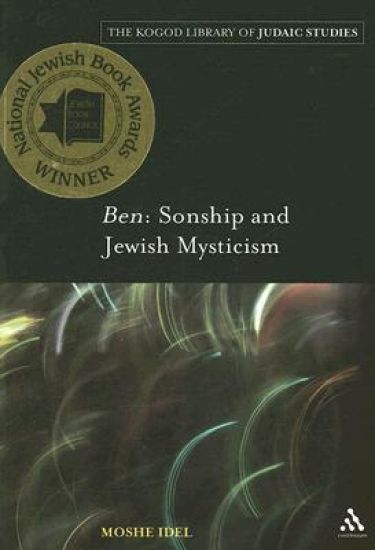
Ben: Sonship and Jewish Mysticism

Ben: Sonship and Jewish Mysticism

Moshe Idel

Continuum International Publishing Group Ltd.
2008
sidottu
While many aspects of Sonship have been analyzed in books on Judaism, this book constitutes the first attempt to address the category of Sonship in Jewish mystical literature as a whole - a category much more vast than ever imagined. Idel's aim is to point out the many instances where Jewish thinkers, especially the mystics among them, resorted to concepts of Sonship and their conceptual backgrounds, and thus to show the existence of a wide variety of understandings of hypostatic sons in Judaism. By this survey, not only can the mystical forms of Sonship in Judaism be better understood, but the concept of Sonship in religion in general can also be enriched. "The Kogod Library of Judaic Studies" aims to publish new research in all areas of Judaic studies with the potential to both enrich and deepen the understanding of Jewish culture and history and to influence and mould Jewish life and philosophy. The series reflects the existence of plural Jewish identities and streams involved in a lively and continuous multi-vocal religious discourse, and in creating a cultural mosaic.
Ben: Sonship and Jewish Mysticism

Ben: Sonship and Jewish Mysticism

Moshe Idel

Continuum International Publishing Group Ltd.
2008
nidottu
While many aspects of Sonship have been analyzed in books on Judaism, this book constitutes the first attempt to address the category of Sonship in Jewish mystical literature as a whole - a category much more vast than ever imagined. Idel's aim is to point out the many instances where Jewish thinkers, especially the mystics among them, resorted to concepts of Sonship and their conceptual backgrounds, and thus to show the existence of a wide variety of understandings of hypostatic sons in Judaism. By this survey, not only can the mystical forms of Sonship in Judaism be better understood, but the concept of Sonship in religion in general can also be enriched. "The Kogod Library of Judaic Studies" aims to publish new research in all areas of Judaic studies with the potential to both enrich and deepen the understanding of Jewish culture and history and to influence and mould Jewish life and philosophy. The series reflects the existence of plural Jewish identities and streams involved in a lively and continuous multi-vocal religious discourse, and in creating a cultural mosaic.
The Mystical Experience in Abraham Abulafia

The Mystical Experience in Abraham Abulafia

Moshe Idel

State University of New York Press
1987
pokkari
The first wide-scale presentation of a major Jewish mystic, the founder of the ecstatic Kabbalah.This book represents the first wide-scale presentation of a major Jewish mystic, the founder of the ecstatic Kabbalah. It includes a description of the techniques employed by his master, including the role of music. There is a discussion of the characteristics of his mystical experience and the erotic imagery by which it was expressed. Based on all the extant manuscript material of Abulafia, this book opens the way to a new understanding of Jewish mysticism. It points to the importance of the ecstatic Kabbalah for the later developments in mystical Judaism.
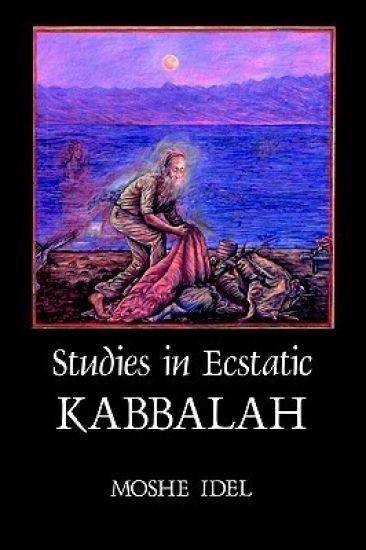
Studies in Ecstatic Kabbalah

Studies in Ecstatic Kabbalah

Moshe Idel

State University of New York Press
1988
pokkari
This book presents important topics regarding the more mystical trend of Kabbalah-the ecstatic Kabbalah. It includes the mystical union, the world of imagination, and concentration as a spiritual technique. The emphasis in the text is on the interaction between the "original" Spanish stage of Kabbalah and Muslim mysticism in the East, mainly in the Galilee. The influence of the Kabbalistic-Sufic synthesis on the later developments of Jewish mysticism is traced, thereby providing a more precise understanding of the history of Kabbalah as an interplay between the theosophical and ecstatic mystical experiences.
Mircea Eliade

Mircea Eliade

Moshe Idel

Peter Lang Publishing Inc
2014
nidottu
Mircea Eliade: From Magic to Myth addresses a series of topics that have been neglected in scholarship. First and foremost, the book looks at the early Romanian background of some of Eliade’s ideas, especially his magical universe, which took on a more mythical nature with his arrival in the West. Other chapters deal with Eliade’s attitude toward Judaism, which is crucial for his phenomenology of religion, and the influences of Kabbalah on his early work. Later chapters address his association with the Romanian extreme right movement known as the Iron Guard and the reverberation of some of the images in the post-war Eliade as well as with the status of Romanian culture in his eyes after World War II. The volume concludes by assessing the impact of Eliade’s personal experiences on the manner in which he presented religion. The book will be useful in classes in the history of religion and the history of Eastern European intellectuals.
Mircea Eliade

Mircea Eliade

Moshe Idel

Peter Lang Publishing Inc
2014
sidottu
Mircea Eliade: From Magic to Myth addresses a series of topics that have been neglected in scholarship. First and foremost, the book looks at the early Romanian background of some of Eliade’s ideas, especially his magical universe, which took on a more mythical nature with his arrival in the West. Other chapters deal with Eliade’s attitude toward Judaism, which is crucial for his phenomenology of religion, and the influences of Kabbalah on his early work. Later chapters address his association with the Romanian extreme right movement known as the Iron Guard and the reverberation of some of the images in the post-war Eliade as well as with the status of Romanian culture in his eyes after World War II. The volume concludes by assessing the impact of Eliade’s personal experiences on the manner in which he presented religion. The book will be useful in classes in the history of religion and the history of Eastern European intellectuals.
Saturn's Jews

Saturn's Jews

Moshe Idel

Continuum Publishing Corporation
2011
sidottu
Tis title provides impressive dossier on the phenomenon of Saturnism, offering a new interpretation of aspects of Judaism, including the emergence of Sabbateanism. This book explores the phenomenon of Saturnism, namely the belief that the planet Saturn, as described by ancient astrology, influenced Jews, reverberating into Jewish life. Taking into consideration the astrological aspects of Judaism, Moshe Idel demonstrates that they were instrumental in the conviction that Sabbatei Tzevei, the mid-17th-century messianic figure in Rabbinic Judaism, was indeed the Messiah. Offering a new approach to the study of this mass-movement known as Sabbateanism, Idel also explores the possible impact of astrology on the understanding of Sabbath as related to sorcery and thus to the concept of the encounter of witches in the late 14th and early 15th century. This book further analyzes aspects of 20th-century scholarship and thought influenced by Saturnism, particularly lingering themes in the works of Gershom Scholem and seminal figure Walter Benjamin. "The Robert and Arlene Kogod Library of Judaic Studies" publishes new research which provides new directions for modern Jewish thought and life and which serves to enhance the quality of dialogue between classical sources and the modern world. This book series reflects the mission of the Shalom Hartman Institute, a pluralistic research and leadership institute, at the forefront of Jewish thought and education. It empowers scholars, rabbis, educators and layleaders to develop new and diverse voices within the tradition, laying foundations for the future of Jewish life in Israel and around the world.
The Privileged Divine Feminine in Kabbalah
This volume addresses the complex topic of the preeminent status of the divine feminine power, to be referred also as Female, within the theosophical structures of many important Kabbalists, Sabbatean believers, and Hasidic masters. This privileged status is part of a much broader vision of the Female as stemming from a very high root within the divine world, then She was emanated and constitutes the tenth, lower divine power, and even in this lower state She is sometime conceived of governing this world and as equal to the divine Male. Finally, She is conceived of as returning to Her original place in special moments, the days of Sabbath, the Jewish Holidays or in the eschatological era. Her special dignity is sometime related to Her being the telos of creation, and as the first entity that emerged in the divine thought, which has been later on generated. In some cases, an uroboric theosophy links the Female Malkhut, directly to the first divine power, Keter. The author points to the possible impact of some of the Kabbalistic discussions on conceptualizations of the feminine in the Renaissance period.
Abraham Abulafia’s Esotericism
This book focuses on Abraham Abulafia's esoteric thought in relation to Maimonides, Maimonideans, and Islamic thought in the line of Leo Strauss' theory of the history of philosophy. A survey of Abulafia's sources leads into an analysis of the esoteric meaning on the famous parable of the three rings, considering also the possible connection between this parable, which Abdulafia inserted into a book dedicated to his student, the 13th century rabbi Nathan the wise, and the Lessing's Play "Nathan the Wise." The book also examines Abulafia's universalistic understanding of the nature of the Bible, the Hebrew language, and the people of Israel (or the Sinaic revelation). The universal aspects of Abulafia’s thought have been put in relief against the more widespread Kabbalistic views which are predominantly particularistic. A number of texts have also been identified here for the first time as authored by Abulafia.
The Privileged Divine Feminine in Kabbalah

The Privileged Divine Feminine in Kabbalah

Moshe Idel

De Gruyter
2020
isokokoinen pokkari
This volume addresses the complex topic of the preeminent status of the divine feminine power, to be referred also as Female, within the theosophical structures of many important Kabbalists, Sabbatean believers, and Hasidic masters. This privileged status is part of a much broader vision of the Female as stemming from a very high root within the divine world, then She was emanated and constitutes the tenth, lower divine power, and even in this lower state She is sometime conceived of governing this world and as equal to the divine Male. Finally, She is conceived of as returning to Her original place in special moments, the days of Sabbath, the Jewish Holidays or in the eschatological era. Her special dignity is sometime related to Her being the telos of creation, and as the first entity that emerged in the divine thought, which has been later on generated. In some cases, an uroboric theosophy links the Female Malkhut, directly to the first divine power, Keter. The author points to the possible impact of some of the Kabbalistic discussions on conceptualizations of the feminine in the Renaissance period.
Ascensions on High in Jewish Mysticism

Ascensions on High in Jewish Mysticism

Moshe Idel

Central European University Press
2005
nidottu
Ascensions on high took many forms in Jewish mysticism and they permeated most of its history from its inception until Hasidism. The book surveys the various categories, with an emphasis on the architectural images of the ascent, like the resort to images of pillars, lines, and ladders. After surveying the variety of scholarly approaches to religion, the author also offers what he proposes as an eclectic approach, and a perspectivist one. The latter recommends to examine religious phenomena from a variety of perspectives. The author investigates the specific issue of the pillar in Jewish mysticism by comparing it to the archaic resort to pillars recurring in rural societies. Given the fact that the ascent of the soul and pillars constituted the concerns of two main Romanian scholars of religion, Ioan P. Culianu and Mircea Eliade, Idel resorts to their views, and in the Concluding Remarks analyzes the emergence of Eliade's vision of Judaism on the basis of neglected sources.