Kirjojen hintavertailu. Mukana 11 380 877 kirjaa ja 12 kauppaa.

Kirjahaku

Etsi kirjoja tekijän nimen, kirjan nimen tai ISBN:n perusteella.

9 kirjaa tekijältä Motti Inbari

Ruth Blau

Ruth Blau

Motti Inbari

INDIANA UNIVERSITY PRESS
2023
sidottu
Ruth Blau: A Life of Paradox and Purpose explores the life of a curious, if not mysterious, character in modern Jewish history. Born a French Catholic, Ruth Blau (Ben-David) (1920–2000) lived a constantly twisting life. During World War II, Blau was active in the French Resistance, and under their command, she joined the Gestapo as a double agent. After the war, she studied philosophy as a PhD candidate at the Sorbonne during the 1950s. After converting to Judaism and moving to Israel in 1960, Blau was involved in concealing Yossele Schumacher, a seven-year-old child, as part of a militant conflict between ultra-Orthodox and secular Jews in Israel. In 1965, despite a huge scandal, she married Amram Blau, head of the anti-Zionist ultra-Orthodox Neturei Karta. After the death of her husband in 1973, Blau took upon herself to travel to Arab countries to help the Jewish communities in distress in Lebanon and Iran, where she met Yasser Arafat, head of the Palestinian Liberation Organization, and his deputy Abu Jihad. But the most significant connections she made were in Iran. In 1979, she met with the leader of the Iranian revolution, Ayatollah Khomeini. Ruth Blau: A Life of Paradox and Purpose represents the first full-length biography of this remarkable woman. Drawing on a trove of archival materials and interviews with those who knew Ruth, Motti Inbari offers a complex, multifaceted portrait of a woman undertaking a remarkable and influential journey through modern European and Middle Eastern history.
Ruth Blau

Ruth Blau

Motti Inbari

INDIANA UNIVERSITY PRESS
2023
pokkari
Ruth Blau: A Life of Paradox and Purpose explores the life of a curious, if not mysterious, character in modern Jewish history. Born a French Catholic, Ruth Blau (Ben-David) (1920–2000) lived a constantly twisting life. During World War II, Blau was active in the French Resistance, and under their command, she joined the Gestapo as a double agent. After the war, she studied philosophy as a PhD candidate at the Sorbonne during the 1950s. After converting to Judaism and moving to Israel in 1960, Blau was involved in concealing Yossele Schumacher, a seven-year-old child, as part of a militant conflict between ultra-Orthodox and secular Jews in Israel. In 1965, despite a huge scandal, she married Amram Blau, head of the anti-Zionist ultra-Orthodox Neturei Karta. After the death of her husband in 1973, Blau took upon herself to travel to Arab countries to help the Jewish communities in distress in Lebanon and Iran, where she met Yasser Arafat, head of the Palestinian Liberation Organization, and his deputy Abu Jihad. But the most significant connections she made were in Iran. In 1979, she met with the leader of the Iranian revolution, Ayatollah Khomeini. Ruth Blau: A Life of Paradox and Purpose represents the first full-length biography of this remarkable woman. Drawing on a trove of archival materials and interviews with those who knew Ruth, Motti Inbari offers a complex, multifaceted portrait of a woman undertaking a remarkable and influential journey through modern European and Middle Eastern history.
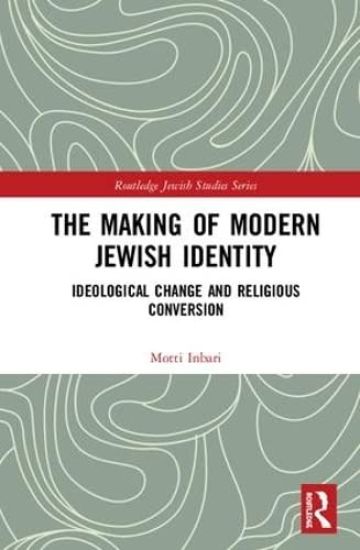
The Making of Modern Jewish Identity
This volume explores the processes that led several modern Jewish leaders – rabbis, politicians, and intellectuals – to make radical changes to their ideology regarding Zionism, Socialism, and Orthodoxy. Comparing their ideological change to acts of conversion, the study examines the philosophical, sociological, and psychological path of the leaders’ transformation. The individuals examined are novelist Arthur Koestler, who transformed from a devout Communist to an anti-Communist crusader following the atrocities of the Stalin regime; Norman Podhoretz, editor of Commentary magazine, who moved from the New Left to neoconservative, disillusioned by US liberal politics; Yissachar Shlomo Teichtel, who transformed from an ultra-Orthodox anti-Zionist Hungarian rabbi to messianic Religious-Zionist due to the events of the Holocaust; Ruth Ben-David, who converted to Judaism after the Second World War in France because of her sympathy with Zionism, eventually becoming a radical anti-Israeli advocate; Haim Herman Cohn, Israeli Supreme Court justice, who grew up as a non-Zionist Orthodox Jew in Germany, later renouncing his belief in God due to the events of the Holocaust; and Avraham (Avrum) Burg, prominent centrist Israeli politician who served as the Speaker of the Knesset and head of the Jewish Agency, who later became a post-Zionist. Comparing aspects of modern politics to religion, the book will be of interest to researchers in a broad range of areas including modern Jewish studies, sociology of religion, and political science.
The Making of Modern Jewish Identity
This volume explores the processes that led several modern Jewish leaders – rabbis, politicians, and intellectuals – to make radical changes to their ideology regarding Zionism, Socialism, and Orthodoxy. Comparing their ideological change to acts of conversion, the study examines the philosophical, sociological, and psychological path of the leaders’ transformation. The individuals examined are novelist Arthur Koestler, who transformed from a devout Communist to an anti-Communist crusader following the atrocities of the Stalin regime; Norman Podhoretz, editor of Commentary magazine, who moved from the New Left to neoconservative, disillusioned by US liberal politics; Yissachar Shlomo Teichtel, who transformed from an ultra-Orthodox anti-Zionist Hungarian rabbi to messianic Religious-Zionist due to the events of the Holocaust; Ruth Ben-David, who converted to Judaism after the Second World War in France because of her sympathy with Zionism, eventually becoming a radical anti-Israeli advocate; Haim Herman Cohn, Israeli Supreme Court justice, who grew up as a non-Zionist Orthodox Jew in Germany, later renouncing his belief in God due to the events of the Holocaust; and Avraham (Avrum) Burg, prominent centrist Israeli politician who served as the Speaker of the Knesset and head of the Jewish Agency, who later became a post-Zionist. Comparing aspects of modern politics to religion, the book will be of interest to researchers in a broad range of areas including modern Jewish studies, sociology of religion, and political science.
Messianic Religious Zionism Confronts Israeli Territorial Compromises
The Six Day War in 1967 profoundly influenced how an increasing number of religious Zionists saw Israeli victory as the manifestation of God's desire to redeem God's people. Thousands of religious Israelis joined the Gush Emunim movement in 1974 to create settlements in territories occupied in the war. However, over time, the Israeli government decided to return territory to Palestinian or Arab control. This was perceived among religious Zionist circles as a violation of God's order. The peak of this process came with the Disengagement Plan in 2005, in which Israel demolished all the settlements in the Gaza Strip and four settlements in the West Bank. This process raised difficult theological questions among religious Zionists. This book explores the internal mechanism applied by a group of religious Zionist rabbis in response to their profound disillusionment with the state, reflected in an increase in religious radicalization due to the need to cope with the feelings of religious and messianic failure.
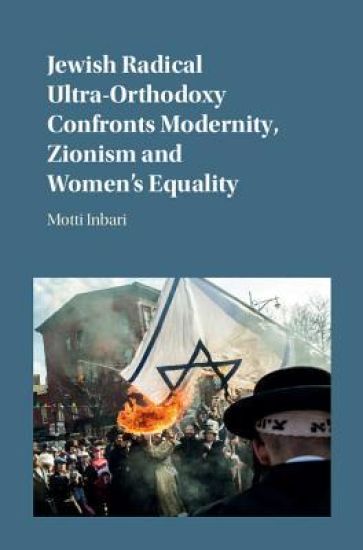
Jewish Radical Ultra-Orthodoxy Confronts Modernity, Zionism and Women's Equality
In Jewish Radical Ultra-Orthodoxy Confronts Modernity, Zionism and Women's Equality, Motti Inbari undertakes a study of the culture and leadership of Jewish radical ultra-Orthodoxy in Hungary, Jerusalem and New York. He reviews the history, ideology and gender relations of prominent ultra-Orthodox leaders Amram Blau (1894–1974), founder of the anti-Zionist Jerusalemite Neturei Karta, and Yoel Teitelbaum (1887–1979), head of the Satmar Hasidic movement in New York. Focussing on the rabbis' biographies, the author analyzes their enclave building methods, their attitude to women and modesty, and their eschatological perspectives. The research is based on newly discovered archival materials, covering many unique and remarkable findings. The author concludes with a discussion of contemporary trends in Jewish religious radicalization. Inbari highlights the resilience of the current generations' sense of community cohesion and their capacity to adapt and overcome challenges such as rehabilitation into potentially hostile secular societies.
Jewish Radical Ultra-Orthodoxy Confronts Modernity, Zionism and Women's Equality
In Jewish Radical Ultra-Orthodoxy Confronts Modernity, Zionism and Women's Equality, Motti Inbari undertakes a study of the culture and leadership of Jewish radical ultra-Orthodoxy in Hungary, Jerusalem and New York. He reviews the history, ideology and gender relations of prominent ultra-Orthodox leaders Amram Blau (1894–1974), founder of the anti-Zionist Jerusalemite Neturei Karta, and Yoel Teitelbaum (1887–1979), head of the Satmar Hasidic movement in New York. Focussing on the rabbis' biographies, the author analyzes their enclave building methods, their attitude to women and modesty, and their eschatological perspectives. The research is based on newly discovered archival materials, covering many unique and remarkable findings. The author concludes with a discussion of contemporary trends in Jewish religious radicalization. Inbari highlights the resilience of the current generations' sense of community cohesion and their capacity to adapt and overcome challenges such as rehabilitation into potentially hostile secular societies.
Messianic Religious Zionism Confronts Israeli Territorial Compromises
The Six Day War in 1967 profoundly influenced how an increasing number of religious Zionists saw Israeli victory as the manifestation of God's desire to redeem God's people. Thousands of religious Israelis joined the Gush Emunim movement in 1974 to create settlements in territories occupied in the war. However, over time, the Israeli government decided to return territory to Palestinian or Arab control. This was perceived among religious Zionist circles as a violation of God's order. The peak of this process came with the Disengagement Plan in 2005, in which Israel demolished all the settlements in the Gaza Strip and four settlements in the West Bank. This process raised difficult theological questions among religious Zionists. This book explores the internal mechanism applied by a group of religious Zionist rabbis in response to their profound disillusionment with the state, reflected in an increase in religious radicalization due to the need to cope with the feelings of religious and messianic failure.
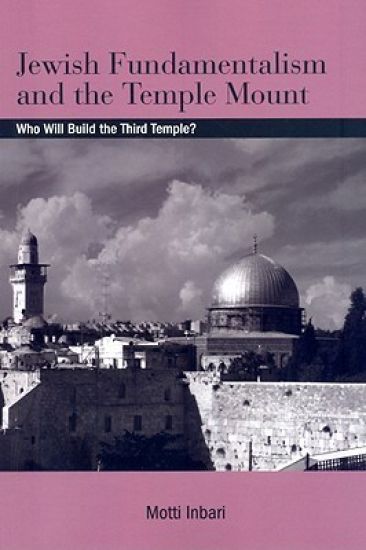
Jewish Fundamentalism and the Temple Mount

Jewish Fundamentalism and the Temple Mount

Motti Inbari

State University of New York Press
2009
pokkari
Examines radical and messianic movements in Israel seeking to rebuild the Third Temple in Jerusalem.The Temple Mount, located in Jerusalem, is the most sacred site in Judaism and the third-most sacred site in Islam, after Mecca and Medina in Saudi Arabia. The sacred nature of the site for both religions has made it one of the focal points of the Arab-Israeli conflict. Jewish Fundamentalism and the Temple Mount is an original and provocative study of the theological roots and historical circumstances that have given rise to the movement of the Temple Builders. Motti Inbari points to the Six Day War in 1967 as the watershed event: the Israeli victory in the war resurrected and intensified Temple-oriented messianic beliefs. Initially confined to relatively limited circles, more recent "land for peace" negotiations between Israel and its Arab neighbors have created theological shock waves, enabling some of the ideas of Temple Mount activists to gain wider public acceptance. Inbari also examines cooperation between Third Temple groups in Israel and fundamentalist Christian circles in the United States, and explains how such cooperation is possible and in what ways it is manifested.