Kirjojen hintavertailu. Mukana 11 627 220 kirjaa ja 12 kauppaa.

Kirjahaku

Etsi kirjoja tekijän nimen, kirjan nimen tai ISBN:n perusteella.

31 kirjaa tekijältä Muhammad Iqbal

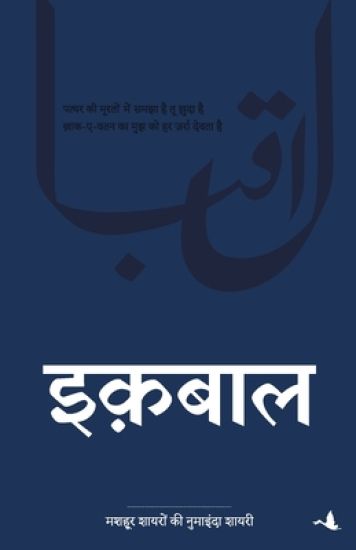
Mashhoor Shayaron kee Pratinidhi Shayari Muhammad Iqbal

Mashhoor Shayaron kee Pratinidhi Shayari Muhammad Iqbal

Muhammad Iqbal

Prabhakar Prakashan Private Limited
2022
pokkari
आता है याद मुझको गुजरा हुआ ज़माना वो बाग की बहारें वो सब का चहचहाना आजादियाँ कहाँ वो अब अपने घोंसले की अपनी खुशी से आना अपनी खुशी से जाना इकबाल युग निर्माता शायर थे। उनकी शायरी एक विचार के खास निज़ाम से रोशनी ग्रहण करती है। इक़बाल आदमी की महानता के अलमबरदार थे और वो किसी बख्शी हुई जन्नत की बजाय अपने खून-ए-जिगर से स्वयं अपनी जन्नत बनाने की प्रक्रिया को अधिक संभावित और अधिक जीवनदायिनी समझते थे। इसके लिए उसका उपाय तजवीज करते हुए उन्होंने कहा था, "पूरब के राष्ट्रों को ये महसूस कर लेना चाहिए कि ज़िन्दगी अपनी हवेली में किसी तरह का इन्किलाब नहीं पैदा कर सकती जब तक उसकी अंदरूनी गहराईयों में इन्किलाब न पैदा हो और कोई नई दुनिया एक बाहरी अस्तित्व नहीं हासिल कर सकती जब तक उसका वजूद इंसानों के ज़मीर में रूपायित न हो।"" इकबाल की शायरी मूल रूप से सक्रियता व कर्म और निरंतर संघर्ष को बयाँ करती है। यहाँ तक कि उनके यहाँ कभी-कभी ये संघर्ष उद्देश्य प्राप्ति के माध्यम की बजाय खुद मकसद बनती नज़र आती है। - इसी किताब से
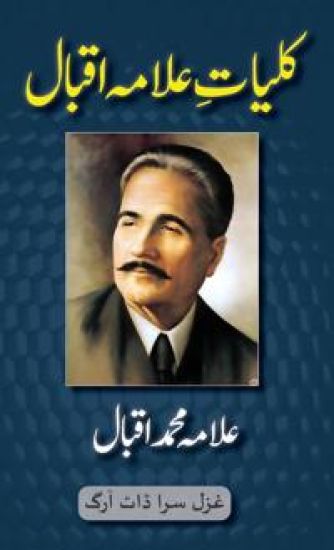
Kulliyat-e-Allama Iqbal

Kulliyat-e-Allama Iqbal

Muhammad Iqbal

Ghazal Sara Dot Org
2022
pokkari
This collection contains all the four books by Sir Allama Mohammad Iqbal.Sir Muhammad Iqbal's The Call of the Marching Bell (بانگِ درا, bang-e-dara), his first collection of Urdu poetry, was published in 1924. It was written in three distinct phases of his life. The poems he wrote up to 1905-the year he left for England-reflect patriotism and the imagery of nature, including the Urdu language patriotic "Saare Jahan se Accha", and "Tarana-e-Milli" ("The Song of the Community"). The second set of poems date from 1905 to 1908, when Iqbal studied in Europe, and dwell upon the nature of European society, which he emphasized had lost spiritual and religious values. This inspired Iqbal to write poems on the historical and cultural heritage of Islam and the Muslim community, with a global perspective. Iqbal urges the entire Muslim community, addressed as the Ummah, to define personal, social and political existence by the values and teachings of Islam.Iqbal's works were in Persian for most of his career, but after 1930 his works were mainly in Urdu. His works in this period were often specifically directed at the Muslim masses of India, with an even stronger emphasis on Islam and Muslim spiritual and political reawakening. Published in 1935, Bal-e-Jibril بالِ جبریل (Wings of Gabriel) is considered by many critics as his finest Urdu poetry and was inspired by his visit to Spain, where he visited the monuments and legacy of the kingdom of the Moors. It consists of ghazals, poems, quatrains and epigrams and carries a strong sense of religious passion.Zarb-i-Kalim ضربِ کلیم (or The Rod of Moses) is another philosophical poetry book of Allama Iqbal in Urdu, it was published in 1936, two years before his death. In which he described as his political manifesto. It was published with the subtitle "A Declaration of War Against the Present Times. Muhammad Iqbal argues that modern problems are due to the godlessness, materialism, and injustice of modern civilization, which feeds on the subjugation and exploitation of weak nations, especially the Indian Muslims.Iqbal's final work was Armughan-e-Hijaz ارمغانِ حجاز (The Gift of Hijaz), published posthumously in 1938. The first part contains quatrains in Persian, and the second part contains some poems and epigrams in Urdu. The Persian quatrains convey the impression that the poet is travelling through the Hijaz in his imagination. The profundity of ideas and intensity of passion are the salient features of these short poems
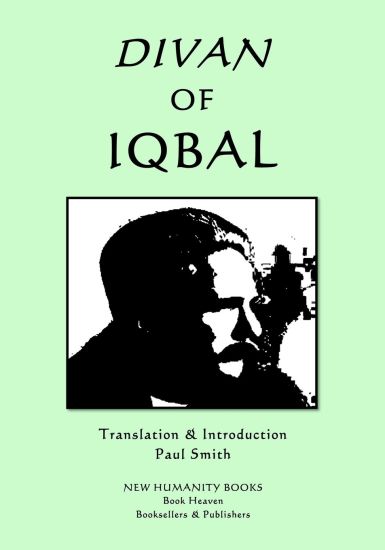
Divan of Iqbal

Divan of Iqbal

Muhammad Iqbal

Createspace Independent Publishing Platform
2018
nidottu
DIVAN OF IQBAL Translation & Introduction Paul Smith Muhammad Iqbal (1873-1938) was born in Sialkot, Punjab. He graduated from Government College, Lahore with a master's degree in philosophy. He taught there while he established his reputation as an Urdu poet. During this period his poetry expressed an ardent Indian nationalism, but a marked change came over his views when he was studying for his doctorate at Cambridge, visiting German universities and qualifying as a barrister. The philosophies of Nietzsche and Bergson influenced him and he became critical of Western civilization that he regarded as decadent. He turned to Islam and Sufism for inspiration and rejected nationalism as a disease of the West. These ideas found expression in his long poems written in Persian, presumably to gain his ideas an audience in the Moslem world outside India. Becoming convinced that Muslims were in danger from the Hindu majority if India should become independent, he gave his support to Jinnah as the leader of India's Muslims. In his final years he returned to Urdu as his medium with ghazals inspired by his on-and-off Sufism. Here is a large collection of his ruba'is, ghazals, nazms, qit'as, Masnavis & a qasida in English in the correct rhyme-structure and meaning. Introduction on his Life, Times & Poetry and Poetic Forms he wrote in. Large Format, 7" x 10" 251 pages. COMMENTS ON PAUL SMITH'S TRANSLATION OF HAFIZ'S 'DIVAN'."It is not a joke... the English version of ALL the ghazals of Hafiz is a great feat... I am astonished. " Dr. Mir Mohammad Taghavi (Dr. of Literature) Tehran."Superb translations. 99% Hafiz 1% Paul Smith." Ali Akbar Shapurzman, translator from English into Persian, knower of Hafiz's Divan off by heart."Smith has probably put together the greatest collection of literary facts and history concerning Hafiz." Daniel Ladinsky (Penguin Books author). Paul Smith (b. 1945) is a poet, author and translator of over 150 books of Sufi poets of the Persian, Arabic, Urdu, Turkish, Pashtu and other languages... including Hafiz, Sadi, Nizami, Rumi, 'Attar, Sana'i, Jahan Khatun, Obeyd Zakani, Mu'in, Amir Khusrau, Nesimi, Kabir, Anvari, Ansari, Jami, Omar Khayyam, Rudaki, Yunus Emre, Mahsati, Lalla Ded, Bulleh Shah, Shah Latif, Makhfi, Seemab, Jigar, Abu Nuwas, Ibn al-Farid, Ibn 'Arabi and many others, and his own poetry, fiction, plays, biographies, children's books and 12 screenplays amazon.com/author/smithpa
Iqbal

Iqbal

Muhammad Iqbal

SANAGE PUBLISHING HOUSE LLP
2022
pokkari
A finest collection of Poems by Muhammad Iqbal having 27 Poems such as "A Cow and a Goat", "A Mountain and a Squirrel", "Mirza Ghalib", "Sympathy", "The Candle", "The Cloud on the Mountain", "The Intellect and the Heart", "The Painful Wail", "The Withered Rose", "A Longing", "A Spider and A Fly", "Jawab-e-Shikwa (Response to the Complaint)", "Pathos of Love", "The Age of Infancy", "The Candle and The Moth", "The Colorful Rose", "The Interrogation Of The Dead", "The Sun", "A Mother's Dream", "Shikwaa (The Complaint)", "The Bird's Complaint", "The Child's Invocation", "The Crescent", "The Morning Sun", "The Tomb-stone of Saiyyid", "The Himalayas" & "Said The Coal To A Diamond".
Javid-Nama (RLE Iran B)

Javid-Nama (RLE Iran B)

Muhammad Iqbal

Routledge
2011
sidottu
Sir Muhammad Iqbal (1873-1938) was not only amongst the leading political figures of his time, but regarded by many as the spiritual father of Pakistan and a great champion of the reform movement of modern Islam. He was also a poet, in both Urdu and Persian. The recurrent theme of his poems is the infinite potentiality of man, as partner with God in shaping the destiny of the universe. As an ardent Muslim, Iqbal saw the realization of mankind’s future in a union of Islamic peoples, unfettered by the bonds of separate nationhood, fully liberated from the chains of imperial domination. The Javid-nama, commonly acknowledged as his greatest work, develops this theme within the frame-work of the ‘Ascension’ story. In imitation of the Prophet of Islam, the poet soars through the spheres, encountering on his heavenly journey many great figures of history with whom he converses. The resemblance to Dante’s Divine Comedy is obvious.
The Secrets of the Self: A Philosophical Poem

The Secrets of the Self: A Philosophical Poem

Muhammad Iqbal

Literary Licensing, LLC
2013
sidottu
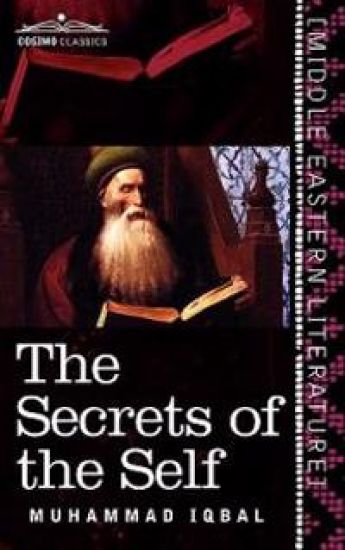
""The Secrets of the Self"" is a philosophical poem written by Muhammad Iqbal, a renowned philosopher and poet from South Asia. The book is a reflection on the nature of the self and its relationship with the divine. The poem is divided into two parts, each containing several sections. In the first part, Iqbal explores the nature of the self, its limitations, and its potential for growth and transformation. He argues that the self is not a fixed entity but rather a dynamic and evolving process that is shaped by both internal and external factors.In the second part of the poem, Iqbal delves into the relationship between the self and the divine. He argues that the self is not separate from the divine but rather a manifestation of it. He explores the idea of the self as a mirror reflecting the divine and the importance of spiritual practice in achieving a deeper understanding of this relationship.Throughout the poem, Iqbal draws on a variety of philosophical and mystical traditions, including Sufism, Vedanta, and Western philosophy, to explore the nature of the self and its relationship with the divine. The language of the poem is rich and evocative, with vivid imagery and powerful metaphors that bring the ideas to life. Overall, ""The Secrets of the Self"" is a profound and thought-provoking work that offers insights into the nature of the self, the divine, and the relationship between the two.This is a new release of the original 1944 edition.This scarce antiquarian book is a facsimile reprint of the old original and may contain some imperfections such as library marks and notations. Because we believe this work is culturally important, we have made it available as part of our commitment for protecting, preserving, and promoting the world's literature in affordable, high quality, modern editions, that are true to their original work.
The Development of Metaphysics in Persia

The Development of Metaphysics in Persia

Muhammad Iqbal

Createspace Independent Publishing Platform
2016
nidottu
The Development of Metaphysics in Persia is the book form of Muhammad Iqbal's PhD thesis in philosophy at the University of Munich submitted in 1908 and published in the same year. It traces the development of metaphysics in Persia from the time of Zoroaster to the advent of the Bah ' Faith.
Zarb-I-Kalim ( Urdu Edition )

Zarb-I-Kalim ( Urdu Edition )

Muhammad Iqbal

Createspace Independent Publishing Platform
2018
nidottu
Zarb-i-Kalim (or The Rod of Moses) is a philosophical poetry book of Allama Iqbal in Urdu, a poet-philosopher of the Indian subcontinent. It was published in 1936, two years before his death. This is third collection of Allama Sir Muhammad Iqbal's poetry, which described as his political manifesto. It was published with the subtitle "A Declaration of War Against the Present Times." Muhammad Iqbal who also known as "Poet of the East" argues that modern problems are due to the godlessness, materialism and injustice of modern civilisation, which feeds on the subjugation and exploitation of weak nations, especially the Indian Muslims.
Bal-I-Jibril ( Urdu Edition )

Bal-I-Jibril ( Urdu Edition )

Muhammad Iqbal

Createspace Independent Publishing Platform
2018
nidottu
Bal-i-Jibril ( Gabriel's Wing; published in Urdu, 1935) was a philosophical poetry book of Allama Iqbal, the great South Asian poet-philosopher, and the national poet of Pakistan.Some of the verses had been written when Iqbal visited Britain, Italy, Egypt, Palestine, France, Spain and Afghanistan, including one of Iqbal's best known poems The Mosque of Cordoba. The work contains 15 ghazals addressed to God and 61 ghazals and 22 quatrains dealing the ego, faith, love, knowledge, the intellect and freedom. The poet recalls the past glory of Muslims as he deals with contemporary political problems.
Bang-E-Dara ( Urdu Edition )

Bang-E-Dara ( Urdu Edition )

Muhammad Iqbal

Createspace Independent Publishing Platform
2018
nidottu
Bang-e-Dara (The Call of the Marching Bell) published in Urdu in 1924, was the first Urdu philosophical poetry book by Allama Iqbal, one of the great poet-philosophers of the Indian subcontinent
Asrar-I-Khudi ( Persian Edition )

Asrar-I-Khudi ( Persian Edition )

Muhammad Iqbal

Createspace Independent Publishing Platform
2018
nidottu
Asrar-i-Khudi (The Secrets of the Self; published in Persian, (1915) was the first philosophical poetry book of Allama Iqbal, the great poet-philosopher of Pakistan. This book deals mainly with the individual, while his second book Rumuz-i-Bekhudi discusses the interaction between the individual and society.In 1915, he published his first collection of poetry, the Asrar-e-Khudi (Secrets of the Self) in Persian. The poems emphasise the spirit and self from a religious, spiritual perspective. Many critics have called this Iqbal's finest poetic work.
Armaghan-I-Hijaz ( Urdu Edition )

Armaghan-I-Hijaz ( Urdu Edition )

Muhammad Iqbal

Createspace Independent Publishing Platform
2018
nidottu
Armaghan-i-Hijaz (Gift from Hijaz; published in Persian, 1938) was a philosophical poetry book of Allama Iqbal, the great poet-philosopher of Islam. This work, published a few months after the poet's death, is a fairly small volume containing verses in both Persian and Urdu. It is incomplete, although this is not readily apparent to the reader; for Iqbal left some gaps in the book which he intended to fill when he made the pilgrimage to Mecca. The title means "Gift from the Hijaz." He had long wished to undertake the journey to the Arabian Peninsula to perform the Hajj and to visit the tomb of Muhammad, but was prevented from doing so by continuous illness during the last years of his life. Iqbal began composing the Armaghan as a gift to take to the Hijaz, intending to publish it on his return to India as a "Gift from the Hijaz" to his countrymen.