Kirjojen hintavertailu. Mukana 12 080 907 kirjaa ja 12 kauppaa.

Kirjahaku

Etsi kirjoja tekijän nimen, kirjan nimen tai ISBN:n perusteella.

6 kirjaa tekijältä Muhammad Qasim Zaman

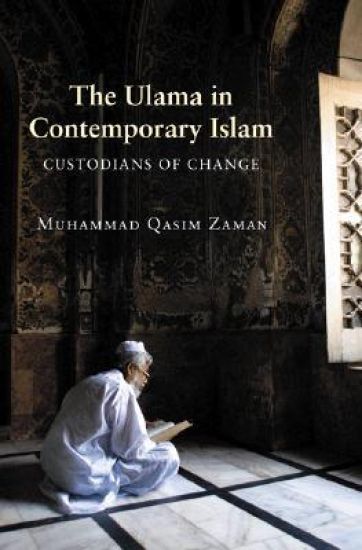
The Ulama in Contemporary Islam

The Ulama in Contemporary Islam

Muhammad Qasim Zaman

Princeton University Press
2007
pokkari
From the cleric-led Iranian revolution to the rise of the Taliban in Afghanistan, many people have been surprised by what they see as the modern reemergence of an antimodern phenomenon. This book helps account for the increasingly visible public role of traditionally educated Muslim religious scholars (the 'ulama) across contemporary Muslim societies. Muhammad Qasim Zaman describes the transformations the centuries-old culture and tradition of the 'ulama have undergone in the modern era--transformations that underlie the new religious and political activism of these scholars. In doing so, it provides a new foundation for the comparative study of Islam, politics, and religious change in the contemporary world. While focusing primarily on Pakistan, Zaman takes a broad approach that considers the Taliban and the 'ulama of Iran, Egypt, Saudi Arabia, India, and the southern Philippines. He shows how their religious and political discourses have evolved in often unexpected but mutually reinforcing ways to redefine and enlarge the roles the 'ulama play in society. Their discourses are informed by a longstanding religious tradition, of which they see themselves as the custodians. But these discourses are equally shaped by--and contribute in significant ways to--contemporary debates in the Muslim public sphere. This book offers the first sustained comparative perspective on the 'ulama and their increasingly crucial religious and political activism. It shows how issues of religious authority are debated in contemporary Islam, how Islamic law and tradition are continuously negotiated in a rapidly changing world, and how the 'ulama both react to and shape larger Islamic social trends. Introducing previously unexamined facets of religious and political thought in modern Islam, it clarifies the complex processes of religious change unfolding in the contemporary Muslim world and goes a long way toward explaining their vast social and political ramifications.
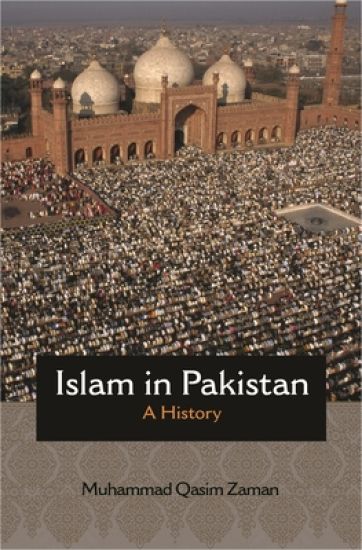
Islam in Pakistan

Islam in Pakistan

Muhammad Qasim Zaman

Princeton University Press
2018
sidottu
The first book to explore the modern history of Islam in South AsiaThe first modern state to be founded in the name of Islam, Pakistan was the largest Muslim country in the world at the time of its establishment in 1947. Today it is the second-most populous, after Indonesia. Islam in Pakistan is the first comprehensive book to explore Islam's evolution in this region over the past century and a half, from the British colonial era to the present day. Muhammad Qasim Zaman presents a rich historical account of this major Muslim nation, insights into the rise and gradual decline of Islamic modernist thought in the South Asian region, and an understanding of how Islam has fared in the contemporary world. Much attention has been given to Pakistan's role in sustaining the Afghan struggle against the Soviet occupation in the 1980s, in the growth of the Taliban in the 1990s, and in the War on Terror after 9/11. But as Zaman shows, the nation's significance in matters relating to Islam has much deeper roots. Since the late nineteenth century, South Asia has witnessed important initiatives toward rethinking core Islamic texts and traditions in the interest of their compatibility with the imperatives of modern life. Traditionalist scholars and their institutions, too, have had a prominent presence in the region, as have Islamism and Sufism. Pakistan did not merely inherit these and other aspects of Islam. Rather, it has been and remains a site of intense contestation over Islam's public place, meaning, and interpretation. Examining how facets of Islam have been pivotal in Pakistani history, Islam in Pakistan offers sweeping perspectives on what constitutes an Islamic state.
Islam in Pakistan

Islam in Pakistan

Muhammad Qasim Zaman

Princeton University Press
2020
pokkari
The first book to explore the modern history of Islam in South AsiaThe first modern state to be founded in the name of Islam, Pakistan was the largest Muslim country in the world at the time of its establishment in 1947. Today it is the second-most populous, after Indonesia. Islam in Pakistan is the first comprehensive book to explore Islam's evolution in this region over the past century and a half, from the British colonial era to the present day. Muhammad Qasim Zaman presents a rich historical account of this major Muslim nation, insights into the rise and gradual decline of Islamic modernist thought in the South Asian region, and an understanding of how Islam has fared in the contemporary world. Much attention has been given to Pakistan's role in sustaining the Afghan struggle against the Soviet occupation in the 1980s, in the growth of the Taliban in the 1990s, and in the War on Terror after 9/11. But as Zaman shows, the nation's significance in matters relating to Islam has much deeper roots. Since the late nineteenth century, South Asia has witnessed important initiatives toward rethinking core Islamic texts and traditions in the interest of their compatibility with the imperatives of modern life. Traditionalist scholars and their institutions, too, have had a prominent presence in the region, as have Islamism and Sufism. Pakistan did not merely inherit these and other aspects of Islam. Rather, it has been and remains a site of intense contestation over Islam's public place, meaning, and interpretation. Examining how facets of Islam have been pivotal in Pakistani history, Islam in Pakistan offers sweeping perspectives on what constitutes an Islamic state.
Modern Islamic Thought in a Radical Age

Modern Islamic Thought in a Radical Age

Muhammad Qasim Zaman

Cambridge University Press
2012
sidottu
Among traditionally educated scholars in the Islamic world there is much disagreement on the crises that afflict modern Muslim societies and how best to deal with them, and the debates have grown more urgent since 9/11. Through an analysis of the work of Muhammad Rashid Rida and Yusuf al-Qaradawi in the Arab Middle East and a number of scholars belonging to the Deobandi orientation in colonial and contemporary South Asia, this book examines some of the most important issues facing the Muslim world since the late nineteenth century. These include the challenges to the binding claims of a long-established scholarly consensus, evolving conceptions of the common good, and discourses on religious education, the legal rights of women, social and economic justice and violence and terrorism. This wide-ranging study by a leading scholar provides the depth and the comparative perspective necessary for an understanding of the ferment that characterizes contemporary Islam.
Modern Islamic Thought in a Radical Age

Modern Islamic Thought in a Radical Age

Muhammad Qasim Zaman

Cambridge University Press
2012
pokkari
Among traditionally educated scholars in the Islamic world there is much disagreement on the crises that afflict modern Muslim societies and how best to deal with them, and the debates have grown more urgent since 9/11. Through an analysis of the work of Muhammad Rashid Rida and Yusuf al-Qaradawi in the Arab Middle East and a number of scholars belonging to the Deobandi orientation in colonial and contemporary South Asia, this book examines some of the most important issues facing the Muslim world since the late nineteenth century. These include the challenges to the binding claims of a long-established scholarly consensus, evolving conceptions of the common good, and discourses on religious education, the legal rights of women, social and economic justice and violence and terrorism. This wide-ranging study by a leading scholar provides the depth and the comparative perspective necessary for an understanding of the ferment that characterizes contemporary Islam.
Ashraf Ali Thanawi

Ashraf Ali Thanawi

Muhammad Qasim Zaman

Oneworld Publications
2007
sidottu
Ashraf `Ali Thanawi (1863-1943) was one of the most prominent religious scholars in Islamic history. Author of over a thousand books on different aspects of Islam, his work sought to defend the Islamic scholarly tradition and to articulate its authority in an age of momentous religious and political change. In this authoritative biography, Muhammad Qasim Zaman offers a comprehensive and highly accessible account of Thanawi’s multifaceted career and thought, whilst also providing a valuable introduction to Islam in modern South Asia.