Kirjojen hintavertailu. Mukana 12 016 292 kirjaa ja 12 kauppaa.

Kirjahaku

Etsi kirjoja tekijän nimen, kirjan nimen tai ISBN:n perusteella.

5 kirjaa tekijältä Murray Forman

We Still Here

We Still Here

Murray Forman

McGill-Queen's University Press
2020
sidottu
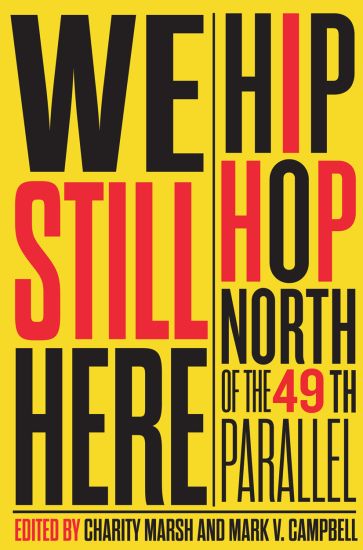
We Still Here maps the edges of hip-hop culture and makes sense of the rich and diverse ways people create and engage with hip-hop music within Canadian borders. Contributors to the collection explore the power of institutions, mainstream hegemonies, and the processes of historical formation in the evolution of hip-hop culture. Throughout, the volume foregrounds the generative issues of gender, identity, and power, in particular in relation to the Black diaspora and Indigenous cultures. The contributions of artists in the scene are front and centre in this collection, exposing the distinct inner mechanics of Canadian hip hop from a variety of perspectives. By amplifying rarely heard voices within hip-hop culture, We Still Here argues for its power to disrupt national formations and highlights the people and communities who make hip hop happen.
One Night on TV Is Worth Weeks at the Paramount

One Night on TV Is Worth Weeks at the Paramount

Murray Forman

Duke University Press
2012
sidottu
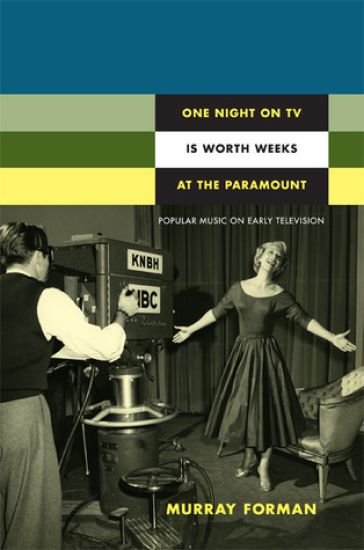
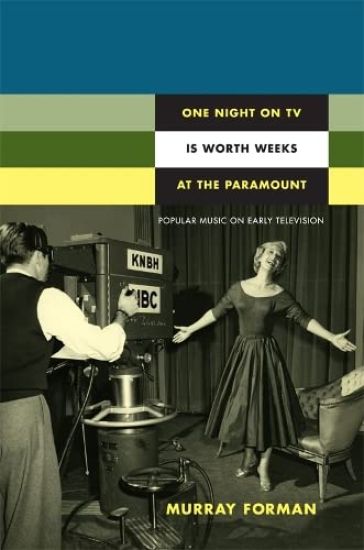
Elvis Presley's television debut in January 1956 is often cited as the moment when popular music and television came together. Murray Forman challenges that contention, revealing popular music as crucial to television years before Presley's sensational small-screen performances. Drawing on trade and popular journalism, internal television and music industry documents, and records of audience feedback, Forman provides a detailed history of the incorporation of musical performances into TV programming during the medium's formative years, from 1948 to 1955. He examines how executives in the music and television industries understood and responded to the convergence of the two media; how celebrity musicians such as Vaughn Monroe, Frank Sinatra, and Fred Waring struggled to adjust to television; and how relative unknowns with an intuitive feel for the medium were sometimes catapulted to stardom. Forman argues that early television production influenced the aesthetics of musical performance in the 1940s and 1950s, particularly those of emerging musical styles such as rock and roll. At the same time, popular music helped to shape the nascent medium of television-its technologies, program formats, and industry structures. Popular music performances were essential to the allure and success of TV in its early years.
One Night on TV Is Worth Weeks at the Paramount

One Night on TV Is Worth Weeks at the Paramount

Murray Forman

Duke University Press
2012
pokkari
Elvis Presley's television debut in January 1956 is often cited as the moment when popular music and television came together. Murray Forman challenges that contention, revealing popular music as crucial to television years before Presley's sensational small-screen performances. Drawing on trade and popular journalism, internal television and music industry documents, and records of audience feedback, Forman provides a detailed history of the incorporation of musical performances into TV programming during the medium's formative years, from 1948 to 1955. He examines how executives in the music and television industries understood and responded to the convergence of the two media; how celebrity musicians such as Vaughn Monroe, Frank Sinatra, and Fred Waring struggled to adjust to television; and how relative unknowns with an intuitive feel for the medium were sometimes catapulted to stardom. Forman argues that early television production influenced the aesthetics of musical performance in the 1940s and 1950s, particularly those of emerging musical styles such as rock and roll. At the same time, popular music helped to shape the nascent medium of television-its technologies, program formats, and industry structures. Popular music performances were essential to the allure and success of TV in its early years.
Old in the Game

Old in the Game

Murray Forman

University of California Press
2026
sidottu
The first study of hip-hop and aging, featuring insights from over twenty hip-hop pioneers and veterans. Hip-hop is now in its sixth decade. How are the culture’s oldest innovators aging in, and with, hip-hop? In Old in the Game, Murray Forman examines how hip-hop artists, audiences, and entrepreneurs negotiate the cultural process of aging, illuminating the deeper meanings and values associated with evolving within a hip-hop sensibility. Featuring commentary from hip-hop pioneers and veterans like Chuck D, LL Cool J, Ice-T, Pepa, and Yo-Yo, Forman reveals age as an essential component of identities and forms of expression through which hip-hop–identified “heads” comprehend the world and present themselves. The book covers themes such as generational difference and dissonance, ageism, memory and nostalgia, and retirement and death and offers a new way of understanding hip-hop as generations of hip-hop heads come of age, mature, and learn to grow old within the culture.
Old in the Game

Old in the Game

Murray Forman

University of California Press
2026
pokkari
The first study of hip-hop and aging, featuring insights from over twenty hip-hop pioneers and veterans. Hip-hop is now in its sixth decade. How are the culture’s oldest innovators aging in, and with, hip-hop? In Old in the Game, Murray Forman examines how hip-hop artists, audiences, and entrepreneurs negotiate the cultural process of aging, illuminating the deeper meanings and values associated with evolving within a hip-hop sensibility. Featuring commentary from hip-hop pioneers and veterans like Chuck D, LL Cool J, Ice-T, Pepa, and Yo-Yo, Forman reveals age as an essential component of identities and forms of expression through which hip-hop–identified “heads” comprehend the world and present themselves. The book covers themes such as generational difference and dissonance, ageism, memory and nostalgia, and retirement and death and offers a new way of understanding hip-hop as generations of hip-hop heads come of age, mature, and learn to grow old within the culture.