Kirjojen hintavertailu. Mukana 11 717 486 kirjaa ja 12 kauppaa.

Kirjahaku

Etsi kirjoja tekijän nimen, kirjan nimen tai ISBN:n perusteella.

18 kirjaa tekijältä Murray Pittock

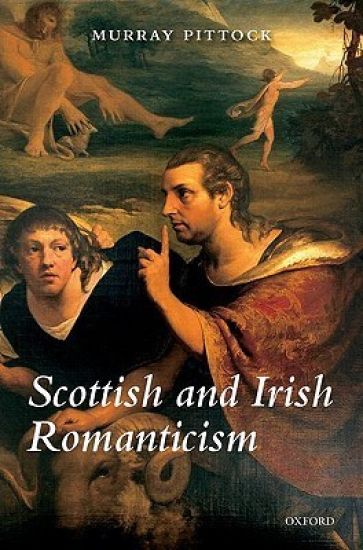
Scottish and Irish Romanticism

Scottish and Irish Romanticism

Murray Pittock

Oxford University Press
2008
sidottu
Scottish and Irish Romanticism is the first single-author book to address the main non-English Romanticisms of the British Isles. Murray Pittock begins by questioning the terms of his chosen title as he searches for a definition of Romanticism and for the meaning of 'national literature'. He proposes certain determining 'triggers' for the recognition of the presence of a national literature, and also deals with two major problems which are holding back the development of a new and broader understanding of British Isles Romanticisms: the survival of outdated assumptions in ostensibly more modern paradigms, and a lack of understanding of the full range of dialogues and relationships across the literatures of these islands. The theorists whose works chiefly inform the book are Bakhtin, Fanon and Habermas, although they do not define its arguments, and an alertness to the ways in which other literary theories inform each other is present throughout the book. Pittock examines in turn the historiography, prejudices, and assumptions of Romantic criticism to date, and how our unexamined prejudices still stand in the way of our understanding of individual traditions and the dialogues between them. He then considers Allan Ramsay's role in song-collecting, hybridizing high cultural genres with broadside forms, creating in synthetic Scots a 'language really used by men', and promoting a domestic public sphere. Chapters 3 and 4 discuss the Scottish and Irish public spheres in the later eighteenth century, together with the struggle for control over national pasts, and the development of the cults of Romance, the Picturesque and Sentiment: Macpherson, Thomson, Owenson and Moore are among the writers discussed. Chapter 5 explores the work of Robert Fergusson and his contemporaries in both Scotland and Ireland, examining questions of literary hybridity across not only national but also linguistic borders, while Chapter 6 provides a brief literary history of Burns' descent into critical neglect combined with a revaluation of his poetry in the light of the general argument of the book. Chapter 7 analyzes the complexities of the linguistic and cultural politics of the national tale in Ireland through the work of Maria Edgeworth, while the following chapter considers of Scott in relation to the national tale, Enlightenment historiography, and the European nationalities question. Chapter 9 looks at the importance of the Gothic in Scottish and Irish Romanticism, particularly in the work of James Hogg and Charles Maturin, while Chapter 10, 'Fratriotism', explores a new concept in the manner in which Scottish and Irish literary, political and military figures of the period related to Empire.
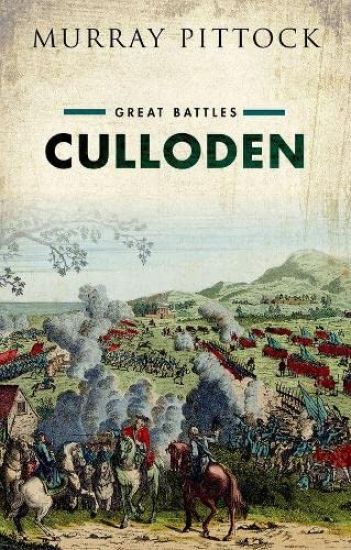
Culloden

Culloden

Murray Pittock

Oxford University Press
2016
sidottu
The battle of Culloden lasted less than an hour. The forces involved on both sides were small, even by the standards of the day. And it is arguable that the ultimate fate of the 1745 Jacobite uprising had in fact been sealed ever since the Jacobite retreat from Derby several months before. But for all this, Culloden is a battle with great significance in British history. It was the last pitched battle on the soil of the British Isles to be fought with regular troops on both sides. It came to stand for the final defeat of the Jacobite cause. And it was the last domestic contestation of the Act of Union of 1707, the resolution of which propelled Great Britain to be the dominant world power for the next 150 years. If the battle itself was short, its aftermath was brutal - with the depredations of the Duke of Cumberland followed by a campaign to suppress the clan system and the Highland way of life. And its afterlife in the centuries since has been a fascinating one, pitting British Whig triumphalism against a growing romantic memorialization of the Jacobite cause. On both sides there has long been a tendency to regard the battle as a dramatic clash, between Highlander and Lowlander, Celt and Saxon, Catholic and Protestant, the old and the new. Yet, as this account of the battle and its long cultural afterlife suggests, while viewing Culloden in such a way might be rhetorically compelling, it is not necessarily good history.
Culloden

Culloden

Murray Pittock

Oxford University Press
2022
nidottu
The battle of Culloden lasted less than an hour. The forces involved on both sides were small, even by the standards of the day. And it is arguable that the ultimate fate of the 1745 Jacobite uprising had in fact been sealed ever since the Jacobite retreat from Derby several months before. But for all this, Culloden is a battle with great significance in British history. It was the last pitched battle on the soil of the British Isles to be fought with regular troops on both sides. It came to stand for the final defeat of the Jacobite cause. And it was the last domestic contestation of the Act of Union of 1707, the resolution of which propelled Great Britain to be the dominant world power for the next 150 years. If the battle itself was short, its aftermath was brutal - with the depredations of the Duke of Cumberland followed by a campaign to suppress the clan system and the Highland way of life. And its afterlife in the centuries since has been a fascinating one, pitting British Whig triumphalism against a growing romantic memorialization of the Jacobite cause. On both sides there has long been a tendency to regard the battle as a dramatic clash, between Highlander and Lowlander, Celt and Saxon, Catholic and Protestant, the old and the new. Yet, as this account of the battle and its long cultural afterlife suggests, while viewing Culloden in such a way might be rhetorically compelling, it is not necessarily good history.
Scottish and Irish Romanticism

Scottish and Irish Romanticism

Murray Pittock

Oxford University Press
2011
nidottu
Scottish and Irish Romanticism is the first single-author book to address the main non-English Romanticisms of the British Isles. Murray Pittock begins by questioning the terms of his chosen title as he searches for a definition of Romanticism and for the meaning of 'national literature'. He proposes certain determining 'triggers' for the recognition of the presence of a national literature, and also deals with two major problems which are holding back the development of a new and broader understanding of British Isles Romanticisms: the survival of outdated assumptions in ostensibly more modern paradigms, and a lack of understanding of the full range of dialogues and relationships across the literatures of these islands. The theorists whose works chiefly inform the book are Bakhtin, Fanon and Habermas, although they do not define its arguments, and an alertness to the ways in which other literary theories inform each other is present throughout the book. Pittock examines in turn the historiography, prejudices, and assumptions of Romantic criticism to date, and how our unexamined prejudices still stand in the way of our understanding of individual traditions and the dialogues between them. He then considers Allan Ramsay's role in song-collecting, hybridizing high cultural genres with broadside forms, creating in synthetic Scots a 'language really used by men', and promoting a domestic public sphere. Chapters 3 and 4 discuss the Scottish and Irish public spheres in the later eighteenth century, together with the struggle for control over national pasts, and the development of the cults of Romance, the Picturesque and Sentiment: Macpherson, Thomson, Owenson and Moore are among the writers discussed. Chapter 5 explores the work of Robert Fergusson and his contemporaries in both Scotland and Ireland, examining questions of literary hybridity across not only national but also linguistic borders, while Chapter 6 provides a brief literary history of Burns' descent into critical neglect combined with a revaluation of his poetry in the light of the general argument of the book. Chapter 7 analyzes the complexities of the linguistic and cultural politics of the national tale in Ireland through the work of Maria Edgeworth, while the following chapter considers of Scott in relation to the national tale, Enlightenment historiography, and the European nationalities question. Chapter 9 looks at the importance of the Gothic in Scottish and Irish Romanticism, particularly in the work of James Hogg and Charles Maturin, while Chapter 10, 'Fratriotism', explores a new concept in the manner in which Scottish and Irish literary, political and military figures of the period related to Empire.
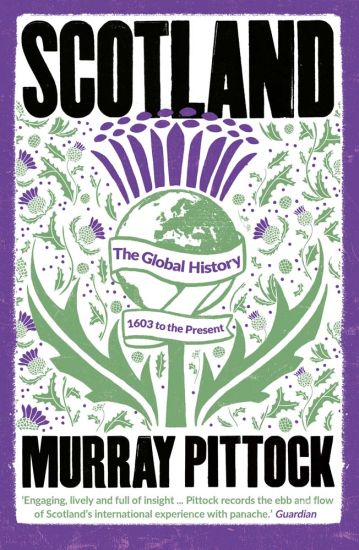
Scotland

Scotland

Murray Pittock

YALE UNIVERSITY PRESS
2023
pokkari
An engaging and authoritative history of Scotland’s influence in the world and the world’s on Scotland, from the Thirty Years’ War to the present day Scotland is one of the oldest nations in the world, yet by some it is hardly counted as a nation at all. Neither a colony of England nor a fully equal partner in the British union, Scotland has often been seen as simply a component part of British history. But the story of Scotland is one of innovation, exploration, resistance—and global consequence. In this wide-ranging, deeply researched account, Murray Pittock examines the place of Scotland in the world. He explores Scotland and Empire, the rise of nationalism, and the pressures on the country from an increasingly monolithic understanding of “Britishness.” From the Thirty Years’ War to Jacobite risings and today’s ongoing independence debates, Scotland and its diaspora have undergone profound changes. This groundbreaking account reveals the diversity of Scotland’s history and shows how, after the country disappeared from the map as an independent state, it continued to build a global brand.
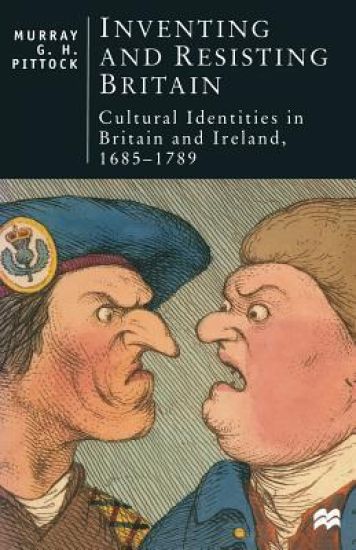
Inventing and Resisting Britain

Inventing and Resisting Britain

Murray Pittock

Red Globe Press
1997
nidottu
This book examines the difficulties and challenges which faced attempts to create a British identity. Taking its perspective from the cultural, social and political margins of the British Isles, it demonstrates how fragile the supposed political consensus of the eighteenth century was. To read it is to revaluate our understanding of the culture of England in relation to other societies of these islands.
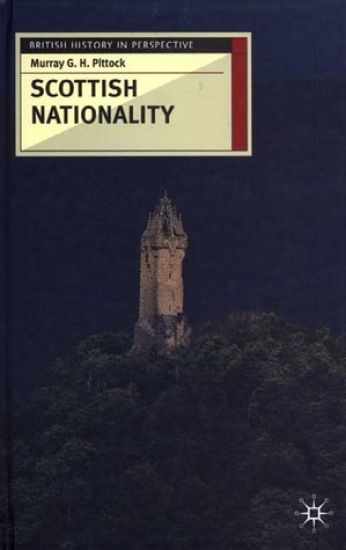
Scottish Nationality

Scottish Nationality

Murray Pittock

Red Globe Press
2001
sidottu
The changes begun by the devolution referendum of 1997 have caused interest and concern throughout Britain. What seemed a remote and abstract question to many has, in the last few years, struck at the heart of the issue of what Britain is - and it is increasingly clear that things will never be the same again.Scottish Nationality is written with these changes in mind. It is the only book available which both gives an overview of what made Scotland a nation across the whole of its history, while also focusing in closely on the issues of the present day, in particular, Scotland's relationship with Britain. Murray Pittock discusses historic Scottish nationality, modern nationalism and patriotism within the Union.What is a nation? How has Scotland developed within Britain? Where does it stand now? And what does the future hold? These questions are all addressed, and Pittock also deals in detail with the essential facts of Scotland's story - not a story which can be understood in isolation. Scottish Nationality examines Scotland's relationship with both England and the wider world in order to put Scotland in context within the new British history and the new Britain itself. As for the future, the book avoids unverifiable predictions, instead showing evidence of various trends, and suggesting the importance of arguments for mutual understanding of Scotland's and England's national traditions.
Celtic Identity and the British Image

Celtic Identity and the British Image

Murray Pittock

Manchester University Press
1999
nidottu
This work explores the idea of the Celt and the definition of the so-called "Celtic Fringe" over the last 300 years. It is an in-depth study of the literary and cultural representation of Ireland, Scotland and Wales over this period, and is based on a wide-ranging grasp of issues of national identity and state formation. The idea of the Celt and Celticism is once again highly fashionable. Is there such a common Celtic heritage? What is the place of the "Celtic Fringe" in British identity? Pittock begins by assessing the term "Celtic" itself, by questioning its validity, going on to examine its historic uses and heroic notions of Scotland's past. The Celtic Revival of the late 19th century is examined in detail together with its impact on Irish nationalism. Pittock asks how far the "Celtic" experience in Britain can be described as a colonial one, and examines the importance of the Celtic languages in preserving a sense of identity. Contemporary issues such as the literary language of the Troubles in Northern Ireland and the growth of modern Scottish nationalism are also considered.
The Myth of the Jacobite Clans

The Myth of the Jacobite Clans

Murray Pittock

Edinburgh University Press
2009
sidottu
The Myth of the Jacobite Clans was first published in 1995: a revolutionary book, it argued that British history had long sought to caricature Jacobitism rather than to understand it, and that the Jacobite Risings drew on extensive Lowland support and had a national quality within Scotland. The Times Higher Education Supplement hailed its author's 'formidable talents' and the book and its ideas fuelled discussions in The Economist and Scotland on Sunday, on Radio Scotland and elsewhere. The argument of the book has been widely accepted, although it is still ignored by media and heritage representations which seek to depoliticise the Rising of 1745. Now entirely rewritten with extensive new primary research, this new expanded second edition addresses the questions of the first in more detail, examining the systematic misrepresentation of Jacobitism, the impressive size of the Jacobite armies, their training and organization and the Jacobite goal of dissolving the Union, and bringing to life the ordinary Scots who formed the core of Jacobite support in the ill-fated Rising of 1745. Now, more than ever, The Myth of the Jacobite Clans sounds the call for an end to the dismissive sneers and pointless romanticisation which have dogged the history of the subject in Scotland for 200 years.
The Myth of the Jacobite Clans

The Myth of the Jacobite Clans

Murray Pittock

Edinburgh University Press
2009
nidottu
The Myth of the Jacobite Clans was first published in 1995: a revolutionary book, it argued that British history had long sought to caricature Jacobitism rather than to understand it, and that the Jacobite Risings drew on extensive Lowland support and had a national quality within Scotland. The Times Higher Education Supplement hailed its author's 'formidable talents' and the book and its ideas fuelled discussions in The Economist and Scotland on Sunday, on Radio Scotland and elsewhere. The argument of the book has been widely accepted, although it is still ignored by media and heritage representations which seek to depoliticise the Rising of 1745. Now entirely rewritten with extensive new primary research, this new expanded second edition addresses the questions of the first in more detail, examining the systematic misrepresentation of Jacobitism, the impressive size of the Jacobite armies, their training and organization and the Jacobite goal of dissolving the Union, and bringing to life the ordinary Scots who formed the core of Jacobite support in the ill-fated Rising of 1745. Now, more than ever, The Myth of the Jacobite Clans sounds the call for an end to the dismissive sneers and pointless romanticisation which have dogged the history of the subject in Scotland for 200 years.
A New History of Scotland

A New History of Scotland

Murray Pittock

Sutton Publishing Ltd
2003
pokkari
A wide-ranging popular history of a small nation that has had a disproportionate influence on culture, trade and industry throughout the world. Murray Pittock presents a full narrative history, starting with Scotland before the Scots and taking in Wallace, the wars of independence, the reformation, the incorporation of Scotland into the United Kingdom and the transformation of Scotland into a modern society. In doing so he brings into play issues of geography, language, identity, religion, politics, science and ideas to create a chronicle of a nation which is looking forward to playing an increasingly important independent role.
Spectrum of Decadence (Routledge Revivals)
The 1890s, the Naughty Nineties, was an exciting and flamboyant time in British life and literature. First published in 1993, this title traces the genesis of the literary culture of the 1890s through some of the popular novels and literary texts of the period. By examining works by such writers as Oscar Wilde, Bram Stoker, W. B. Yeats, and Walter Pater, Murray Pittock analyses the nature of the ‘Decadent era’ and the artistic theories of Symbolism and Aestheticism. Significantly, he provides a full assessment of the lasting impact that the thought of the period has had on our own understanding of our cultural past. Spectrum of Decadence explores the confrontations between art and science, sex and mortality, desire and virtue, which, the author argues are as much a part of modern society’s fin-de-siécle as they were of the nineteenth century’s. This reissue bridges the gap between literary texts, historical context, and contemporary critical theory.
Spectrum of Decadence (Routledge Revivals)
The 1890s, the Naughty Nineties, was an exciting and flamboyant time in British life and literature. First published in 1993, this title traces the genesis of the literary culture of the 1890s through some of the popular novels and literary texts of the period. By examining works by such writers as Oscar Wilde, Bram Stoker, W. B. Yeats, and Walter Pater, Murray Pittock analyses the nature of the ‘Decadent era’ and the artistic theories of Symbolism and Aestheticism. Significantly, he provides a full assessment of the lasting impact that the thought of the period has had on our own understanding of our cultural past. Spectrum of Decadence explores the confrontations between art and science, sex and mortality, desire and virtue, which, the author argues are as much a part of modern society’s fin-de-siécle as they were of the nineteenth century’s. This reissue bridges the gap between literary texts, historical context, and contemporary critical theory.
Enlightenment in a Smart City

Enlightenment in a Smart City

Murray Pittock

Edinburgh University Press
2018
sidottu
This is a study of Enlightenment in Edinburgh like no other. Using data and models provided by urban innovation and Smart City theory, it pinpoints the distinctive features that made Enlightenment in the Scottish capital possible. In a journey packed with evidence and incident, Murray Pittock explores various civic networks such as the newspaper and printing businesses, the political power of the gentry and patronage networks, as well as the pub and coffee-house life as drivers of cultural change. His analysis reveals that the attributes of civic development, which lead to innovation and dynamism, were at the heart of what made Edinburgh a smart city of 1700.
Enlightenment in a Smart City

Enlightenment in a Smart City

Murray Pittock

Edinburgh University Press
2018
nidottu
This is a study of Enlightenment in Edinburgh like no other. Using data and models provided by urban innovation and Smart City theory, it pinpoints the distinctive features that made Enlightenment in the Scottish capital possible. In a journey packed with evidence and incident, Murray Pittock explores various civic networks such as the newspaper and printing businesses, the political power of the gentry and patronage networks, as well as the pub and coffee-house life as drivers of cultural change. His analysis reveals that the attributes of civic development, which lead to innovation and dynamism, were at the heart of what made Edinburgh a smart city of 1700.
Robert Burns in Global Culture

Robert Burns in Global Culture

Murray Pittock

Bucknell University Press
2011
sidottu
Robert Burns has been a key figure in Scottish identity globally since his death in 1796. But he has always been much more than that. In America, his admirers have included Emerson, President Lincoln, Maya Angelou and many others, for Burns was long held to be a friend to the American way of life, an opponent of kings and tyranny, and someone who proved that the values that built the United States were not extinct in Europe. In Europe itself, Burns was seen as both an authentic voice of the people-a representative of their way of life-and a progressive, informed and radical writer. In the British Empire and later the Commonwealth, he was a symbol of Scottish nationality and sociability abroad. In more recent times he has been seen as a poet of universal brotherhood and sisterhood. It takes a great poet to be all things to all people, and to be interpreted so variously worldwide. One of the extraordinary things about Burns is that while his books were sold globally, while he remains the second most translated Scottish author of all time, and when even the USSR issued a stamp in his honor, the postwar academic world turned away from a poet whom it had previously recognized as a major figure. Burns disappeared from accounts of Romanticism, and such meager helpings of critical attention as he received were often directed towards his supposed status as a laboring class or dialect poet, a status which is completely at odds with Burns' sophisticated control of register. Robert Burns in Global Culture is an ambitious book. Drawing on the work of leading experts from Scotland, England, North America, France, Germany and Spain, it analyses the reasons for Burns' critical decline, examines the phenomenon of Burns' global influence on areas from Italian politics to American identity, and places Burns' influence, reputation and unique qualities as a poet within a framework of reference which blends rigorous intellectual inquiry into the poet and his poetry with analyses of popular culture.