Kirjojen hintavertailu. Mukana 11 342 296 kirjaa ja 12 kauppaa.

Kirjahaku

Etsi kirjoja tekijän nimen, kirjan nimen tai ISBN:n perusteella.

9 kirjaa tekijältä N Mani

Infrastructure Development & Financing in India
Availability of adequate, efficient and affordable infrastructural facilities -- power, transport, communications, irrigation and others -- constitutes the core of development strategy and efforts. Unfortunately, infrastructural bottlenecks remain the biggest stumbling block of industrial progress in India. By their very nature, infrastructure projects involve huge initial investments, long gestation periods and high risk. Various initiatives have been taken for the development of infrastructure in India after the initiation of economic reforms in the early 1990s. India Infrastructure Finance Company Limited (IIFCL) was incorporated on January 5, 2006 to lend funds, of longer term maturity, directly to the eligible projects to supplement other loans from banks and financial institutions. Broad guidelines were issued on September 23, 2011 for setting up Infrastructure Debt Funds (IDFs) to facilitate flow of funds into infrastructure projects.Electricity Act, 2003 recognises trading of power as a distinct activity and permits State Electricity Regulatory Commissions (SERCs) to allow open access in distribution of electricity in phases that would ultimately encourage efficiency and competition. Rajiv Gandhi Grameen Vidyutikaran Yojana (RGGVY) was launched by the Prime Minister on April 4, 2005. This scheme is for rural electricity infrastructure and household electrification. The National Highways Development Project (NHDP) the largest highway project ever undertaken by the country is being implemented by the National Highways Authority of India (NHAI). National Telecom Policy, 2011 seeks to maximize public good by making available affordable, reliable and secure telecommunication and broadband services across the entire country. Special Economic Zones Act, 2005 seeks to promote value addition component in exports, generate employment and mobilise foreign exchange. Planning Commission, Government of India, in its Approach Paper released in October 2011 has projected an investment in infrastructure of over ' 45 lakh crore (about US$ 1 trillion) during the Twelfth Five Year Plan (2012-17).It is projected that at least 50 percent of this investment will come from the private sector as against the 36 percent anticipated in the Eleventh Five Year Plan (2007-12). This book provides an exhaustive and analytical account of various facets of infrastructure development in India. It contains 32 chapters which are categorised under the following 8 theme parts: Part I: Infrastructure and Economic Development. Part II: Energy Needs, Sources and Management. Part III: Transport Services. Part IV: Telecommunications, Information Technology (IT), Postal Services, and Broadcasting. Part V: Special Economic Zones (SEZs). Part VI: Water Resources and Irrigation. Part VII: Rural Infrastructure and Services. Part VIII: Urban Infrastructure and Services. Besides, there are 9 Appendices which contain varied information on infrastructure in India.
Micro Finance, Self-Help Groups (SHGs) & Poverty Eradication in India
In India, micro finance is the provision of a diverse range of financial services and products - including small loans (micro credit), saving accounts, insurance, pensions, and money transfers - that are designed to assist those living in poverty who are not able to access financial services in the mainstream banking sector, because they have no collateral, formal identification, or steady income. The objective of micro finance is to help poor people escape poverty - leading towards economic development, employment, and growth - through the support of micro entrepreneurs and small businesses. Several micro finance institutions have succeeded in reaching India's poorest of the poor by devising innovative strategies. These include the provision of small loans to poor people - especially in rural areas, at low interest rates, without collateral. Above all, many micro credit programs have targeted one of the most vulnerable groups in society, i.e. women who live in households that own little or no assets. By providing opportunities for self-employment, these programs have significantly increased women's security, autonomy, self-confidence, and status within the household. This book examines the objectives of micro finance in India, looking at the role of the delivering agents and their interface with the needy, promoting economic growth with greater equity.
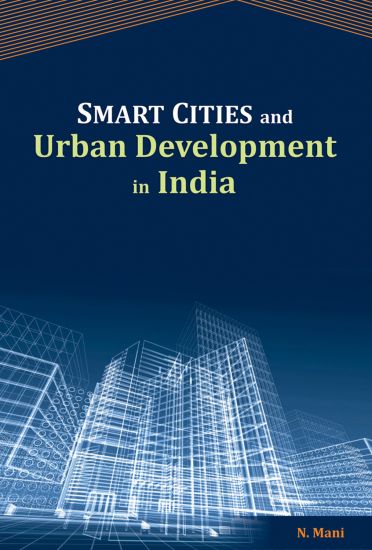
Smart Cities & Urban Development in India

Smart Cities & Urban Development in India

N Mani

New Century Publications
2016
sidottu
The share of urban population in India's total population was 25.7 percent in 1991 which increased to 27.8 percent in 2001. About 377 million Indians comprising of about 31 percent of the country's population, live in urban areas according to Census 2011. Projections are that by 2031, 40 percent of India's population will be residing in urban areas. In recent years, the urban sector in India has undergone a major change following the country's transition towards a market-based economy and the spirit of decentralization embodied in the Constitution (Seventy-fourth) Amendment Act, 1992 (relating to municipalities) which came into force on June 1, 1993. Municipalities are now constitutional bodies forming third tier to the federal polity of India. Taking into account the existing and future scenario, Government of India has launched, in recent years, a number of schemes/programmes to augment and modernize urban infrastructure. Development of smart cities is a step in that direction. The Smart Cities Mission, launched by the Prime Minister in June 2015, will cover 100 cities and its duration will be 5 years (2015-16 to 2019-20). The first list of 20 urban areas that will be developed as smart cities was announced by the Government on January 28, 2016. 13 more cities were added to the list on May 24, 2016, making a total of 33 cities. This book provides a detailed account of problems arising from growing urbanization in India. It particularly focuses on policies and programmes of the Government to deal with the challenges posed by rising urbanization which is attributable in large measure, to migration of rural people to urban areas in search of employment and a better standard of living.
Environment, Climate Change & Disaster Management
Environmental degradation in India has been caused by a variety of social, economic, institutional and technological factors. Rapidly growing population, urbanisation, industrial activities, and the increasing use of pesticides and fossil fuels have all resulted in considerable deterioration in the quality and sustainability of the environment. Similarly, climate change, caused by the building up of green house gases (GHGs) in the atmosphere, is a serious global environmental concern. The affects on India from climate change-in particular impacts on water resources, forests, coastal areas, agriculture, and health-need to be identified and appropriate remedial measures taken. Many regions in India are highly vulnerable to natural and other disasters due to geological conditions. About 60% of the landmass is susceptible to earthquakes. Over 8% is prone to floods, and 8,000 kilometres of coastline is prone to cyclones. Likewise, 68% of the landmass is susceptible to drought. Disasters are no longer limited to natural catastrophes. Man-made emergencies often cause bigger disasters in terms of fatalities and economic losses. This book provides an exhaustive account of the environmental problems in India, and the subsequent consequences. It examines policies and programs of the Government of India to arrest environmental degradation and ensure green growth. India's approach to climate change and disaster mitigation/management is also included. Subject: Environmental Economics, Development Studies, Environmental Conservation and Protection, Environmental Law, Public Policy, Climate Change, India Studies, Sustainable Development]
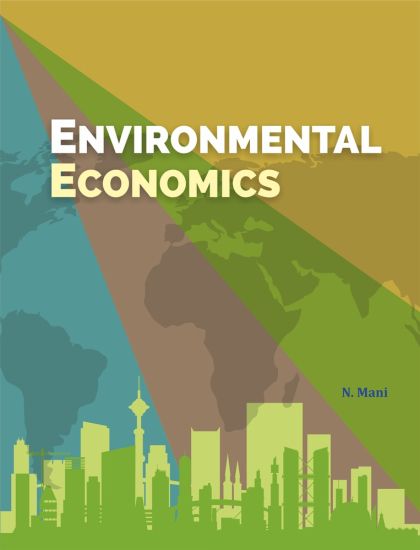
Environmental Economics

Environmental Economics

N Mani

New Century Publications
2020
sidottu
Environmental economics is a branch of economics which deals with the inter-relationships between environment and development. Economic activities of human beings have a profound impact on natural environment. Hence, use/abuse of natural resources has raised many moral, legal, and practical questions for present and future generations. Presently, many governments require cost-benefit analysis of policy options with regard to changes in environmental legislations by resetting environmental standards and introducing new policy instruments for environmental protection. Environmental economics has also made significant contributions to valuation techniques and design of new policy instruments for pollution control and management. This book provides a comprehensive description of current environmental problems facing the world and their solutions through economic institutions, economic incentives, and other instruments and policies. In other words, the book focuses on international environmental problems and how economic principles can be applied to solve them. The book contains 22 chapters which have been organized into 6 theme parts.