Kirjojen hintavertailu. Mukana 11 244 527 kirjaa ja 12 kauppaa.

Kirjahaku

Etsi kirjoja tekijän nimen, kirjan nimen tai ISBN:n perusteella.

7 kirjaa tekijältä Nancy November

Beethoven's String Quartet in C-sharp Minor, Op. 131

Beethoven's String Quartet in C-sharp Minor, Op. 131

Nancy November

Oxford University Press Inc
2021
sidottu
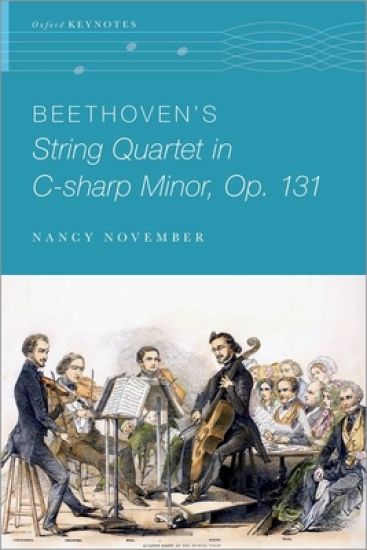
Beethoven's String Quartet in C-sharp minor Op. 131 (1826) is not only firmly a part of the scholarly canon, the performing canon, and the pedagogical canon, but also makes its presence felt in popular culture. Yet in recent times, the terms in which the C-sharp minor quartet is discussed and presented tend to undermine the multivalent nature of the work. Although it is held up as a masterpiece, Op. 131 has often been understood in monochrome terms as a work portraying tragedy, struggle, and loss. In Beethoven's String Quartet in C-sharp Minor, Op. 13, author Nancy November takes the modern-day listener well beyond these categories of adversity or deficit. The book goes back to early reception documents, including Beethoven's own writings about the work, to help the listener reinterpret and re-hear it. This book reveals the diverse musical ideas present in Op. 131 and places the work in the context of an emerging ideology of silent or 'serious' listening in Beethoven's Europe. It considers how this particular 'late' quartet could speak with special eloquence to a highly select but passionately enthusiastic audience and examines how and why the reception of Op. 131 has changed so profoundly from Beethoven's time to our own.
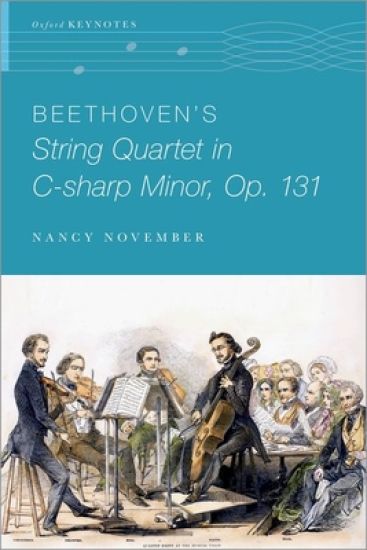
Beethoven's String Quartet in C-sharp Minor, Op. 131

Beethoven's String Quartet in C-sharp Minor, Op. 131

Nancy November

Oxford University Press Inc
2021
nidottu
Beethoven's String Quartet in C-sharp minor Op. 131 (1826) is not only firmly a part of the scholarly canon, the performing canon, and the pedagogical canon, but also makes its presence felt in popular culture. Yet in recent times, the terms in which the C-sharp minor quartet is discussed and presented tend to undermine the multivalent nature of the work. Although it is held up as a masterpiece, Op. 131 has often been understood in monochrome terms as a work portraying tragedy, struggle, and loss. In Beethoven's String Quartet in C-sharp Minor, Op. 13, author Nancy November takes the modern-day listener well beyond these categories of adversity or deficit. The book goes back to early reception documents, including Beethoven's own writings about the work, to help the listener reinterpret and re-hear it. This book reveals the diverse musical ideas present in Op. 131 and places the work in the context of an emerging ideology of silent or 'serious' listening in Beethoven's Europe. It considers how this particular 'late' quartet could speak with special eloquence to a highly select but passionately enthusiastic audience and examines how and why the reception of Op. 131 has changed so profoundly from Beethoven's time to our own.

Opera in the Viennese Home from Mozart to Rossini

Opera in the Viennese Home from Mozart to Rossini

Nancy November

Cambridge University Press
2024
sidottu
Domestic musical arrangements of opera provide a unique window on the world of nineteenth-century amateur music-making. These arrangements flourished in especially rich variety in early nineteenth-century Vienna. This study reveals ways in which the Viennese culture of musical arrangements opened up opportunities, especially for women, for connoisseurship, education, and sociability in the home, and extended the meanings and reach of public concert life. It takes a novel stance for musicology, prioritising musical arrangements over original compositions, and female amateurs' perspectives over those of composers, and asks: what cultural, musical, and social functions did opera arrangements serve in Vienna c.1790–1830? Multivalent musical analyses explore ways Viennese arrangers tailored large-scale operatic works to the demands and values of domestic consumers. Documentary analysis, using little-studied evidence of private and semi-private music-making, investigates the agency of musical amateurs and reinstates the central importance of women's roles.
Beethoven's Symphonies Arranged for the Chamber

Beethoven's Symphonies Arranged for the Chamber

Nancy November

Cambridge University Press
2021
sidottu
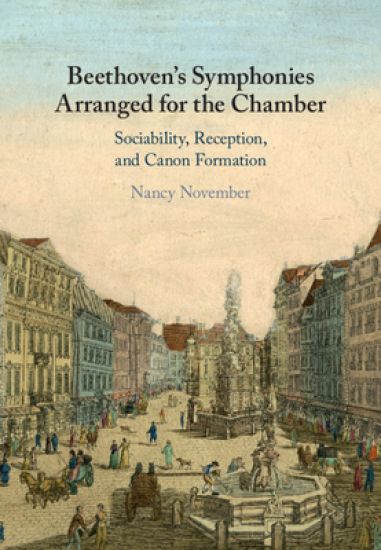
Early nineteenth-century composers, publishers and writers evolved influential ideals of Beethoven's symphonies as untouchable masterpieces. Meanwhile, many and various arrangements of symphonies, principally for amateur performers, supported diverse and 'hands-on' cultivation of the same works. Now mostly forgotten, these arrangements served a vital function in nineteenth-century musical life, extending works' meanings and reach, especially to women in the home. This book places domestic music-making back into the history of the classical symphony. It investigates a largely untapped wealth of early nineteenth-century arrangements of symphonies by Beethoven - for piano, string quartet, mixed quintet and other ensembles. The study focuses on three key agents in the nineteenth-century culture of musical arrangement: arrangers, publishers and performers. It investigates significant functions of those musical arrangements in the era: sociability, reception and canon formation. The volume also explores how conceptions of Beethoven's symphonies, and their arrangement, changed across the era with changing conception of musical works.
Beethoven's Symphonies Arranged for the Chamber

Beethoven's Symphonies Arranged for the Chamber

Nancy November

Cambridge University Press
2024
pokkari
Early nineteenth-century composers, publishers and writers evolved influential ideals of Beethoven's symphonies as untouchable masterpieces. Meanwhile, many and various arrangements of symphonies, principally for amateur performers, supported diverse and 'hands-on' cultivation of the same works. Now mostly forgotten, these arrangements served a vital function in nineteenth-century musical life, extending works' meanings and reach, especially to women in the home. This book places domestic music-making back into the history of the classical symphony. It investigates a largely untapped wealth of early nineteenth-century arrangements of symphonies by Beethoven - for piano, string quartet, mixed quintet and other ensembles. The study focuses on three key agents in the nineteenth-century culture of musical arrangement: arrangers, publishers and performers. It investigates significant functions of those musical arrangements in the era: sociability, reception and canon formation. The volume also explores how conceptions of Beethoven's symphonies, and their arrangement, changed across the era with changing conception of musical works.
The Age of Musical Arrangements in Europe, 1780–1830

The Age of Musical Arrangements in Europe, 1780–1830

Nancy November

Cambridge University Press
2023
pokkari
This Element considers the art and culture of arranging music in Europe in the period 1780–1830, using Haydn's London symphonies and Mozart's operas as its principal examples. The degree to which musical arrangements shaped the social, musical, and ideological landscape in this era deserves further attention. This Element focuses on Vienna, and an important era in the culture of arrangements in which they were widely and variously cultivated, and in which canon formation and the conception of musical works underwent crucial development. Piano transcriptions (for two hands, four hands, and two pianos) became ever more prominent, completely taking over the field after 1850. For various reasons, principal composers of the era under consideration, including Haydn, Mozart, and Beethoven, participated directly in the practice of arrangement. Motivations to produce arrangements included learning the art of composition, getting one's name known more widely, financial gain, and pedagogical aims.
Cultivating String Quartets in Beethoven's Vienna
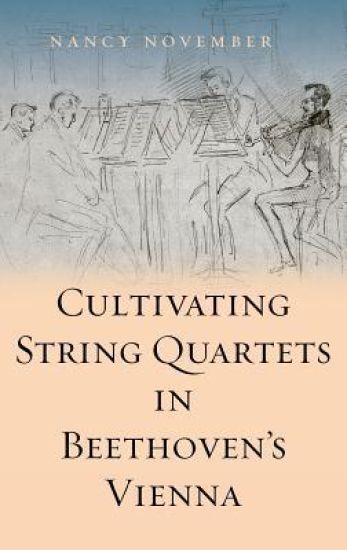
The first detailed contextual study of chamber music in Beethoven's Vienna, at a time when the string quartet reigned supreme among the different chamber genres This book is the first detailed contextual study of string quartets in Beethoven's Vienna, at a time when that genre reigned supreme among the different chamber genres. Focusing on a key transition period in the early nineteenth century, which bore witness to fundamental shifts in the 'private' sphere of music-making, it explores the 'cultivation' of string quartets by composers, critics, listeners, performers, publishers and patrons. The book highlights these parties' interactions, ideas and ideals, which were central to defining the unique cultures of chamber music arising at this time. We gain fresh insights into publishing and marketing, performance venues and practices, review culture, listening theories and practices, and composition in early nineteenth-century Vienna. Until now, the unique theatricality of chamber music, and the 'social' nature of its discourse, has been poorly appreciated. Cultivating String Quartets in Beethoven's Vienna addresses this misconception and enriches our understanding of this crucial period of change, in which concert life began and previously 'private' music was moved out onto the stage. NANCY NOVEMBER is Associate Professor in Musicology at the University of Auckland.