Kirjojen hintavertailu. Mukana 12 406 033 kirjaa ja 12 kauppaa.

Kirjahaku

Etsi kirjoja tekijän nimen, kirjan nimen tai ISBN:n perusteella.

7 kirjaa tekijältä Nancy Rosenfeld

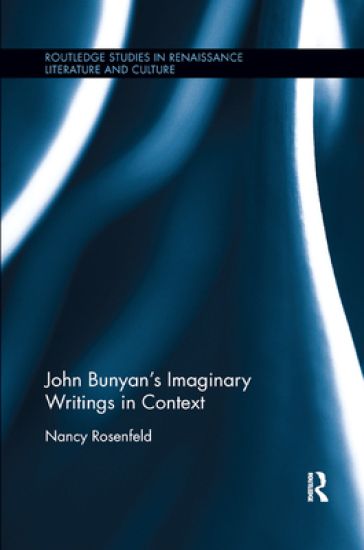
John Bunyan?s Imaginary Writings in Context
Within the last half-century, early scholarly approaches and analysis of John Bunyan’s Pilgrim’s Progress have seen siginificant advances in mandating and enabling a more contextualized view of Bunyan’s oeuvre. Utilizing this fresh examination of context, John Bunyan’s Imaginary Writings in Context explores Bunyan’s writings in a double context: his fictional works vis-à-vis his own non-fictional writings, and his fictional writings in the context of written materials by other authors – books, tracts, spiritual biographies, and poems available to Bunyan. This volumepresents these recent developments by blurring the boundaries between fiction and non-fiction, between literature and history, and in the case of Bunyan, between imaginative literatures in fiction and theological writing. Moreover, this book aims to delineate the imaginary world underlying Bunyan’s fictional writings by viewing Bunyan’s own fictional works in tandem with his non-fiction writings. Simultaneously it situates aspects of Bunyan’s fiction in the context of writings available to him, whether these be Holy Scripture, religious tracts by other authors, or ballads and short texts current in the wider culture of the time.
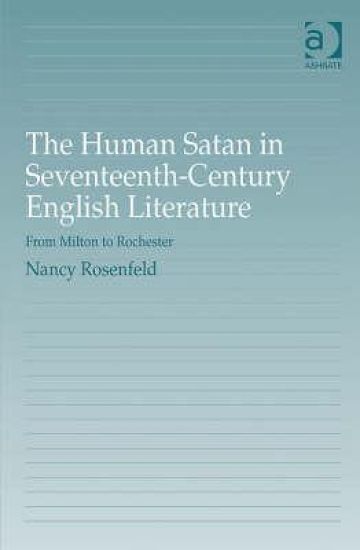
The Human Satan in Seventeenth-Century English Literature

The Human Satan in Seventeenth-Century English Literature

Nancy Rosenfeld

Ashgate Publishing Limited
2008
sidottu
Framed by an understanding that the very concept of what defines the human is often influenced by Renaissance and early modern texts, this book establishes the beginning of the literary development of the satanic form into a humanized form in the seventeenth century. This development is centered on characters and poetry of four seventeenth-century writers: the Satan character in John Milton's Paradise Lost and Paradise Regained, the Tempter in John Bunyan's Grace Abounding to the Chief of Sinners and Diabolus in Bunyan's The Holy War, the poetry of John Wilmot, earl of Rochester, and Dorimant in George Etherege's Man of Mode. The initial understanding of this development is through a sequential reading of Milton and Bunyan which examines the Satan character as an archetype-in-the-making, building upon each to work so that the character metamorphoses from a groveling serpent and fallen archangel to a humanized form embodying the human impulses necessary to commit evil. Rosenfeld then argues that this development continues in Restoration literature, showing that both Rochester and Etherege build upon their literary predecessors to develop the satanic figure towards greater humanity. Ultimately she demonstrates that these writers, taken collectively, have imbued Satan with the characteristics that define the human. This book includes as an epilogue a discussion of Samson in Milton's Samson Agonistes as a later seventeenth-century avatar of the humanized satanic form, providing an example for understanding a stock literary character in the light of early modern texts.
Unfinished Journey

Unfinished Journey

Nancy Rosenfeld

University Press of America
1993
pokkari
This book is a three-layered story. The first layer is the work of the Union of Councils for Soviet Jews Chicago Action for Soviet Jewry (CASJ) in particular. The second layer focuses on the campaign to gain freedom for the former Soviet scientist and poet, Yuri Tarnopolsky. (Memoirs of 1984, also published by University Press of America, is Tarnopolsky's first-person account of his experience.) When he applied to emigrate in 1979 from the USSR, he became a refusenik and was subsequently arrested on trumped up charges in 1983, condemned to three years in a Siberian prison camp. The third layer is Nancy Rosenfeld's own personal story. Rosenfeld, an upper-middle-class suburban Chicago housewife, became actively involved with the refusenik movement in 1982, the year a world-wide campaign was launched to rescue Tarnopolskly. She spearheaded this dramatic effort under the auspices of CASJ through telephone calls, letter-writing campaigns, and lobbying which were coordinated with similar efforts throughout the U.S. and France. Rosenfeld became so involved in the cause that after Tarnopolsky's ultimate release and emigration she suffered a nervous breakdown due to the void the triumph had left. This book lists an arsenal of methods that can be used in a campaign against individual human rights violations. This is the first time the Soviet Jewry Movement in America has been documented.
The Human Satan in Seventeenth-Century English Literature
Framed by an understanding that the very concept of what defines the human is often influenced by Renaissance and early modern texts, this book establishes the beginning of the literary development of the satanic form into a humanized form in the seventeenth century. This development is centered on characters and poetry of four seventeenth-century writers: the Satan character in John Milton's Paradise Lost and Paradise Regained, the Tempter in John Bunyan's Grace Abounding to the Chief of Sinners and Diabolus in Bunyan's The Holy War, the poetry of John Wilmot, earl of Rochester, and Dorimant in George Etherege's Man of Mode. The initial understanding of this development is through a sequential reading of Milton and Bunyan which examines the Satan character as an archetype-in-the-making, building upon each to work so that the character metamorphoses from a groveling serpent and fallen archangel to a humanized form embodying the human impulses necessary to commit evil. Rosenfeld then argues that this development continues in Restoration literature, showing that both Rochester and Etherege build upon their literary predecessors to develop the satanic figure towards greater humanity. Ultimately she demonstrates that these writers, taken collectively, have imbued Satan with the characteristics that define the human. This book includes as an epilogue a discussion of Samson in Milton's Samson Agonistes as a later seventeenth-century avatar of the humanized satanic form, providing an example for understanding a stock literary character in the light of early modern texts.
John Bunyan?s Imaginary Writings in Context
Within the last half-century, early scholarly approaches and analysis of John Bunyan’s Pilgrim’s Progress have seen siginificant advances in mandating and enabling a more contextualized view of Bunyan’s oeuvre. Utilizing this fresh examination of context, John Bunyan’s Imaginary Writings in Context explores Bunyan’s writings in a double context: his fictional works vis-à-vis his own non-fictional writings, and his fictional writings in the context of written materials by other authors – books, tracts, spiritual biographies, and poems available to Bunyan. This volumepresents these recent developments by blurring the boundaries between fiction and non-fiction, between literature and history, and in the case of Bunyan, between imaginative literatures in fiction and theological writing. Moreover, this book aims to delineate the imaginary world underlying Bunyan’s fictional writings by viewing Bunyan’s own fictional works in tandem with his non-fiction writings. Simultaneously it situates aspects of Bunyan’s fiction in the context of writings available to him, whether these be Holy Scripture, religious tracts by other authors, or ballads and short texts current in the wider culture of the time.
I Am Doing This! A Travel Adventure Inspires A New Life
An empowering life adventure takes off with exciting solo travel and dominant intuition with compelling instructions: It's time to GO Over 50 and solo, this free-spirited, focused woman, went for it. She wasn't angry, newly divorced, broken-hearted, laid-off from work or suffering from empty-nest syndrome. Her heart-felt inner voice instructed her to GO. "Travel," the voice said. "Travel until you feel like pausing. Then, pause and do whatever you want. Then live where you want to vacation. Live life like it's a vacation. Be who you truly are. Contribute your gifts. Love. Inspire. You can do this "Would you do it? Would you quit your job, get rid of stuff, find a temporary home for your pet, and just GO? What initiative and planning does it take? What emotional issues arise when alone, severing traditional career and income, and traveling far, far away from familiar ways?Nancy Rosenfeld is a former financial executive and former consultant to leadership teams with a career focused on "change," first with organizations, and later guiding personal transformations. She experienced her own life-changing events while taking a one-year sabbatical from hectic consulting to refresh and recharge, shared in her book, A Left-Brain Thinker On A Right-Brain Journey. Already a national speaker and author, she later fused ancient tribal wisdom and mind/brain influences on a thriving life, acclaimed in her book, A Path to Higher Self: Ancient Tribal Wisdom Shows the Way. More than a travel book, Nancy now inspires you to follow your heart with a life plan that shouts, I am doing this - What does it look like to embrace uncertainty, especially when life previously was structured and controlled?- What does it feel like to travel consecutively for 8 months, much of the time solo and on exotic islands, lodging in 55 places, with no end-date or final destination for where to live?- What does it feel like to end a successful career just because you are compelled to GO, NOW?- Are you curious about exploring Hawaii, New Zealand travel or Tasmania wilderness? - How did meditation, intuition and journaling strongly guide Nancy's life adventures?Buckle up as Nancy takes you on her inner journey with tangible actions you can apply to change your life and declare: I am doing this BONUS Follow Nancy's travel adventures visually with photos on her website with book's name and author. It's time to go
50 Cents for a Life

50 Cents for a Life

Bernard Rosenfeld; Nancy Rosenfeld

Booklocker.com
2024
pokkari
Amidst the panic of World War II Europe, a young Jewish man's desperate escape crossing perilous borders magically unfolds through the lens of synchronistic openings. Kept safe and sane by artistic talents and a miraculous fate, survivor's guilt for family loss casts its spell despite an enchanted life of accomplishment. A gripping true story painted with strokes of determination as a destiny is forever altered by unseen protection, perseverance, and the healing power of creative expression.For almost half a century, details of Bernard's early life were kept hidden, even from his daughters. It was safer that way, afraid of what might occur if he allowed himself to feel.He didn't share his unimaginable escape from Lithuania, alone at age 17, guided by angel-like synchronicity. He didn't share the horrific loss of family in the Holocaust and his relentless search for even a tiny drop of evidence about their paths.Hiding behind a successful, busy life with his American family in the deep South, he finally surrendered to the emotional battle of survivor's guilt, haunted by visions of family he ached to honor.It was time. His secret manuscript belonged with his four adult daughters. Incredible photos and documents accompanied raw words transmitting his story through the darkened eyes of an alone young man scrambling to survive.Clearly, something magical safeguarded him. Unexpected synchronicities shielded his exit path where armies stood days before. A divine invitation to speak in Washington, DC shed sorrows for astounding connections. Newly discovered artistic talents transformed torment to inspiring beauty.Enter this cathartic historical memoir with unique perspectives of survival, hope, and triumph, as anguish is transformed by artistry in a mission for self-peace, eclipsed by 50 cents that saved his colorful life.- Bernard's deeply personal story inspires perseverance to continue on where paths appear impossible. Hold onto hope that magical unknown help is on the horizon.- Historically informative details and timelines of WW2 theater follow his escape route from Eastern Europe to America, and, later, when sent back from whence he came, discover startling orders given to a non-U.S. citizen drafted into the U.S. military.- A decades-long search for evidence about family members killed in the Holocaust, reveals bold, assertive actions in a quest for truth and validation of a town and life destroyed.- Bernard's vivid descriptions invite sensory experiences with his every move: o When he is sad and lonely, we feel it in our hearts.o When he is in denial, we understand.o When he is intrigued, we're eager to jump in and help.o When he passionately paints to express and release, we join in each stroke of healing.A touching memoir with lessons of history, artistic healing, and persevering to live life to the fullest.