Kirjojen hintavertailu. Mukana 11 699 587 kirjaa ja 12 kauppaa.

Kirjahaku

Etsi kirjoja tekijän nimen, kirjan nimen tai ISBN:n perusteella.

6 kirjaa tekijältä Naomi Greene

Landscapes of Loss

Landscapes of Loss

Naomi Greene

Princeton University Press
1999
pokkari
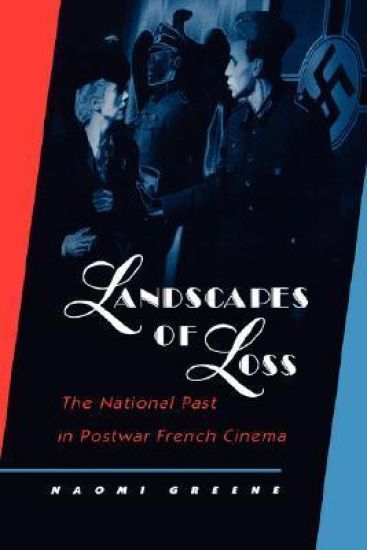
In Landscapes of Loss, Naomi Greene makes new sense of the rich variety of postwar French films by exploring the obsession with the national past that has characterized French cinema since the late 1960s. Observing that the sense of grandeur and destiny that once shaped French identity has eroded under the weight of recent history, Greene examines the ways in which French cinema has represented traumatic and defining moments of the nation's past: the political battles of the 1930s, the Vichy era, decolonization, the collapse of ideologies. Drawing upon a broad spectrum of films and directors, she shows how postwar films have reflected contemporary concerns even as they have created images and myths that have helped determine the contours of French memory. This study of the intricate links between French history, memory, and cinema begins by examining the long shadow cast by the Vichy past: the repressed memories and smothered unease that characterize the cinema of Alain Resnais are seen as a kind of prelude to a fierce battle for national memory that marked so-called retro films of the 1970s and 1980s. The shifting political and historical perspectives toward the nation's more distant past, which also emerged in these years, are explored in the light of the films of one of France's leading directors, Bertrand Tavernier. Finally, the mood of nostalgia and melancholy that appears to haunt contemporary France is analyzed in the context of films about the nation's imperial past as well as those that hark back to a "golden age," a remembered paradis perdu, of French cinema itself.
Pier Paolo Pasolini

Pier Paolo Pasolini

Naomi Greene

Princeton University Press
2017
pokkari
The major Italian filmmaker Pier Paolo Pasolini was also a poet, novelist, essayist, and iconoclastic political commentator. Naomi Greene reveals to English-speaking readers the diverse talents that made him one of the most controversial European intellectuals of the postwar era, at the center of political and cultural debates still vital to our time. Greene presents Pasolini's films to the English-speaking world in full detail and in a rich critical context, using them to trace the evolution of his ideas and the details of his troubled personal life from 1950, when he settled in Rome, to 1975, the year of his brutal murder, apparently at the hands of a young male prostitute. "In her concise and sympathetic book, Greene intelligently explicates the political and social context within which Pasolini became both a leading figure and a significant heretic. He was an atheist who directed one of the few genuinely profound biblical films in the cinema, a communist who severely criticized many of the radical movements of modern Italy. Though he publicly acknowledged his homosexuality, he privately referred to it as his "sickness." As the book well documents, Pasolini was not a rebel but rather an authentic heretic who worked in contradiction to both his medium and milieu."--Choice Originally published in 1992. The Princeton Legacy Library uses the latest print-on-demand technology to again make available previously out-of-print books from the distinguished backlist of Princeton University Press. These editions preserve the original texts of these important books while presenting them in durable paperback and hardcover editions. The goal of the Princeton Legacy Library is to vastly increase access to the rich scholarly heritage found in the thousands of books published by Princeton University Press since its founding in 1905.
Pier Paolo Pasolini

Pier Paolo Pasolini

Naomi Greene

PRINCETON UNIVERSITY PRESS
2017
sidottu
The major Italian filmmaker Pier Paolo Pasolini was also a poet, novelist, essayist, and iconoclastic political commentator. Naomi Greene reveals to English-speaking readers the diverse talents that made him one of the most controversial European intellectuals of the postwar era, at the center of political and cultural debates still vital to our time. Greene presents Pasolini's films to the English-speaking world in full detail and in a rich critical context, using them to trace the evolution of his ideas and the details of his troubled personal life from 1950, when he settled in Rome, to 1975, the year of his brutal murder, apparently at the hands of a young male prostitute. "In her concise and sympathetic book, Greene intelligently explicates the political and social context within which Pasolini became both a leading figure and a significant heretic. He was an atheist who directed one of the few genuinely profound biblical films in the cinema, a communist who severely criticized many of the radical movements of modern Italy. Though he publicly acknowledged his homosexuality, he privately referred to it as his "sickness." As the book well documents, Pasolini was not a rebel but rather an authentic heretic who worked in contradiction to both his medium and milieu."--Choice Originally published in 1992. The Princeton Legacy Library uses the latest print-on-demand technology to again make available previously out-of-print books from the distinguished backlist of Princeton University Press. These editions preserve the original texts of these important books while presenting them in durable paperback and hardcover editions. The goal of the Princeton Legacy Library is to vastly increase access to the rich scholarly heritage found in the thousands of books published by Princeton University Press since its founding in 1905.
From Fu Manchu to Kung Fu Panda

From Fu Manchu to Kung Fu Panda

Naomi Greene

University of Hawai'i Press
2014
sidottu
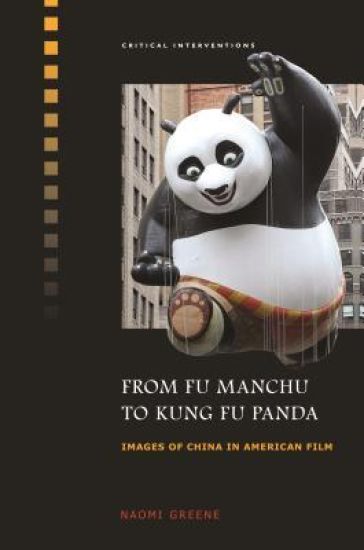
Throughout the twentieth century, American filmmakers have embraced cinematic representations of China. Beginning with D.W. Griffith’s silent classic Broken Blossoms (1919) and ending with the computer-animated Kung Fu Panda (2008), this book explores China’s changing role in the American imagination. Taking viewers into zones that frequently resist logical expression or more orthodox historical investigation, the films suggest the welter of intense and conflicting impulses that have surrounded China.In the United States, the exceptional emotional charge that imbues images of China has tended to swing violently from positive to negative and back again: China has been loved and— as is generally the case today—feared. Using film to trace these dramatic fluctuations, Naomi Greene relates them to the larger arc of historical and political change. She finds that American ethno-centrism is related both to an ever-present sense of American exceptionalism and to a Manichean world view that perceives other countries as friends or enemies.Greene analyzes a series of influential films, including classics like Shanghai Express (1932), The Good Earth (1936), and Shanghai Gesture (1941); important cold war films such as The Manchurian Candidate (1962) and The Sand Pebbles (1966); and a range of contemporary films, including The Wedding Banquet (1993), Kundun (1997), Mulan (1998), and Shanghai Noon (2000). Her consideration makes clear that while many stereotypes and racist images of the past have been largely banished from the screen, the political, cultural, and social impulses they embodied are still alive and well.
From Fu Manchu to Kung Fu Panda

From Fu Manchu to Kung Fu Panda

Naomi Greene

University of Hawai'i Press
2014
nidottu
Throughout the twentieth century, American filmmakers have embraced cinematic representations of China. Beginning with D.W. Griffith’s silent classic Broken Blossoms (1919) and ending with the computer-animated Kung Fu Panda (2008), this book explores China’s changing role in the American imagination. Taking viewers into zones that frequently resist logical expression or more orthodox historical investigation, the films suggest the welter of intense and conflicting impulses that have surrounded China.In the United States, the exceptional emotional charge that imbues images of China has tended to swing violently from positive to negative and back again: China has been loved and— as is generally the case today—feared. Using film to trace these dramatic fluctuations, Naomi Greene relates them to the larger arc of historical and political change. She finds that American ethno-centrism is related both to an ever-present sense of American exceptionalism and to a Manichean world view that perceives other countries as friends or enemies.Greene analyzes a series of influential films, including classics like Shanghai Express (1932), The Good Earth (1936), and Shanghai Gesture (1941); important cold war films such as The Manchurian Candidate (1962) and The Sand Pebbles (1966); and a range of contemporary films, including The Wedding Banquet (1993), Kundun (1997), Mulan (1998), and Shanghai Noon (2000). Her consideration makes clear that while many stereotypes and racist images of the past have been largely banished from the screen, the political, cultural, and social impulses they embodied are still alive and well.
The French New Wave – A New Look

The French New Wave – A New Look

Naomi Greene

Wallflower Press
2007
nidottu
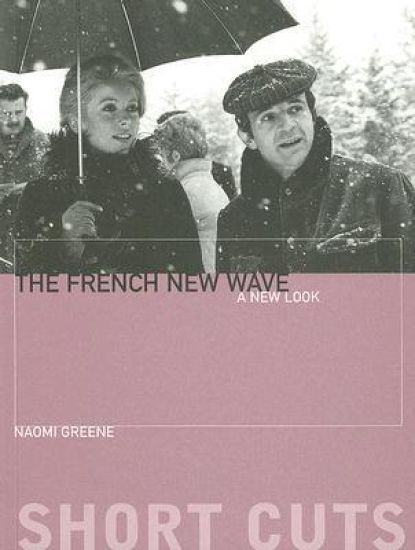
The French New Wave was perhaps the biggest--and briefest--explosion in the history of world cinema, with more than hundred French directors shooting debut features between 1958 and 1964. Its aftershocks are still being felt today. Through the work of such directors as Jean-Luc Godard and Fran ois Truffaut, filmmakers came to be seen as outstanding artists rather than mere studio technicians, paving the way for contemporary cinematic auteurs such as Martin Scorsese, Pedro Almod var, and Luc Besson. This volume begins by tracing the social and cultural changes of postwar France that gave birth to the New Wave then examines in detail the careers of artists like Alain Renais and Jean-Luc Godard. The French New Wave: A New Look is a concise and accessible account of a crucial movement in film history.