Kirjojen hintavertailu. Mukana 11 699 587 kirjaa ja 12 kauppaa.

Kirjahaku

Etsi kirjoja tekijän nimen, kirjan nimen tai ISBN:n perusteella.

25 kirjaa tekijältä Naomi Zack

Democracy

Democracy

Naomi Zack

Oxford University Press
2023
nidottu
Very Short Introductions: Brilliant, Sharp, Inspiring Democracy refers to both ideal and real forms of government. The concept of democracy means that those governed — the demos — have a say in government. But different conceptions of democracy have left many out. Naomi Zack provides here a fresh treatment of the history of this idea and its key conceptions. In the ancient world, direct and representative democracy in Athens and Rome privileged elites, as did democratic deliberative bodies in Africa, India, the Middle East, and China. Plato, Aristotle, and Cicero were sceptical of mob-rule dangers of democracy. The medieval and renaissance periods saw legislative checks on monarchy, notably the Magna Carta. The social contract theories of Thomas Hobbes, John Locke, and Jean-Jacques Rousseau matched political expectations that national government be based on consent, for the benefit of those governed. The American Revolution established a new sovereignty, based on British government tradition. By contrast, the French Revolution heralded universal humanitarian ideals. In the nineteenth century, Jeremy Bentham, John Stuart Mill, Immanuel Kant, and Karl Marx focused on the democratization of society. Mary Wollstonecraft had championed women's education and rights and Mill advocated further for that cause. Movements for the abolition of slavery, women's suffrage, and labour unionization were organized. World War II brought a reset in the twentieth century, with new democratic governments for many countries, including India and South Africa, and new ideals. Karl Popper, Hannah Arendt, and John Rawls emphasized orderly government transition, inclusion, and fairness. Equalitarian goals have concerned racial and ethnic minorities, as well as women. The twenty-first century has brought fresh challenges, including disasters and uninformed electorates. Democracy among nations is a future goal. ABOUT THE SERIES: The Very Short Introductions series from Oxford University Press contains hundreds of titles in almost every subject area. These pocket-sized books are the perfect way to get ahead in a new subject quickly. Our expert authors combine facts, analysis, perspective, new ideas, and enthusiasm to make interesting and challenging topics highly readable.
Intersectionality

Intersectionality

Naomi Zack

OXFORD UNIVERSITY PRESS INC
2024
sidottu
In Intersectionality, philosopher Naomi Zack presents a novel philosophical account of intersectionality - the process by which people already oppressed, experience more oppression because of their intersecting identities. Examples include women who experience racism or poor people who are under-served. Identifying such intersections allows for more precise analysis of oppression, as well as newly recognized identities, such as blackwomen or homeless people of colour. Zack here explores the meaning of intersectionality through analysis of current events and controversies including the #MeToo movement, the COVID-19 pandemic, and class opportunities for minorities in higher education. Her analysis develops a robust definition of intersectionality in terms of inclusion, recognition, and diversity; works out ontological issues about the relationship between persons, labels, and identity; explores the distinction between abstract philosophical thinking and activism; and discusses how intersectionality can be an effective basis for empowerment, as well as understanding. Zack's distinctively philosophical account explains how intersectionality, considered as a method of analysis, works and can be employed in many areas of progressive thought across varying disciplines. She concludes that identifying and challenging the injustice of oppressions logically requires a broad humanistic framework, that intersectionality cannot be reduced to mere talk of diversity and inclusion, and that intersectionality itself is a progressive method of analysis worthy of philosophical attention.
Philosophy of Science and Race
First published in 2003. In this concisely argued, short new book, well-known philosopher Naomi Zack explores the scientific and philosophical problems in applying a biological conception of race to human beings. Through the systematic analysis of up-to-date data and conclusions in population genetics, transmission genetics, and biological anthropology, Zack provides a comprehensive conceptual account of how race in the ordinary sense has no basis in science. Her book combats our everyday understanding of race as a scientifically supported taxonomy of human beings, and in conclusion challenges us to be clear about what we mean by race and what it would require to remedy racism.
Philosophy of Science and Race
First published in 2003. In this concisely argued, short new book, well-known philosopher Naomi Zack explores the scientific and philosophical problems in applying a biological conception of race to human beings. Through the systematic analysis of up-to-date data and conclusions in population genetics, transmission genetics, and biological anthropology, Zack provides a comprehensive conceptual account of how race in the ordinary sense has no basis in science. Her book combats our everyday understanding of race as a scientifically supported taxonomy of human beings, and in conclusion challenges us to be clear about what we mean by race and what it would require to remedy racism.
Inclusive Feminism

Inclusive Feminism

Naomi Zack

Rowman Littlefield Publishers
2005
sidottu
Second Wave feminism collapsed in the early 1980s when a universal definition of women was abandoned. At the same time, as a reaction to the narcissism of white middle class feminism, 'intersectionality' led to many different feminisms according to race, sexual preference and class. These ongoing segregations make it impossible for women to unite politically and they have not ended exclusion and discrimination among women, especially in the academy. In Inclusisve Feminism, Naomi Zack provides a universal, relational definition of women, critically engages both Anglo and French feminists and shows how women can become a united historical force, with the political goal of ruling in place of men.
Inclusive Feminism

Inclusive Feminism

Naomi Zack

Rowman Littlefield Publishers
2005
nidottu
Second Wave feminism collapsed in the early 1980s when a universal definition of women was abandoned. At the same time, as a reaction to the narcissism of white middle class feminism, "intersectionality" led to many different feminisms according to race, sexual preference and class. These ongoing segregations make it impossible for women to unite politically and they have not ended exclusion and discrimination among women, especially in the academy. In Inclusisve Feminism, Naomi Zack provides a universal, relational definition of women, critically engages both Anglo and French feminists and shows how women can become a united historical force, with the political goal of ruling in place of men.
Ethics for Disaster

Ethics for Disaster

Naomi Zack

Rowman Littlefield Publishers
2009
sidottu
Ethics for Disaster addresses the moral aspects of hurricanes, earthquakes, tornadoes, plane crashes, Avian Flu pandemics, and other disasters. Naomi Zack explores how these catastrophes illuminate the existing inequalities in society. By employing the moral systems of utilitarianism, deontology, and virtue ethics to analyze the consequences of recent natural disasters, Zack reveals the special plight of the poor, disabled, and infirm when tragedy strikes. Zack explores the political foundations of social contract theory and dignitarianism and invites readers to rethink the distinction between risk in normal times and risk in disaster. Using both real life and fictional examples, Zack forcefully argues for the preservation of normal moral principles in times of national crisis and emergency, stressing the moral obligation of both individuals and government in preparing for and responding to disaster..
Ethics for Disaster

Ethics for Disaster

Naomi Zack

Rowman Littlefield Publishers
2010
nidottu
Ethics for Disaster addresses the moral aspects of hurricanes, earthquakes, tornadoes, plane crashes, Avian Flu pandemics, and other disasters. Naomi Zack explores how these catastrophes illuminate the existing inequalities in society. By employing the moral systems of utilitarianism, deontology, and virtue ethics to analyze the consequences of recent natural disasters, Zack reveals the special plight of the poor, disabled, and infirm when tragedy strikes. Zack explores the political foundations of social contract theory and dignitarianism and invites readers to rethink the distinction between risk in normal times and risk in disaster. Using both real life and fictional examples, Zack forcefully argues for the preservation of normal moral principles in times of national crisis and emergency, stressing the moral obligation of both individuals and government in preparing for and responding to disaster..
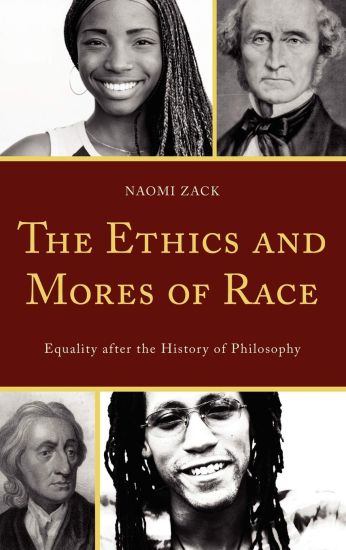
The Ethics and Mores of Race

The Ethics and Mores of Race

Naomi Zack

Rowman Littlefield
2011
sidottu
Preeminent philosopher, Naomi Zack, brings us an indispensable work in the ethics of race through an inquiry into the history of moral philosophy. Beginning with Plato and a philosophical tradition that has largely ignored race, The Ethics and Mores of Race: Equality After the History of Philosophy enters into a web of ideas, ethics, and morals that untangle our evolving ideas of racial equality straight into the twenty-first century. The dichotomy between ethics and mores has long aided the separation of what is right with ideas of equality. Zack tackles the co-existence of slavery with the classic moral systems and continues to show how our society has evolved and our mores with it. An ethics of race my not exist yet, but this book gives us twelve discerning requirements to establish it.
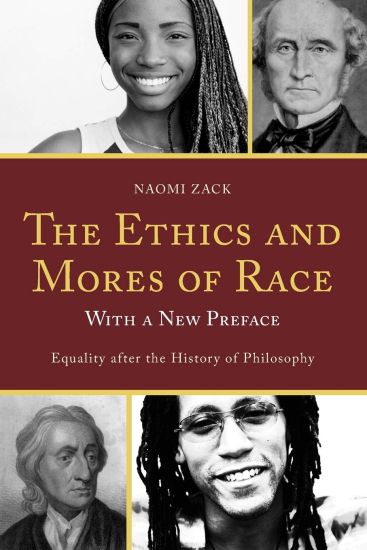
The Ethics and Mores of Race

The Ethics and Mores of Race

Naomi Zack

Rowman Littlefield
2015
nidottu
Preeminent philosopher, Naomi Zack, brings us an indispensable work in the ethics of race through an inquiry into the history of moral philosophy. Beginning with Plato and a philosophical tradition that has largely ignored race, The Ethics and Mores of Race: Equality after the History of Philosophy enters into a web of ideas, ethics, and morals that untangle our evolving ideas of racial equality straight into the twenty-first century. The dichotomy between ethics and mores has long aided the separation of what is right with ideas of equality. Zack tackles the co-existence of slavery with the classic moral systems and continues to show how our society has evolved and our mores with it. An ethics of race may not exist yet, but this book gives us twelve discerning requirements to establish it. In the preface to the paperback edition, Zack addresses the criticisms raised in response to this book and concludes that a focus on rights and justice, rather than privilege, is the only fruitful pathway towards a functioning ethics of race.
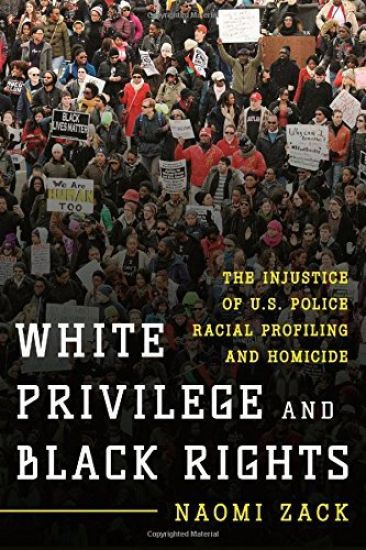
White Privilege and Black Rights

White Privilege and Black Rights

Naomi Zack

Rowman Littlefield
2015
sidottu
Examining racial profiling in American policing, Naomi Zack argues against white privilege discourse while introducing a new theory of applicative justice. Zack draws clear lines between rights and privileges and between justice and existing laws to make sense of the current crisis. This urgent and immediate analysis of the killings of unarmed black men by police officers shows how racial profiling matches statistics of the prison population with disregard for the constitutional rights of the many innocent people of all races. Moving the discussion from white privilege discourse to the rights of blacks, from ideas of white supremacy to legally protected police impunity, and from ideal and non-ideal justice theory to existing injustice, White Privilege and Black Rights examines the legal structure that has permitted the killings of Trayvon Martin, Michael Brown, Eric Garner, Tamir Rice, and others. Deepening understanding without abandoning hope, Zack shows why it is more important to consider black rights than white privilege as we move forward through today's culture of inequality.
White Privilege and Black Rights

White Privilege and Black Rights

Naomi Zack

Rowman Littlefield
2015
nidottu
Examining racial profiling in American policing, Naomi Zack argues against white privilege discourse while introducing a new theory of applicative justice. Zack draws clear lines between rights and privileges and between justice and existing laws to make sense of the current crisis. This urgent and immediate analysis of the killings of unarmed black men by police officers shows how racial profiling matches statistics of the prison population with disregard for the constitutional rights of the many innocent people of all races. Moving the discussion from white privilege discourse to the rights of blacks, from ideas of white supremacy to legally protected police impunity, and from ideal and non-ideal justice theory to existing injustice, White Privilege and Black Rights examines the legal structure that has permitted the killings of Trayvon Martin, Michael Brown, Eric Garner, Tamir Rice, and others. Deepening understanding without abandoning hope, Zack shows why it is more important to consider black rights than white privilege as we move forward through today's culture of inequality.
Applicative Justice

Applicative Justice

Naomi Zack

Rowman Littlefield
2016
sidottu
Naomi Zack pioneers a new theory of justice starting from a correction of current injustices. While the present justice paradigm in political philosophy and related fields begins from John Rawls’s 1970 Theory of Justice, Zack insists that what people in reality care about is not justice as an ideal, but injustice as a correctable ill. For a way to describe real injustice and the society in which it occurs, Zack resurrect Arthur Bentley’s key insight that government and law (or political life) is a constant process of contending interest groups throughout society. Bentley’s main idea allows for a resolution of the contradiction between formal legal equality for U.S. minorities and post-civil rights practical inequality. Just law and unjust practice co-exist as a fact of political life. The correction of injustice in reality requires applicative justice, in a comparison between those who are treated unjustly with those who are treated justly, and the design of effective measures to equalize such treatment. Zack's theory of applicative justice offers a revolutionary reorientation of society's pursuit of justice, seeking to undo injustice in a practical and fully achievable way.
Progressive Anonymity

Progressive Anonymity

Naomi Zack

Rowman Littlefield
2020
sidottu
Continuing her visionary work in social-political philosophy, Zack critiques identity politics as perpetuating damaging essentialist perspectives and policies. The antidote to identity group egoism is anonymity based on relevant shared interests and a meritocracy led by experts chosen without preference for group affiliation or political charisma.
The American Tragedy of COVID-19

The American Tragedy of COVID-19

Naomi Zack

Rowman Littlefield
2021
sidottu
COVID-19 in the United States is a classic tragedy of destruction following errors in judgment Naomi Zack presents social and political aspects of this disaster as it unfolded in public health through federal and local government structures, society, culture, and the economy. Federalism combined with politics in facing and denying the SARS-CoV2 pandemic has revealed both weaknesses and strengths. Preparation was woefully inadequate for the 2020 tidal wave of COVID-19 that broke over the medical system, the educational system, the lives of the poor, essential workers, racial and ethnic minorities, the elderly, and women, especially. Rhetoric and conspiracy theories flourished, as Red and Blue Americans politicized the pandemic. Police reform became urgent after billions witnessed George Floyd’s death. The war of the statues evoked new conflicts over free speech. The X-ray nature of COVID-19 revealed the United States to itself, in character, incompetence, superstition, and injustice, but also in dedication to caring for others and abiding resilience. The core of democracy held after the 2020 election but vigilance is newly important and required. As a record of this US Plague Year and an argument for why we need to prepare for Climate Change, as well as the next pandemic, this book is an essential resource for every student, scholar, and citizen.
The American Tragedy of COVID-19

The American Tragedy of COVID-19

Naomi Zack

Rowman Littlefield
2021
nidottu
COVID-19 in the United States is a classic tragedy of destruction following errors in judgment Naomi Zack presents social and political aspects of this disaster as it unfolded in public health through federal and local government structures, society, culture, and the economy. Federalism combined with politics in facing and denying the SARS-CoV2 pandemic has revealed both weaknesses and strengths. Preparation was woefully inadequate for the 2020 tidal wave of COVID-19 that broke over the medical system, the educational system, the lives of the poor, essential workers, racial and ethnic minorities, the elderly, and women, especially. Rhetoric and conspiracy theories flourished, as Red and Blue Americans politicized the pandemic. Police reform became urgent after billions witnessed George Floyd’s death. The war of the statues evoked new conflicts over free speech. The X-ray nature of COVID-19 revealed the United States to itself, in character, incompetence, superstition, and injustice, but also in dedication to caring for others and abiding resilience. The core of democracy held after the 2020 election but vigilance is newly important and required. As a record of this US Plague Year and an argument for why we need to prepare for Climate Change, as well as the next pandemic, this book is an essential resource for every student, scholar, and citizen.
Ethics and Race

Ethics and Race

Naomi Zack

BLOOMSBURY PUBLISHING PLC
2022
sidottu
Philosophers have separated the subjects of ethics and race. But every issue concerning race is an ethical issue. Ethics and Race approaches historical and contemporary issues of race and racism, on an ethical/moral foundation that the student is encouraged to think with. The 24 chapters encompass the history of race in ideas and events, including both law and culture. Throughout the book, race is inclusively discussed––black, white, Asian, Native American. Topics within the book are coherently organized through six sections: I. Ideas and History of Race, II, Law and Policy, III, Social Institutions, IV Social Disruptions, V. Identity and Representation, VI, The National and International World. Key features include the following: Up to date scientific findings concerning race are clearly explained, to add to reasoning from the ethical foundation; Affirmative Action and Diversity, as well as current events from protests from Left and Right, and police killings are addressed; The relevance of race to the effects of disaster and climate change is explained; White privilege is considered and white racial status is introduced as an important factor that has led to current political impasse and cultural oppositions; Racial identity, included mixed race is considered, as is race and gender and media representation. Ethics and Race mainly addresses race and race relations in the United States, but international issues and examples are included. Humanism, as derived from global thought is proposed in the final chapter. However, while Ethics and Race treats issues of race as a moral subject, with suggested moral foundations, the student is not told what to conclude on any of these issues. This is an important opportunity, through thought, discussion, and writing questions, for the student to think through contemporary issues concerning race, on explicit moral foundations, and construct their own chains of reasonings. Students may also bring in their own experience, as relevant.
Ethics and Race

Ethics and Race

Naomi Zack

BLOOMSBURY PUBLISHING PLC
2022
nidottu
Philosophers have separated the subjects of ethics and race. But every issue concerning race is an ethical issue. Ethics and Race approaches historical and contemporary issues of race and racism, on an ethical/moral foundation that the student is encouraged to think with. The 24 chapters encompass the history of race in ideas and events, including both law and culture. Throughout the book, race is inclusively discussed––black, white, Asian, Native American. Topics within the book are coherently organized through six sections: I. Ideas and History of Race, II, Law and Policy, III, Social Institutions, IV Social Disruptions, V. Identity and Representation, VI, The National and International World. Key features include the following: Up to date scientific findings concerning race are clearly explained, to add to reasoning from the ethical foundation; Affirmative Action and Diversity, as well as current events from protests from Left and Right, and police killings are addressed; The relevance of race to the effects of disaster and climate change is explained; White privilege is considered and white racial status is introduced as an important factor that has led to current political impasse and cultural oppositions; Racial identity, included mixed race is considered, as is race and gender and media representation. Ethics and Race mainly addresses race and race relations in the United States, but international issues and examples are included. Humanism, as derived from global thought is proposed in the final chapter. However, while Ethics and Race treats issues of race as a moral subject, with suggested moral foundations, the student is not told what to conclude on any of these issues. This is an important opportunity, through thought, discussion, and writing questions, for the student to think through contemporary issues concerning race, on explicit moral foundations, and construct their own chains of reasonings. Students may also bring in their own experience, as relevant.
Progressive Anonymity

Progressive Anonymity

Naomi Zack

BLOOMSBURY PUBLISHING PLC
2022
nidottu
Naomi Zack critiques identity politics and argues that both political and social identities should not enter democratic government. She proposes evidence-based government by anonymous stakeholders, without preference for group affiliation or political charisma. Central to this book is the theme that government should have an enduring goal of minimizing misery. Toward that goal, the imperfections of evidence, matched by the imperfections of democracy, need to be accepted in commitments to piecemeal public policies that benefit and include oppressors as well as the oppressed. This strategy preserves the social compact idea that government exists for the benefit of all those governed. Zack’s original work will be useful to both scholars and students interested in studies of race, political philosophy, social philosophy, and cultural criticism.
Ethics for Disaster

Ethics for Disaster

Naomi Zack

BLOOMSBURY PUBLISHING PLC
2023
sidottu
Ethics for Disaster shows how individual and government preparation and response to hurricanes, earthquakes, tornadoes, wildfires, pandemics, and other disasters are ethical matters. Confronting the social inequalities revealed by these disasters, we must also acknowledge how the complete lack of preparation for climate change and pandemics has shifted these threats from old-fashioned isolated disasters into constant modern risks. This second edition presents four new chapters about disaster-as-risk, focusing on climate change; more intense confrontation by the elements of earth, air, fire and water; the COVID-19 pandemic; and innocent victims and refugees. Now more than ever, we need good and just moral principles to guide us through the disruptive crises ahead. Where standard ethical frameworks and government action fail to address new issues and guide just choices, humanism and humanitarianism become vital for deciding what we owe innocent victims and climate refugees.Combining moral philosophy, political theory, public policy, and environmental science, Ethics for Disaster presents new ways to think about changes in the world we all share.