Kirjojen hintavertailu. Mukana 12 016 292 kirjaa ja 12 kauppaa.

Kirjahaku

Etsi kirjoja tekijän nimen, kirjan nimen tai ISBN:n perusteella.

7 kirjaa tekijältä Natalie Carnes

Attunement

Attunement

Natalie Carnes

OXFORD UNIVERSITY PRESS INC
2025
sidottu
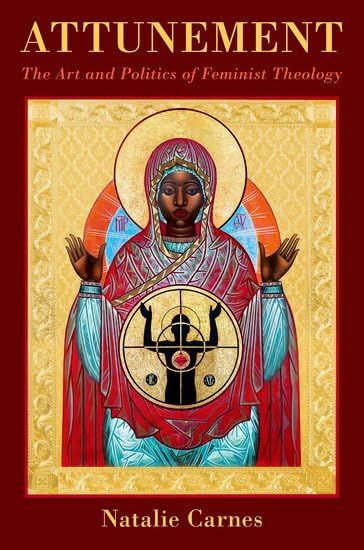
What is a feminist theologian to do with Christianity's patriarchal inheritance? She can avoid the most patriarchal aspects of the theological tradition and seek resources for constructive work elsewhere. Or she can critique misogynistic texts and artifacts, exposing their strategies of domination to warn against replicating them. Both approaches have merits and yet, without other interpretive strategies, they reaffirm that the theological tradition does not belong to women and others marginalized by gender. They cannot transform the discourse. But within feminist theology are the seeds of another approach, aimed at just such transformation by reworking the theological landscape to become hospitable to all those marginalized by gender. Attunement: The Art and Politics of Feminist Theology identifies trajectories resonant with this alternative approach and from them, describes and develops attunement as a third, generative path for feminist theologians. Attunement is an aesthetically-invested approach to texts and artifacts that self-consciously co-creates as it interprets. Aware of what the text affords the reader, attunement constellates images, texts, and insights to build or augment positive affordances in the text and diminish negative ones. Natalie Carnes describes why this approach is significant for feminist theology, maps its roots in a long history of gender-marginalized individuals claiming authority, describes how it casts interpretation as both an aesthetic and political event, and notes how it might provide a way forward in vexed topics in feminist theology.
Attunement

Attunement

Natalie Carnes

OXFORD UNIVERSITY PRESS INC
2025
nidottu
What is a feminist theologian to do with Christianity's patriarchal inheritance? She can avoid the most patriarchal aspects of the theological tradition and seek resources for constructive work elsewhere. Or she can critique misogynistic texts and artifacts, exposing their strategies of domination to warn against replicating them. Both approaches have merits and yet, without other interpretive strategies, they reaffirm that the theological tradition does not belong to women and others marginalized by gender. They cannot transform the discourse. But within feminist theology are the seeds of another approach, aimed at just such transformation by reworking the theological landscape to become hospitable to all those marginalized by gender. Attunement: The Art and Politics of Feminist Theology identifies trajectories resonant with this alternative approach and from them, describes and develops attunement as a third, generative path for feminist theologians. Attunement is an aesthetically-invested approach to texts and artifacts that self-consciously co-creates as it interprets. Aware of what the text affords the reader, attunement constellates images, texts, and insights to build or augment positive affordances in the text and diminish negative ones. Natalie Carnes describes why this approach is significant for feminist theology, maps its roots in a long history of gender-marginalized individuals claiming authority, describes how it casts interpretation as both an aesthetic and political event, and notes how it might provide a way forward in vexed topics in feminist theology.

Image and Presence

Image and Presence

Natalie Carnes

STANFORD UNIVERSITY PRESS
2017
sidottu
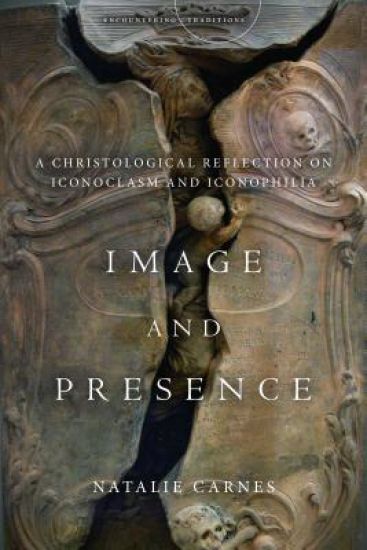
Images increasingly saturate our world, making present to us what is distant or obscure. Yet the power of images also arises from what they do not make present—from a type of absence they do not dispel. Joining a growing multidisciplinary conversation that rejects an understanding of images as lifeless objects, this book offers a theological meditation on the ways images convey presence into our world. Just as Christ negates himself in order to manifest the invisible God, images, Natalie Carnes contends, negate themselves to give more than they literally or materially are. Her Christological reflections bring iconoclasm and iconophilia into productive relation, suggesting that they need not oppose one another. Investigating such images as the biblical golden calf and paintings of the Virgin Mary, Carnes explores how to distinguish between iconoclasms that maintain fidelity to their theological intentions and those that lead to visual temptation. Offering ecumenical reflections on issues that have long divided Protestant, Catholic, and Orthodox traditions, Image and Presence provokes a fundamental reconsideration of images and of the global image crises of our time.
Image and Presence

Image and Presence

Natalie Carnes

Stanford University Press
2017
pokkari
Images increasingly saturate our world, making present to us what is distant or obscure. Yet the power of images also arises from what they do not make present—from a type of absence they do not dispel. Joining a growing multidisciplinary conversation that rejects an understanding of images as lifeless objects, this book offers a theological meditation on the ways images convey presence into our world. Just as Christ negates himself in order to manifest the invisible God, images, Natalie Carnes contends, negate themselves to give more than they literally or materially are. Her Christological reflections bring iconoclasm and iconophilia into productive relation, suggesting that they need not oppose one another. Investigating such images as the biblical golden calf and paintings of the Virgin Mary, Carnes explores how to distinguish between iconoclasms that maintain fidelity to their theological intentions and those that lead to visual temptation. Offering ecumenical reflections on issues that have long divided Protestant, Catholic, and Orthodox traditions, Image and Presence provokes a fundamental reconsideration of images and of the global image crises of our time.
Motherhood

Motherhood

Natalie Carnes

Stanford University Press
2020
sidottu
A meditation on the conversions, betrayals, and divine revelations of motherhood. What if Augustine's Confessions had been written not by a man, but by a mother? How might her tales of desire, temptation, and transformation differ from his? In this memoir, Natalie Carnes describes giving birth to a daughter and beginning a story of conversion strikingly unlike Augustine's—even as his journey becomes a surprising companion to her own. The challenges Carnes recounts will be familiar to many parents. She wonders what and how much she should ask her daughter to suffer in resisting racism, patriarchy, and injustice. She wrestles with an impulse to compel her child to flourish, and reflects on what this desire reveals about human freedom. She negotiates the conflicting demands of a religiously divided home, a working motherhood, and a variety of social expectations, and traces the hopes and anxieties such negotiations expose. The demands of motherhood continually open for her new modes of reflection about deep Christian commitments and age-old human questions. Addressing first her child and then her God, Carnes narrates how a child she once held within her body grows increasingly separate, provoking painful but generative change. Having given birth, she finds that she herself is reborn.