Kirjojen hintavertailu. Mukana 12 016 292 kirjaa ja 12 kauppaa.

Kirjahaku

Etsi kirjoja tekijän nimen, kirjan nimen tai ISBN:n perusteella.

9 kirjaa tekijältä Nathan Abrams

Caledonian Jews

Caledonian Jews

Nathan Abrams

McFarland Co Inc
2009
pokkari
This is the first full history of the Jews in Scotland who lived outside Edinburgh and Glasgow. The work focuses on seven communities from the borders to the highlands: Aberdeen, Ayr, Dundee, Dunfermline, Falkirk, Greenock, and Inverness. Each of these communities was of sufficient size and affluence to form a congregation with a functional synagogue and, while their histories have been previously neglected in favor of Jewish populations in larger cities, their stories are important in understanding Scottish Jewry and British history as a whole. Drawn from numerous primary sources, the history of Jews in Scotland is traced from the earliest rumors to the present.
Stanley Kubrick

Stanley Kubrick

Nathan Abrams

Rutgers University Press
2020
nidottu
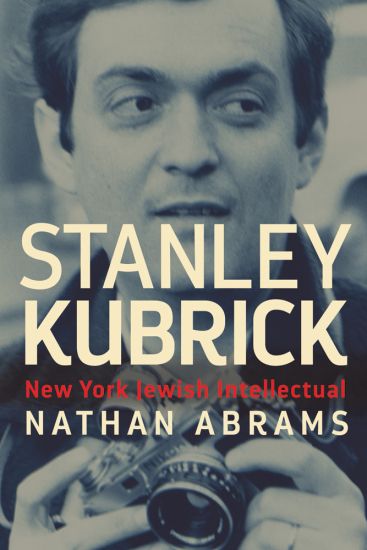
Stanley Kubrick is generally acknowledged as one of the world’s great directors. Yet few critics or scholars have considered how he emerged from a unique and vibrant cultural milieu: the New York Jewish intelligentsia. Stanley Kubrick reexamines the director’s work in context of his ethnic and cultural origins. Focusing on several of Kubrick’s key themes—including masculinity, ethical responsibility, and the nature of evil—it demonstrates how his films were in conversation with contemporary New York Jewish intellectuals who grappled with the same concerns. At the same time, it explores Kubrick’s fraught relationship with his Jewish identity and his reluctance to be pegged as an ethnic director, manifest in his removal of Jewish references and characters from stories he adapted. As he digs deep into rare Kubrick archives to reveal insights about the director’s life and times, film scholar Nathan Abrams also provides a nuanced account of Kubrick’s cinematic artistry. Each chapter offers a detailed analysis of one of Kubrick’s major films, including Lolita, Dr. Strangelove, 2001, A Clockwork Orange, Barry Lyndon, The Shining, Full Metal Jacket, and Eyes Wide Shut. Stanley Kubrick thus presents an illuminating look at one of the twentieth century’s most renowned and yet misunderstood directors.
Commentary Magazine 1945-59

Commentary Magazine 1945-59

Nathan Abrams

Vallentine Mitchell Co Ltd
2007
sidottu
Launched in 1945, Commentary magazine became one of America's most celebrated periodicals. Under the editorship of Elliot E. Cohen, it developed into the premier postwar journal of Jewish affairs attracting a readership far wider than its Jewish community origin. This book is the first detailed and critical study of Commentary magazine during its formative years. Abrams traces the development of the key issues that have occupied its first fifty years: the construction of a new American Jewish identity, Judaism, the Holocaust, the State of Israel, and the Cold War. This account of the chief and most influential journal of Jewish thought, opinion, and culture in America will complete the picture of postwar American Jewish and general intellectual life. It is based upon a wide range of sources including archival and other material never before published in the context of Commentary magazine.
Commentary Magazine 1945-59

Commentary Magazine 1945-59

Nathan Abrams

Vallentine Mitchell Co Ltd
2007
nidottu
Launched in 1945, Commentary magazine became one of America's most celebrated periodicals. Under the editorship of Elliot E. Cohen, it developed into the premier postwar journal of Jewish affairs attracting a readership far wider than its Jewish community origin. This book is the first detailed and critical study of Commentary magazine during its formative years. Abrams traces the development of the key issues that have occupied its first fifty years: the construction of a new American Jewish identity, Judaism, the Holocaust, the State of Israel, and the Cold War. This account of the chief and most influential journal of Jewish thought, opinion, and culture in America will complete the picture of postwar American Jewish and general intellectual life. It is based upon a wide range of sources including archival and other material never before published in the context of Commentary magazine.
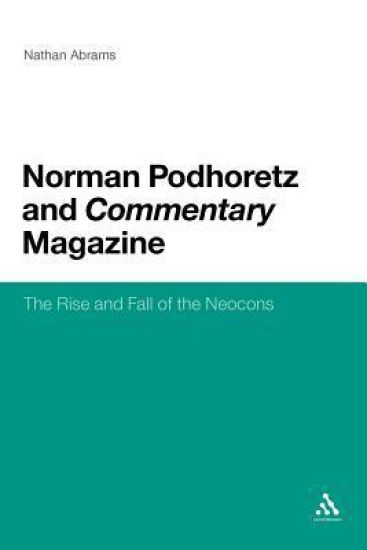
Norman Podhoretz and Commentary Magazine

Norman Podhoretz and Commentary Magazine

Nathan Abrams

Continuum Publishing Corporation
2010
sidottu
This is a fascinating new study of the neoconservative momevent's leading thinker and magazine: Norman Podhoretz and "Commentary". "Norman Podhoretz and Commentary Magazine" is a unique study of the neoconservative movement's leading thinker and magazine: Norman Podhoretz and "Commentary". In this book, Nathan Abrams examines the origins, rise, and fall of neoconservatism and argues that much of what has been said about it in the last six years is the result of willful distortion and exaggeration by both the neocons and their opponents. With ten books and 35 years as Editor of the magazine "Commentary", Podhoretz was a powerful force who helped shape neoconservatism. In fact, neoconservatism was almost Podhoretz's personal ideology, one in which he promoted his own ideas for the future direction of America. However, in spite of being described as 'the conductor of the neocon orchestra', Podhoretz is often ignored by current assessments of the neocon movement. Based on archival and unpublished materials, including Podhoretz's private papers, this is the first detailed and critical study of neoconservatism to focus exclusively on Podhoretz and "Commentary". A notable contribution to the study of conservatism in America, this timely book will appeal to anyone who seeks to understand better the movement that has shaped contemporary American politics.
Norman Podhoretz and Commentary Magazine

Norman Podhoretz and Commentary Magazine

Nathan Abrams

Continuum Publishing Corporation
2012
nidottu
What does the term "neoconservative" mean? Who are we talking about and where did they come from? Abrams answers those very questions through a detailed and critical study of neoconservatism's leading thinker, Norman Podhoretz, and the magazine he edited for 35 years, Commentary. Podhoretz has been described as "the conductor of the neocon orchestra" and through Commentary Podhoretz powerfully shaped neoconservatism. Rich in research, the book is based upon a wide range of sources, including archival and other material never before published in the context of Commentary magazine, including Podhoretz's private papers. It argues that much of what has been said about neoconservatism is the product of willful distortion and exaggeration both by the neoconservatives themselves and their many enemies. From this unique perspective, Abrams examines the origins, rise, and fall of neoconservatism. In understanding Podhoretz, a figure often overlooked, this book sheds light on the origins, ideas, and intellectual pedigree of neoconservatism.
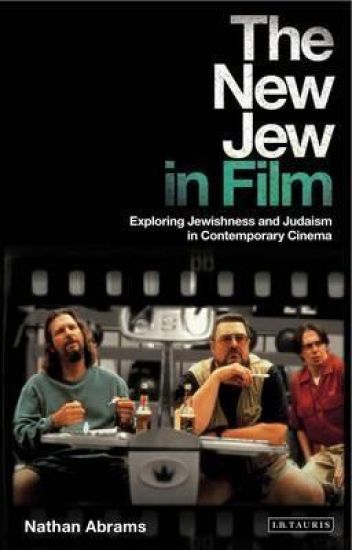
The New Jew in Film

The New Jew in Film

Nathan Abrams

I.B. Tauris
2011
nidottu
Jewish film characters have existed almost as long as the medium itself. But around 1990, films about Jews and their representation in cinema multiplied and took on new forms, marking a radical rupture with the past. With a new generation of Jewish filmmakers, writers and actors at work, contemporary cinemas in Hollywood and the rest of the world have been depicting a multiplicity of new Jews, including tough Jews, brutish Jews, gay and lesbian Jews, Jewish cowboys, skinheads and superheroes, Jews in space and so on. Grounded in the study of over 300 films from Hollywood and beyond, 'The New Jew in FIlm' explores these new and changing depictions of Jews, Jewishness and Judaism, providing a wider, more representative picture of the subject than has hitherto been attempted. This is a compelling, surprising and provocative book, whose chapters explore masculinity, femininity, passivity, agency, religion, as well as a departure into new territory including food and bathrooms. Its concern is to reveal how the representation of the Jew is used to convey confidence or anxieties about Jewish identity and history, as well as how it engages with questions of racial, sexual and gender politics. In so doing, 'The New Jew in Film' also provides a welcome overview of important Jewish films produced globally over the last twenty years.
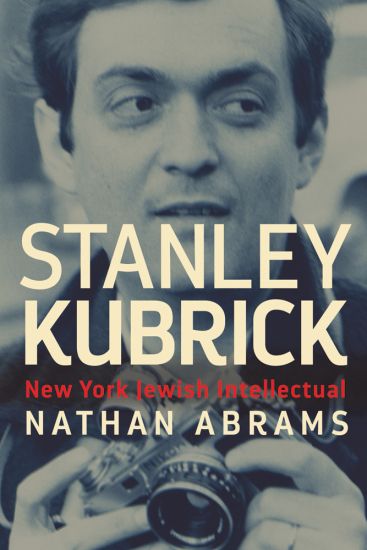
Stanley Kubrick

Stanley Kubrick

Nathan Abrams

Rutgers University Press
2018
sidottu
Stanley Kubrick is generally acknowledged as one of the world’s great directors. Yet few critics or scholars have considered how he emerged from a unique and vibrant cultural milieu: the New York Jewish intelligentsia. Stanley Kubrick reexamines the director’s work in context of his ethnic and cultural origins. Focusing on several of Kubrick’s key themes—including masculinity, ethical responsibility, and the nature of evil—it demonstrates how his films were in conversation with contemporary New York Jewish intellectuals who grappled with the same concerns. At the same time, it explores Kubrick’s fraught relationship with his Jewish identity and his reluctance to be pegged as an ethnic director, manifest in his removal of Jewish references and characters from stories he adapted. As he digs deep into rare Kubrick archives to reveal insights about the director’s life and times, film scholar Nathan Abrams also provides a nuanced account of Kubrick’s cinematic artistry. Each chapter offers a detailed analysis of one of Kubrick’s major films, including Lolita, Dr. Strangelove, 2001, A Clockwork Orange, Barry Lyndon, The Shining, Full Metal Jacket, and Eyes Wide Shut. Stanley Kubrick thus presents an illuminating look at one of the twentieth century’s most renowned and yet misunderstood directors.