Kirjojen hintavertailu. Mukana 11 699 587 kirjaa ja 12 kauppaa.

Kirjahaku

Etsi kirjoja tekijän nimen, kirjan nimen tai ISBN:n perusteella.

4 kirjaa tekijältä Nathan Lyons

Signs in the Dust

Signs in the Dust

Nathan Lyons

Oxford University Press Inc
2019
sidottu
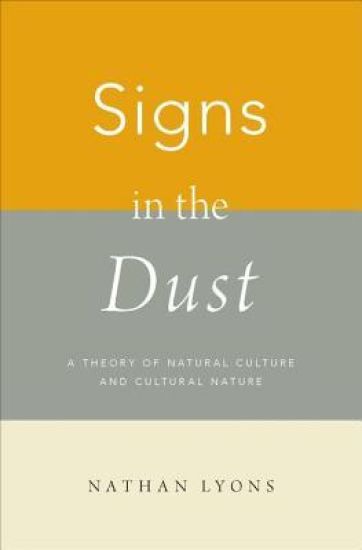
Modern thought is characterized by a dichotomy of meaningful culture and unmeaning nature. Signs in the Dust uses medieval semiotics to develop a new theory of nature and culture that resists this familiar picture of things. Through readings of Thomas Aquinas, Nicholas of Cusa, and John Poinsot (John of St. Thomas), it offers a semiotic analysis of human culture in both its anthropological breadth as an enterprise of creaturely sign-making, and its theological height as a finite participation in the Trinity, which can be understood as an absolute 'cultural nature'. Signs in the Dust then extends this account of human culture backwards into the natural depth of biological and physical nature. It puts the biosemiotics of its medieval sources, along with Félix Ravaisson's philosophy of habit, into dialogue with the Extended Evolutionary Synthesis that is emerging in contemporary biology, to show how all living things participate in semiosis, so that that a cultural dimension is present through the whole order of nature and the whole of natural history. It also retrieves Aquinas' doctrine of intentions in the medium to show how signification can be attributed in a diminished way to even inanimate nature, with the ontological implication that being as such should be reconceived in semiotic terms. The phenomena of human culture are therefore to be understood not as breaks with a meaningless nature, but instead as heightenings and deepenings of natural movements of meaning that long precede and far exceed us. Against the modern divorce of nature and culture, Signs in the Dust argues that culture is natural and nature is cultural, through and through.

After 9/11

After 9/11

Nathan Lyons

Yale University Press
2003
sidottu
In response to the tragic events of September 11, photographer Nathan Lyons—known for his honest and often questioning depictions of American culture—has created a poignant portfolio of images. Photographing in small towns and large cities, Lyons has captured the extreme and often confusing variety of responses—from deep reverence to blatant commercialization—manifested by ordinary Americans. One will marvel, for instance, at the myriad uses of the American flag. This provocative sequence of images with multiple messages is powerfully coherent and strangely disturbing. In the tradition of Robert Frank’s The Americans, these photographs will engage audiences to question the responses to this horrific event in the context of our complicated society, along with memorializing the tragic loss of so many innocent lives. Distributed for the Yale University Art Gallery
God and Being

God and Being

Nathan Lyons

Cambridge University Press
2023
pokkari
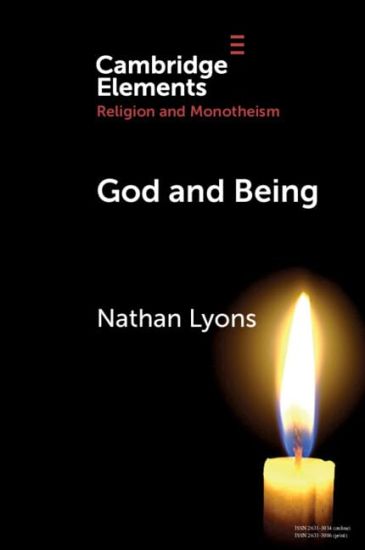
This Element examines how the Western philosophical-theological tradition between Plato and Aquinas understands the relation between God and being. It gives a historical survey of the two major positions in the period: (a) that the divine first principle is 'beyond being' (e.g. Plato, Plotinus, and Pseudo-Dionysius), and (b) that the first principle is 'being itself' (e.g. Augustine, Avicenna, and Aquinas). The Element argues that we can recognise in the two traditions, despite their apparent contradiction, complementary approaches to a shared project of inquiry into transcendence.
God and Being

God and Being

Nathan Lyons

Cambridge University Press
2023
sidottu
This Element examines how the Western philosophical-theological tradition between Plato and Aquinas understands the relation between God and being. It gives a historical survey of the two major positions in the period: (a) that the divine first principle is 'beyond being' (e.g. Plato, Plotinus, and Pseudo-Dionysius), and (b) that the first principle is 'being itself' (e.g. Augustine, Avicenna, and Aquinas). The Element argues that we can recognise in the two traditions, despite their apparent contradiction, complementary approaches to a shared project of inquiry into transcendence.