Kirjojen hintavertailu. Mukana 12 390 323 kirjaa ja 12 kauppaa.

Kirjahaku

Etsi kirjoja tekijän nimen, kirjan nimen tai ISBN:n perusteella.

4 kirjaa tekijältä National Archives

Hitler's Shadow - Nazi War Criminals, U.S. Intelligence, and the Cold War

Hitler's Shadow - Nazi War Criminals, U.S. Intelligence, and the Cold War

National Archives

Createspace Independent Publishing Platform
2014
nidottu
At the end of World War II, Allied armies recovered a large portion of the written or filmed evidence of the Holocaust and other forms of Nazi persecution. Allied prosecutors used newly found records in numerous war crimes trials. Governments released many related documents regarding war criminals during the second half of the 20th century. A small segment of American-held documents from Nazi Germany or about Nazi officials and Nazi collaborators, however, remained classified into the 21st century because of government restrictions on the release of intelligence-related records.Approximately 8 million pages of documents declassified in the United States under the 1998 Nazi War Crimes Disclosure Act added significantly to our knowledge of wartime Nazi crimes and the postwar fate of suspected war criminals. A 2004 U.S. Government report by a team of independent historians working with the government's Nazi War Criminal Records Interagency Working Group (IWG), entitled U.S. Intelligence and the Nazis, highlighted some of the new information; it appeared with revisions as a 2005 book.1 Our 2010 report serves as an addendum to U.S. Intelligence and the Nazis; it draws upon additional documents declassified since then.The latest CIA and Army files have: evidence of war crimes and about the wartime activities of war criminals; postwar documents on the search for or prosecution of war criminals; documents about the escape of war criminals; documents about the Allied protection or use of Nazi war criminals; and documents about the postwar political activities of war criminals. None of the declassified documents conveys a complete story in itself; to make sense of this evidence, we have also drawn on older documents and published works.
Putting the Bill of Rights to the Test

Putting the Bill of Rights to the Test

National Archives

Createspace Independent Publishing Platform
2016
nidottu
The Bill of Rights is the first 10 Amendments to the United States Constitution. It spells out Americans' rights in relation to their Government.It guarantees civil rights and liberties to individuals - like freedom of speech, press, and religion. It sets rules for due process of law and reserves all powers not delegated to the Federal Government to the people or the States. And itspecifies that just because the Constitution doesn't list every right people have, it doesn't mean those rights not mentioned can be violated.In this workbook you'll find primary sources to help you explore some of the core concepts, or protections, found in the Bill of Rights, and how they've been tested throughout American history.
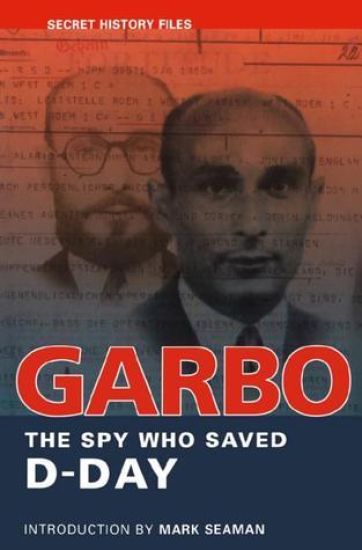
GARBO

GARBO

National Archives

Dundurn Group Ltd
2004
pokkari
Juan Pujol, a young Spanish antifascist, became agent GARBO, a master of deception and intrigue. His story contains all the hallmarks of classic spy adventure—enciphered messages, secret inks, items concealed in cakes—culminating in one of the greatest strategic deceptions in history. Through a ring of invented subagents, GARBO and his MI5 controllers succeeded in convincing the Germans that the DDay landings were only a diversionary tactic, thus safeguarding the Allied landings and hastening the end of the war in Europe. Secret History Files is an exciting series from The National Archives that puts covert history in readers’ hands. Dossiers previously classified as "Top Secret" are now available, with an explanatory introduction and background analysis by expert historians. Publisher’s Note: This publication brings you in full the ’Summary of the Garbo Case 1941—1945’ by Tomás Harris. All document references are to the original files, which may be consulted under supervision at the National Archives, Kew. Our intention is to reproduce the material as faithfully as possible without compromising the integrity of the original. This means that the occasional inconsistency or typing error survives from Harris’s text. The symbol […] is used where material from the original document has been retained under section 3(4) of the Public Records Act 1958.