Kirjojen hintavertailu. Mukana 12 083 983 kirjaa ja 12 kauppaa.

Kirjahaku

Etsi kirjoja tekijän nimen, kirjan nimen tai ISBN:n perusteella.

5 kirjaa tekijältä Neal DeRoo

Futurity in Phenomenology

Futurity in Phenomenology

Neal DeRoo

FORDHAM UNIVERSITY PRESS
2013
sidottu
From Husserl’s account of protention to the recent turn to eschatology in “theological” phenomenology, the future has always been a key aspect of phenomenological theories of time. This book offers the first sustained reflection on the significance of futurity for the phenomenological method itself. In tracing the development of this theme, the author shows that only a proper understanding of the two-fold nature of the future (as constitution and as openness) can clarify the way in which phenomenology brings the subject and the world together. Futurity therefore points us to the centrality of the promise for phenomenology, recasting phenomenology as a promissory discipline. Clearly written and carefully argued, this book provides fresh insight into the phenomenological provenance of the “theological” turn and the phenomenological conclusions of Husserl, Levinas, and Derrida. Closely examining the themes of protention, eschatology, and the messianic, it will be essential reading for anyone interested in phenomenology, philosophy of religion, deconstruction, or philosophical theology.
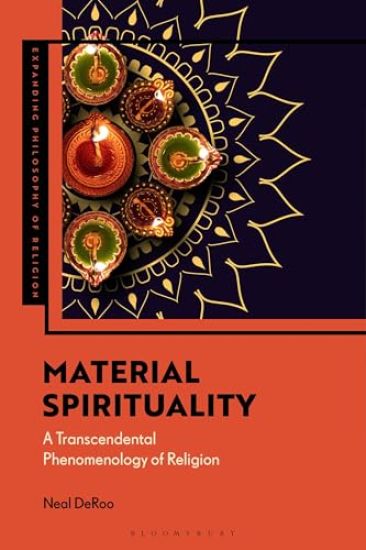
Material Spirituality

Material Spirituality

Neal DeRoo

BLOOMSBURY PUBLISHING PLC
2026
nidottu
Challenging monotheistic and cognitive assumptions in philosophy of religion, Neal DeRoo sets out a novel theory grounded in a transcendental phenomenological understanding of spirituality. DeRoo applies transcendental phenomenology to questions and methods in the empirical study of religion and considers the way religion shapes our experience and interaction with the world.Accounting for this transcendental dimension enables us to clarify how religion – as both a concept and as various material practices – is generated out of Husserl’s notion of ‘material spiritual’ conditions. Shedding light on the four-fold distinction between transcendental and empirical levels, emphasizing the transcendental dimension of religion via an account of spiritual expression reveals that rigorous analysis of religion requires us to distinguish between spirituality, religiosity and religious phenomena. Investigating current methodological approaches to religion, spirituality, and the religious, DeRoo provides an essential toolbox for the cross-cultural study of religion, drawing on key concepts such as materiality, flesh, spirituality and phenomena.
The Political Logic of Experience

The Political Logic of Experience

Neal DeRoo

FORDHAM UNIVERSITY PRESS
2022
sidottu
The Political Logic of Experience argues that experience and phenomenology are essentially political, with profound implications for our understanding of subjectivity, epistemology, experience, the phenomenological method, and politics. Drawing on work from across the phenomenological tradition, it develops an account of expression as the internal relationship uniting knowing, being, and doing with both transcendental conditions and empirical phenomena. This expressive unification generates subjectivity as an expression of particular communities and subjects as an expression of subjectivity. Subjectivity and experience are therefore both revealed to be inherently political prior to their expression in particular subjects. In clarifying the political nature of experience and the constitution of subjectivity, the book puts the work of critical phenomenology in dialogue with transcendental phenomenology to reveal the need for a phenomenological politics: a field tasked with explaining the expressive, co-constitutive, and necessarily political relationships between subjects and their communities. It is only through such a phenomenological politics that we can properly make sense of the epistemological, ontological, and practical significance of issues like racism and sexism, problems that concern our very experience of the world. The book reveals phenomenology to be both essentially political and politically essential, as it emerges within particular communities and shapes and transforms how individuals within those communities experience the world. Touching on issues of transcendental phenomenology, political strategy, historical interpretation and inter-disciplinary phenomenological method, the book argues for foundational claims pertaining to phenomenology, politics, and social criticism that will be of interest to those working in philosophy, gender studies, race, queer theory, transcendental and applied phenomenology, and beyond.
The Political Logic of Experience

The Political Logic of Experience

Neal DeRoo

FORDHAM UNIVERSITY PRESS
2022
pokkari
The Political Logic of Experience argues that experience and phenomenology are essentially political, with profound implications for our understanding of subjectivity, epistemology, experience, the phenomenological method, and politics. Drawing on work from across the phenomenological tradition, it develops an account of expression as the internal relationship uniting knowing, being, and doing with both transcendental conditions and empirical phenomena. This expressive unification generates subjectivity as an expression of particular communities and subjects as an expression of subjectivity. Subjectivity and experience are therefore both revealed to be inherently political prior to their expression in particular subjects. In clarifying the political nature of experience and the constitution of subjectivity, the book puts the work of critical phenomenology in dialogue with transcendental phenomenology to reveal the need for a phenomenological politics: a field tasked with explaining the expressive, co-constitutive, and necessarily political relationships between subjects and their communities. It is only through such a phenomenological politics that we can properly make sense of the epistemological, ontological, and practical significance of issues like racism and sexism, problems that concern our very experience of the world. The book reveals phenomenology to be both essentially political and politically essential, as it emerges within particular communities and shapes and transforms how individuals within those communities experience the world. Touching on issues of transcendental phenomenology, political strategy, historical interpretation and inter-disciplinary phenomenological method, the book argues for foundational claims pertaining to phenomenology, politics, and social criticism that will be of interest to those working in philosophy, gender studies, race, queer theory, transcendental and applied phenomenology, and beyond.
Material Spirituality

Material Spirituality

Neal DeRoo

BLOOMSBURY PUBLISHING PLC
2026
sidottu
Challenging monotheistic and cognitive assumptions in philosophy of religion, Neal DeRoo sets out a novel theory grounded in a transcendental phenomenological understanding of spirituality. DeRoo applies transcendental phenomenology to questions and methods in the empirical study of religion and considers the way religion shapes our experience and interaction with the world. Accounting for this transcendental dimension enables us to clarify how religion – as both a concept and as various material practices – is generated out of Husserl’s notion of ‘material spiritual’ conditions. Shedding light on the four-fold distinction between transcendental and empirical levels, emphasizing the transcendental dimension of religion via an account of spiritual expression reveals that rigorous analysis of religion requires us to distinguish between spirituality, religiosity and religious phenomena. Investigating current methodological approaches to religion, spirituality, and the religious, DeRoo provides an essential toolbox for the cross-cultural study of religion, drawing on key concepts such as materiality, flesh, spirituality and phenomena.