Kirjojen hintavertailu. Mukana 11 717 486 kirjaa ja 12 kauppaa.

Kirjahaku

Etsi kirjoja tekijän nimen, kirjan nimen tai ISBN:n perusteella.

3 kirjaa tekijältä Neal Ford

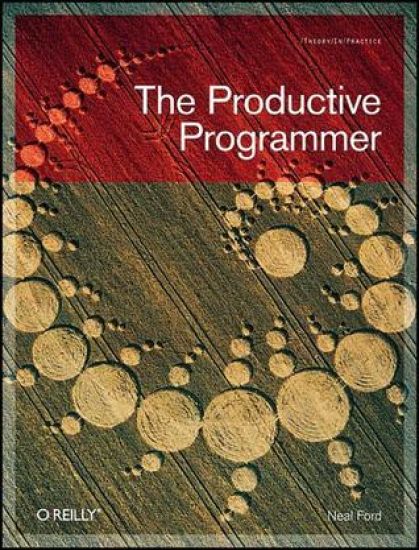
The Productive Programmer

The Productive Programmer

Neal Ford

O'Reilly Media, Inc, USA
2008
nidottu
Anyone who develops software for a living needs a proven way to produce it better, faster, and cheaper. "The Productive Programmer" offers critical timesaving and productivity tools that you can adopt right away, no matter what platform you use. Master developer Neal Ford not only offers advice on the mechanics of productivity-how to work smarter, spurn interruptions, get the most out your computer, and avoid repetition-he also details valuable practices that will help you elude common traps, improve your code, and become more valuable to your team.You'll learn to: write the test before you write the code; manage the lifecycle of your objects fastidiously; build only what you need now, not what you might need later; apply ancient philosophies to software development; question authority, rather than blindly adhere to standards; make hard things easier and impossible things possible through meta-programming; be sure all code within a method is at the same level of abstraction; and, pick the right editor and assemble the best tools for the job. This isn't theory, but the fruits of Ford's real-world experience as an Application Architect at the global IT consultancy ThoughtWorks. Whether you're a beginner or a pro with years of experience, you'll improve your work and your career with the simple and straightforward principles in The Productive Programmer.
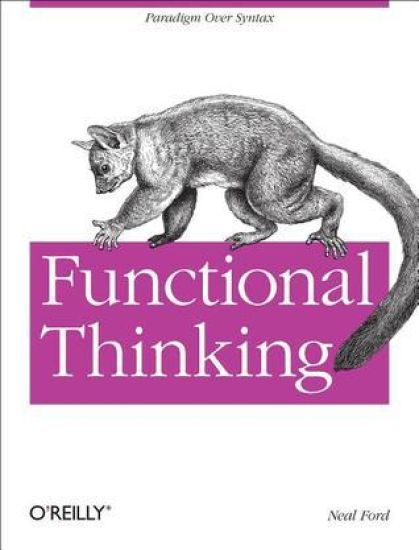
Functional Thinking

Functional Thinking

Neal Ford

O'Reilly Media, Inc, USA
2014
nidottu
If you want to take advantage of functional programming features in Java and other languages, this in-depth guide takes you beyond syntax and demonstrates how you need to think in a new way. Software architect Neal Ford shows intermediate to advanced developers how functional coding allows you to step back a level of abstraction so you can see your programming problem with greater clarity. Each chapter shows you various examples of functional thinking, using numerous code examples from Java 8 and other JVM languages that include functional capabilities. This book may bend your mind, but you'll come away with a good grasp of functional programming concepts. Understand why many imperative languages are adding functional capabilities Compare functional and imperative solutions to common problems Examine ways to cede control of routine chores to the runtime Learn how memoization and laziness eliminate hand-crafted solutions Explore functional approaches to design patterns and code reuse View real-world examples of functional thinking with Java 8, and in functional architectures and web frameworks Learn the pros and cons of living in a paradigmatically richer world
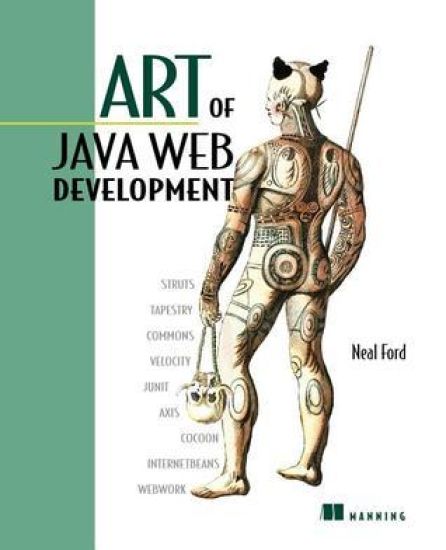
Art of Java Web Development

Art of Java Web Development

Neal Ford

Manning Publications
2003
nidottu
A guide to the topics required for state of the art web development, this book covers wide-ranging topics, including a variety of web development frameworks and best practices. Beginning with coverage of the history of the architecture of web applications, highlighting the uses of the standard web API to create applications with increasingly sophisticated architectures, developers are led through a discussion on the development of industry accepted best practices for architecture. Described is the history and evolution towards this architecture and the reasons that it is superior to previous efforts. Also provided is an overview of the most popular web application frameworks, covering their architecture and use. Numerous frameworks exist, but trying to evaluate them is difficult because their documentation stresses their advantages but hides their deficiencies. Here, the same application is built in six different frameworks, providing a way to perform an informed comparison. Also provided is an evaluation of the pros and cons of each framework to assist in making a decision or evaluating a framework on your own. Finally, best practices are covered, including sophisticated user interface techniques, intelligent caching and resource management, performance tuning, debugging, testing, and Web services.