Kirjojen hintavertailu. Mukana 12 016 292 kirjaa ja 12 kauppaa.

Kirjahaku

Etsi kirjoja tekijän nimen, kirjan nimen tai ISBN:n perusteella.

12 kirjaa tekijältä Neema Parvini

Shakespeare's History Plays

Shakespeare's History Plays

Neema Parvini

Edinburgh University Press
2012
sidottu
Boldly moves criticism of Shakespeare's history plays beyond anti-humanist theoretical approaches This important intervention in the critical and theoretical discourse of Shakespeare studies summarises, evaluates and ultimately calls time on the mode of criticism that has prevailed in Shakespeare studies over the past thirty years. It heralds a new, more dynamic way of reading Shakespeare as a supremely intelligent and creative political thinker, whose history plays address and illuminate the very questions with which cultural historicists have been so preoccupied since the 1980s. In providing bold and original readings of the first and second tetralogies ( Henry VI, Richard III, Richard II and Henry IV, Parts 1 & 2), the book reignites old debates and re-energises recent bids to humanise Shakespeare and to restore agency to the individual in the critical readings of his plays. Key Features * Re-evaluates the legacy of new historicism and cultural materialism and intervenes in vital theoretical debates about human nature, the relationship between the individual and society, and the scope for individual political agency * Questions the anti-essentialist, anti-humanist theoretical framework that has held sway in Shakespeare studies since the 1980s and develops a critical practice which appreciates Shakespeare's startling insights into personal agency in history and ideology * Provides original new readings of the first and second tetralogies that demonstrate Shakespeare's unique and radical take on the workings of power, history, and individual agency Keywords Shakespeare, History Plays, Anti-humanism, New Historicism, Cultural Materialism, Critical Theory
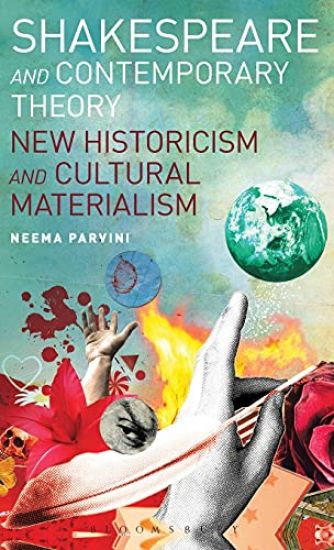
Shakespeare and Contemporary Theory

Shakespeare and Contemporary Theory

Neema Parvini

Bloomsbury Academic USA
2012
sidottu
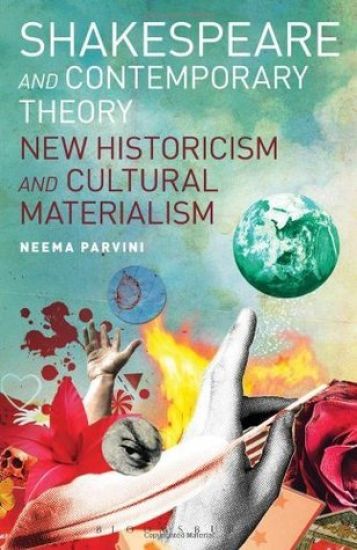
In the thirty years since thepublication of Stephen Greenblatt's Renaissance Self-Fashioningoverthrew traditional modes of Shakespeare criticism, New Historicism and CulturalMaterialism have rapidly become the dominant modes for studying and writingabout the Bard. This comprehensive guide introduces students to the keywriters, texts and ideas of contemporary Shakespeare criticism and alternativesto new historicist and cultural materialist approaches suggested by a range ofdissenters including evolutionary critics, historical formalists and advocatesof 'the new aestheticism', and the more politically active presentists. Shakespeare and Contemporary Theory covers such topics as: The key theoreticalinfluences on new historicism including Michel Foucault and Louis Althusser.The major critics, from Stephen Greenblatt to Jonathan Dollimore and AlanSinfield. Dissenting views from traditional critics and contemporary theorists. Chapter summaries and questions for discussion throughout encourage students tocritically engage with contemporary Shakespeare theory for themselves. The bookincludes a 'Who's Who' of major critics, a timeline of key publications and aglossary of essential critical terms to give students and teachers easy accessto essential information.
Shakespeare and Contemporary Theory

Shakespeare and Contemporary Theory

Neema Parvini

Bloomsbury Academic USA
2012
nidottu
In the 30 years since the publication of Stephen Greenblatt's Renaissance Self-Fashioning overthrew traditional modes of Shakespeare criticism, New Historicism and Cultural Materialism have rapidly become the dominant modes for studying and writing about the Bard. This comprehensive guide introduces students to the key writers, texts and ideas of contemporary Shakespeare criticism and alternatives to new historicist and cultural materialist approaches suggested by a range of dissenters including evolutionary critics, historical formalists and advocates of 'the new aestheticism', and the more politically active presentists. Shakespeare and Contemporary Theory covers such topics as: - The key theoretical influences on new historicism including Michel Foucault and Louis Althusser.- The major critics, from Stephen Greenblatt to Jonathan Dollimore and Alan Sinfield. - Dissenting views from traditional critics and contemporary theorists. Chapter summaries and questions for discussion throughout encourage students to critically engage with contemporary Shakespeare theory for themselves. The book includes a 'Who's Who' of major critics, a timeline of key publications and a glossary of essential critical terms to give students and teachers easy access to essential information.
Shakespeare and New Historicist Theory

Shakespeare and New Historicist Theory

Neema Parvini

The Arden Shakespeare
2017
nidottu
Over the past three decades, no critical movement has been more prominent in Shakespeare Studies than new historicism. And yet, it remains notoriously difficult to pin down, define and explain, let alone analyze. Shakespeare and New Historicist Theory provides a comprehensive scholarly analysis of new historicism as a development in Shakespeare studies while asking fundamental questions about its status as literary theory and its continued usefulness as a method of approaching Shakespeare’s plays.
Shakespeare and New Historicist Theory

Shakespeare and New Historicist Theory

Neema Parvini

The Arden Shakespeare
2017
sidottu
Over the past three decades, no critical movement has been more prominent in Shakespeare Studies than new historicism. And yet, it remains notoriously difficult to pin down, define and explain, let alone analyze. Shakespeare and New Historicist Theory provides a comprehensive scholarly analysis of new historicism as a development in Shakespeare studies while asking fundamental questions about its status as literary theory and its continued usefulness as a method of approaching Shakespeare’s plays.
Shakespeare'S Moral Compass

Shakespeare'S Moral Compass

Neema Parvini

Edinburgh University Press
2018
sidottu
Overturns orthodox thinking about morality in Shakespeare's plays by updating our understanding of the human mindThis ground-breaking study fearlessly combines latest research in evolutionary psychology, historical scholarship and philosophy to answer a question that has eluded critics for centuries: what is Shakespeare's moral vision? At a political and cultural moment in which many of us are taking stock and looking for meaning, and in which moral outrage and polarisation seem endemic, this book radically reimagines how we might approach great works of literature to find some answers.Key FeaturesProvocatively outlines how we might read literature for ethical contentBrings latest research on morality from evolutionary psychology and sociology to bear on the study of Shakespeare's playsComprehensive coverage of moral philosophy in Shakespeare's time and place, including the impact of the Renaissance, the Reformation and the rise of capitalismPlots 'Shakespeare's moral compass' on six foundations (Authority, Loyalty, Fairness, Sanctity, Care, Liberty) with a chapter on each
Shakespeare'S Moral Compass

Shakespeare'S Moral Compass

Neema Parvini

Edinburgh University Press
2020
nidottu
Overturns orthodox thinking about morality in Shakespeare's plays by updating our understanding of the human mindThis ground-breaking study fearlessly combines latest research in evolutionary psychology, historical scholarship and philosophy to answer a question that has eluded critics for centuries: what is Shakespeare's moral vision? At a political and cultural moment in which many of us are taking stock and looking for meaning, and in which moral outrage and polarisation seem endemic, this book radically reimagines how we might approach great works of literature to find some answers.Key FeaturesProvocatively outlines how we might read literature for ethical contentBrings latest research on morality from evolutionary psychology and sociology to bear on the study of Shakespeare's playsComprehensive coverage of moral philosophy in Shakespeare's time and place, including the impact of the Renaissance, the Reformation and the rise of capitalismPlots 'Shakespeare's moral compass' on six foundations (Authority, Loyalty, Fairness, Sanctity, Care, Liberty) with a chapter on each
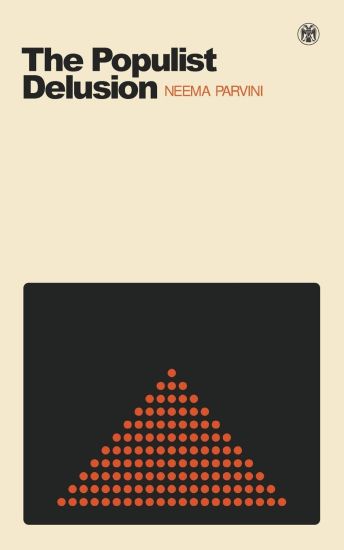
The Populist Delusion

The Populist Delusion

Neema Parvini

Imperium Press
2022
nidottu
The 2016 presidential campaign of Donald Trump unleashed a wave of populism not seen in America since the Nixon era, which carried him into the presidency. Seen widely as a vindication of the people over elites, his failure to bring about any meaningful change was then seen as an aberration, a departure from a natural state where the people are sovereign and their representatives govern by their consent. This is the populist delusion.This book explodes that delusion. Beginning with the Italian elite school, Parvini shows the top-down and elite driven nature of politics by explicating one thinker per chapter: Mosca, Pareto, Michels, Schmitt, Jouvenel, Burnham, Francis, and Gottfried. The sobering picture that emerges is that the interests of the people have only ever been advanced by a tightly organized minority. Just as fire drives out fire, so an elite is only ever driven out by another elite.The Populist Delusion is the remedy for a self-defeating folk politics that has done the people a great disservice.
The Defenders of Liberty

The Defenders of Liberty

Neema Parvini

Springer Nature Switzerland AG
2020
sidottu
The Defenders of Liberty presents a history of economic liberalism from the Renaissance to the present. It chronicles the tradition of thought that sees human nature as social yet self-interested, methodological individualism as its key analytical tool, and property rights as foundational to a civilised society. In the development of this way of thinking, it considers the contributions of many key thinkers including Niccolò Machiavelli, Thomas Hobbes, John Locke, Richard Cantillon, A.J.R. Turgot, David Hume, Adam Smith, Nassau William Senior, Richard Cobden, Herbert Spencer, Jean-Baptiste Say, Carl Menger, William Stanley Jevons, Gaetano Mosca, Eugen Böhm-Bawerk, Vilfredo Pareto, Phillip Wicksteed, Edwin Cannan, Ludwig von Mises, Lionel Robbins, F.A. Hayek, W.H. Hutt, Milton Friedman, George Stigler, Murray N. Rothbard, James M. Buchanan, and Thomas Sowell. The book contends that liberalism needs to be grounded in realism, and that it has been derailed whenever economists have deviated from an explicitly realist understanding of human nature, individualism and property rights. It argues that the cause of liberalism was compromised by errors in economic reasoning by such major figures as David Ricardo, John Stuart Mill, Alfred Marshall, A.C. Pigou, and John Maynard Keynes. In diagnosing what has gone wrong for liberalism in the twenty-first century, The Defenders of Liberty argues against substituting mathematical abstraction for causal realism; it opposes interventionist central banking; it seeks to recover economic liberalism from social and political liberalism, which are somewhat unrelated schools of thought; it resists a view of human nature rooted in selfishness or atomised individualism; and finally alerts defenders of freedom to the ruthless but effective language games played by their opponents. This book will be of interest to the educated general reader as well as undergraduates and postgraduates in disciplines such as economics, political theory and philosophy.
The Defenders of Liberty

The Defenders of Liberty

Neema Parvini

Springer Nature Switzerland AG
2021
nidottu
The Defenders of Liberty presents a history of economic liberalism from the Renaissance to the present. It chronicles the tradition of thought that sees human nature as social yet self-interested, methodological individualism as its key analytical tool, and property rights as foundational to a civilised society. In the development of this way of thinking, it considers the contributions of many key thinkers including Niccolò Machiavelli, Thomas Hobbes, John Locke, Richard Cantillon, A.J.R. Turgot, David Hume, Adam Smith, Nassau William Senior, Richard Cobden, Herbert Spencer, Jean-Baptiste Say, Carl Menger, William Stanley Jevons, Gaetano Mosca, Eugen Böhm-Bawerk, Vilfredo Pareto, Phillip Wicksteed, Edwin Cannan, Ludwig von Mises, Lionel Robbins, F.A. Hayek, W.H. Hutt, Milton Friedman, George Stigler, Murray N. Rothbard, James M. Buchanan, and Thomas Sowell. The book contends that liberalism needs to be grounded in realism, and that it has been derailed whenever economists have deviated from an explicitly realist understanding of human nature, individualism and property rights. It argues that the cause of liberalism was compromised by errors in economic reasoning by such major figures as David Ricardo, John Stuart Mill, Alfred Marshall, A.C. Pigou, and John Maynard Keynes. In diagnosing what has gone wrong for liberalism in the twenty-first century, The Defenders of Liberty argues against substituting mathematical abstraction for causal realism; it opposes interventionist central banking; it seeks to recover economic liberalism from social and political liberalism, which are somewhat unrelated schools of thought; it resists a view of human nature rooted in selfishness or atomised individualism; and finally alerts defenders of freedom to the ruthless but effective language games played by their opponents. This book will be of interest to the educated general reader as well as undergraduates and postgraduates in disciplines such as economics, political theory and philosophy.