Kirjojen hintavertailu. Mukana 12 031 191 kirjaa ja 12 kauppaa.

Kirjahaku

Etsi kirjoja tekijän nimen, kirjan nimen tai ISBN:n perusteella.

8 kirjaa tekijältä Neil Cohn

Who Understands Comics?

Who Understands Comics?

Neil Cohn

Bloomsbury Academic
2020
sidottu
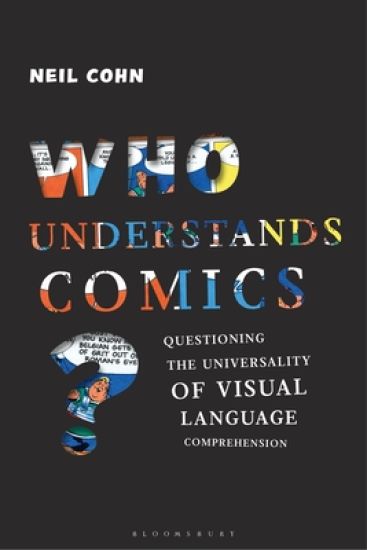
**Nominated for the 2021 Eisner Award for Best Academic/Scholarly Work**Drawings and sequential images are so pervasive in contemporary society that we may take their understanding for granted. But how transparent are they really, and how universally are they understood? Combining recent advances from linguistics, cognitive science, and clinical psychology, this book argues that visual narratives involve greater complexity and require a lot more decoding than widely thought. Although increasingly used beyond the sphere of entertainment as materials in humanitarian, educational, and experimental contexts, Neil Cohn demonstrates that their universal comprehension cannot be assumed. Instead, understanding a visual language requires a fluency that is contingent on exposure and practice with a graphic system. Bringing together a rich but scattered literature on how people comprehend, and learn to comprehend, a sequence of images, this book coalesces research from a diverse range of fields into a broader interdisciplinary view of visual narrative to ask: Who Understands Comics?
Who Understands Comics?

Who Understands Comics?

Neil Cohn

Bloomsbury Academic
2020
nidottu
**Nominated for the 2021 Eisner Award for Best Academic/Scholarly Work**Drawings and sequential images are so pervasive in contemporary society that we may take their understanding for granted. But how transparent are they really, and how universally are they understood? Combining recent advances from linguistics, cognitive science, and clinical psychology, this book argues that visual narratives involve greater complexity and require a lot more decoding than widely thought. Although increasingly used beyond the sphere of entertainment as materials in humanitarian, educational, and experimental contexts, Neil Cohn demonstrates that their universal comprehension cannot be assumed. Instead, understanding a visual language requires a fluency that is contingent on exposure and practice with a graphic system. Bringing together a rich but scattered literature on how people comprehend, and learn to comprehend, a sequence of images, this book coalesces research from a diverse range of fields into a broader interdisciplinary view of visual narrative to ask: Who Understands Comics?
The Patterns of Comics

The Patterns of Comics

Neil Cohn

BLOOMSBURY PUBLISHING PLC
2023
sidottu
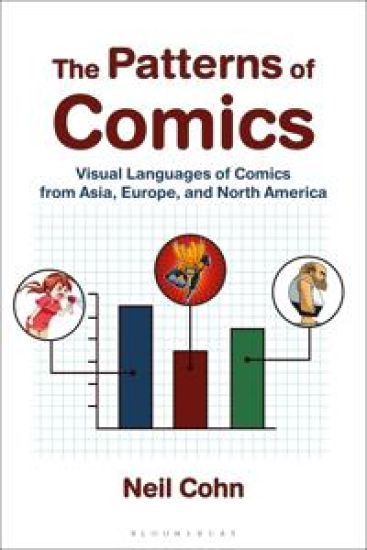
Comics are a global phenomenon, and yet it’s easy to distinguish the visual styles of comics from Asia, Europe, or the United States. But, do the structures of these visual narratives differ in more subtle ways? Might these comics actually be drawn in different visual languages that vary in their structures across cultures? To address these questions, The Patterns of Comics seeks evidence through a sustained analysis of an annotated corpus of over 36,000 panels from more than 350 comics from Asia, Europe, and the United States. This data-driven approach reveals the cross-cultural variation in symbology, layout, and storytelling between various visual languages, and shows how comics have changed across 80 years. It compares, for example, the subtypes within American comics and Japanese manga, and analyzes the formal properties of Bill Watterson’s Calvin and Hobbes across its entire 10-year run. Throughout, it not only uncovers the patterns in and across the panels of comics, but shows how these regularities in the visual languages of comics connect to the organizing principles of all languages.
The Patterns of Comics

The Patterns of Comics

Neil Cohn

BLOOMSBURY PUBLISHING PLC
2023
nidottu
Comics are a global phenomenon, and yet it’s easy to distinguish the visual styles of comics from Asia, Europe, or the United States. But, do the structures of these visual narratives differ in more subtle ways? Might these comics actually be drawn in different visual languages that vary in their structures across cultures? To address these questions, The Patterns of Comics seeks evidence through a sustained analysis of an annotated corpus of over 36,000 panels from more than 350 comics from Asia, Europe, and the United States. This data-driven approach reveals the cross-cultural variation in symbology, layout, and storytelling between various visual languages, and shows how comics have changed across 80 years. It compares, for example, the subtypes within American comics and Japanese manga, and analyzes the formal properties of Bill Watterson’s Calvin and Hobbes across its entire 10-year run. Throughout, it not only uncovers the patterns in and across the panels of comics, but shows how these regularities in the visual languages of comics connect to the organizing principles of all languages.
Speaking in Pictures

Speaking in Pictures

Neil Cohn

BLOOMSBURY PUBLISHING PLC
2026
nidottu
Pictures are a fundamental aspect of how we express ourselves, and cave paintings are among our oldest records of intelligence. Yet, despite their importance, why don’t most people feel they can draw, and why are pictures often considered less important than language?For over 20 years, Neil Cohn has pioneered research around these questions within the fields of linguistics and cognitive neuroscience, and this book is the result, heralding a new paradigm of language, drawing, and communication, all accessibly presented as a non-fiction graphic novel. This work challenges the conventional understandings of how pictures communicate, how people learn to draw, and the nature of language itself. With humor and a clear, friendly, and accessible tone, Speaking in Pictures introduces ground-breaking research by doing what it discusses: intertwining pictures and words into a single message as a non-fiction graphic novel, taking the reader on an inspiring journey through the study of communication and the mind.
Speaking in Pictures

Speaking in Pictures

Neil Cohn

BLOOMSBURY PUBLISHING PLC
2026
sidottu
Pictures are a fundamental aspect of how we express ourselves, and cave paintings are among our oldest records of intelligence. Yet, despite their importance, why don’t most people feel they can draw, and why are pictures often considered less important than language?For over 20 years, Neil Cohn has pioneered research around these questions within the fields of linguistics and cognitive neuroscience, and this book is the result, heralding a new paradigm of language, drawing, and communication, all accessibly presented as a non-fiction graphic novel. This work challenges the conventional understandings of how pictures communicate, how people learn to draw, and the nature of language itself. With humor and a clear, friendly, and accessible tone, Speaking in Pictures introduces ground-breaking research by doing what it discusses: intertwining pictures and words into a single message as a non-fiction graphic novel, taking the reader on an inspiring journey through the study of communication and the mind.
The Visual Language of Comics

The Visual Language of Comics

Neil Cohn

Bloomsbury Academic USA
2013
nidottu
Drawings and sequential images are an integral part of human expression dating back at least as far as cave paintings, and in contemporary society appear most prominently in comics. Despite this fundamental part of human identity, little work has explored the comprehension and cognitive underpinnings of visual narratives—until now. This work presents a provocative theory: that drawings and sequential images are structured the same as language. Building on contemporary theories from linguistics and cognitive psychology, it argues that comics are written in a visual language of sequential images that combines with text. Like spoken and signed languages, visual narratives use a lexicon of systematic patterns stored in memory, strategies for combining these patterns into meaningful units, and a hierarchic grammar governing the combination of sequential images into coherent expressions. Filled with examples and illustrations, this book details each of these levels of structure, explains how cross-cultural differences arise in diverse visual languages of the world, and describes what the newest neuroscience research reveals about the brain’s comprehension of visual narratives. From this emerges the foundation for a new line of research within the linguistic and cognitive sciences, raising intriguing questions about the connections between language and the diversity of humans’ expressive behaviours in the mind and brain.