Kirjojen hintavertailu. Mukana 11 717 486 kirjaa ja 12 kauppaa.

Kirjahaku

Etsi kirjoja tekijän nimen, kirjan nimen tai ISBN:n perusteella.

18 kirjaa tekijältä Neil Faulkner

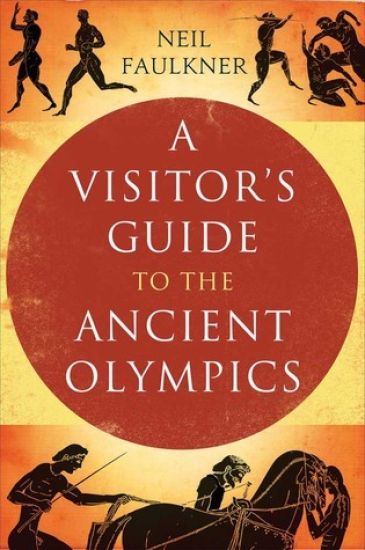
A Visitor's Guide to the Ancient Olympics

A Visitor's Guide to the Ancient Olympics

Neil Faulkner

Yale University Press
2012
pokkari
An essential book for the 21st-century citizen who seeks a lively guided tour of the ancient Greek Olympics What was it like to attend the Olympics in 388 B.C.? Would the experience resemble Olympic festivals as we celebrate them today? This remarkable book transports us back to the heyday of the city-state and classical Greek civilization. It invites us to enter this distant, alien, but still familiar culture and discover what the Greeks did and didn't do during five thrilling days in August 2,400 years ago.In the Olympic Stadium there were no stands, no shade—and no women allowed. Visitors sat on a grassy bank in the searing heat of midsummer to watch naked athletes compete in footraces, the pentathlon, horse and chariot races, and three combat sports—wrestling, boxing, and pankration, everyone's favorite competition, with virtually no rules and considerable blood and pain. This colorfully illustrated volume offers a complete tour of the Olympic site exactly as athletes and spectators found it. The book evokes the sights, sounds, and smells of the crowded encampment; introduces the various attendees (from champions and charlatans to aristocrats and prostitutes); and explains the numerous exotic religious rituals. Uniquely detailed and precise, this guide offers readers an unparalleled opportunity to travel in time, back to the excitement of ancient Olympia.
Lawrence of Arabia's War

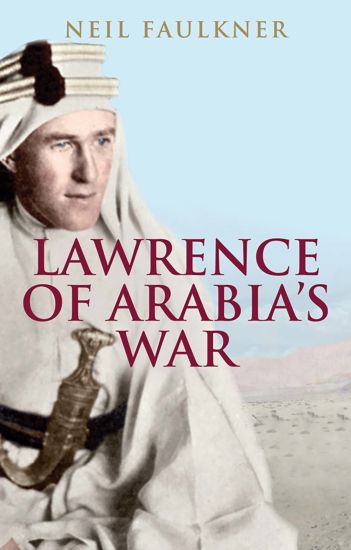
Lawrence of Arabia's War

Neil Faulkner

Yale University Press
2017
pokkari
A wealth of new research and thinking on Lawrence, the Arab Revolt, and World War One in the Middle East, providing essential background to today’s violent conflicts Rarely is a book published that revises our understanding of an entire world region and the history that has defined it. This groundbreaking volume makes just such a contribution. Neil Faulkner draws on ten years of field research to offer the first truly multidisciplinary history of the conflicts that raged in Sinai, Arabia, Palestine, and Syria during the First World War. In Lawrence of Arabia’s War, the author rewrites the history of T. E. Lawrence’s legendary military campaigns in the context of the Arab Revolt. He explores the intersections among the declining Ottoman Empire, the Bedouin tribes, nascent Arab nationalism, and Western imperial ambition. The book provides a new analysis of Ottoman resilience in the face of modern industrialized warfare, and it assesses the relative weight of conventional operations in Palestine and irregular warfare in Syria. Faulkner thus reassesses the historic roots of today’s divided, fractious, war-torn Middle East.
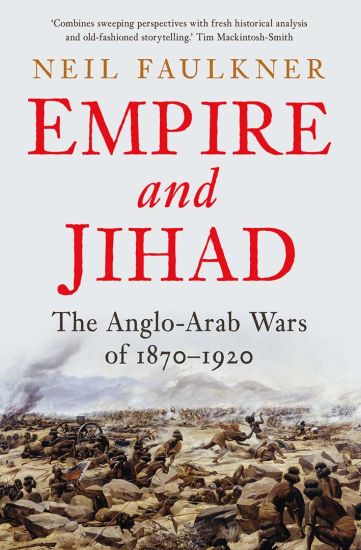
Empire and Jihad

Empire and Jihad

Neil Faulkner

Yale University Press
2021
sidottu
A panoramic, provocative account of the clash between British imperialism and Arab jihadism in Africa between 1870 and 1920 "An epic account of the British Empire’s activities in Africa and the Middle East. . . . An important, indeed tremendous, contribution."—John Newsinger, author of The Blood Never Dried: A People’s History of the British Empire The Ottoman Sultan called for a "Great Jihad" against the Entente powers at the start of the First World War. He was building on half a century of conflict between British colonialism and the people of the Middle East and North Africa. Resistance to Western violence increasingly took the form of radical Islamic insurgency. Ranging from the forests of Central Africa to the deserts of Egypt, Sudan, and Somaliland, Neil Faulkner explores a fatal collision between two forms of oppression, one rooted in the ancient slave trade, the other in modern "coolie" capitalism. He reveals the complex interactions between anti-slavery humanitarianism, British hostility to embryonic Arab nationalism, "war on terror" moral panics, and Islamist revolt. Far from being an enduring remnant of the medieval past, or an essential expression of Muslim identity, Faulkner argues that "Holy War" was a reactionary response to the violence of modern imperialism.
A Marxist History of the World

A Marxist History of the World

Neil Faulkner

Pluto Press
2013
pokkari
This magisterial analysis of human history - from 'Lucy', the first hominid, to the current Great Recession - combines the insights of earlier generations of Marxist historians with radical new ideas about the historical process. Reading history against the grain, Neil Faulkner reveals that what happened in the past was not predetermined. Choices were frequent and numerous. Different outcomes - liberation or barbarism - were often possible. Rejecting the top-down approach of conventional history, Faulkner contends that it is the mass action of ordinary people that drives great events. At the beginning of the 21st century - with economic disaster, war, climate catastrophe and deep class divisions - humans face perhaps the greatest crisis in the long history of our species. The lesson of A Marxist History of the World is that, if we created our past, we can also create a better future.
A Radical History of the World

A Radical History of the World

Neil Faulkner

Pluto Press
2018
pokkari
History is a weapon. The powerful have their version of events, the people have another. And if we understand how the past was forged, we arm ourselves to change the future. This is a history of struggle, revolution and social change: of hominids, hunters and herders; of emperors and slaves; of patriarchs and women; of rich and poor; of dictators and revolutionaries. From the ancient empires of Persia and Rome to the Russian Revolution, the Vietnam War, and the 2008 Crash, this is a history of greed and violence, but also of solidarity and resistance. Many times in the past, a different society became an absolute necessity. Humans have always struggled to create a better life. This history proves that we, the many, have the power to change the world.
A Radical History of the World

A Radical History of the World

Neil Faulkner

Pluto Press
2018
sidottu
History is a weapon. The powerful have their version of events, the people have another. And if we understand how the past was forged, we arm ourselves to change the future. This is a history of struggle, revolution and social change: of hominids, hunters and herders; of emperors and slaves; of patriarchs and women; of rich and poor; of dictators and revolutionaries. From the ancient empires of Persia and Rome to the Russian Revolution, the Vietnam War, and the 2008 Crash, this is a history of greed and violence, but also of solidarity and resistance. Many times in the past, a different society became an absolute necessity. Humans have always struggled to create a better life. This history proves that we, the many, have the power to change the world.
A People's History of the Russian Revolution
The Russian Revolution may well be the most misunderstood event in modern history. In this fast-paced introduction, Neil Faulkner debunks the myths that continue to shroud it, showing how a mass movement of millions, organised in democratic assemblies, mobilised for militant action and destroyed a regime of landlords, profiteers and warmongers. Faulkner rejects caricatures of Lenin and the Bolsheviks as authoritarian conspirators, 'democratic-centralists' or the progenitors of Stalinist dictatorship; though short-lived, the Revolution of October 1917 was an explosion of democracy and creativity. Crushed by bloody counter-revolution, its socialist vision was ultimately displaced by a monstrous form of bureaucratic state-capitalism. Laced with first-hand testimony, this history rescues the democratic essence of the revolution from its detractors and deniers, offering a perfect primer for the modern reader. Published in partnership with the Left Book Club.
A People's History of the Russian Revolution
The Russian Revolution may well be the most misunderstood event in modern history. In this fast-paced introduction, Neil Faulkner debunks the myths that continue to shroud it, showing how a mass movement of millions, organised in democratic assemblies, mobilised for militant action and destroyed a regime of landlords, profiteers and warmongers. Faulkner rejects caricatures of Lenin and the Bolsheviks as authoritarian conspirators, 'democratic-centralists' or the progenitors of Stalinist dictatorship; though short-lived, the Revolution of October 1917 was an explosion of democracy and creativity. Crushed by bloody counter-revolution, its socialist vision was ultimately displaced by a monstrous form of bureaucratic state-capitalism. Laced with first-hand testimony, this history rescues the democratic essence of the revolution from its detractors and deniers, offering a perfect primer for the modern reader. Published in partnership with the Left Book Club.
The Decline and Fall of Roman Britain

The Decline and Fall of Roman Britain

Neil Faulkner

The History Press Ltd
2001
nidottu
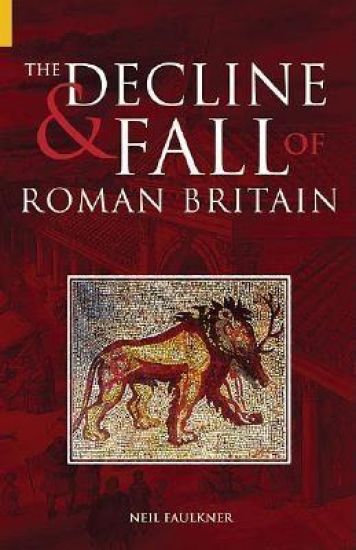
Combining a fresh analysis of the archaeological evidence with the traditional historical accounts, Neil Faulkner presents a new interpretation of the decline and fall of Roman Britain. The original conquest of Britain was one of the last successes of Roman military imperialism, whereas the Romans' repeated failures on the north British frontier shows the limits of this system. A new order became established in Britain: a centralised, military-bureaucratic state, governed by a class of super-rich landlords and apparatchiks, who siphoned wealth out of the provinces to defend the frontier. As a result the towns declined and the countryside was depressed. This process of decline led to the great military crisis of the last fourth century. The Roman imperial army, bled white by defeats on continental battlefields, withdrew its troops from Britain to defend the imperial heartlands, and the Romano-British elite succumbed to a combination of warlord power, barbarian attack an popular revolt. The study concludes by discussing the legacy of Roman's and the significance of the so-called 'Dark Ages'.
Apocalypse

Apocalypse

Neil Faulkner

NPI Media Group
2002
sidottu
Ancient Palestine was a ferment of social conflict and ideological rivalries. Full-scale insurrectionary revolt exploded in AD 66, a revolt which took on a revolutionary character as moderate upper-class Jewish leaders were pushed aside and replaced by more radical plebeian elements. The defeat of local Roman forces led to the appointment of Vespasian to command and the invasion of revolutionary Palestine by a huge Roman army in AD 67. The war was characterized by hard guerrilla fighting in the countryside, bitterly fought sieges - culminating in the siege, fall and destruction of Jerusalem in AD 70-1 - and appalling atrocities. Mopping-up operations ended with the spectacular siege of Masada in AD 73. The author synthesizes textual and archaeological evidence to produce an essentially narrative account to these events, but also deals in detail with the historical and cultural context of the revolt.
Apocalypse

Apocalypse

Neil Faulkner

The History Press Ltd
2004
nidottu
The great revolt by the Jews against the occupying Roman power in the first century AD ended in bloody defeat. Neil Faulkner provides a blow-by-blow account of this long and bitter struggle, together with a shrewd analysis of the underlying issues. The author synthesises the evidence of written sources with that of archaeology to produce a narrative account of the revolt with full historical and cultural background. This event was a milestone in Jewish national consciousness.
Interpreting Archaeology

Interpreting Archaeology

Neil Faulkner

ARCTURUS PUBLISHING LTD
2023
sidottu
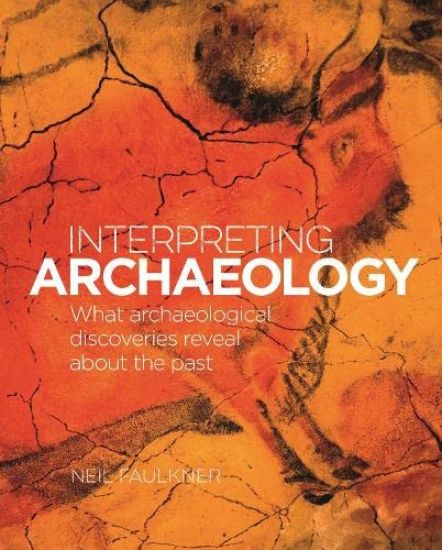
Archaeology can shed light on the rise and fall of empires, the march of technology, the nature of past societies, the development of arts and culture, the course of warfare, and much more. Yet what gives it its greatest value is its ability to illuminate the area in which written records fall short - the everyday lives of ordinary people.Interpreting Archaeology uses a wide array of evidence, including artefacts as varied as humble ceramic pots, imposing monuments, and genetic data, to tell the human story from a new angle.Beginning with the discoveries that have reshaped our understanding of hominin evolution and the spread of Homo sapiens across the globe, Neil Faulkner has charted a fascinating journey through the past, taking in everything from the rise of the world's first great civilizations to the establishment of hierarchies, the development of art and religion, and the causes of warfare along the way.
Första världskrigets övergivna platser
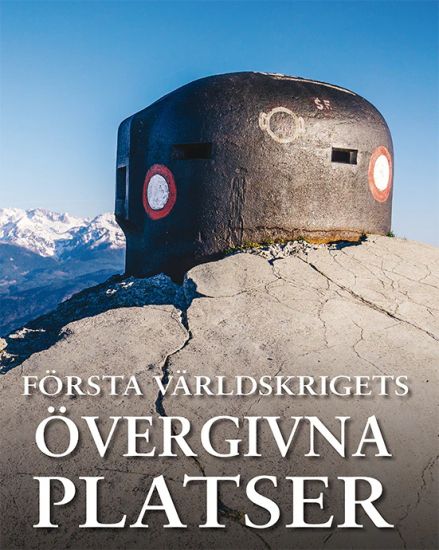
Följ med på en fotografisk tidsresa!Första världskrigets övergivna platser är en fascinerande bildberättelse om första världskriget. Fotografierna skildrar de lämningar som finns kvar i dag, bland annat överväxta bunkrar, strandade fartygsvrak, rostande artilleripjäser, kasserad ammunition, bortglömda fort och förfallna skyttegravar. Boken redogör för lämningar från alla delar av världen, från slagfälten i Belgien och Frankrike, via bergssluttningarna i Alperna och Karpaterna till Gallipolihalvön, Jordaniens och Palestinas öknar samt Stilla havet.
Abandoned Places of World War I

Abandoned Places of World War I

Neil Faulkner

Amber Books Ltd
2021
sidottu
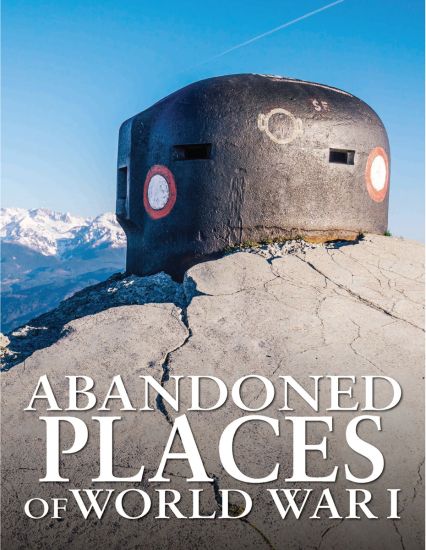
An overgrown concrete bunker at Ypres; a rusting gun carriage in a field in Flanders; perfectly preserved trenchworks at Vimy, northern France; a rocky mountaintop observation post high in the Tyrolean mountains. More than 100 years after the end of World War I, the conflict’s legacy can still be seen from Europe to the Pacific. Abandoned Places of World War I explores more than 120 bunkers, trench systems, tunnels, fortifications and gun emplacements from North America to East Africa. Included are defensive structures, such as Fort Douaumont at Verdun, the site of the Western Front’s bloodiest battle; the elaborately constructed tunnels of the Wellington Quarry, near Arras, designed to provide a safe working hospital for wounded British soldiers; and crumbling concrete pill boxes in Anzac Cove, Turkey. From the preserved remains of the mighty Przemysl fortress to bunkers and observation points high in the Slovenian Dolomites, Abandoned Places of World War I features more than 180 striking photographs from around the world.