Kirjojen hintavertailu. Mukana 11 244 527 kirjaa ja 12 kauppaa.

Kirjahaku

Etsi kirjoja tekijän nimen, kirjan nimen tai ISBN:n perusteella.

2 kirjaa tekijältä Neil Feit

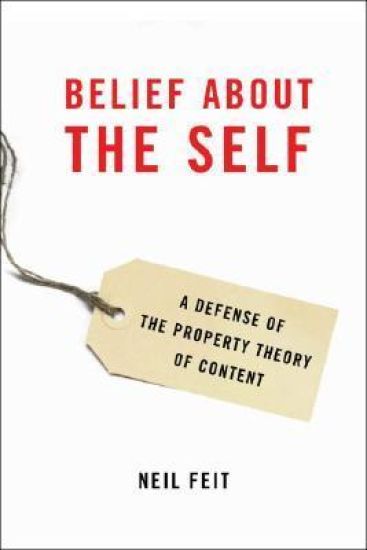
Belief about the Self

Belief about the Self

Neil Feit

Oxford University Press Inc
2008
sidottu
Philosophers typically suppose that the contents of our beliefs and other cognitive attitudes are propositions-things that might be true or false, and their truth values do not vary from time to time, place to place, or person to person. Neil Feit argues that this view breaks down in the face of beliefs about the self. These are beliefs that we express by means of a first-person pronoun. Feit maintains-following David Lewis, Roderick Chisholm, and others-that in general, the contents of our beliefs are properties. Unlike propositions, properties lack absolute truth values that do not vary with time, place, or person. Belief about the Self offers a sustained defense of the Property Theory of Content, according to which the content of every cognitive attitude is a property rather than a proposition. The theory is supported with an array of new arguments, defended from various objections, and applied to some important problems and puzzles in the philosophy of mind.

Bad Things

Bad Things

Neil Feit

OXFORD UNIVERSITY PRESS INC
2023
sidottu
Bad Things addresses various philosophical questions about the nature and moral relevance of harm. The most basic question is this: under what conditions does an event (or do some events) harm a given individual? Neil Feit focuses primarily on the metaphysics of harm, and he both defends and extends the counterfactual comparative account of harm. On this account, in its most basic form, an act or event harms an individual provided that she would have been better off if it had not occurred. The counterfactual comparative account is widely accepted but also widely criticized. Feit provides detailed and thorough responses to the most challenging objections. He argues that an adequate theory of harm should entail the counterfactual comparative account but also make room for a certain kind plural harm, where two or more events together harm an individual although neither one by itself is harmful. These harmful events are bad things, collectively, even if no single event is itself a bad thing. Feit sets out and defends a detailed account of plural harm, addressing issues about the magnitude and the time of the harm suffered by the victim. The primary focus of the book is on the metaphysics of harm, but issues concerning its normative or moral relevance are addressed. In particular, Feit questions the received view that there are strong reasons, which can be overridden only in unusual circumstances, against harming per se.