Kirjojen hintavertailu. Mukana 11 244 527 kirjaa ja 12 kauppaa.

Kirjahaku

Etsi kirjoja tekijän nimen, kirjan nimen tai ISBN:n perusteella.

2 kirjaa tekijältä Neil G. Jacobs

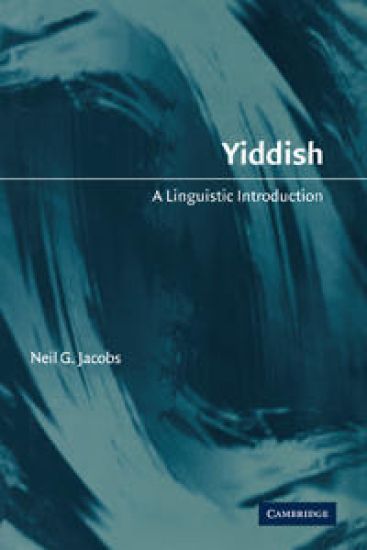
Yiddish

Yiddish

Neil G. Jacobs

Cambridge University Press
2009
pokkari
Yiddish, the language of Ashkenazic Jewry, arose some 900–1200 years ago as a result of contact with indigenous varieties of medieval German. Over the next few centuries, it grew to cover the second-largest language area in Europe, with Yiddish-speaking colonies being created in North and South America, Palestine/Israel, Australia and South Africa. It is estimated that just before the Nazi genocide in World War II, there were between 11 and 13 million Yiddish speakers worldwide. This broad yet comprehensive 2005 introduction provides an authoritative overview of all aspects of Yiddish language and linguistics. As well as looking at key features of its syntax, phonology and morphology, Neil Jacobs discusses its history, its dialectology, and the sociolinguistic issues surrounding it. Presenting linguistic data in a way that is compatible with general theoretical issues, it will be welcomed by scholars of general linguistics, Germanic linguistics, and Jewish Studies alike.
Yiddish

Yiddish

Neil G. Jacobs

Cambridge University Press
2005
sidottu
Yiddish, the language of Ashkenazic Jewry, arose some 900–1200 years ago as a result of contact with indigenous varieties of medieval German. Over the next few centuries, it grew to cover the second-largest language area in Europe, with Yiddish-speaking colonies being created in North and South America, Palestine/Israel, Australia and South Africa. It is estimated that just before the Nazi genocide in World War II, there were between 11 and 13 million Yiddish speakers worldwide. This broad yet comprehensive 2005 introduction provides an authoritative overview of all aspects of Yiddish language and linguistics. As well as looking at key features of its syntax, phonology and morphology, Neil Jacobs discusses its history, its dialectology, and the sociolinguistic issues surrounding it. Presenting linguistic data in a way that is compatible with general theoretical issues, it will be welcomed by scholars of general linguistics, Germanic linguistics, and Jewish Studies alike.