Kirjojen hintavertailu. Mukana 11 699 587 kirjaa ja 12 kauppaa.

Kirjahaku

Etsi kirjoja tekijän nimen, kirjan nimen tai ISBN:n perusteella.

6 kirjaa tekijältä Neil Gascoigne

Richard Rorty

Richard Rorty

Neil Gascoigne

Polity Press
2008
sidottu
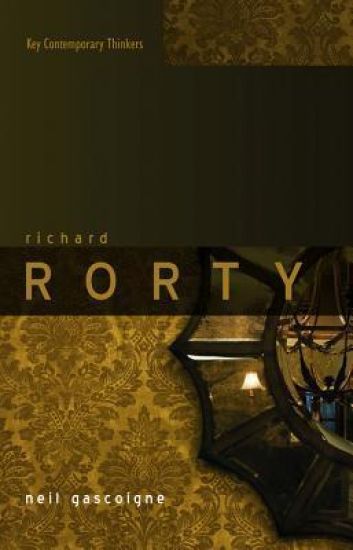
Neil Gascoigne provides the first comprehensive introduction Richard Rorty’s work. He demonstrates to the general reader and to the student of philosophy alike how the radical views on truth, objectivity and rationality expressed in Rorty’s widely-read essays on contemporary culture and politics derive from his earliest work in the philosophy of mind and language. He avoids the partisanship that characterizes much discussion of Rorty’s work whilst providing a critical account of some of the dominant concerns of contemporary thought. Beginning with Rorty’s early work on concept-change in the philosophy of mind, the book traces his increasing hostility to the idea that philosophy is cognitively privileged with respect to other disciplines. After the publication of Philosophy and the Mirror of Nature, this led to a new emphasis on preserving the moral and political inheritance of the enlightenment by detaching it from the traditional search for rational foundations. This emerging project led Rorty to champion ‘ironic’ thinkers like Foucault and Derrida, and to his attempt to update the liberalism of J. S. Mill by offering a non-universalistic account of the individual’s need to balance their own private interests against their commitments to others. By returning him to his philosophical roots, Gascoigne shows why Rorty’s pragmatism is of continuing relevance to anyone interested in ongoing debates about the nature and limits of philosophy, and the implications these debates have for our understanding of what role the intellectual might play in contemporary life. This book serves as both an excellent introduction to Rorty’s work and an innovative critique which contributes to ongoing debates in the field.
Richard Rorty

Richard Rorty

Neil Gascoigne

Polity Press
2008
nidottu
Neil Gascoigne provides the first comprehensive introduction Richard Rorty’s work. He demonstrates to the general reader and to the student of philosophy alike how the radical views on truth, objectivity and rationality expressed in Rorty’s widely-read essays on contemporary culture and politics derive from his earliest work in the philosophy of mind and language. He avoids the partisanship that characterizes much discussion of Rorty’s work whilst providing a critical account of some of the dominant concerns of contemporary thought. Beginning with Rorty’s early work on concept-change in the philosophy of mind, the book traces his increasing hostility to the idea that philosophy is cognitively privileged with respect to other disciplines. After the publication of Philosophy and the Mirror of Nature, this led to a new emphasis on preserving the moral and political inheritance of the enlightenment by detaching it from the traditional search for rational foundations. This emerging project led Rorty to champion ‘ironic’ thinkers like Foucault and Derrida, and to his attempt to update the liberalism of J. S. Mill by offering a non-universalistic account of the individual’s need to balance their own private interests against their commitments to others. By returning him to his philosophical roots, Gascoigne shows why Rorty’s pragmatism is of continuing relevance to anyone interested in ongoing debates about the nature and limits of philosophy, and the implications these debates have for our understanding of what role the intellectual might play in contemporary life. This book serves as both an excellent introduction to Rorty’s work and an innovative critique which contributes to ongoing debates in the field.
Scepticism

Scepticism

Neil Gascoigne

Acumen Publishing Ltd
2014
sidottu
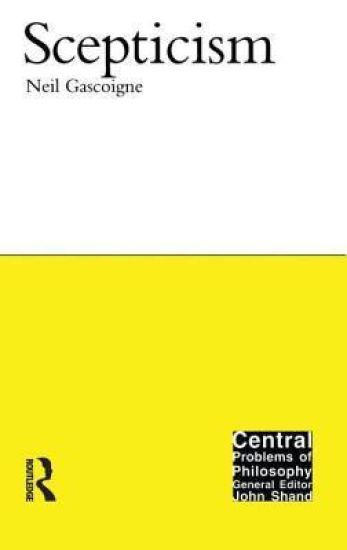
The history of scepticism is assumed by many to be the history of failed responses to a problem first raised by Descartes. While the thought of the ancient sceptics is acknowledged, their principle concern with how to live a good life is regarded as bearing little, if any, relation to the work of contemporary epistemologists. In "Scepticism" Neil Gascoigne engages with the work of canonical philosophers from Descartes, Hume and Kant through to Moore, Austin, and Wittgenstein to show how themes that first emerged in the Hellenistic period are inextricably bound up with the historical development of scepticism. Foremost amongst these is the view that scepticism relates not to the possibility of empirical knowledge but to the possibility of epistemological theory. This challenge to epistemology itself is explored and two contemporary trends are considered: the turn against foundationalist epistemology and towards more naturalistic conceptions of inquiry, and the resistance to this on the part of non-naturalistically inclined philosophers. In contextualizing the debate in this way Gascoigne equips students with a better appreciation of the methodological importance of sceptical reasoning, an analytic understanding of the structure of sceptical arguments, and an awareness of the significance of scepticism to the nature of philosophical inquiry.
Scepticism

Scepticism

Neil Gascoigne

Acumen Publishing Ltd
2014
nidottu
The history of scepticism is assumed by many to be the history of failed responses to a problem first raised by Descartes. While the thought of the ancient sceptics is acknowledged, their principle concern with how to live a good life is regarded as bearing little, if any, relation to the work of contemporary epistemologists. In "Scepticism" Neil Gascoigne engages with the work of canonical philosophers from Descartes, Hume and Kant through to Moore, Austin, and Wittgenstein to show how themes that first emerged in the Hellenistic period are inextricably bound up with the historical development of scepticism. Foremost amongst these is the view that scepticism relates not to the possibility of empirical knowledge but to the possibility of epistemological theory. This challenge to epistemology itself is explored and two contemporary trends are considered: the turn against foundationalist epistemology and towards more naturalistic conceptions of inquiry, and the resistance to this on the part of non-naturalistically inclined philosophers. In contextualizing the debate in this way Gascoigne equips students with a better appreciation of the methodological importance of sceptical reasoning, an analytic understanding of the structure of sceptical arguments, and an awareness of the significance of scepticism to the nature of philosophical inquiry.
Rorty, Liberal Democracy, and Religious Certainty

Rorty, Liberal Democracy, and Religious Certainty

Neil Gascoigne

Springer Nature Switzerland AG
2019
sidottu
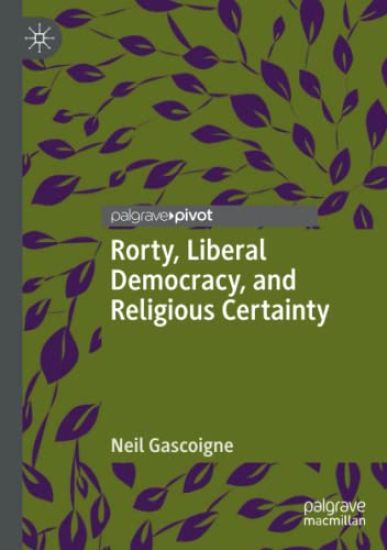
This book asks whether there any limits to the sorts of religious considerations that can be raised in public debates, and if there are, by whom they are to be identified. Its starting point is the work of Richard Rorty, whose pragmatic pluralism leads him to argue for a politically motivated anticlericalism rather than an epistemologically driven atheism. Rather than defend Rorty’s position directly, Gascoigne argues for an epistemological stance he calls ‘Pragmatist Fideism’. The starting point for this exercise in what Rorty calls ‘Cultural Politics’ is an acknowledgement that one must appeal to both secularists and those with religious commitments. In recent years ‘reformed’ epistemologists have aimed to establish a parity of epistemic esteem between religious and perceptual beliefs by exploiting an analogy in respect of their mutual vulnerability to sceptical challenges. Through an examination of this analogy, and in light of Wittgenstein’s On Certainty, this book argues that understood correctly the ‘parity’ argument in fact lends epistemological support to the argument that religious considerations should not be raised in public debate. The political price paid—paying the price of politics—is worth it: the religious thinker is provided with a good reason for maintaining that their practices and beliefs are not undermined by other forms of religious life.
Rorty, Liberal Democracy, and Religious Certainty

Rorty, Liberal Democracy, and Religious Certainty

Neil Gascoigne

Springer Nature Switzerland AG
2020
nidottu
This book asks whether there any limits to the sorts of religious considerations that can be raised in public debates, and if there are, by whom they are to be identified. Its starting point is the work of Richard Rorty, whose pragmatic pluralism leads him to argue for a politically motivated anticlericalism rather than an epistemologically driven atheism. Rather than defend Rorty’s position directly, Gascoigne argues for an epistemological stance he calls ‘Pragmatist Fideism’. The starting point for this exercise in what Rorty calls ‘Cultural Politics’ is an acknowledgement that one must appeal to both secularists and those with religious commitments. In recent years ‘reformed’ epistemologists have aimed to establish a parity of epistemic esteem between religious and perceptual beliefs by exploiting an analogy in respect of their mutual vulnerability to sceptical challenges. Through an examination of this analogy, and in light of Wittgenstein’s On Certainty, this book argues that understood correctly the ‘parity’ argument in fact lends epistemological support to the argument that religious considerations should not be raised in public debate. The political price paid—paying the price of politics—is worth it: the religious thinker is provided with a good reason for maintaining that their practices and beliefs are not undermined by other forms of religious life.