Kirjojen hintavertailu. Mukana 11 244 527 kirjaa ja 12 kauppaa.

Kirjahaku

Etsi kirjoja tekijän nimen, kirjan nimen tai ISBN:n perusteella.

5 kirjaa tekijältä Neil Gross

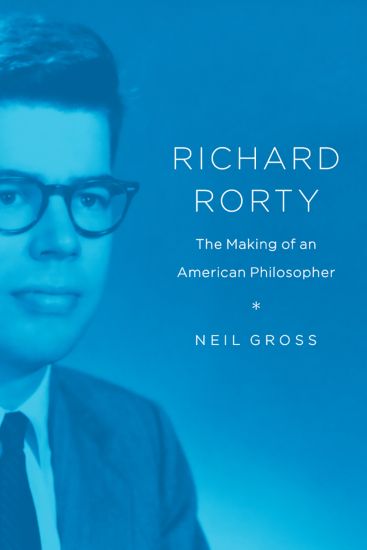
Richard Rorty

Richard Rorty

Neil Gross

University of Chicago Press
2019
pokkari
On his death in 2007, Richard Rorty was heralded by the New York Times as "one of the world's most influential contemporary thinkers." Controversial on the left and the right for his critiques of objectivity and political radicalism, Rorty experienced a renown denied to all but a handful of living philosophers. In this masterly biography, Neil Gross explores the path of Rorty's thought over the decades in order to trace the intellectual and professional journey that led him to that prominence. The child of a pair of leftist writers who worried that their precocious son "wasn't rebellious enough," Rorty enrolled at the University of Chicago at the age of fifteen. There he came under the tutelage of polymath Richard McKeon, whose catholic approach to philosophical systems would profoundly influence Rorty's own thought. Doctoral work at Yale led to Rorty's landing a job at Princeton, where his colleagues were primarily analytic philosophers. With a series of publications in the 1960s, Rorty quickly established himself as a strong thinker in that tradition--but by the late 1970s Rorty had eschewed the idea of objective truth altogether, urging philosophers to take a "relaxed attitude" toward the question of logical rigor. Drawing on the pragmatism of John Dewey, he argued that philosophers should instead open themselves up to multiple methods of thought and sources of knowledge--an approach that would culminate in the publication of Philosophy and the Mirror of Nature, one of the most seminal and controversial philosophical works of our time. In clear and compelling fashion, Gross sets that surprising shift in Rorty's thought in the context of his life and social experiences, revealing the many disparate influences that contribute to the making of knowledge. As much a book about the growth of ideas as it is a biography of a philosopher, Richard Rorty will provide readers with a fresh understanding of both the man and the course of twentieth-century thought.
Why Are Professors Liberal and Why Do Conservatives Care?
Some observers see American academia as a bastion of leftist groupthink that indoctrinates students and silences conservative voices. Others see a protected enclave that naturally produces free-thinking, progressive intellectuals. Both views are self-serving, says Neil Gross, but neither is correct. Why Are Professors Liberal and Why Do Conservatives Care? explains how academic liberalism became a self-reproducing phenomenon, and why Americans on both the left and right should take notice.Academia employs a higher percentage of liberals than nearly any other profession. But the usual explanations—hiring bias against conservatives, correlations of liberal ideology with high intelligence—do not hold up to scrutiny. Drawing on a range of original research, statistics, and interviews, Gross argues that “political typing” plays an overlooked role in shaping academic liberalism. For historical reasons, the professoriate developed a reputation for liberal politics early in the twentieth century. As this perception spread, it exerted a self-selecting influence on bright young liberals, while deterring equally promising conservatives. Most professors’ political views formed well before they stepped behind the lectern for the first time.Why Are Professors Liberal and Why Do Conservatives Care? shows how studying the political sympathies of professors and their critics can shed light not only on academic life but on American politics, where the modern conservative movement was built in no small part around opposition to the “liberal elite” in higher education. This divide between academic liberals and nonacademic conservatives makes accord on issues as diverse as climate change, immigration, and foreign policy more difficult.
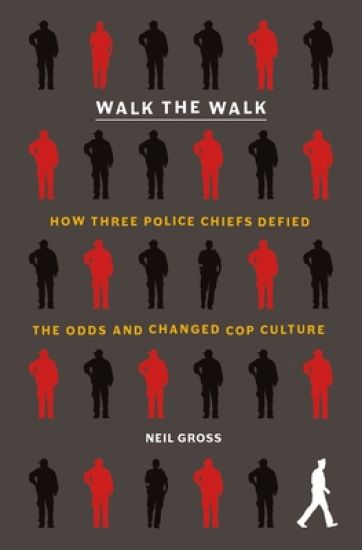
Walk the Walk: How Three Police Chiefs Defied the Odds and Changed Cop Culture
From "one of the most interesting sociologists of his generation" and a former cop, the story of three departments and their struggle to change aggressive police culture and achieve what Americans want: fair, humane, and effective policing. What should we do about the police? After the murder of George Floyd, there's no institution more controversial: only 14 percent of Americans believe that "policing works pretty well as it is" (CNN, April 27, 2021). We're swimming in proposals for reform, but most do not tackle the aggressive culture of the profession, which prioritizes locking up bad guys at any cost, loyalty to other cops, and not taking flak from anyone on the street. Far from improving public safety, this culture, in fact, poses a danger to citizens and cops alike. Walk the Walk brings readers deep inside three unusual departments--in Stockton, California; Longmont, Colorado; and LaGrange, Georgia--whose chiefs signed on to replace that aggressive culture with something better: with models focused on equity before the law, social responsibility, racial reconciliation, and the preservation of life. Informed by research, unflinching and by turns gripping, tragic, and inspirational, this book follows the chiefs--and their officers and detectives--as they conjured a new spirit of policing. While every community faces unique challenges with police reform, Walk the Walk opens a window onto what the police could be, if we took seriously the charge of creating a more just America.
Walk the Walk: How Three Police Chiefs Defied the Odds and Changed Cop Culture
From "one of the most interesting sociologists of his generation" and a former cop, the story of three departments and their struggle to change aggressive police culture and achieve what Americans want: fair, humane, and effective policing. What should we do about the police? After the murder of George Floyd, there's no institution more controversial: only 14 percent of Americans believe that "policing works pretty well as it is" (CNN, April 27, 2021). We're swimming in proposals for reform, but most do not tackle the aggressive culture of the profession, which prioritizes locking up bad guys at any cost, loyalty to other cops, and not taking flak from anyone on the street. Far from improving public safety, this culture, in fact, poses a danger to citizens and cops alike. Walk the Walk brings readers deep inside three unusual departments--in Stockton, California; Longmont, Colorado; and LaGrange, Georgia--whose chiefs signed on to replace that aggressive culture with something better: with models focused on equity before the law, social responsibility, racial reconciliation, and the preservation of life. Informed by research, unflinching and by turns gripping, tragic, and inspirational, this book follows the chiefs--and their officers and detectives--as they conjured a new spirit of policing. While every community faces unique challenges with police reform, Walk the Walk opens a window onto what the police could be, if we took seriously the charge of creating a more just America.
What Happened to College?: How Politics Broke Higher Education and What We Can Do to Fix It
How did college become such a minefield? A sociologist who has been tracking the polarization of higher education reveals how things went off track, what students are saying, and where we can find hope. Imagine arriving on campus, full of excitement and anticipation, only to find that every other conversation can devolve into an ideological litmus test. Over the last ten years, politics has seeped into every corner of college life. From the moment students set foot in their dorms, they're navigating a morass of self-censorship and social exclusion. How can anyone hope to learn when the cost of speaking freely is so high? A sociologist known for his groundbreaking work on campus politics, Neil Gross spoke to hundreds of students and faculty at America's top colleges and universities and polled thousands more to make sense of how epic polarization, cancel culture, battles over race and gender, administrative overreach, anxieties about the future of work, and intrusive political assumptions baked into the curriculum have remade the college experience. What he found was startling: To a degree unimaginable a generation ago, undergraduates are choosing their schools, friends, partners, activities, majors, and classes based on their political beliefs, with the goal of interacting as little as possible with anyone whose views don't line up with their own. Popular campus dating apps invite you to swipe left if you don't like someone's political profile--a metaphor for today's college experience writ large. Instead of resisting this development, faculty and administrators added fuel to the fire. A must-read for anyone who cares about our kids, their education, and the future of our democracy, What Happened to College? paints a stark picture of an educational system in crisis----and under assault. But it's not all doom and gloom. While some are questioning the value of an over-priced degree, there are places where open debate and friendship across political lines still thrive. What's their secret? And will our universities, once the envy of the world, have the courage and creativity to get back on track?