Kirjojen hintavertailu. Mukana 11 244 527 kirjaa ja 12 kauppaa.

Kirjahaku

Etsi kirjoja tekijän nimen, kirjan nimen tai ISBN:n perusteella.

12 kirjaa tekijältä Neil Harris

Capital Culture

Capital Culture

Neil Harris

University of Chicago Press
2013
sidottu
American art museums flourished in the late twentieth century, and the impresario leading much of this growth was J. Carter Brown, director of the National Gallery of Art in Washington, DC, from 1969 to 1992. Along with S. Dillon Ripley, who served as Smithsonian secretary for much of that time, Brown reinvented the museum experience in ways that had important consequences for the cultural life of Washington and its visitors as well as for American museums in general. In Capital Culture, distinguished historian Neil Harris provides a wide-ranging look at Brown's achievement and the growth of museum culture during this crucial period. Harris combines his in-depth knowledge of American history and culture with extensive archival research, interviewing dozens of key players to reveal how Brown's showmanship transformed the National Gallery. At the time of the Cold War, Washington itself was growing into a global destination, with Brown as its devoted booster. Harris describes Brown's major role in the birth of blockbuster exhibitions, such as the King Tut show of the late 1970s and the National Gallery's immensely successful Treasure Houses of Britain, which helped inspire similarly popular exhibitions around the country. He recounts Brown's role in the creation of the award-winning East Building by architect I. M. Pei and the subsequent renovation of the West Building. Harris also explores the politics of exhibition planning, describing Brown's courtship of corporate leaders, politicians, and international dignitaries. In this monumental book, Harris brings to life a dynamic era and exposes the creation of Brown's impressive but costly legacy, one that changed the face of American museums forever.
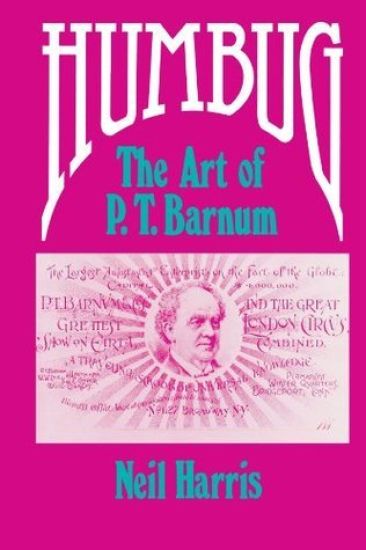
The Artist in American Society

The Artist in American Society

Neil Harris

University of Chicago Press
1982
nidottu
What was the place of the artist in a new society? How would he thrive where monarchy, aristocracy, and an established church—those traditional patrons of painting, sculpture, and architecture—were repudiated so vigorously? Neil Harris examines the relationships between American cultural values and American society during the formative years of American art and explores how conceptions of the artist's social role changed during those years.
Cultural Excursions

Cultural Excursions

Neil Harris

University of Chicago Press
1990
nidottu
Neil Harris's scholarship of the past twenty-five years has helped to open up the study of American cultural history. This long-awaited collection gathers some of his rich and varied writings. Harris takes us from John Philip Sousa to Superman, with stops along the way to explore art museums and world fairs, shopping malls and hotel lobbies, urban design and utopian novels, among other artifacts of American cultures. The essays fall into three general sections: the first treats the history of cultural institutions, highlighting the role of museums; the second section focuses on some literary, artistic, and entrepreneurial responses to the new mass culture; and the final group of essays explores the social history of art and architecture. Throughout Harris's diverse writings certain themes recur—the redefining of boundaries between high art and popular culture, the relationship between public taste and technological change, and the very notion of what constitutes a shared social experience. Harris's pioneering work has broadened the field of cultural history and encouraged whole new areas of inquiry. Cultural Excursions will be useful for those in American and culture studies, as well as for the general reader trying to make sense of the culture in which we live.
The Chicagoan

The Chicagoan

Neil Harris

University of Chicago Press
2008
sidottu
While browsing the stacks of the Regenstein Library at the University of Chicago some years ago, noted historian Neil Harris made a surprising discovery: a group of nine plainly bound volumes whose unassuming spines bore the name "The Chicagoan". Pulling one down and leafing through its pages, Harris was startled to find it brimming with striking covers, fanciful art, witty cartoons, profiles of local personalities, and a whole range of incisive articles. He quickly realized that he had stumbled upon a Chicago counterpart to the New Yorker that mysteriously had slipped through the cracks of history and memory.Here Harris brings this lost magazine of the Jazz Age back to life. In its own words, the "Chicagoan" claimed to represent 'a cultural, civilized, and vibrant' city 'which needs make no obeisance to Park Avenue, Mayfair, or the Champs-Elysees.' Urbane in aspiration and first published just sixteen months after the 1925 appearance of the "New Yorker", it sought passionately to redeem the Windy City's unhappy reputation for organized crime, political mayhem, and industrial squalor by demonstrating the presence of style and sophistication in the Midwest. Harris' substantial introductory essay here sets the stage, exploring the ambitions, tastes, and prejudices of Chicagoans during the 1920s and '30s. The author then lets the "Chicagoan" speak for itself in lavish full-color segments that reproduce its many elements: from covers, cartoons, and editorials to reviews, features, and even one issue reprinted in its entirety.Recalling a vivid moment in the life of the Second City, the "Chicagoan" is a forgotten treasure, offered here for a whole new age to enjoy.
Capital Culture

Capital Culture

Neil Harris

University of Chicago Press
2016
nidottu
American art museums flourished in the late twentieth century, and the impresario leading much of this growth was J. Carter Brown, director of the National Gallery of Art in Washington, DC, from 1969 to 1992. Along with S. Dillon Ripley, who served as Smithsonian secretary for much of this time, Brown reinvented the museum experience in ways that had important consequences for the cultural life of Washington and its visitors as well as for American museums in general. In Capital Culture, distinguished historian Neil Harris provides a wide-ranging look at Brown's achievement and the growth of museum culture during this crucial period. Harris combines his in-depth knowledge of American history and culture with extensive archival research, and he has interviewed dozens of key players to reveal how Brown's showmanship transformed the National Gallery. At the time of the Cold War, Washington itself was growing into a global destination, with Brown as its devoted booster. Harris describes Brown's major role in the birth of blockbuster exhibitions, such as the King Tut show of the late 1970s and the National Gallery's immensely successful Treasure Houses of Britain, which helped inspire similarly popular exhibitions around the country. He recounts Brown's role in creating the award-winning East Building by architect I. M. Pei and the subsequent renovation of the West building. Harris also explores the politics of exhibition planning, describing Brown's courtship of corporate leaders, politicians, and international dignitaries. In this monumental book Harris brings to life this dynamic era and exposes the creation of Brown's impressive but costly legacy, one that changed the face of American museums forever.
European Business

European Business

Neil Harris

Red Globe Press
1999
nidottu
European Business 2nd edition explores the interaction between European business and their environment using up-to-date case studies. Drawing upon a range of disciplines including economics, organizational behaviour, finance and business strategy, it explores how and why modern businesses behave as they do, and how and why the business environment is changing. A central themem of this substantially updated second edition is the position of Europe within the global economy. Also comprehensively examined is the developing nature of the European Union and the movement towards market economies in Central and Eastern Europe.
Business Economics

Business Economics

Neil Harris

Butterworth-Heinemann Ltd
2000
nidottu
'Business Economics: Theory and Application' is an undaunting and accessible text that focuses on the real world of business and how this relates to economics. The links to business are far more intrinsic that in other business economics textbooks where a business "flavour" is simply added to traditional economics theory. It provides an in-depth jargon-free analysis, particularly relevant for one semester courses. A variety of case studies and questions are used throughout the text both to illustrate key points and for seminar and assignment work. Diagrams are included to aid the explanation of complex issues, and review and discussion questions are incorporated to consolidate and expand on the learning. A lecturer's supplement accompanies the text.
Business Economics

Business Economics

Neil Harris

Routledge
2018
sidottu
'Business Economics: Theory and Application' is an undaunting and accessible text that focuses on the real world of business and how this relates to economics. The links to business are far more intrinsic that in other business economics textbooks where a business "flavour" is simply added to traditional economics theory. It provides an in-depth jargon-free analysis, particularly relevant for one semester courses. A variety of case studies and questions are used throughout the text both to illustrate key points and for seminar and assignment work. Diagrams are included to aid the explanation of complex issues, and review and discussion questions are incorporated to consolidate and expand on the learning. A lecturer's supplement accompanies the text.