Kirjojen hintavertailu. Mukana 11 244 527 kirjaa ja 12 kauppaa.

Kirjahaku

Etsi kirjoja tekijän nimen, kirjan nimen tai ISBN:n perusteella.

11 kirjaa tekijältä Neil Hooley

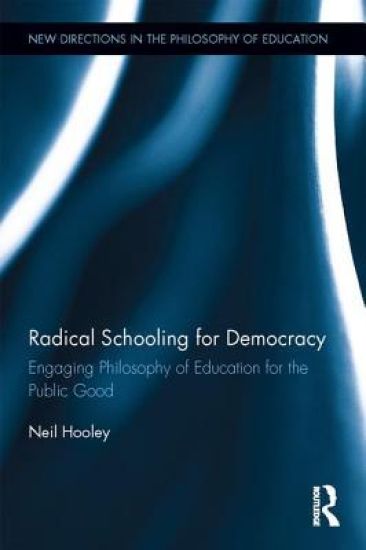
Radical Schooling for Democracy

Radical Schooling for Democracy

Neil Hooley

Routledge
2019
nidottu
Radical Schooling for Democracy proposes that formal education around the world has a serious philosophical weakness: as the ideology of neoliberalism increasingly dominates economic and as a consequence, educational and social life, formal education has adopted a narrow, rational and economic purpose for all students. Hooley argues that, under these circumstances, schooling is inherently frustrating and alienating for vast numbers of children as they are systematically removed from the big ideas and practices of history and knowledge of which they and their communities are a part and are instead inducted into a technical and superficial rationality of human existence. Radical Schooling for Democracy begins with a progressive and contemporary overview of philosophical and sociological thought during the European Enlightenment and identifies a framework of understanding that is extremely weak in education. This action framework of integrated philosophy, sociology and epistemology generates an ‘action theory’ that not only accounts for human progress, but has the potential to radically change the nature of schooling. A number of theorists who generally support a ‘theory of action’ is considered, ranging from Aristotle, Marx, Dewey and Freire to Habermas. From this analysis, the curriculum, pedagogical, assessment and research constructs of schooling are detailed such that a coherent and integrated model of education as an attribute of being human can be articulated, rather than being seen as a disparate derivative from other disciplines. With its coverage of internationally relevant issues, this book will be essential reading for academics, graduate students, policymakers and researchers in education, philosophy, sociology and epistemology, as well as teachers and pre-service teachers.
Constructing Pragmatist Knowledge
Constructing Pragmatist Knowledge reintroduces an explicit and systematic philosophical approach to education through American Pragmatism, expanding and detailing the practice of pragmatism itself for practitioners across various fields of social action. While a number of theorists are referenced, it focuses on the work of the original pragmatists Charles Sanders Peirce, William James, John Dewey, George Herbert Mead and Jane Addams. It is written in a narrative style and connects personal and professional experience of the author with philosophical description, analysis and explanation. Major themes of pragmatism are encountered throughout involving knowledge, experience, inquiry, social acts, dialectic and contradiction, giving rise to human constructs of values, moral conduct and bricolage. Reintroducing pragmatism and epistemology as the focus of teaching and learning heralds revolutionary and democratic change for education systems worldwide and corrects neoliberal tendencies that impose anti-educational ideological, economic and political distortions. This book will be of interest to academics, graduate students, teachers and pre-service teachers, policy makers and researchers in education, philosophy, sociology and epistemology.
Constructing Pragmatist Knowledge

Constructing Pragmatist Knowledge

Neil Hooley

TAYLOR FRANCIS LTD
2022
nidottu
Constructing Pragmatist Knowledge reintroduces an explicit and systematic philosophical approach to education through American Pragmatism, expanding and detailing the practice of pragmatism itself for practitioners across various fields of social action. While a number of theorists are referenced, it focuses on the work of the original pragmatists Charles Sanders Peirce, William James, John Dewey, George Herbert Mead and Jane Addams. It is written in a narrative style and connects personal and professional experience of the author with philosophical description, analysis and explanation. Major themes of pragmatism are encountered throughout involving knowledge, experience, inquiry, social acts, dialectic and contradiction, giving rise to human constructs of values, moral conduct and bricolage. Reintroducing pragmatism and epistemology as the focus of teaching and learning heralds revolutionary and democratic change for education systems worldwide and corrects neoliberal tendencies that impose anti-educational ideological, economic and political distortions. This book will be of interest to academics, graduate students, teachers and pre-service teachers, policy makers and researchers in education, philosophy, sociology and epistemology.
Pragmatist Philosophy for Critical Knowledge, Learning and Consciousness
Emerging from the confusion and chaos of neoliberal economic systems around the world, this book brings together a collection of major philosophical ideas from previous centuries and applies them to the practice of education. The book argues that pragmatist philosophy is the most appropriate to guide the organisation of curriculum, pedagogy and assessment. It outlines a number of philosophical dilemmas, exploring these in relation to particular philosophers and offers philosophical insights for educational practice. Further, the book proposes Critical Praxis Bricolage, an epistemological framework articulating a view that education practices are embedded in a social context. This reshapes formal education from being dominated by the market forces of neoliberalism, into a way of ethical life that respects the dignity and knowledgeability of each person and community regardless of background. Written in a narrative style, Pragmatist Philosophy for Critical Knowledge, Learning and Consciousness provides a philosophical paradigm of experience, culture and inquiry that actively connects with human interests of the everyday and with the distinctiveness of being human. This work will be of interest to researchers and higher degree students of education and philosophy of education.
Pragmatist Philosophy for Critical Knowledge, Learning and Consciousness
Emerging from the confusion and chaos of neoliberal economic systems around the world, this book brings together a collection of major philosophical ideas from previous centuries and applies them to the practice of education. The book argues that pragmatist philosophy is the most appropriate to guide the organisation of curriculum, pedagogy and assessment. It outlines a number of philosophical dilemmas, exploring these in relation to particular philosophers and offers philosophical insights for educational practice. Further, the book proposes Critical Praxis Bricolage, an epistemological framework articulating a view that education practices are embedded in a social context. This reshapes formal education from being dominated by the market forces of neoliberalism, into a way of ethical life that respects the dignity and knowledgeability of each person and community regardless of background. Written in a narrative style, Pragmatist Philosophy for Critical Knowledge, Learning and Consciousness provides a philosophical paradigm of experience, culture and inquiry that actively connects with human interests of the everyday and with the distinctiveness of being human. This work will be of interest to researchers and higher degree students of education and philosophy of education.
Dialectics of Knowing in Education
Dialectics of Knowing in Education strengthens the philosophical basis of formal education that has been weakened by neoliberalism over the past 30 years. It theorises and encourages human existence based on social action, culture, inquiry and creativity so that citizens in democratic association can formulate their own understandings of the world and be their own philosophers of practice.Under neoliberal capitalism, formal education has become a key economic driver and factor for all countries, but has exacerbated social division and inequality. This has led to an increased pressure on education systems to emphasise individual gain and prosperity at the expense of community care and concern. Drawing on the work of Dewey, Mead, Freire and Biesta, the author argues that formal education at all levels must be transformed so that it does not seek to impose knowledge and truth, but situates knowledge as being constructed by democratic learning circles of staff, students and citizens.Focusing particularly on the notion of praxis and specific issues involving Indigenous, feminist and practitioner knowing, this book will help scholars, practitioners and policy makers to transform their education theories and practices in ways that encourage democracy, emancipation, social action, culture, inquiry and creativity.
Dialectics of Knowing in Education
Dialectics of Knowing in Education strengthens the philosophical basis of formal education that has been weakened by neoliberalism over the past 30 years. It theorises and encourages human existence based on social action, culture, inquiry and creativity so that citizens in democratic association can formulate their own understandings of the world and be their own philosophers of practice.Under neoliberal capitalism, formal education has become a key economic driver and factor for all countries, but has exacerbated social division and inequality. This has led to an increased pressure on education systems to emphasise individual gain and prosperity at the expense of community care and concern. Drawing on the work of Dewey, Mead, Freire and Biesta, the author argues that formal education at all levels must be transformed so that it does not seek to impose knowledge and truth, but situates knowledge as being constructed by democratic learning circles of staff, students and citizens.Focusing particularly on the notion of praxis and specific issues involving Indigenous, feminist and practitioner knowing, this book will help scholars, practitioners and policy makers to transform their education theories and practices in ways that encourage democracy, emancipation, social action, culture, inquiry and creativity.
Radical Schooling for Democracy

Radical Schooling for Democracy

Neil Hooley

Routledge
2017
sidottu
Radical Schooling for Democracy proposes that formal education around the world has a serious philosophical weakness: as the ideology of neoliberalism increasingly dominates economic and as a consequence, educational and social life, formal education has adopted a narrow, rational and economic purpose for all students. Hooley argues that, under these circumstances, schooling is inherently frustrating and alienating for vast numbers of children as they are systematically removed from the big ideas and practices of history and knowledge of which they and their communities are a part and are instead inducted into a technical and superficial rationality of human existence. Radical Schooling for Democracy begins with a progressive and contemporary overview of philosophical and sociological thought during the European Enlightenment and identifies a framework of understanding that is extremely weak in education. This action framework of integrated philosophy, sociology and epistemology generates an ‘action theory’ that not only accounts for human progress, but has the potential to radically change the nature of schooling. A number of theorists who generally support a ‘theory of action’ is considered, ranging from Aristotle, Marx, Dewey and Freire to Habermas. From this analysis, the curriculum, pedagogical, assessment and research constructs of schooling are detailed such that a coherent and integrated model of education as an attribute of being human can be articulated, rather than being seen as a disparate derivative from other disciplines. With its coverage of internationally relevant issues, this book will be essential reading for academics, graduate students, policymakers and researchers in education, philosophy, sociology and epistemology, as well as teachers and pre-service teachers.
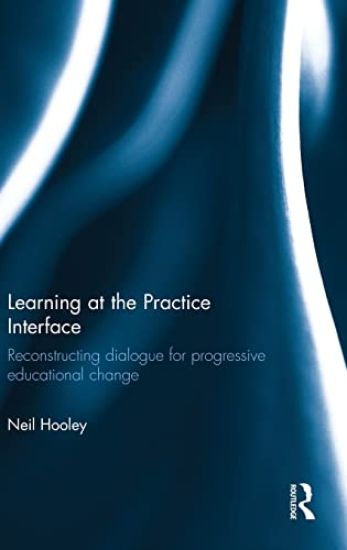
Learning at the Practice Interface
This book investigates professional practice at the interface of sociology and epistemology for progressive educational change. It suggests that orthodox sociology and sociology of education have not sufficiently analysed contemporary educational situations due primarily to the strength of the economic and educational influence of neoliberalism. In drawing upon key aspects of the work of Dewey, Freire, Bernstein and Bourdieu, a new reflexive sociology of knowledge is proposed that could potentially revolutionise public schooling and emancipate learning. This critical reconceptualisation of curriculum and teaching, as well as the democratic inclusion of all children into structures of privileged and community knowledge, opens up a new epistemological stage in the sociology of education worldwide.In confronting the contradiction between social marginalisation and educational expectations, Learning at the Practice Interface explores new approaches to education systems and knowledge production. Part A raises questions regarding knowledge, pedagogy and social justice that are central to schooling and which support values weakened by neoliberalism. These values include democracy, equity, community collaboration and deference towards knowledge and culture not dependent on wealth and status. Part B explores practical issues related to how knowledge is engaged in the school curriculum. This discussion goes to the heart of learning at the practice interface and suggests that the lack of epistemological strategies based on sociological description has created serious estrangement from school knowledge for large numbers of students. Part C discusses a critical view of knowledge in relation to research, teaching and learning and the education profession generally. The need for a new reflexive sociology of knowledge is proposed to guide educational dialogue and action such that connections can be made between progressive sociology and epistemology in the interests of all children.This book will be of interest to academics and researchers in the Sociology of Education, Teacher Education, and Education Reform.
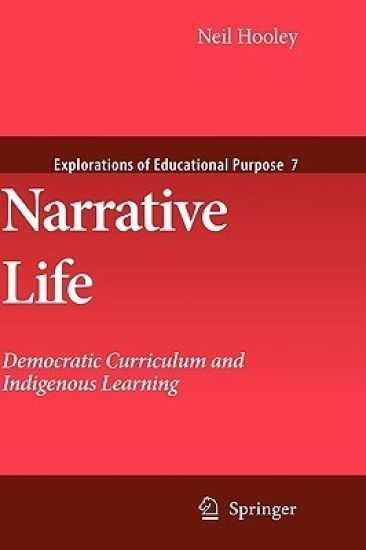
Narrative Life

Narrative Life

Neil Hooley

Springer-Verlag New York Inc.
2009
sidottu
Indigenous education is one of the great challenges facing humanity in the historic quest for a democratic and peaceful future. The 370 million Indigenous peoples of the world demand that the racist and colonial wrongs of the past be recti ed and that they stand as equals in confronting the social, political and cultural problems that surround us all. Education offers a way forward, whether concerned with the public good, schooling for all citizens including universal primary education and expanding secondary education, the education of women regardless of background, the inclusion of local cultures, literacy and numeracy for all as a democratic right and the provisionof comprehensiveeducationthat enables both personal aspiration, cultural satisfaction and economic pathways. What this means is that all children no matter where they live, no matter what theirbackgroundorthecolouroftheirskinshouldexpecttohaveaccesstoeducation of the highest quality. This does not impose a particular style of education for local communitiesbut respects that educationaldirections must be decidedindependently by countries themselves. Within this general context, there is also something most profound about Indigenous knowing, of appreciating Indigenous perspectives and applying these across all knowledge, across all subjects of a curriculum. Rather than accepting the one often highly conservative and dominant view of knowledge, teaching and learning for all schools, Indigenous perspectives offer other insights and means of analysis, re ection and critique. These can open up elds of creative and critical learning for all children, including the dispossessed, marginalised and disenfranchised.
Narrative Life

Narrative Life

Neil Hooley

Springer
2010
nidottu
Indigenous education is one of the great challenges facing humanity in the historic quest for a democratic and peaceful future. The 370 million Indigenous peoples of the world demand that the racist and colonial wrongs of the past be recti ed and that they stand as equals in confronting the social, political and cultural problems that surround us all. Education offers a way forward, whether concerned with the public good, schooling for all citizens including universal primary education and expanding secondary education, the education of women regardless of background, the inclusion of local cultures, literacy and numeracy for all as a democratic right and the provisionof comprehensiveeducationthat enables both personal aspiration, cultural satisfaction and economic pathways. What this means is that all children no matter where they live, no matter what theirbackgroundorthecolouroftheirskinshouldexpecttohaveaccesstoeducation of the highest quality. This does not impose a particular style of education for local communitiesbut respects that educationaldirections must be decidedindependently by countries themselves. Within this general context, there is also something most profound about Indigenous knowing, of appreciating Indigenous perspectives and applying these across all knowledge, across all subjects of a curriculum. Rather than accepting the one often highly conservative and dominant view of knowledge, teaching and learning for all schools, Indigenous perspectives offer other insights and means of analysis, re ection and critique. These can open up elds of creative and critical learning for all children, including the dispossessed, marginalised and disenfranchised.