Kirjojen hintavertailu. Mukana 11 342 296 kirjaa ja 12 kauppaa.

Kirjahaku

Etsi kirjoja tekijän nimen, kirjan nimen tai ISBN:n perusteella.

2 kirjaa tekijältä Neil J. Mitchell

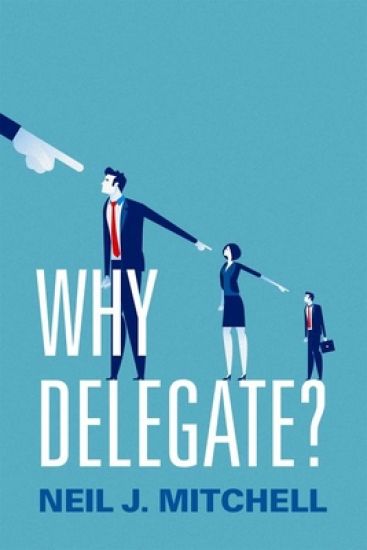
Why Delegate?

Why Delegate?

Neil J. Mitchell

Oxford University Press Inc
2021
nidottu
Why Delegate? moves beyond the standard economic accounts of delegation to offer a fresh take on a wide variety of issues and shows how essential the act of delegating is to our society. From mundane tasks like choosing a plumber to weightier ones like running a country, the world turns on delegation. We delegate particular tasks to people we believe have more expertise than we do. When it is successful, delegation improves efficiency, expands the range of responsible actors, and even increases happiness. When delegation fails, though, it brings conflict, corruption, and an absence of accountability. In Why Delegate?, Neil J. Mitchell investigates the incentives to delegate and the risks we take in doing so. He demonstrates how a new, modified understanding of the simple structure of the delegation relationship-the principal-agent relationship, as economists have described it-simplifies a myriad of important and seemingly disparate problems in private and public life. Using real-world case studies including child abuse in the Catholic Church, the Volkswagen pollution scandal, and FIFA corruption, Mitchell illustrates the broad functionality of delegation logic and the wide range of incentives at work in these relationships. Diverse examples reveal the opportunism of both the leaders and the led and show how accepted accounts of the principal-agent relationship are incomplete. By drawing on multidisciplinary research to address complex questions of motivation, control, responsibility, and accountability, the book builds a broader, more useful logic of delegation. Why Delegate? moves beyond the standard economic accounts of delegation to offer a fresh take on a wide variety of issues and shows how essential the act of delegating is to our society. Mitchell's comprehensive account of the contexts, causes, and effects of delegation develops a new way to understand both the theory and practice of this critical relationship.
The Conspicuous Corporation

The Conspicuous Corporation

Neil J. Mitchell

The University of Michigan Press
1997
sidottu
Why, despite the political advantages of business in the policy process, do business interests still sometimes lose policy fights in the political system? Money, mobility, connections, and incentives load the political system in favor of business interests. Against the odds, when the conspicuous corporation meets the virtuous politician, business often loses in the policy struggle. In answering this question, Neil J. Mitchell reassesses the dimensions of business power in the political system and provides a fresh consideration of how economic power translates into political power. Charles Lindbloom's analysis of business power provides a point of departure for an examination of the evidence on business influence over public preferences, on the importance of business confidence to politicians, and on the financial and lobbying activities of business interests. Mitchell then considers the position of labor unions--the traditional opposition to business--in contemporary policy making. Finally, he discusses the conditions under which business power breaks down. This is accompanied by an analysis of a variety of cases in which business has attempted to influence the policy making process to test his findings. Extensively researched, this book sheds new light on the activities of business in politics, on the strength of interests opposing business, and on business policy failures in the United States and the United Kingdom. The empirical analysis builds on survey data, extensive interviews, and archival research. The relationship between business and government is a core topic for economists, sociologists and political scientists, taking us from heroic struggles over policy to sordid episodes of political corruption. The book will be of interest to scholars in the social sciences and in business schools as well as to the general reader interested in power and influence in representative democracies. Neil Mitchell is Professor of Political Science, University of New Mexico.