Kirjojen hintavertailu. Mukana 11 627 220 kirjaa ja 12 kauppaa.

Kirjahaku

Etsi kirjoja tekijän nimen, kirjan nimen tai ISBN:n perusteella.

16 kirjaa tekijältä Neil J. Smelser

Social Change in the Industrial Revolution
First Published in 2005. The following study analyses several sequences of differentiation and a attempt to apply social theory to history. Such an analysis naturally calls for two components: (1) a segment of social theory; and (2) an empirical instance of change. For the first the author has selected a model of social change from a developing general theory of action; for the second, the British industrial revolution between 1770 and 1840. From this large revolution is the isolated the growth of the cotton industry and the transformation of the family structure of its working classes.
Social Change in the Industrial Revolution
First Published in 2005. The following study analyses several sequences of differentiation and a attempt to apply social theory to history. Such an analysis naturally calls for two components: (1) a segment of social theory; and (2) an empirical instance of change. For the first the author has selected a model of social change from a developing general theory of action; for the second, the British industrial revolution between 1770 and 1840. From this large revolution is the isolated the growth of the cotton industry and the transformation of the family structure of its working classes.
The Social Edges of Psychoanalysis

The Social Edges of Psychoanalysis

Neil J. Smelser

University of California Press
1999
sidottu
For several decades the writings of sociologist Neil J. Smelser have won him a vast and admiring audience across several disciplines. Best known for his work on social movements, economic sociology, and British social history, Smelser's psychoanalytic writings are less familiar to his readers. In fact, many people are completely unaware of Smelser's formal psychoanalytic training and ongoing counseling practice. With the publication of The Social Edges of Psychoanalysis, Smelser's thought-provoking essays on psychoanalytic concepts are finally brought together in one book. Psychoanalytic theory has had an ambivalent relationship with sociology, and these essays explore that ambivalence, providing arguments about how and why psychoanalytic approaches can deepen the sociological perspective. One of Smelser's main tenets is that human social behavior always contains both social-structural and social-psychological elements, and that psychoanalytic theory can bridge these two dimensions of human social life. Many of the issues Smelser addresses--including interdisciplinarity, the macro-micro link in research, masculinity and violence, and affirmative action--have generated considerable scholarly interest. This collection paves the way for further articulation of the relationship between sociology and psychoanalysis at a time when many sociologists are looking for interdisciplinary links in their work. Presented with clarity and grace, and free of the murkiness often found in both sociological and psychoanalytic writing, Smelser's new book will excite reflection and research on the less visible dynamics of social existence.
The Odyssey Experience

The Odyssey Experience

Neil J. Smelser

University of California Press
2009
sidottu
This bold and innovative book traces the phenomenon of the 'odyssey' experience as it shapes, informs, and defines our lives. Drawing on an astonishing range of examples, Neil J. Smelser focuses on how such experiences enhance our lives and provide us with meaning and dignity. The odyssey experience, as Smelser advances it, is generic, widespread, and recurring. It is a finite period of disengagement from the routines of life and immersion into a simpler, transitory, often collective, usually intense period of involvement that culminates in some kind of regeneration. By examining a variety of topics as part of a larger, overarching phenomenon, Smelser transforms their study from the particular to the comparative. "The Odyssey Experience" thus reaches beyond a simple description of where and how transformations occur in daily life to offer a profound explanation for why they are there.
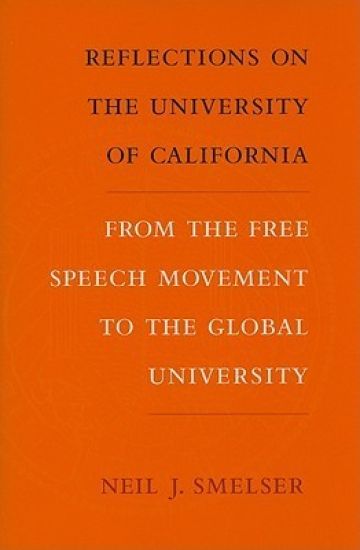
Reflections on the University of California

Reflections on the University of California

Neil J. Smelser

University of California Press
2010
sidottu
These invaluable essays offer an insider's perspective on three decades at a major American university during a time of political turmoil. Neil J. Smelser, who spent thirty-six years as a professor of sociology at the University of California, Berkeley, sheds new light on a full range of the issues that dominated virtually all institutions of higher learning during the second half of the twentieth century. Smelser considers student activism - in particular the Free Speech Movement at Berkeley - political surprises, affirmative action, multiculturalism and the culture wars, and much more. As one of the leading sociologists of his generation, Smelser is uniquely qualified to convey and analyze the complexities of administrating a first-rate and very large university as it encounters a highly politicized environment.
Dynamics of the Contemporary University

Dynamics of the Contemporary University

Neil J. Smelser

University of California Press
2013
sidottu
This book is an expanded version of the Clark Kerr Lectures of 2012, delivered by Neil Smelser at the University of California at Berkeley in January and February of that year. The initial exposition is of a theory of change - labeled structural accretion - that has characterized the history of American higher education, mainly (but not exclusively) of universities. The essence of the theory is that institutions of higher education progressively add functions, structures, and constituencies as they grow, but seldom shed them, yielding increasingly complex structures. The first two lectures trace the multiple ramifications of this principle into other arenas, including the essence of complexity in the academic setting, the solidification of academic disciplines and departments, changes in faculty roles and the academic community, the growth of political constituencies, academic administration and governance, and academic stratification by prestige. In closing, Smelser analyzes a number of contemporary trends and problems that are superimposed on the already-complex structures of higher education, such as the diminishing public support without alterations of governance and accountability, the increasing pattern of commercialization in higher education, the growth of distance-learning and for-profit institutions, and the spectacular growth of temporary and part-time faculty.
Getting Sociology Right

Getting Sociology Right

Neil J. Smelser

University of California Press
2014
sidottu
Neil J. Smelser, one of the most important and influential American sociologists, traces the discipline of sociology from 1969 to the early twenty-first century in Getting Sociology Right: A Half-Century of Reflections. By examining sociology as a vocation and building on the work of Talcott Parsons, Smelser discusses his views on the discipline of sociology, and how his perspective of the field evolved in the postwar era.
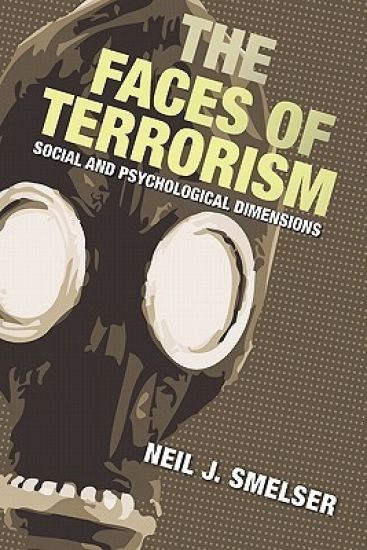
The Faces of Terrorism

The Faces of Terrorism

Neil J. Smelser

Princeton University Press
2010
pokkari
Terrorism is the most clear and present danger we confront today, yet no phenomenon is more poorly understood by policymakers, the media, and the general public. The Faces of Terrorism is the first serious interdisciplinary examination of terrorism in all its facets. What gives rise to it, who are its proponents and how do they think, and how--and why--does it work? Neil Smelser begins by tackling the fundamental problem of defining what exactly terrorism is. He shows why a precise definition has eluded us until now, and he proposes one that takes into account the full complexities of this unconventional and politically charged brand of violence. He explores the root causes and conditions of terrorism, and examines the ideologies that inspire and fuel it throughout the world. Smelser looks closely at the terrorists themselves--their recruitment, their motivations, the groups they form, their intended audiences, and their uses of the media in pursuing their agendas. He studies the target societies as well, unraveling the complicated social and psychological impacts of having to cope with the ever-present threat of a terrorist strike--and responding when one occurs. He explains what it means to live under constant threat of terrorism, and addresses the thorny domestic and foreign policy challenges this poses. Throughout, Smelser draws from the latest findings in sociology, political science, anthropology, economics, psychology, psychiatry, and history. The Faces of Terrorism provides the breadth of scope necessary to understand--and ultimately eliminate--this most pressing global threat.
Effective Committee Service

Effective Committee Service

Neil J. Smelser

SAGE Publications Inc
1993
nidottu
Committees. Seemingly endless, boring discussions going nowhere. No university survives without them, and no faculty member can avoid them. Why are there such a plethora of committees in the university? What functions do they serve? And how can you, as a committee member or chair, ensure that the work gets done quickly and effectively with a minimum of conflict, boredom, or wasted time? Author Neil J. Smelser has incorporated decades of experience on a myriad of committees from the local level up to national policy advisory groups into this book. He skillfully demystifies committees and explains how to get on certain committees and avoid others, how to get the committee work done as efficiently as possible, how to ensure that your views are properly represented in the committee's report, how chairing a committee can help shape its mission and direct its outcome, and how to use committees as a positive factor for your academic career. Smelser's advice will be useful to anyone working in the university setting.
Social Change in the Industrial Revolution: An Application of Theory to the British Cotton Industry
""Social Change in the Industrial Revolution: An Application of Theory to the British Cotton Industry"" by Neil J. Smelser is a comprehensive analysis of the transformation of society during the Industrial Revolution in Britain. The book explores the impact of industrialization on the cotton industry and its workers, as well as the broader social changes that occurred during this period.Drawing on sociological and economic theories, Smelser provides an in-depth examination of the factors that led to the rise of the cotton industry and the subsequent changes in social organization, including the emergence of new social classes, the growth of urbanization, and the development of new forms of labor organization.The book also explores the social and political implications of these changes, including the rise of labor movements and the tensions between workers and factory owners. Smelser's analysis is based on extensive historical research, including primary sources such as diaries, letters, and official records.Overall, ""Social Change in the Industrial Revolution"" is an important contribution to the study of social change and economic development, providing a detailed and nuanced understanding of the complex processes that shaped the modern world.This scarce antiquarian book is a facsimile reprint of the old original and may contain some imperfections such as library marks and notations. Because we believe this work is culturally important, we have made it available as part of our commitment for protecting, preserving, and promoting the world's literature in affordable, high quality, modern editions, that are true to their original work.
Comparative Methods in the Social Sciences

Comparative Methods in the Social Sciences

Neil J. Smelser

Quid Pro, LLC
2013
nidottu
Even after teaching generations of social scientists, Neil Smelser's classic study remains the most definitive statement of methodological issues for comparative scholars in political science, anthropology, sociology, economics, and psychology. These issues are timeless and therefore the lucid analysis remains timely and relevant-offering a unique clarity to working scholars, as well as students fighting their way through the methodological thickets of comparative studies. Smelser posits a methodological continuity between the comparative studies of past masters and the more recent flow of contemporary comparative work. To that end, he takes a pragmatic, critical look at the classic studies of Alexis de Tocqueville, mile Durkheim, and Max Weber. His analyses respect the historical specifics and contexts of their work, but also raise general issues such as cross-unit comparability, empirical representation of theoretical concepts and measures, and historical causality. The book further deals with the ongoing flows of comparative study in the social sciences, which, while methodologically more self-conscious than past work, nevertheless face a common set of issues, including causation, classification, and reducing bias. This book is one of the most well-known and frequently referenced studies of methodology and historical applications in the social sciences, and how the approaches vary by disciplines. It is written by the internationally recognized expert on the intersection of sociology with economics, psychology, and political science. An enduring resource, it is presented now as part of the Classics of the Social Sciences Series from Quid Pro Books.