Kirjojen hintavertailu. Mukana 11 244 527 kirjaa ja 12 kauppaa.

Kirjahaku

Etsi kirjoja tekijän nimen, kirjan nimen tai ISBN:n perusteella.

11 kirjaa tekijältä Neil Kent

A Concise History of Sweden

A Concise History of Sweden

Neil Kent

Cambridge University Press
2008
sidottu
Neil Kent's book sweeps through Sweden's history from the Stone Age to the present day. Early coverage includes Viking hegemony, the Scandinavian Union, the Reformation and Sweden's political zenith as Europe's greatest superpower in the seventeenth century, while later chapters explore the Swedish Enlightenment, royal absolutism, the commitment to military neutrality and Pan-Scandinavianism. The author brings his account up to date by focusing on more recent developments: the rise of Social Democracy, the establishment of the welfare state, the country's acceptance of membership in the European Union and its progressive ecological programme. The book successfully combines the politics, economics and social and cultural mores of one of the world's most successfully functioning and humane societies. This is an informative and entertaining account for students and general readers.
Italia Rediviva

Italia Rediviva

Neil Kent

Academica Press
2017
sidottu
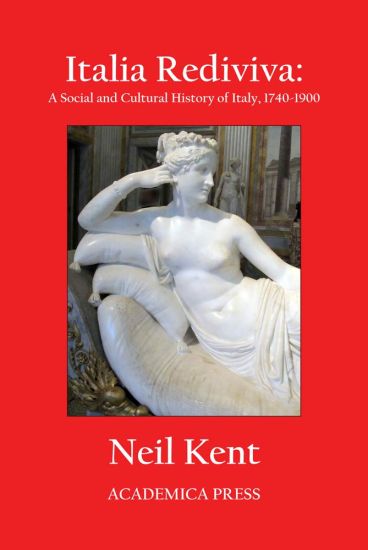
This book seeks to provide a readable history, rich in both anecdotes and statistics, for students and a wide reading public who are interested in Italy in a period of history which - while it has been widely examined with respect to the Risorgimento as a positive and progressive movement which united Italy and enabled it to enter the modern world – has failed to consider Italy's multiplicity of cultures, art, architecture and societies. The period from 1750-1900, however, is neglected. This book rectifies the situation, examining the Catholic Church and its relationship to Jews, Protestants, Moslems, and the state; the relationship of urban areas to the countryside, with various regional dimensions; art, architecture, literature and music; famines, epidemics, health, and hygiene; the family, women, and sexual identity; war, peace, criminality, and the Mafia. Italia Redivia thus focuses on how Italians lived and interacted on a grass-roots level. Rather than considering the Risorgimento and Italy's national unification as THE defining event of the period, this work provides an alternative focus, rejecting sweeping conclusions in favor of a more nuanced analysis in which the regional societies, religious communities, local cultures and economic activities that informed the Italian peninsula from 1750-1900 are set against a complex background of conflict and cooperation, at a time of growing industrialization, secularism, and economic competition, which witnessed the rise of an independent Kingdom of Naples to the assassination of King Umberto I.
Italia Rediviva

Italia Rediviva

Neil Kent

Academica Press
2019
nidottu
In this well received volume, Cambridge polymath Neil Kent seeks to provide a readable history, rich in both anecdotes and statistics, for students and a wide reading public who are interested in Italy in a period of history which - while it has been widely examined with respect to the Risorgimento as a positive and progressive movement which united Italy and enabled it to enter the modern world – has failed to consider Italy's multiplicity of cultures, art, architecture and societies. The period from 1740-1900, however, is neglected. This book rectifies the situation, examining the Catholic Church and its relationship to Jews, Protestants, Moslems, and the state; the relationship of urban areas to the countryside, with various regional dimensions; art, architecture, literature and music; famines, epidemics, health, and hygiene; the family, women, and sexual identity; war, peace, criminality, and the Mafia. Italia Rediviva thus focuses on how Italians lived and interacted on a grass-roots level. Rather than considering the Risorgimento and Italy’s national unification as the defining events of the period, this work provides an alternative focus, rejecting sweeping conclusions in favor of a more nuanced analysis in which the regional societies, religious communities, local cultures and economic activities that informed the Italian peninsula from 1740-1900 are set against a complex background of conflict and cooperation, at a time of growing industrialization, secularism, and economic competition, which witnessed the rise of an independent Kingdom of Naples to the assassination of King Umberto I.
A Concise History of the Russian Orthodox Church
Orthodox Christianity is one of the world’s major religions, and the Russian Orthodox Church is by far its largest denomination. Few know its history and spiritual richness, however. Neil Kent’s comprehensive new book fills that gap. The Russian Orthodox Church’s Eastern roots, including its dogma, canons, and practices, are explored, along with the political and military contexts in which it carried out its mission over the centuries. Hemmed in between the Catholic powers of pre-Reformation Europe in the West, the Mongol steppe empires to the East, and the Islamic civilizations to the South, Russia and its Church found themselves in a difficult position during the Middle Ages.The Russian Orthodox Church’s greatest strength was in the spiritual power of its liturgy, prayerfulness, icons, and monastic life. But even as the Church consolidated its authority under its own metropolitan, and later patriarch, it came into conflict with political rulers who sought to undermine it. After defeating foreign challenges, the Church underwent a painful reformation and schism, finally coming under government control. The Church survived this “Babylonian Captivity,” and, in philosophical and spiritual terms, flourished under tsarist rule while still facing rising opposition. The fall of the monarchy in 1917 led to the Church’s brief rejuvenation, but communist rule spelled relentless persecution with little respite at home and a lively émigré church carrying Russian traditions abroad. In post-Soviet times, however, the Church enjoyed an extraordinary resurrection and, benefiting from the spiritual richness and reunion with the Russian Orthodox Church abroad, once again became a spiritual pillar of the Russian people and a beacon of hope and Christian values, not only in Russia but anywhere it is currently practiced.
A Concise History of the Russian Orthodox Church
Orthodox Christianity is one of the world's major religions, and the Russian Orthodox Church is by far its largest denomination. Few know its history and spiritual richness, however. Neil Kent's comprehensive new book fills that gap. The Russian Orthodox Church's Eastern roots, including its dogma, canons, and practices, are explored, along with the political and military contexts in which it carried out its mission over the centuries. Hemmed in between the Catholic powers of pre-Reformation Europe in the West, the Mongol steppe empires to the East, and the Islamic civilizations to the South, Russia and its Church found themselves in a difficult position during the Middle Ages.The Russian Orthodox Church's greatest strength was in the spiritual power of its liturgy, prayerfulness, icons, and monastic life. But even as the Church consolidated its authority under its own metropolitan, and later patriarch, it came into conflict with political rulers who sought to undermine it. After defeating foreign challenges, the Church underwent a painful reformation and schism, finally coming under government control. The Church survived this "Babylonian Captivity," and, in philosophical and spiritual terms, flourished under tsarist rule while still facing rising opposition. The fall of the monarchy in 1917 led to the Church's brief rejuvenation, but communist rule spelled relentless persecution with little respite at home and a lively émigré church carrying Russian traditions abroad. In post-Soviet times, however, the Church enjoyed an extraordinary resurrection and, benefiting from the spiritual richness and reunion with the Russian Orthodox Church abroad, once again became a spiritual pillar of the Russian people and a beacon of hope and Christian values, not only in Russia but anywhere it is currently practiced.
The Sami Peoples of the North

The Sami Peoples of the North

Neil Kent

C Hurst Co Publishers Ltd
2018
nidottu
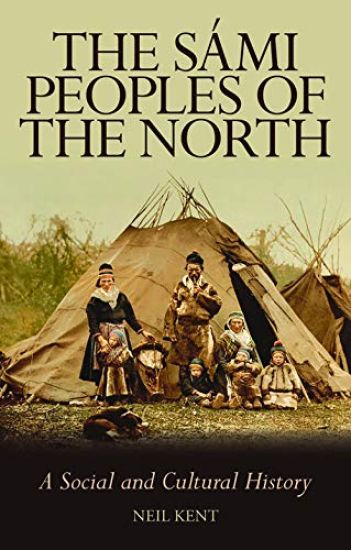
The first comprehensive history of the Sami people of the Nordic countries and northwestern Russia. There is no single volume which encompasses an integrated social and cultural history of the Sami people from the Nordic countries and northwestern Russia. Neil Kent's book fills this lacuna. In the first instance, he considers how the Sami homeland is defined: its geography, climate, and early contact with other peoples. He then moves on to its early chronicles and the onset of colonisation, which changed Sami life profoundly over the last millennium. Thereafter, the nature of Sami ethnicity is examined, in the context of the peoples among whom the Sami increasingly lived, as well as the growing intrusions of the states who claimed sovereignty over them. The Soviet gulag, the Lapland War and increasing urbanisation all impacted upon Sami life. Religion, too, played an important role from pre-historic times, with their pantheon of gods and sacred sites, to their Christianisation. In the late twentieth century there has been an increasing symbiosis of ancient Sami spiritual practice with Christianity. Recently the intrusions of the logging and nuclear industries, as well as tourism have come to redefine Sami society and culture. Even the meaning of who exactly a Sami is is scrutinised, at a time when some intermarry and yet return to Sapmi, where their children maintain their Sami identity.
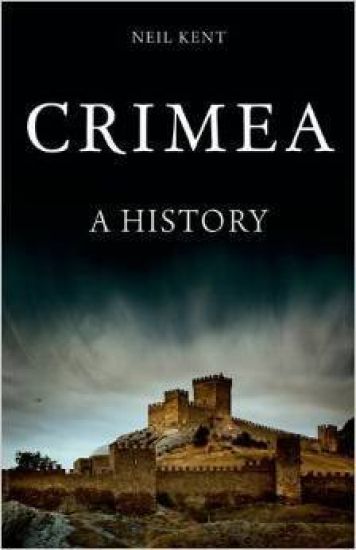
Crimea

Crimea

Neil Kent

C Hurst Co Publishers Ltd
2016
sidottu
Crimea shapes the headlines much as it did some 160 years ago, when the Crimean War pitted Britain, France and Turkey against Russia. Yet few books have been published on the history of the peninsula. For many readers, Crimea seems as remote today as it was when colonised by the ancient Greeks. Neil Kent's book recounts the history of the Crimea over three millennia. A crossroads between Europe and Asia, ships sailed to and from Crimean ports, forming a bridge that carried merchandise and transmitted ideas and innovations. Greeks, Scythians, Tartars, Russians, Armenians and Genoese are among those who settled the peninsula since antiquity, a demographic patchwork that reflects its geography. The religious beliefs of its inhabitants are almost as numerous: the Hebraicised beliefs of the Karaim Tartars, Islam, Judaisim, Russian and Greek Orthodoxy, as well as Roman Catholicism. This mosaic is also reflected in places of worship and the palaces which still adorn Crimea: imperial Romanov Massandra, the 'noble nest' of Prince Voronzov at Alupca or the Palace of Bakhchisaray built for the Tartar Khan.For some two centuries balmy Yalta and its environs were a veritable Black Sea Riviera, where Churchill, Roosevelt and Stalin met at the end of the Second World War.
Trieste

Trieste

Neil Kent

C Hurst Co Publishers Ltd
2011
sidottu
Neil Kent's portrait of Trieste fills a major gap in contemporary writing on Italy, an important task bearing in mind that the city is now one of Western Europe's major gateways to the Balkans. It focuses in particular on the last two centuries: first, on the post-Napoleonic period-its heyday- when Trieste emerged as the otherwise landlocked Habsburg Empire's gateway to the Adriatic, a rich and thriving city of numerous ethnic and religious groups; then on the period of decline after the First World War, when Italian irredentists longing to recover Dalmatia radiated out from the city; and next on the decades of the Cold War, when Trieste became a marginalized border town, with its link to the Balkans virtually blocked off. Finally the book moves into the contemporary period, when the political and economic reorganisation of the Balkans has made Trieste south-eastern Europe's gateway to western Europe. While political, economic and social issues form the primary focus, art, literature and architecture, natural geography and aspects relating to health and hygiene are also examined.
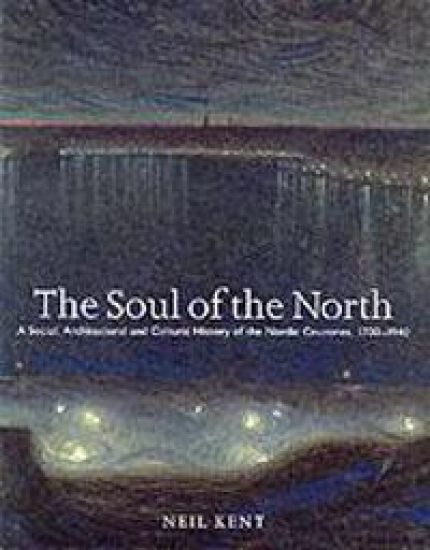
The Soul of the North

The Soul of the North

Neil Kent

Reaktion Books
2001
nidottu
The social and cultural history of the Nordic region (including Denmark, Sweden, Finland, Norway, Iceland and Greenland), as well as that of outlying former provinces such as Swedish Pomerania and the Caribbean colonies, is examined in this study. Religious and spiritual values, family life and sexuality, health and hygiene, town and country and slavery in the tropical colonies are amongst the topics dealt with in some depth. At the same time, the author also provides an architectural and artistic history of the region.
St. Petersburg

St. Petersburg

Neil Kent

Signal Books Ltd
2017
nidottu
St Petersburg is one of the world's most beautiful cities. Most of its baroque and neoclassical palaces and churches are modelled on those of Italy and France, in turn inspired by the temples of classical Greek and Rome. Yet it is situated on a swamp, a location so insalubrious that it took the lives of the thousands who built the city. Founded by Peter the Great on land seized from Sweden in 1703, the Tsar made it into his new capital and Russia's gateway to Europe. Guarded by the Kronstadt Fortress, it was never conquered and under his successors the city achieved a splendour and cultural richness that vied with other European capitals. After the Golden Age of the 1830s when Pushkin and Lermontov wrote some of Russia's greatest literature, famine and war would undermine political and cultural life, and the Revolution led to calamity. Nonetheless, in the dying embers of the old regime, music, art and theatre all thrived, creating a Silver Age which brought the city renewed renown. During the Soviet period, the city, renamed Leningrad, fell into a Cinderella-like slumber, with Moscow taking primacy.Yet it survived both wars to enjoy a revival after the fall of the Soviet Union under its old name. Neil Kent considers the extraordinary history of St Petersburg along with its political, religious, cultural and social dimensions, rich in stories and anecdotes from its various periods. Its musical heritage is unrivalled: Mussorgsky, Rimsky-Korsakov, Tchaikovsky and Rachmaninov are all associated with the city. A walk today through the streets and courtyards evokes the world of Dostoyevsky who immortalized its violent underbelly in his 1865 novel Crime and Punishment. He turned to Orthodoxy for inspiration, as does the modern city today. This revival has been multifaceted, its pictorial glories on display in the Russian Museum and Hermitage Gallery. As Kent stresses, St Petersburg remains a city of paradox, full of tragedy but also of breathtaking beauty and endurance.
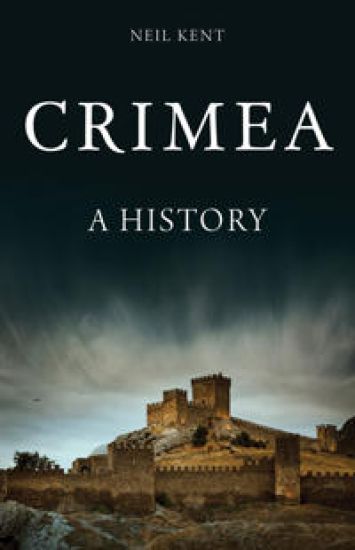
Crimea

Crimea

Neil Kent

C HURST CO PUBLISHERS LTD
2024
nidottu
Crimea shapes the headlines much as it did some 160 years ago, when the Crimean War pitted Britain, France and Turkey against Russia. Yet few books have been published on the history of the peninsula. For many readers, Crimea seems as remote today as it was when colonised by the ancient Greeks. Neil Kent's book recounts the history of the Crimea over three millennia. A crossroads between Europe and Asia, ships sailed to and from Crimean ports, forming a bridge that carried merchandise and transmitted ideas and innovations. Greeks, Scythians, Tartars, Russians, Armenians and Genoese are among those who settled the peninsula since antiquity, a demographic patchwork that reflects its geography. The religious beliefs of its inhabitants are almost as numerous: the Hebraicised beliefs of the Karaim Tartars, Islam, Judaisim, Russian and Greek Orthodoxy, as well as Roman Catholicism. This mosaic is also reflected in places of worship and the palaces which still adorn Crimea: imperial Romanov Massandra, the 'noble nest' of Prince Voronzov at Alupca or the Palace of Bakhchisaray built for the Tartar Khan.For some two centuries balmy Yalta and its environs were a veritable Black Sea Riviera, where Churchill, Roosevelt and Stalin met at the end of the Second World War.