Kirjojen hintavertailu. Mukana 11 244 527 kirjaa ja 12 kauppaa.

Kirjahaku

Etsi kirjoja tekijän nimen, kirjan nimen tai ISBN:n perusteella.

7 kirjaa tekijältä Neil Levy

Bad Beliefs

Bad Beliefs

Neil Levy

Oxford University Press
2021
sidottu
This is an open access title available under the terms of a CC BY-NC-ND 4.0 International licence. It is free to read at Oxford Scholarship Online and offered as a free PDF download from OUP and selected open access locations. Bad beliefs - beliefs that blatantly conflict with easily available evidence - are common. Large minorities of people hold that vaccines are dangerous or accept bizarre conspiracy theories, for instance. The prevalence of bad beliefs may be politically and socially important, for instance blocking effective action on climate change. Explaining why people accept bad beliefs and what can be done to make them more responsive to evidence is therefore an important project. A common view is that bad beliefs are largely explained by widespread irrationality. This book argues that ordinary people are rational agents, and their beliefs are the result of their rational response to the evidence they're presented with. We thought they were responding badly to evidence, because we focused on the first-order evidence alone: the evidence that directly bears on the truth of claims. We neglected the higher-order evidence, in particular evidence about who can be trusted and what sources are reliable. Once we recognize how ubiquitous higher-order evidence is, we can see that belief formation is by and large rational. The book argues that we should tackle bad belief by focusing as much on the higher-order evidence as the first-order evidence. The epistemic environment gives us higher-order evidence for beliefs, and we need to carefully manage that environment. The book argues that such management need not be paternalistic: once we recognize that managing the epistemic environment consists in management of evidence, we should recognize that such management is respectful of epistemic autonomy.
Consciousness and Moral Responsibility

Consciousness and Moral Responsibility

Neil Levy

Oxford University Press
2014
sidottu
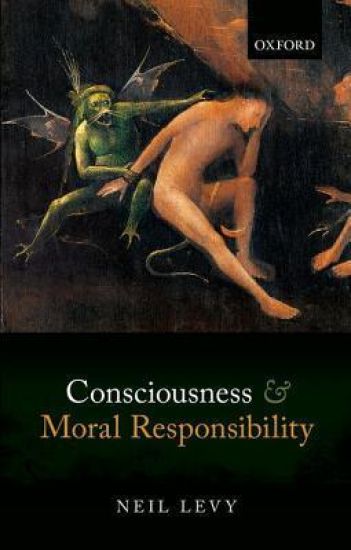
Neil Levy presents an original theory of freedom and responsibility. Cognitive neuroscience and psychology provide a great deal of evidence that our actions are often shaped by information of which we are not conscious; some psychologists have concluded that we are actually conscious of very few of the facts we respond to. But most people seem to assume that we need to be conscious of the facts we respond to in order to be responsible for what we do. Some thinkers have argued that this naïve assumption is wrong, and we need not be conscious of these facts to be responsible, while others think it is correct and therefore we are never responsible. Levy argues that both views are wrong. He sets out and defends a particular account of consciousness--the global workspace view--and argues this account entails that consciousness plays an especially important role in action. We exercise sufficient control over the moral significance of our acts to be responsible for them only when we are conscious of the facts that give to our actions their moral character. Further, our actions are expressive of who we are as moral agents only when we are conscious of these same facts. There are therefore good reasons to think that the naïve assumption, that consciousness is needed for moral responsibility, is in fact true. Levy suggests that this entails that people are responsible less often than we might have thought, but the consciousness condition does not entail that we are never morally responsible.
Hard Luck

Hard Luck

Neil Levy

Oxford University Press
2011
sidottu
The concept of luck has played an important role in debates concerning free will and moral responsibility, yet participants in these debates have relied upon an intuitive notion of what luck is. Neil Levy develops an account of luck, which is then applied to the free will debate. He argues that the standard luck objection succeeds against common accounts of libertarian free will, but that it is possible to amend libertarian accounts so that they are no more vulnerable to luck than is compatibilism. But compatibilist accounts of luck are themselves vulnerable to a powerful luck objection: historical compatibilisms cannot satisfactorily explain how agents can take responsibility for their constitutive luck; non-historical compatibilisms run into insurmountable difficulties with the epistemic condition on control over action. Levy argues that because epistemic conditions on control are so demanding that they are rarely satisfied, agents are not blameworthy for performing actions that they take to be best in a given situation. It follows that if there are any actions for which agents are responsible, they are akratic actions; but even these are unacceptably subject to luck. Levy goes on to discuss recent non-historical compatibilisms, and argues that they do not offer a viable alternative to control-based compatibilisms. He suggests that luck undermines our freedom and moral responsibility no matter whether determinism is true or not.
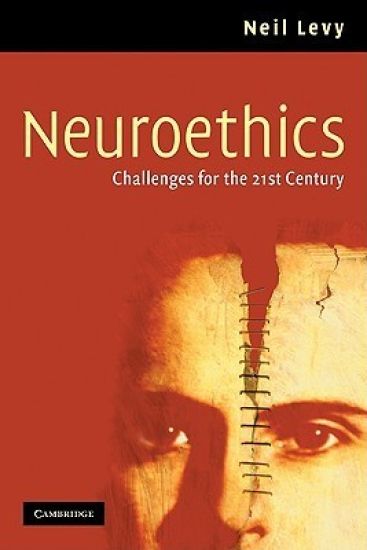
Neuroethics

Neuroethics

Neil Levy

Cambridge University Press
2007
pokkari
Neuroscience has dramatically increased understanding of how mental states and processes are realized by the brain, thus opening doors for treating the multitude of ways in which minds become dysfunctional. This book explores questions such as when is it permissible to alter a person's memories, influence personality traits or read minds? What can neuroscience tell us about free will, self-control, self-deception and the foundations of morality? The view of neuroethics offered here argues that many of our new powers to read ,alter and control minds are not entirely unparalleled with older ones. They have, however, expanded to include almost all our social, political and ethical decisions. Written primarily for graduate students, this book will appeal to anyone with an interest in the more philosophical and ethical aspects of the neurosciences.
Evolutionary Psychology

Evolutionary Psychology

Neil Levy

Ashgate Publishing Limited
2010
sidottu
Evolutionary approaches to the study of human beings have been able to explain the origin and maintenance of many of the features of our bodies. Many thinkers believe that an evolutionary approach will be equally fruitful when it comes to explaining the features of our minds. Since our behaviour is driven by our minds, our cognitive dispositions and processes are likely to have been a target of selection and adaptation. This volume collects recent prominent explorations of this theme, as well as the voices of dissenters who argue that our minds are far more significantly the product of culture than of evolution.
Philosophy, Bullshit, and Peer Review

Philosophy, Bullshit, and Peer Review

Neil Levy

Cambridge University Press
2024
pokkari
Peer review is supposed to ensure that published work, in philosophy and in other disciplines, meets high standards of rigor and interest. But many people fear that it no longer is fit to play this role. This Element examines some of their concerns. It uses evidence that critics of peer review sometimes cite to show its failures, as well as empirical literature on the reception of bullshit, to advance positive claims about how the assessment of scholarly work is appropriately influenced by features of the context in which it appears: for example, by readers' knowledge of authorship or of publication venue. Reader attitude makes an appropriate and sometimes decisive difference to perceptions of argument quality. This Element finishes by considering the difference that author attitudes to their own arguments can appropriately make to their reception. This title is also available as Open Access on Cambridge Core.
Philosophy, Bullshit, and Peer Review

Philosophy, Bullshit, and Peer Review

Neil Levy

Cambridge University Press
2024
sidottu
Peer review is supposed to ensure that published work, in philosophy and in other disciplines, meets high standards of rigor and interest. But many people fear that it no longer is fit to play this role. This Element examines some of their concerns. It uses evidence that critics of peer review sometimes cite to show its failures, as well as empirical literature on the reception of bullshit, to advance positive claims about how the assessment of scholarly work is appropriately influenced by features of the context in which it appears: for example, by readers' knowledge of authorship or of publication venue. Reader attitude makes an appropriate and sometimes decisive difference to perceptions of argument quality. This Element finishes by considering the difference that author attitudes to their own arguments can appropriately make to their reception. This title is also available as Open Access on Cambridge Core.