Kirjojen hintavertailu. Mukana 12 015 351 kirjaa ja 12 kauppaa.

Kirjahaku

Etsi kirjoja tekijän nimen, kirjan nimen tai ISBN:n perusteella.

18 kirjaa tekijältä Neil MacGregor

Germany

Germany

Neil MacGregor

Penguin Books Ltd
2016
pokkari
From Neil MacGregor, the author of A History of the World in 100 Objects, this is a view of Germany like no otherFor the past 140 years, Germany has been the central power in continental Europe. Twenty-five years ago a new German state came into being. How much do we really understand this new Germany, and how do its people now understand themselves?Neil MacGregor argues that uniquely for any European country, no coherent, over-arching narrative of Germany's history can be constructed, for in Germany both geography and history have always been unstable. Its frontiers have constantly floated. Königsberg, home to the greatest German philosopher, Immanuel Kant, is now Kaliningrad, Russia; Strasbourg, in whose cathedral Johann Wolfgang von Goethe, Germany's greatest writer, discovered the distinctiveness of his country's art and history, now lies within the borders of France. For most of the five hundred years covered by this book Germany has been composed of many separate political units, each with a distinct history. And any comfortable national story Germans might have told themselves before 1914 was destroyed by the events of the following thirty years.German history may be inherently fragmented, but it contains a large number of widely shared memories, awarenesses and experiences; examining some of these is the purpose of this book. Beginning with the fifteenth-century invention of modern printing by Gutenberg, MacGregor chooses objects and ideas, people and places which still resonate in the new Germany - porcelain from Dresden and rubble from its ruins, Bauhaus design and the German sausage, the crown of Charlemagne and the gates of Buchenwald - to show us something of its collective imagination. There has never been a book about Germany quite like it.
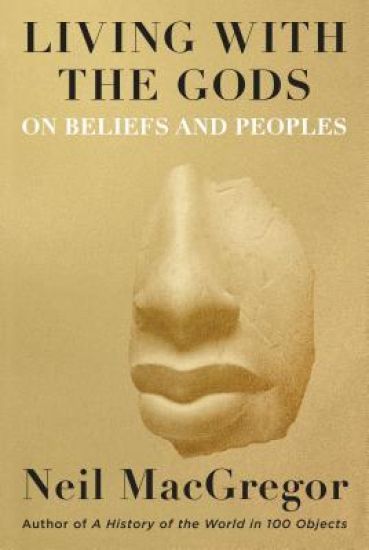
Living with the Gods

Living with the Gods

Neil MacGregor

Penguin Books Ltd
2019
pokkari
Following the award-winning BBC Radio 4 series, a panoramic exploration of peoples, objects and beliefs from the celebrated author of A History of the World in 100 Objects and Germany 'Riveting, extraordinary ... tells the sweeping story of religious belief in all its inventive variety. The emphasis is not on our differences, but on shared spiritual yearnings' Rachel Campbell-Johnston, The Times, Books of the Year One of the central facts of human existence is that every society shares a set of beliefs and assumptions - a faith, an ideology, a religion - that goes far beyond the life of the individual. These beliefs are an essential part of a shared identity. They have a unique power to define - and to divide - us, and are a driving force in the politics of much of the world today. Throughout history they have most often been, in the widest sense, religious. Yet this book is not a history of religion, nor an argument in favour of faith. It is about the stories which give shape to our lives, and the different ways in which societies imagine their place in the world. Looking across history and around the globe, it interrogates objects, places and human activities to try to understand what shared beliefs can mean in the public life of a community or a nation, how they shape the relationship between the individual and the state, and how they help give us our sense of who we are. For in deciding how we live with our gods, we also decide how to live with each other. 'The new blockbuster by the museums maestro Neil MacGregor ... The man who chronicles world history through objects is back ... examining a new set of objects to explore the theme of faith in society' Sunday Times
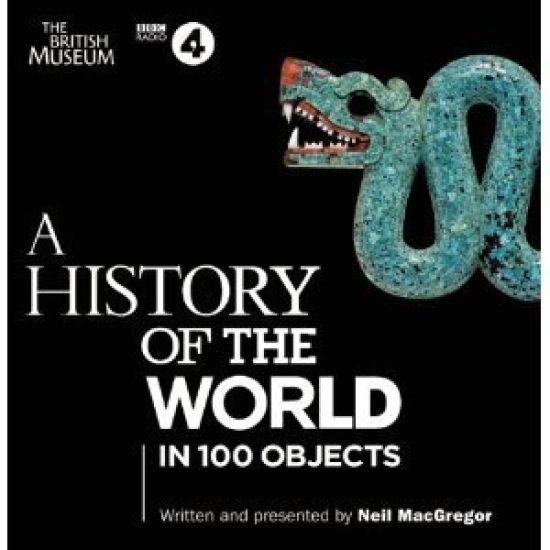
A History of the World in 100 Objects

A History of the World in 100 Objects

Neil MacGregor

PENGUIN BOOKS
2013
nidottu
"An enthralling and profoundly humane book that every civilized person should read." --The Wall Street Journal The blockbuster New York Times bestseller and the companion volume to the wildly popular radio seriesWhen did people first start to wear jewelry or play music? When were cows domesticated, and why do we feed their milk to our children? Where were the first cities, and what made them succeed? Who developed math--or invented money? The history of humanity is one of invention and innovation, as we have continually created new things to use, to admire, or leave our mark on the world. In this groundbreaking book, Neil MacGregor turns to objects that previous civilizations have left behind to paint a portrait of mankind's evolution, focusing on unexpected turning points. Beginning with a chopping tool from the Olduvai Gorge in Africa and ending with a recent innovation that is transforming the way we power our world, he urges us to see history as a kaleidoscope--shifting, interconnected, constantly surprising. A landmark bestseller, A History of the World in 100 Objects is one f the most unusual and engrossing history books to be published in years. "None could have imagined quite how the radio series would permeate the national consciousness. Well over 12.5 million podcasts have been downloaded since the first programme and more than 550 museums around Britain have launched similar series featuring local history. . . . MacGregor's voice comes through as distinctively as it did on radio and his arguments about the interconnectedness of disparate societies through the ages are all the stronger for the detail afforded by extra space. A book to savour and start over."--The Economist
A History of the World in 100 Objects

A History of the World in 100 Objects

Neil MacGregor

Penguin Books Ltd
2012
pokkari
Neil MacGregor's A History of the World in 100 Objects takes a bold, original approach to human history, exploring past civilizations through the objects that defined them. Encompassing a grand sweep of human history, A History of the World in 100 Objects begins with one of the earliest surviving objects made by human hands, a chopping tool from the Olduvai gorge in Africa, and ends with objects which characterise the world we live in today. Seen through MacGregor's eyes, history is a kaleidoscope - shifting, interconnected, constantly surprising, and shaping our world today in ways that most of us have never imagined. A stone pillar tells us about a great Indian emperor preaching tolerance to his people; Spanish pieces of eight tell us about the beginning of a global currency; and an early Victorian tea-set speaks to us about the impact of empire. An intellectual and visual feast, this is one of the most engrossing and unusual history books published in years. 'Brilliant, engagingly written, deeply researched' Mary Beard, Guardian 'A triumph: hugely popular, and rightly lauded as one of the most effective and intellectually ambitious initiatives in the making of 'public history' for many decades' Sunday Telegraph 'Highly intelligent, delightfully written and utterly absorbing ' Timothy Clifford, Spectator 'This is a story book, vivid and witty, shining with insights, connections, shocks and delights' Gillian Reynolds Daily Telegraph
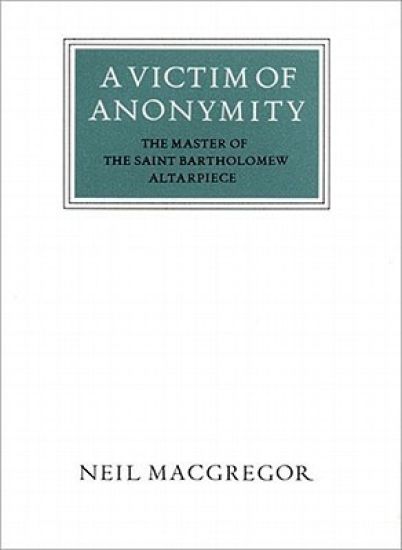
A Victim of Anonymity

A Victim of Anonymity

Neil MacGregor

Thames Hudson Ltd
1994
sidottu
Are there miscarriages of justice in art history? Neil MacGregor believes there are. However great an artist, if his name is lost he will not receive a fair verdict from posterity. No exhibition will be devoted to his work; no books will be written about him; he will not even figure in indexes. Among these neglected geniuses is the 15th-century painter known only as the Master of the Saint Bartholomew Altarpiece. He may have been Netherlandish or German; he may or may not have been a monk. On stylistic grounds an oeuvre of half a dozen paintings, three of them large altarpieces, are attributed to him, and from them a vivid, if hypothetical personality can be built up: emotional, compassionate, observant, original, humorous. All that is certain is that he was a great painter whose name, if known, would rank with Botticelli or Holbein. In A Victim of Anonymity, Neil MaGregor corrects the judgement of history by demonstrating the power of this unacknowledged master, making us look closely at works that are all too easily passed over, showing us a peerless artist whose paintings derive their fame from nothing but their own superlative merits.
Living with the Gods: On Beliefs and Peoples

Living with the Gods: On Beliefs and Peoples

Neil MacGregor

Knopf Publishing Group
2018
sidottu
In the same format as his best-selling books A History of the World in 100 Objects and Germany: Memories of a Nation--the acclaimed art historian now gives us a magnificent new book that explores the relationship between faith and society. Until fairly recently, religion as a major influence on the nature of individual societies around the world seemed to be on the wane. Now, far from being marginalized, the relationship between faith and society has moved to the center of politics and global conversation. Neil MacGregor's new book traces the ways in which different societies have understood and articulated their places in the cosmic scheme. It examines mankind's beliefs not from the perspective of institutional religions but according to how shared narratives have shaped societies--and what happens when different narratives run up against each other. As he did in A History of the World in 100 Objects and Germany: Memories of a Nation, MacGregor brilliantly combines objects, places, and ideas to examine and, ultimately, illuminate these pressing contemporary concerns.
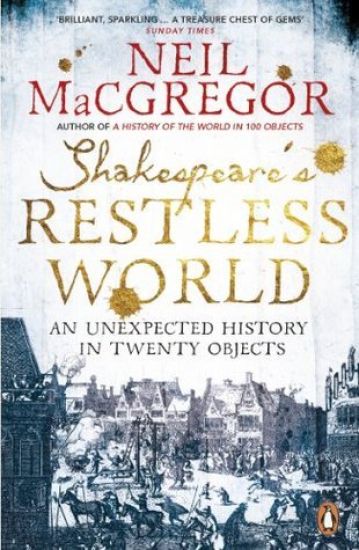
Shakespeare's Restless World

Shakespeare's Restless World

Neil MacGregor

Penguin Books Ltd
2014
pokkari
The Elizabethan age was a tumultuous time, when long-cherished certainties were crumbling and life was exhilaratingly uncertain. Shakespeare's Restless World uncovers the extraordinary stories behind twenty objects from the period to re-create an age at once distant and yet surprisingly familiar. From knife crime to belief in witches, religious battles to the horizons of the New World, Neil MacGregor brings the past to life in a fresh, unexpected portrait of a dangerous and dynamic era.'Fascinating ... filled with anecdotes and insights, eerie, funny, poignant and grotesque ... another brilliant vindication of MacGregor's understanding of physical objects to enter deep into our fore­fathers' mental and spiritual world' Christopher Hart, Sunday Times'Enjoyable and intriguing, an absorbing evocation ... he draws us into the minds of the Elizabethan and Jacobean audience. Next time you see one of the plays reading this book will make those first audiences seem real to you' Peter Lewis, Daily Mail'How gripping are these tales from a lost world. And what a world Shakespeare's was - adventurous, melancholy, rich and plagued by beggary, courteous and quarrelsome, sceptical and credulous' Daily Telegraph 'Elegant, informative ... provides stimulating insights' Anne Somerset, Spectator
Germany: Memories of a Nation

Germany: Memories of a Nation

Neil MacGregor

Knopf Publishing Group
2015
sidottu
For the past 140 years, Germany has been the central power in continental europe. Twenty-five years ago a new German state came into being. How much do we really understand this new Germany, and how do its people understand themselves? Neil MacGregor argues that, uniquely for any European country, no coherent, overarching narrative of Germany's history can be constructed, for in Germany both geography and history have always been unstable. Its frontiers have constantly shifted. K nigsberg, home to the greatest German philosopher, Immanuel Kant, is now Kaliningrad, Russia; Strasbourg, in whose cathedral Wolfgang von Geothe, Germany's greatest writer, discovered the distinctiveness of his country's art and history, now lies within the borders of France. For most of the five hundred years covered by this book Germany has been composed of many separate political units, each with a distinct history. And any comfortable national story Germans might have told themselves before 1914 was destroyed by the events of the following thirty years. German history may be inherently fragmented, but it contains a large number of widely shared memories, awarenesses, and experiences; examining some of these is the purpose of this book. MacGregor chooses objects and ideas, people and places that still resonate in the new Germany--porcelain from Dresden and rubble from its ruins, Bauhaus design and the German sausage, the crown of Charlemagne and the gates of Buchenwald--to show us something of its collective imagination. There has never been a book about Germany quite like it.
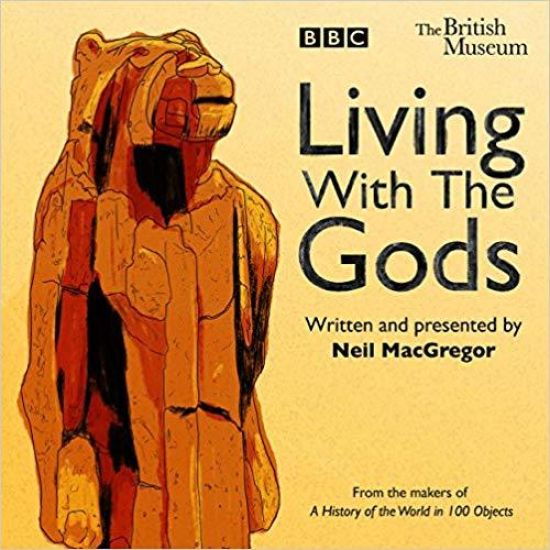
Living With The Gods

Living With The Gods

Neil MacGregor

BBC Physical Audio
2018
cd
A 30-part landmark series for BBC Radio 4, written and presented by Neil MacGregor'The new blockbuster by the museums maestro Neil MacGregor ... The man who chronicles world history through objects is back ... examining a new set of objects to explore the theme of faith in society' Sunday TimesIn this major new BBC radio series, Neil MacGregor investigates the role and expression of shared beliefs through time and around the world.Using specially selected objects from the British Museum and beyond, talking to experts from various disciplines and visiting key locations from the river Ganges to Jerusalem, he examines how rituals and systems of belief have shaped our societies. Looking at communities from the distant past to the present day, both in Europe and worldwide, his focus moves from the beginnings of belief and the elemental worship of fire, water and the sun, through festivals, pilgrimages and sacrifices, to power struggles and political battles between faiths and states.Among the objects featured are the Lion Man, a small ivory sculpture which is about 40,000 years old; a 16th century ivory and gold qibla, used to find the direction of Mecca; and the Lampedusa Cross, made from pieces of a refugee boat wrecked off the Italian coast in 2013.Produced by BBC Radio 4 in partnership with the British Museum, this enlightening series explores humanity’s enduring need to believe, belong and connect with the cosmos.Duration: 6 hours 50 mins.
As Others See Us

As Others See Us

Neil MacGregor

BBC Physical Audio
2019
cd
All ten episodes of BBC Radio 4’s ambitious global series, presented by Neil MacGregor‘Insightful, provocative, satisfying’ TelegraphWith the United Kingdom on the brink of potentially momentous change, historian and broadcaster Neil MacGregor embarks on a worldwide voyage to discover how Britain is perceived from abroad.Visiting Germany, Egypt, Nigeria, Canada, India, Singapore, the United States, Spain, Australia and Poland – all countries with significant historical links to the UK – he talks to leading opinion formers to find out how they, as individuals and members of their wider communities, see Britain.His interviewees reveal what they learnt about Britain at school, and how key events and cultural influences, as well as their own personal experiences, have shaped their impressions of the country now. Each has a defining image that symbolises the UK to them: from Shakespeare to Monty Python, the 1966 World Cup, the Suez Crisis, the Financial Times, ‘99’ ice cream and The Crown.Throughout his travels, MacGregor uncovers tensions and frustrations, admiration and affection – along with an underlying sense of hope and a desire to retain close links with Britain as it prepares to reevaluate its relationship with Europe and the world.
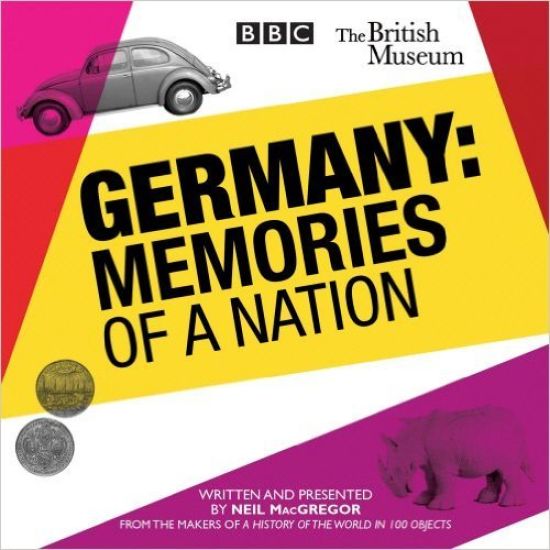
Germany: Memories of a Nation

Germany: Memories of a Nation

Neil MacGregor

BBC Physical Audio
2014
cd
A major new series from the makers of A History Of The World In 100 Objects, exploring the fascinating and complex history of Germany from the origins of the Holy Roman Empire right up to the present day. Written and presented by Neil MacGregor, it is produced by BBC Radio 4, in partnership with the British Museum. Whilst Germany’s past is too often seen through the prism of the two World Wars, this series investigates a wider 600-year-old history of the nation through its objects. It examines the key moments that have defined Germany’s past - its great, world-changing achievements and its devastating tragedies - and it explores the profound influence that Germany’s history, culture and inventiveness have had across Europe. The objects featured in the radio series range from large sculptures to small individual artefacts and items that are prosaic, iconic and symbolic. Each has a story to tell, a memory to invoke.