Kirjojen hintavertailu. Mukana 11 244 527 kirjaa ja 12 kauppaa.

Kirjahaku

Etsi kirjoja tekijän nimen, kirjan nimen tai ISBN:n perusteella.

9 kirjaa tekijältä Neil Murphy

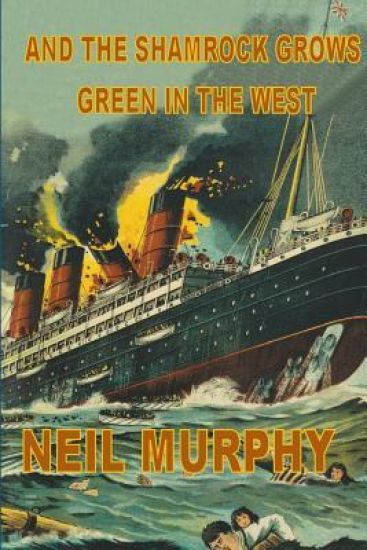
And The Shamrock Grows Green In The West
Neil Murphy's third book embraces the subject of the Irish 'Troubles' during the chaotic period between the Easter Rising in 1916 and the signing of the Treaty in 1921. Lord Keppel, a psychopathic Captain in the British army needs money to refurbish his castlein Enniskillen. His American heiress wife will foot the bill. Sadly for Keppel his pregnant bride, a millionaire's daughter, drowns as a consequence of a German torpedo attack on the liner, Moldavia, but not before the child enters the world. She is left in the care of Mossy McGuire, a passing Irish fisherman who rescued the infant.This story follows Keppel's search for his daughter, thwarted by the I.R.A. and friendly locals who are intent on saving the child from the hands of Keppel and returning her to her maternal grandparents in America.
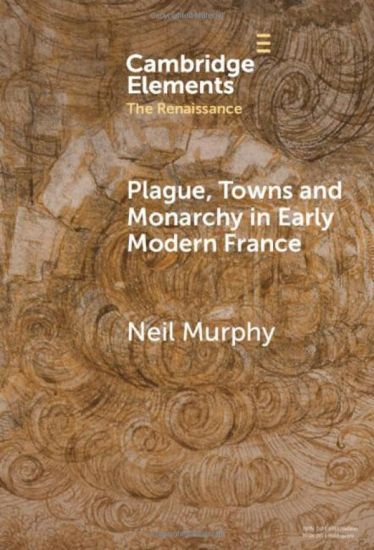
Plague, Towns and Monarchy in Early Modern France

Plague, Towns and Monarchy in Early Modern France

Neil Murphy

Cambridge University Press
2024
pokkari
This Element examines the emergence of comprehensive plague management systems in early modern France. While the historiography on plague argues that the plague of Provence in the 1720s represented the development of a new and 'modern' form of public health care under the control of the absolutist monarchy, it shows that the key elements in this system were established centuries earlier because of the actions of urban governments. It moves away from taking a medical focus on plague to examine the institutions that managed disease control in early modern France. In doing so, it seeks to provide a wider context of French plague care to better understand the systems used at Provence in the 1720s. It shows that the French developed a polycentric system of plague care which drew on the input of numerous actors combat the disease.
Plague, Towns and Monarchy in Early Modern France

Plague, Towns and Monarchy in Early Modern France

Neil Murphy

Cambridge University Press
2024
sidottu
This Element examines the emergence of comprehensive plague management systems in early modern France. While the historiography on plague argues that the plague of Provence in the 1720s represented the development of a new and 'modern' form of public health care under the control of the absolutist monarchy, it shows that the key elements in this system were established centuries earlier because of the actions of urban governments. It moves away from taking a medical focus on plague to examine the institutions that managed disease control in early modern France. In doing so, it seeks to provide a wider context of French plague care to better understand the systems used at Provence in the 1720s. It shows that the French developed a polycentric system of plague care which drew on the input of numerous actors combat the disease.
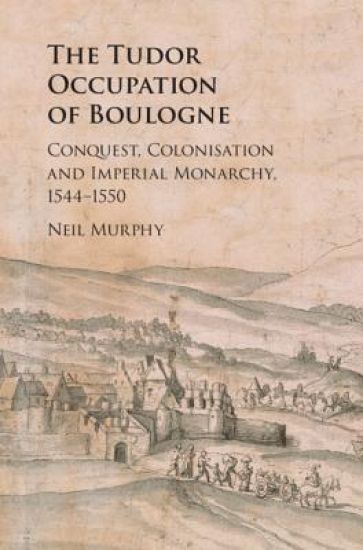
The Tudor Occupation of Boulogne

The Tudor Occupation of Boulogne

Neil Murphy

Cambridge University Press
2019
sidottu
In 1544, Henry VIII led the largest army then ever raised by an English monarch to invade France. This book investigates the consequences of this action by examining the devastating impact of warfare on the native population, the methods the English used to impose their rule on the region (from the use of cartography to the construction of fortifications) and the development of English of colonial rule in France. As Murphy explores the significance of this major financial and military commitment by the Tudor monarchy, he situates the developments within the wider context of English actions in Ireland and Scotland during the mid-sixteenth century. Rather than consider the plantations established in the mid-sixteenth century Ireland as the 'laboratory' for a new form of empire, this book argues that they should be viewed along with the Boulogne venture as the English crown's final attempt to establish colonies through the use of state resources alone.
The Captivity of John II, 1356-60

The Captivity of John II, 1356-60

Neil Murphy

Palgrave Pivot
2016
sidottu
This book provides a systematic analysis of the innovations that occurred in the display of royal power during John II’s four years in English captivity. Neil Murphy shows how the French king’s competition with Edward III led to a revolution in the presentation of the royal image, manifesting through developments to the sacral character of the French monarchy, lavish displays of gift giving, and the use of courtly display. Showing that the Hundred Years War was not just fought on the battlefields of France, this book unravels how the war played out daily in the competition for status between Edward III and John II.
John Banville

John Banville

Neil Murphy

RUTGERS UNIVERSITY PRESS
2025
nidottu
John Banville offers a close analysis of most of Banville’s major novels, his Quirke crime novels, and his dramatic adaptations of Heinrich von Kleist’s plays. Banville’s work has been marked by an embedded discourse about the significance of art and by a concurrent self-consciousness of its own status as art. His novels perpetually reveal an overt fascination with the visual arts, in particular, and with the aesthetic principle of literature as art. This study asserts that, as a whole, Banville’s work presents an elaborate and richly textured coded account of his relationship with art and with the self-referential fictional world that his novels conjure. It is from this critical context that John Banville’s central argument is derived: that his fiction can be viewed as an extended interrogation of the meaning and status of art and that it is itself representative of the type of art admired in the pages of the novels. Published by Bucknell University Press. Distributed worldwide by Rutgers University Press.
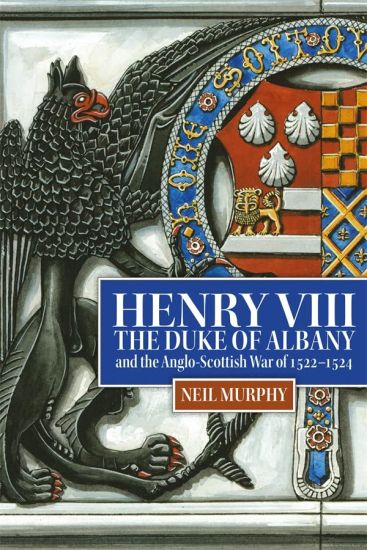
Henry VIII, the Duke of Albany and the Anglo-Scottish War of 1522-1524
The first comprehensive study of this war helps us understand how each country to defend the frontier, and the political issues which drove the Anglo-Scottish wars of the 1520s. The Anglo-Scottish War of 1522-1524 saw the mobilisation of tens of thousands of men and vast amounts of resources in both England and Scotland. Beyond its British context, the war had a European significance: it formed an element in the wider Valois-Habsburg struggles over Italy, with the complex systems of alliances spreading the repercussions of this struggle far across the continent and to the borders of England and Scotland. Recent years have seen the emergence of a renewed debate around the status of the Anglo-Scottish frontier and the wider political and social conditions which predominated in the borderlands of each kingdom. Although there has been a move to present the Anglo-Scottish border as a porous frontier where the populations on either side were closely connected, these neighbourly links imploded rapidly in wartime when frontier populations were co-opted into a national struggle. It is significant that borderers were responsible for inflicting the heaviest violence on each other during the war. Drawing on an unprecedented access to English and Sottish sources of the conflict, this book offers an important new contribution to both Scottish and English history as well as the wider military history of late medieval and early modern Europe. Aspects of military mobilisation, logistics, the defence of frontiers, the use of violence against civilians and wartime espionage feature prominently.
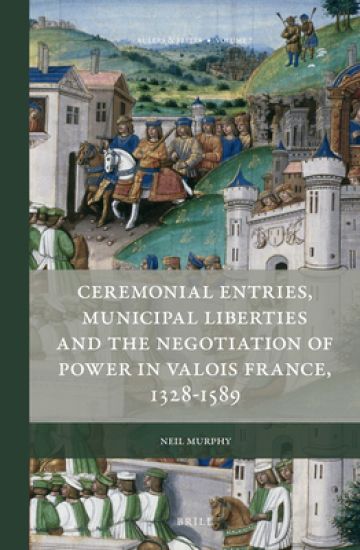
Ceremonial Entries, Municipal Liberties and the Negotiation of Power in Valois France, 1328-1589
In a fresh examination of the French ceremonial entry, Neil Murphy considers the role these events played in the negotiation between urban elites and the Valois monarchy for rights and liberties. Moving away from the customary focus on the pageantry, this book focuses on how urban governments used these ceremonies to offer the ruler (or his representatives) petitions regarding their rights, liberties and customs. Drawing on extensive research, he shows that ceremonial entries lay at the heart of how the state functioned in later medieval and Renaissance France.