Kirjojen hintavertailu. Mukana 11 239 951 kirjaa ja 12 kauppaa.

Kirjahaku

Etsi kirjoja tekijän nimen, kirjan nimen tai ISBN:n perusteella.

12 kirjaa tekijältä Neil Postman

Amusing Ourselves to Death: Public Discourse in the Age of Show Business
What happens when media and politics become forms of entertainment? As our world begins to look more and more like Orwell's 1984, Neil's Postman's essential guide to the modern media is more relevant than ever. "It's unlikely that Trump has ever read Amusing Ourselves to Death, but his ascent would not have surprised Postman." -CNN Originally published in 1985, Neil Postman's groundbreaking polemic about the corrosive effects of television on our politics and public discourse has been hailed as a twenty-first-century book published in the twentieth century. Now, with television joined by more sophisticated electronic media--from the Internet to cell phones to DVDs--it has taken on even greater significance. Amusing Ourselves to Death is a prophetic look at what happens when politics, journalism, education, and even religion become subject to the demands of entertainment. It is also a blueprint for regaining control of our media, so that they can serve our highest goals. "A brilliant, powerful, and important book. This is an indictment that Postman has laid down and, so far as I can see, an irrefutable one." -Jonathan Yardley, The Washington Post Book World
Building a Bridge to the 18th Century

Building a Bridge to the 18th Century

Neil Postman

Vintage Books
2000
pokkari
In Building a Bridge to the 18th Century, acclaimed cultural critic Neil Postman offers a cure for the hysteria and hazy values of the postmodern world. Postman shows us how to reclaim that balance between mind and machine in a dazzling celebration of the accomplishments of the Enlightenment-from Jefferson's representative democracy to Locke's deductive reasoning to Rousseau's demand that the care and edification of children be considered an investment in our collective future. Here, too, is the bold assertion that Truth is invulnerable to fashion or the passing of time. Provocative and brilliantly argued, Building a Bridge to the 18th Century illuminates a navigable path through the Information Age-a byway whose signposts, it turns out, were there all along.
Amusing Ourselves to Death

Amusing Ourselves to Death

Neil Postman

Methuen Publishing Ltd
1987
nidottu
Television has conditioned us to tolerate visually entertaining material measured out in spoonfuls of time, to the detriment of rational public discourse and reasoned public affairs. In this eloquent, persuasive book, Neil Postman alerts us to the real and present dangers of this state of affairs, and offers compelling suggestions as to how to withstand the media onslaught. Before we hand over politics, education, religion, and journalism to the show business demands of the television age, we must recognize the ways in which the media shape our lives and the ways we can, in turn, shape them to serve out highest goals.
Conscientious Objections

Conscientious Objections

Neil Postman

Vintage Books
1992
pokkari
In a series of feisty and ultimately hopeful essays, one of America's sharpest social critics casts a shrewd eye over contemporary culture to reveal the worst -- and the best -- of our habits of discourse, tendencies in education, and obsessions with technological novelty. Readers will find themselves rethinking many of their bedrock assumptions: Should education transmit culture or defend us against it? Is technological innovation progress or a peculiarly American addiction? When everyone watches the same television programs -- and television producers don't discriminate between the audiences for Sesame Street and Dynasty -- is childhood anything more than a sentimental concept? Writing in the traditions of Orwell and H.L. Mencken, Neil Postman sends shock waves of wit and critical intelligence through the cultural wasteland. "Postman is that rare social critic whose commentary on the current state of American culture and education is a funny as it is throughout and well argued...a provocative collection." -- The New York Times Book Review"Postman uses cogent arguments, sharp needles and gentle humor to challenge readers to change their ways of thinking ... delightful." -- St. Louis Post Dispatch
End Of Education

End Of Education

Neil Postman

Vintage Books
1996
nidottu
Postman suggests that the current crisis in our educational system derives from its failure to supply students with a translucent, unifying "narrative" like those that inspired earlier generations. Instead, today's schools promote the false "gods" of economic utility, consumerism, or ethnic separatism and resentment. What alternative strategies can we use to instill our children with a sense of global citizenship, healthy intellectual skepticism, respect of America's traditions, and appreciation of its diversity? In answering this question, The End of Education restores meaning and common sense to the arena in which they are most urgently needed. "Informal and clear...Postman's ideas about education are appealingly fresh."--New York Times Book Review
Television and the Teaching of English

Television and the Teaching of English

Neil Postman

Literary Licensing, LLC
2012
sidottu
Television And The Teaching Of English is a book written by Neil Postman that explores the impact of television on the teaching of English. The book is divided into two parts, with the first part examining the ways in which television has changed the way we learn and communicate. Postman argues that television has had a profound effect on the way we think and process information, and that this has had a significant impact on the teaching of English.In the second part of the book, Postman provides practical advice for teachers who want to use television as a tool for teaching English. He suggests that teachers should use television programs to teach critical thinking skills, to help students analyze and evaluate the messages they receive through television, and to encourage students to become more active and engaged viewers.Throughout the book, Postman emphasizes the importance of critical thinking and the need for teachers to be aware of the ways in which television can shape our thinking and our understanding of the world around us. He also provides examples of successful teaching strategies that have been used in the classroom, and offers guidance on how teachers can adapt these strategies to meet the needs of their own students.Overall, Television And The Teaching Of English is a thought-provoking and insightful book that offers valuable insights into the role of television in education. It is a must-read for anyone who is interested in the ways in which media can shape our thinking and our understanding of the world around us.This scarce antiquarian book is a facsimile reprint of the old original and may contain some imperfections such as library marks and notations. Because we believe this work is culturally important, we have made it available as part of our commitment for protecting, preserving, and promoting the world's literature in affordable, high quality, modern editions, that are true to their original work.
Das Verschwinden der Kindheit

Das Verschwinden der Kindheit

Neil Postman

S. Fischer Verlag
1987
pokkari
Dieses Buch bricht den faulen Frieden, den die Erwachsenen mit der Gleichgültigkeit geschlossen haben, um die Welt bis in die Nischen hinein nach ihrem Bilde einzurichten. Es handelt von dem vielleicht folgenschwersten kulturellen Kolonisierungsunternehmen in der Gegenwart: der Zerstörung der Kindheit durch Mißachtung oder Destabilisierung ihrer Spielräume, ihrer inneren Geschichte und ihrer spezifischen Zeitrechnung. Brisant ist nicht nur Postmans These, daß in der abendländischen Zivilisation die Idee der Kindheit im Verschwinden begriffen sei, sondern auch seine intelligente Analyse der elektronischen Medien, die er als die machtvollen Beschleuniger dieser Entwicklung bestimmt. Postmans Kritik gilt der Allianz von Kommerz, Ideologie und Gedankenlosigkeit gegen die Ansprüche der Kinder auf eine eigene, freie Lebenszeit: auf die Kindheit nicht als eine biologische, sondern vielmehr als eine kulturelle Erfahrung. Die Vorstellungs- und Empfindungswelt der Kindheit ist endgültig dann abgeschafft, wenn die Kinder und Jugendlichen nur noch zu Erwachsenen-Wünschen fähig sind.
Wir amüsieren uns zu Tode

Wir amüsieren uns zu Tode

Neil Postman

S. Fischer Verlag
1988
pokkari
Noch sind die Diskussionen, die Neil Postman mit seiner Streitschrift "Das Verschwinden der Kindheit" ausgelöst hat, nicht verstummt, da kündigt ein neues Buch von ihm neuen, grundsätzlichen Meinungsstreit an. Denn diesmal kritisiert er die allmähliche Zerrüttung der Kulturtätigkeiten durch den gewerbsmäßigen Illusionismus, das totale Entertainment. Postmans These lautet, daß die Medien zunehmend nicht nur bestimmen, was wir kennenlernen und erleben, welche Erfahrungen wir sammeln, wie wir Wissen ausbilden, sondern auch, was und wie wir denken, was und wie wir empfinden, ja, was wir von uns selbst und voneinander halten sollen. Zum ersten Mal in der Geschichte gewöhnen die Menschen sich daran, statt der Welt ausschließlich Bilder von ihr ernst zu nehmen. An die Stelle der Erkenntnis- und Wahrnehmungsanstrengung tritt das Zerstreuungsgeschäft. Die Folge davon ist ein rapider Verfall der menschlichen Urteilskraft. In ihm steckt eine unmißverständliche Bedrohung: Er macht unmündig oder hält in der Unmündigkeit fest. Und er tastet das gesellschaftliche Fundament der Demokratie an. Wir amüsieren uns zu Tode.
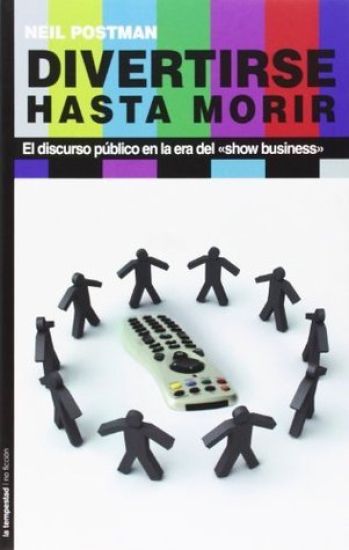
Divertirse hasta morir

Divertirse hasta morir

Neil Postman

Ediciones La Tempestad
2012
nidottu
Neil Postman, con Huxley, se pregunta "de qu nos re mos y por qu hemos dejado de pensar", y dirige sus respuestas a la televisi n y a su modo entretenido de presentar, que ha transformado dr sticamente la pol tica, la educaci n, el periodismo, la ciencia y la religi n. Recordando la frase del actor presidente norteamericano Ronald Reagan (La pol tica es igual que el show business), Postman se lamenta de la muerte de la palabra impresa, con pasi n de profesor y melancol a de sabio historiador.El principal error de la cultura del entretenimiento, seg n Postman, consiste en el hecho de que produce vastas cantidades de informaci n sin ofrecer ning n contexto para la comprensi n, lo que provoca la inutilidad de dicha informaci n (...). La televisi n comercial obliga a los espectadores a tener una conciencia fracturada, con su omnipresente "y ahora... Esto", cuando pasa a su tarea de vender. Timothy Erwin, Michigan Quarterly ReviewNeil Postman dibuja una sociedad que camina, aceleradamente, hacia la estupidez colectiva, en un marco de libertades formales in tiles porque nadie las podr ejercer, por desconocimiento, en un mundo universal donde cuatro grandes comunicadores -viejos actores, deportistas famosos, presentadores con glamur- ser n los Grandes Escritores omnipotentes y omnipresentes.Josep Bargall , AvuiCon prosa f cil y ejemplos sencillos y brillantes, Neil Postman acaba por provocar la inquietud en el lector, conduciendo sus reflexiones a datos tan significativos como el fen meno de la existencia de una cantidad de informaci n tal que, reforzada por el tratamiento de flash de la radio o la televisi n, acaba provocando un aut ntico descontrol en el ciudadano.Carles Geli, El Peri dico de Catalunya
Vi morer os ihjel

Vi morer os ihjel

Neil Postman

Forlaget Mindspace
2023
pokkari
Hvad sker der, når medier og politik bliver former for underholdning? I takt med at vores verden begynder at ligne Orwells 1984 mere og mere, er Neil Postmans analyse af de moderne medier mere relevant end nogensinde. ”Vi holdt øje med 1984. Da året kom, og profetien udeblev, klappede tænksomme amerikanere sig selv på skulderen. Det liberale demokrati havde sejret. Selvom rædsler var indtruffet mange steder, havde vi i det mindste ikke fået besøg af det Orwellske mareridt. Men vi havde glemt, at der ud over Orwells mørke vision var en anden – en anelse ældre, en anelse mindre kendt, men lige så skræmmende: Aldous Huxleys Brave New World, Fagre nye verden. Men i modsætning til, hvad de fleste tror, selv de højtuddannede, profeterede Huxley og Orwell ikke det samme. Orwell advarer om, at en påtvunget undertrykkelse vil få bugt med os. Men i Huxleys vision er der ikke brug for nogen Big Brother til at fratage folk deres autonomi, modenhed og historie. Som han så det, vil folk komme til at elske deres undertrykkelse, komme til at tilbede de teknologier, der spolerer deres evne til at tænke.” (Fra bogen) Neil Postmans banebrydende polemik om fjernsynets ødelæggende effekt på vores politik og offentlige samtale blev oprindeligt udgivet i 1985 og er blevet hyldet som en bog fra det 21. århundrede udgivet i det 20. århundrede. Nu, hvor fjernsynet har fået følgeskab af mere sofistikerede elektroniske medier – fra internettet til mobiltelefoner – har den fået endnu større betydning. Vi morer os ihjel er et profetisk blik på, hvad der sker, når politik, journalistik, uddannelse og endda religion bliver underlagt underholdningens krav. ”Det er usandsynligt, at Trump nogensinde har læst Amusing Ourselves to Death, men hans opstigning ville ikke have overrasket Postman.” – CNN ”Den mest ætsende, nøjagtige og svimlende profetiske bog om, hvordan medieudviklingen er ved at blæse vores hjerner ud og underminere betingelserne for ikke bare et sammenhængende selv, men også et sammenhængende samfund.” – Lea Korsgaard, fra det danske forord til bogen @font-face {font-family:"Cambria Math"; panose-1:2 4 5 3 5 4 6 3 2 4; mso-font-charset:0; mso-generic-font-family:roman; mso-font-pitch:variable; mso-font-signature:-536870145 1107305727 0 0 415 0;}@font-face {font-family:Calibri; panose-1:2 15 5 2 2 2 4 3 2 4; mso-font-charset:0; mso-generic-font-family:swiss; mso-font-pitch:variable; mso-font-signature:-469750017 -1040178053 9 0 511 0;}@font-face {font-family:Georgia; panose-1:2 4 5 2 5 4 5 2 3 3; mso-font-charset:0; mso-generic-font-family:roman; mso-font-pitch:variable; mso-font-signature:647 0 0 0 159 0;}@font-face {font-family:Didot; panose-1:2 0 5 3 0 0 0 2 0 3; mso-font-charset:177; mso-generic-font-family:auto; mso-font-pitch:variable; mso-font-signature:-2147481497 0 0 0 507 0;}p.MsoNormal, li.MsoNormal, div.MsoNormal {mso-style-unhide:no; mso-style-qformat:yes; mso-style-parent:""; margin:0cm; mso-pagination:widow-orphan; font-size:12.0pt; font-family:"Calibri",sans-serif; mso-ascii-font-family:Calibri; mso-ascii-theme-font:minor-latin; mso-fareast-font-family:Calibri; mso-fareast-theme-font:minor-latin; mso-hansi-font-family:Calibri; mso-hansi-theme-font:minor-latin; mso-bidi-font-family:"Times New Roman"; mso-bidi-theme-font:minor-bidi; mso-font-kerning:1.0pt; mso-ligatures:standardcontextual; mso-fareast-language:EN-US;}.MsoChpDefault {mso-style-type:export-only; mso-default-props:yes; font-family:"Calibri",sans-serif; mso-ascii-font-family:Calibri; mso-ascii-theme-font:minor-latin; mso-fareast-font-family:Calibri; mso-fareast-theme-font:minor-latin; mso-hansi-font-family:Calibri; mso-hansi-theme-font:minor-latin; mso-bidi-font-family:"Times New Roman"; mso-bidi-theme-font:minor-bidi; mso-fareast-language:EN-US;}div.WordSection1 {page:WordSection1;}
När skolans klocka klämtar

När skolans klocka klämtar

Neil Postman

Bokförlaget Daidalos
1998
nidottu
Med sin nya bok När skolans klocka klämtar vill Neil Postman förskjuta utbildningsdiskussionens tyngdpunkt från frågan om lämpliga undervisningsmetoder till frågan om själva meningen med utbildningen. Från medel till mål. Skolan har i dag, menar Postman, i allt för hög grad förfallit till mekanisk inlärning och förlorat lärandets inneboende värde ur sikte. Målsättningen med När skolans klocka klämtar är att återupprätta detta värde, hjälpa skolan att återvinna sin mening: en känsla av tolerans och respekt för lärandet och kunskapen. För att kunna göra detta använder sig Postman av berättelsens kategori. Människan skapar sig ständigt ett förflutet och en framtid med berättelsens hjälp, menar han. Utan berättelsen förlorar livet sin mening. Om livet saknar mening har kunskapstillägnelsen inget syfte. Och utan syfte blir skolan en förvaringsplats och inte en plats för aktiva deltagare. Syftet med berättelsen är att göra världen meningsfull, inte att beskriva den vetenskapligt. Berättelsens sanningsvärde ligger i dess konsekvenser. Det viktiga är att den ger en känsla av personlig identitet och gemensamt liv, en grund för moraliskt uppförande och en förklaring av det okända. Neil Postman har ett tjugotal böcker om bl a utbildning, teknik- och medieutvecklingen bakom sig, varav flera finns på svenska. Han har själv arbetat som grundskolelärare och är i dag professor i Kultur och kommunikation vid New York University.