Kirjojen hintavertailu. Mukana 11 806 343 kirjaa ja 12 kauppaa.

Kirjahaku

Etsi kirjoja tekijän nimen, kirjan nimen tai ISBN:n perusteella.

13 kirjaa tekijältä Neil R. Storey

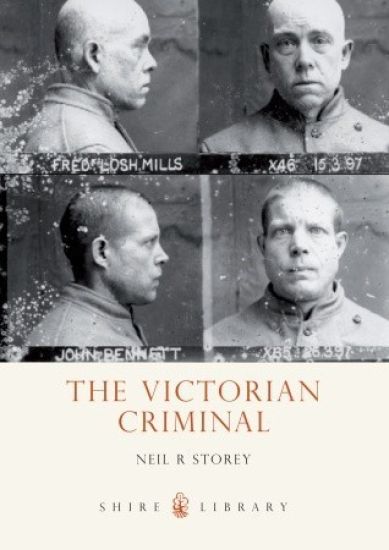
The Victorian Criminal

The Victorian Criminal

Neil R. Storey

Shire Publications
2011
nidottu
From gaslit city streets to dark wooded estates, crime was rife in Victorian Britain; through a wide array of historical court records, newspaper accounts and prison books, The Victorian Criminal gives a fascinating overview of those involved in it. Within these pages may be found accounts of petty criminals and poachers, baby farmers and notorious murderers, along with stories of the development of detective forces and forensic techniques. Countless novels, plays and films are testament to an enduring fascination with the dark aspects of the time and place that gave us Sherlock Holmes, Wilkie Collins and the great works of Charles Dickens.
Animals in the First World War

Animals in the First World War

Neil R. Storey

Shire Publications
2014
nidottu
The burden of the Great War was not shouldered by soldiers alone: the tasks, the camaraderie, the day-to-day life and the devastation were all shared with the animals that accompanied the forces abroad. The horses that took part in the last cavalry charges or hauled heavy guns are the most famous examples, but were far from alone: pigeons carried vital messages, dogs sniffed out wounded soldiers, camels were used as beasts of burden in the desert, and even ships’ cats and baby orang-utans had their parts to play. From noted historian Neil R. Storey, this book looks at all the practical ways in which animals were essential to the war effort, but is equally interested in their roles as companions, mascots and morale boosters – on land, in the air and at sea. Neil R. Storey is a social and military historian specialising in the impact of war on society. He has written over twenty-five books, countless articles and has given lectures across the UK, including at the Imperial War Museum. He has acted as a consultant on a number of television documentaries and dramas.
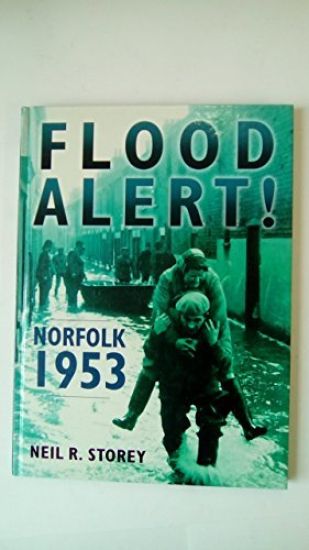
Flood Alert! Norfolk 1953

Flood Alert! Norfolk 1953

Neil R. Storey

Sutton Publishing Ltd
2007
sidottu
On the night of 31 January 1953 the east coast of England was hit by howling winds, torrential rain and the most violent surge of the North Sea since records began. The resultant loss of life, extent of destruction, damage and flooding was the worst peacetime disaster to hit Britain in living memory. The magnitude of the events on that night and in its aftermath, the spirit of the people involved and the selflessness of those, military and civilian, concerned with the rescue and relief effort is comparable to the spirit of Dunkirk and the London Blitz. This is the story of that fateful night, compiled from newly discovered reports of the rescues - written at the time by those who were there. These have been blended with a variety of contemporary accounts, many previously unpublished photographs and personal recollections to create a moving account of Norfolk's experiences during the unforgettable East Coast Floods in 1953.
A Grim Almanac of Jack the Ripper's London 1870-1900

A Grim Almanac of Jack the Ripper's London 1870-1900

Neil R. Storey

Sutton Publishing Ltd
2004
sidottu
Did you know? - On 15 November 1892 as Dr Neill Cream dropped through the gallows trap at Newgate he declared 'I'm Jack the ...'. (Cream was in prison in America at the time the Ripper murders were committed) - In November 1887 there was a pitch battle in Trafalgar Square between those so poor they took to camping there and 2,000 policemen and soldiers. The event became known as 'Bloody Sunday'. - In December 1884 after bombs had been successfully detonated near Trafalgar Square and Scotland Yard a terrorist dropped another over one of the parapets of London Bridge and only succeeded in killing himself. - By the mid-nineteenth century the graveyards of London became so full a vast cemetery was established at Woking in Surrey. Opened in 1854 and known as Brookwood Cemetery or The London Necropolis it was even served by its own railway - the Necropolis Light Railway where the deceased's last one-way ticket could even be bought in first, second or third class. Neil Storey macabre calendar chronicles the darker side of life in the London between 1870 and 1900. Murderers and footpads, pimps and prostitutes, riots, rebels, bizarre funerals, disaster and peculiar medicine all feature. The book will be illustrated with engravings, newspaper reports, photographs and original documents.
UFOs in Britain

UFOs in Britain

Neil R. Storey

AMBERLEY PUBLISHING
2025
nidottu
The first reported UFO sightings in Britain date back to the early years of the twentieth century and have continued through two World Wars to recent years. Cases include mystery airships of 1909 at Peterborough and the eastern counties, the Burton Dassett ghost lights of 1923, RAF gremlins in the Second World War, the Newbiggin enigma in 1942, Dorothy Kilgallen and the UK saucer crash in the Second World War, the Tenterden spaceman in 1952, the Ranton landing of 1956, the RAF Cosford incident in 1964, Rendlesham Forest in 1980 and many others. Drawing on archives of unpublished British UFO material assembled by a group of former RAF and ROC officers, along with other archive accounts, rare articles and cuttings of UFO sightings and incidents in the UK covering most of the 20th century, including the Second World War, author and military historian Neil R. Storey presents a history of UFOs in the British Isles. Illustrations are included showing archive images of people and events from the time, photographs of locations where the events took place and line drawings and illustrations of the unidentified flying objects witnessed. This book will appeal to all those interested in UFO phenomena as well as those interested in the social history of Britain.
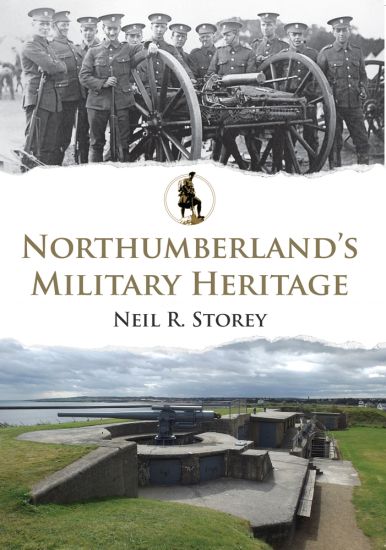
Northumberland's Military Heritage

Northumberland's Military Heritage

Neil R. Storey

Amberley Publishing
2017
nidottu
The military heritage of Northumberland is without doubt one of the richest in all the British Isles. By nature of it being England’s most northern county, its borders have seen many bloody clashes and battles since the earliest times. Hadrian’s Wall stretches along the south of the county and is dotted with forts, garrisons and fortified settlements along its length. The first Viking raid was carried out upon Lindisfarne in 793. There were clashes with the Scots for centuries and from the thirteenth century and for 400 years afterwards there were border raids by reivers. The Battle of Newburn in 1640 was one of the flashpoints that led to the English Civil War, and many a noble Northumberland family was ruined in the Jacobite Rebellion of 1745. It is hardly surprising that within the boundaries of the county there can be found more castles than anywhere else in Britain and, as a breed of fighting men, the steel of the Northumbrians is like no other. The men of the North were the backbone of the British Army; a number of regiments have recruited here, including the Coldstream Guards, King’s Own Scottish Borderers and, of course, our very own Northumberland Fusiliers, ‘The Fighting Fifth’. They all served with distinction wherever they fought – from the Peninsular War to South Africa, through two world wars, and beyond. Award-winning military historian Neil R. Storey knows and loves Northumberland and this book will interest anyone keen to know more about its remarkable military history.
Norfolk's Military Heritage

Norfolk's Military Heritage

Neil R. Storey

Amberley Publishing
2019
nidottu
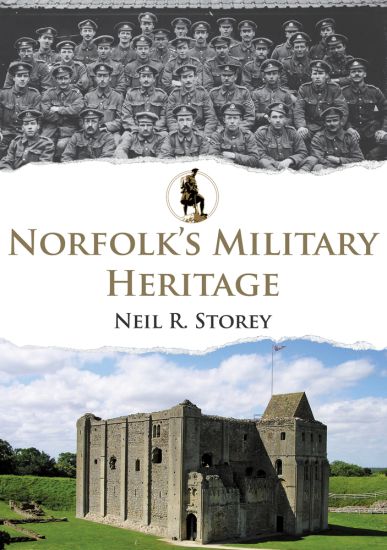
Norfolk’s military heritage dates back to the earliest times, from Iron Age forts, Iceni strongholds and Boudica’s rebellion against Roman occupation to its front-line role with coastal defences and numerous airbases during the Second World War. The Romans left their mark with fortifications, garrisons and shore forts. The county was shaped by Anglo-Saxon and Viking invasions and the Normans, whose castles still stand dominant in the county. Norfolk was the scene of uprisings and rebellions, including the Peasants’ Revolt, Kett’s Rebellion and Civil War conflicts. The men of the county led and filled the ranks of the local volunteers, militias and yeomanry during the Napoleonic Wars and was famed for its great maritime commander of the day – Admiral Lord Nelson. The county played a vital part in both world wars, not least suffering direct attacks by German battleships, Zeppelin air raids during the First World War and becoming a target during the Baedeker Blitz in 1942. The Royal Norfolk Regiment has a proud history, serving with distinction wherever they fought – from the Peninsular War to South Africa, through two world wars and beyond. Award-winning historian Neil R. Storey is a born-and-bred Norfolk man. He has published on military and social history themes for thirty years and knows and loves his county well. Norfolk’s Military Heritage will interest anyone keen to know more about the county’s remarkable military history.
WRNS

WRNS

Neil R. Storey

Shire Publications
2017
nidottu
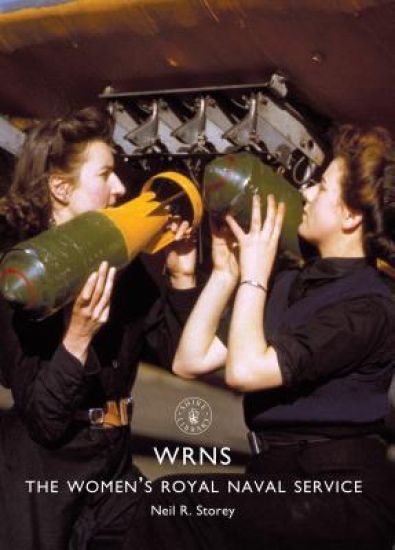
From cooks and clerks to weapons analysts and air mechanics, generations of women have served in the Wrens (Women’s Royal Naval Service or WRNS). The Royal Navy was the first of the UK armed services to admit women during the First World War with the purpose of freeing up a man to go to sea by giving his job to a trained female worker. Disbanded in 1919, the Wrens were reinstated on the outbreak of the Second World War. This book focuses on the work and experiences of Wrens during the two world wars, introducing the kinds of jobs they performed and the places where they served. It contains poignant accounts from the women themselves, along with contemporary images of the Wrens in action and modern photographs of their uniforms, badges and insignia.
Animals in the Second World War

Animals in the Second World War

Neil R. Storey

Shire Publications
2021
nidottu
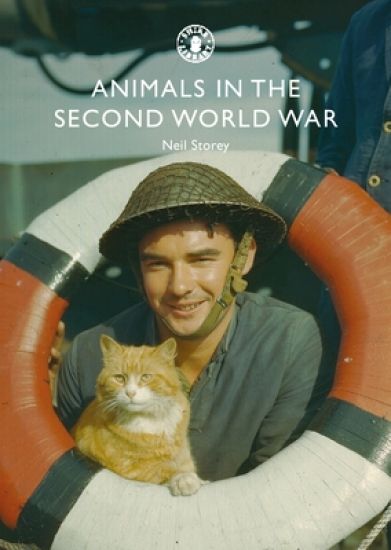
Throughout the course of the Second World War, many millions of animals were enlisted to serve. Though they had no choice, yet they demonstrated loyalty, determination and bravery as they shared the burden of war with their human companions both on active service and on the Home Front. From the dogs trained to locate air-raid victims buried under rubble, to the mules that carried ammunition and supplies through the jungles of the Far East, each animal played a crucial role in the war effort. In fact, such was their contribution that those animals that showed exceptional gallantry or devotion to duty were recognised officially with the introduction of the Dickin Medal in 1943. This fascinating book draws from first-hand accounts and contemporary sources to reveal the wide-ranging contributions that animals made both on and off the battlefield.
Wartime Industry

Wartime Industry

Neil R. Storey

BLOOMSBURY PUBLISHING PLC
2022
nidottu
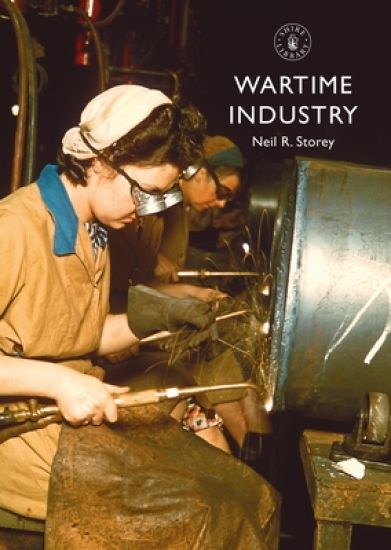
An illustrated introduction to how British industries, supported by thousands of newly recruited women, strove to meet the nation’s wartime need for munitions, armour, shipping, uniforms and aircraft.During the Second World War (1939–45), Britain stretched every sinew of its industrial might to fend off a Nazi invasion. As the nation stood alone against Fortress Europe, it harnessed, coordinated and maximised its resources, firstly to defend itself and then to help liberate Axis-occupied countries. Wartime Industry uses informative text and beautiful illustrations to show how the men and women of Britain met this unprecedented demand for military and home-front materials. It explores the work of Lord Beaverbrook’s highly organised Ministry of Aircraft Production; the ‘Shadow Factories’ that enabled manufacturers such as Vauxhall and Rootes to make tanks and aircraft; the Royal Ordnance Factories that produced firearms and explosives; the ‘Bevin Boys’ conscripted to work in the coal mines; the Women’s Timber Corps; and war workers – who, together, helped the nation to make it.
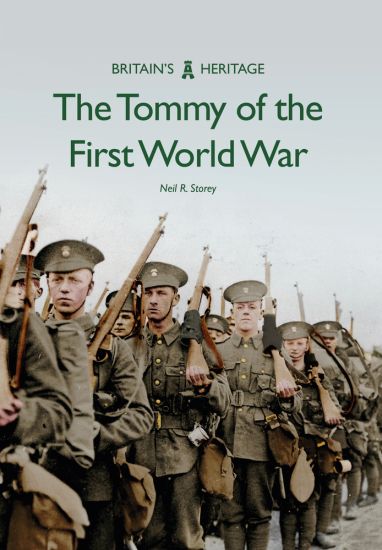
The Tommy of the First World War

The Tommy of the First World War

Neil R. Storey

Amberley Publishing
2017
nidottu
‘Tommy Atkins’ has been the nickname given to soldiers of the British Army since the eighteenth century. The origin of the name is shrouded in mystery, but it has stuck. By 1914, the Tommy had changed dramatically since the days of Queen Victoria’s redcoats. Edwardian army reforms had improved recruitment and training and had re-organised the regular forces and reserves. When the First World War broke out, the system went smoothly into action and the BEF was carried across the Channel to France. But the British Army was relatively small and the First World War required a rapid expansion of the ranks. Lord Kitchener’s call for men raised the so-called New Army, half a million strong, but more were needed and conscription came into force. Many of those who volunteered together were also trained together and fought side by side in battle. In the fire of machine guns and amid the shell-fire, large numbers of men from city parishes, towns and villages fell together. Neil Storey takes us through the recruitment, equipment, training and experiences of these soldiers in the First World War: the Tommies, ‘the poor bloody infantry’. This book is part of the Britain’s Heritage series, which provides definitive introductions to the riches of Britain’s past, and is the perfect way to get acquainted with the Tommy of the First World War.