Kirjojen hintavertailu. Mukana 11 244 527 kirjaa ja 12 kauppaa.

Kirjahaku

Etsi kirjoja tekijän nimen, kirjan nimen tai ISBN:n perusteella.

5 kirjaa tekijältä Neil Richards

Intellectual Privacy

Intellectual Privacy

Neil Richards

Oxford University Press Inc
2017
nidottu
Most people believe that our rights to privacy and free speech are inevitably in conflict. Courts all over the world have struggled with how to reconcile the two for over a century, and the rise of the Internet has made this problem more urgent. We live in an age of corporate and government surveillance of our lives. And our free speech culture has created an anything-goes environment on the web, filled with hurtful and harmful expression and data flows. In Intellectual Privacy, Neil Richards offers a solution that ensures that our ideas and values keep pace with our technologies. Because of the importance of free speech to open societies, he argues that when privacy and free speech truly conflict, free speech should almost always win. But in sharp contrast to conventional wisdom, Richards argues that speech and privacy are only rarely in conflict. True invasions of privacy like peeping toms or electronic surveillance should almost never be protected as "free speech." And critically, Richards shows how most of the law we enact to protect online privacy poses no serious burden to public debate, and how protecting the privacy of our data is not censorship. A timely and provocative book on a subject that affects us all, Intellectual Privacy will radically reshape the debate about privacy and free speech in our digital age.
Why Privacy Matters

Why Privacy Matters

Neil Richards

Oxford University Press Inc
2022
sidottu
A much-needed corrective on what privacy is, why it matters, and how we can protect in an age when so many believe that the concept is dead. Everywhere we look, companies and governments are spying on us--seeking information about us and everyone we know. Ad networks monitor our web-surfing to send us "more relevant" ads. The NSA screens our communications for signs of radicalism. Schools track students' emails to stop school shootings. Cameras guard every street corner and traffic light, and drones fly in our skies. Databases of human information are assembled for purposes of "training" artificial intelligence programs designed to predict everything from traffic patterns to the location of undocumented migrants. We're even tracking ourselves, using personal electronics like Apple watches, Fitbits, and other gadgets that have made the "quantified self" a realistic possibility. As Facebook's Mark Zuckerberg once put it, "the Age of Privacy is over." But Zuckerberg and others who say "privacy is dead" are wrong. In Why Privacy Matters, Neil Richards explains that privacy isn't dead, but rather up for grabs. Richards shows how the fight for privacy is a fight for power that will determine what our future will look like, and whether it will remain fair and free. If we want to build a digital society that is consistent with our hard-won social values--fairness, freedom, and sustainability--then we must make a meaningful commitment to privacy. Privacy matters because good privacy rules can promote the essential human values of identity, power, freedom, and trust. If we want to preserve our commitments to these precious yet fragile values, we will need privacy rules. After detailing why privacy remains so important, Richards considers strategies that can help us protect it privacy from the forces that are working to undermine it. Pithy and forceful, this is essential reading for anyone interested in a topic that sits at the center of so many current problems.
Intellectual Privacy

Intellectual Privacy

Neil Richards

Oxford University Press Inc
2015
sidottu
Most people believe that the right to privacy is inherently at odds with the right to free speech. Courts all over the world have struggled with how to reconcile the problems of media gossip with our commitment to free and open public debate for over a century. The rise of the Internet has made this problem more urgent. We live in an age of corporate and government surveillance of our lives. And our free speech culture has created an anything-goes environment on the web, where offensive and hurtful speech about others is rife. How should we think about the problems of privacy and free speech? In Intellectual Privacy, Neil Richards offers a different solution, one that ensures that our ideas and values keep pace with our technologies. Because of the importance of free speech to free and open societies, he argues that when privacy and free speech truly conflict, free speech should almost always win. Only when disclosures of truly horrible information are made (such as sex tapes) should privacy be able to trump our commitment to free expression. But in sharp contrast to conventional wisdom, Richards argues that speech and privacy are only rarely in conflict. America's obsession with celebrity culture has blinded us to more important aspects of how privacy and speech fit together. Celebrity gossip might be a price we pay for a free press, but the privacy of ordinary people need not be. True invasions of privacy like peeping toms or electronic surveillance will rarely merit protection as free speech. And critically, Richards shows how most of the law we enact to protect online privacy pose no serious burden to public debate, and how protecting the privacy of our data is not censorship. More fundamentally, Richards shows how privacy and free speech are often essential to each other. He explains the importance of 'intellectual privacy,' protection from surveillance or interference when we are engaged in the processes of generating ideas - thinking, reading, and speaking with confidantes before our ideas are ready for public consumption. In our digital age, in which we increasingly communicate, read, and think with the help of technologies that track us, increased protection for intellectual privacy has become an imperative. What we must do, then, is to worry less about barring tabloid gossip, and worry much more about corporate and government surveillance into the minds, conversations, reading habits, and political beliefs of ordinary people. A timely and provocative book on a subject that affects us all, Intellectual Privacy will radically reshape the debate about privacy and free speech in our digital age.
Questions in Dataviz

Questions in Dataviz

Neil Richards

TAYLOR FRANCIS LTD
2022
nidottu
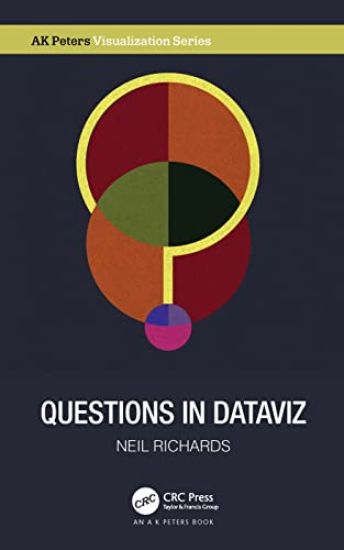
This book takes the reader through the process of learning and creating data visualisation, following a unique journey with questions every step of the way, ultimately discussing how and when to bend and break the "rules" to come up with creative, unique, and sometimes unconventional ideas. Each easy-to-follow chapter poses one key question and provides a selection of discussion points and relevant data visualisation examples throughout.Structured in three parts: Section I poses questions around some fundamental data visualisation principles, while Section II introduces more advanced questions, challenging perceived best practices and suggesting when rules are open to interpretation or there to be broken. The questions in Section III introduce further themes leading on to specific ideas and visualisation projects in more detail.Questions in Dataviz: A Design-Driven Process for Data Visualisation will appeal to any reader with an interest in creative or unconventional data visualisation and will be especially useful for those at a beginner or intermediate level looking for inspiration and alternative ways to deploy their data visualisation skills outside of conventional business charts.
Questions in Dataviz

Questions in Dataviz

Neil Richards

TAYLOR FRANCIS LTD
2022
sidottu
This book takes the reader through the process of learning and creating data visualisation, following a unique journey with questions every step of the way, ultimately discussing how and when to bend and break the "rules" to come up with creative, unique, and sometimes unconventional ideas. Each easy-to-follow chapter poses one key question and provides a selection of discussion points and relevant data visualisation examples throughout.Structured in three parts: Section I poses questions around some fundamental data visualisation principles, while Section II introduces more advanced questions, challenging perceived best practices and suggesting when rules are open to interpretation or there to be broken. The questions in Section III introduce further themes leading on to specific ideas and visualisation projects in more detail.Questions in Dataviz: A Design-Driven Process for Data Visualisation will appeal to any reader with an interest in creative or unconventional data visualisation and will be especially useful for those at a beginner or intermediate level looking for inspiration and alternative ways to deploy their data visualisation skills outside of conventional business charts.