Kirjojen hintavertailu. Mukana 12 390 323 kirjaa ja 12 kauppaa.

Kirjahaku

Etsi kirjoja tekijän nimen, kirjan nimen tai ISBN:n perusteella.

3 kirjaa tekijältä Neil Sinhababu

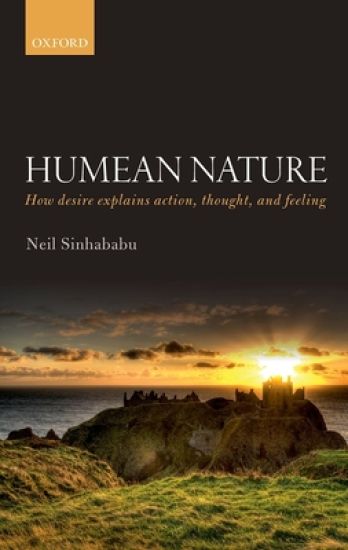
Humean Nature

Humean Nature

Neil Sinhababu

Oxford University Press
2017
sidottu
Neil Sinhababu defends the Humean Theory of Motivation, according to which desire drives all human action and practical reasoning. Desire motivates us to pursue its object, makes thoughts of its object pleasant or unpleasant, focuses attention on its object, and is amplified by vivid representations of its object. These aspects of desire explain a vast range of psychological phenomena - why motivation often accompanies moral belief, how intentions shape our planning, how we exercise willpower, what it is to be a human self, how we express our emotions in action, why we procrastinate, and what we daydream about. Some philosophers regard such phenomena as troublesome for the Humean Theory, but the properties of desire help Humeans provide simpler and better explanations of these phenomena than their opponents can. The success of the Humean Theory in explaining a wide range of folk-psychological and experimental data, including those that its opponents cite in counterexamples, suggest that it is true. And the Humean Theory has revolutionary consequences for ethics, suggesting that moral judgments are beliefs about what feelings like guilt, admiration, and hope accurately represent in objective reality.
Nietzsche on the Eternal Recurrence

Nietzsche on the Eternal Recurrence

Neil Sinhababu

Cambridge University Press
2025
pokkari
The idea of the eternal recurrence is that we will live the exact same lives again an infinite number of times. Nietzsche appreciates that this would multiply the value of a single life by infinity, justifying intense emotional responses. His unpublished notes provide a cosmological argument for the eternal recurrence that anticipates Poincaré's recurrence theorem. Nietzsche's Thus Spoke Zarathustra describes its hero discovering this idea and struggling to accept the recurrence of all bad things. He eventually comes to love the eternal recurrence because it will bring back all the joys of his life, and teaches this idea to others.
Nietzsche on the Eternal Recurrence

Nietzsche on the Eternal Recurrence

Neil Sinhababu

Cambridge University Press
2025
sidottu
The idea of the eternal recurrence is that we will live the exact same lives again an infinite number of times. Nietzsche appreciates that this would multiply the value of a single life by infinity, justifying intense emotional responses. His unpublished notes provide a cosmological argument for the eternal recurrence that anticipates Poincaré's recurrence theorem. Nietzsche's Thus Spoke Zarathustra describes its hero discovering this idea and struggling to accept the recurrence of all bad things. He eventually comes to love the eternal recurrence because it will bring back all the joys of his life, and teaches this idea to others.