Kirjojen hintavertailu. Mukana 11 244 527 kirjaa ja 12 kauppaa.

Kirjahaku

Etsi kirjoja tekijän nimen, kirjan nimen tai ISBN:n perusteella.

11 kirjaa tekijältä Neil Sinyard

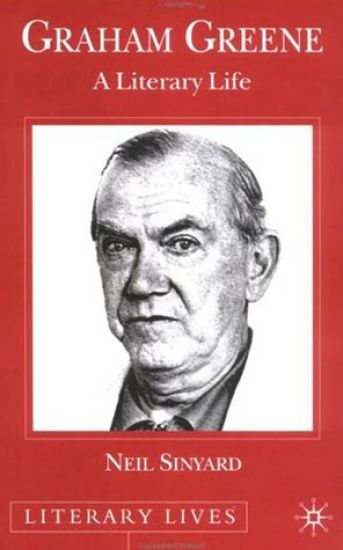
Graham Greene

Graham Greene

Neil Sinyard

Palgrave Macmillan
2003
sidottu
A new title in Palgrave Macmillan's Literary Lives series, this is a biographical narrative of Graham Greene's literary career. Among other things, it explores his motives for writing; the literary and cinematic influences that shaped his work; his writing routine and the importance of his childhood experience. Greene was elusive and enigmatic, and this book teases out the fiction from his autobiographies, the autobiography from his fictions, sharing Paul Theroux's view that you may not know Greene from his face or speech 'but from his writing, you know everything.'
Graham Greene

Graham Greene

Neil Sinyard

Palgrave Macmillan
2003
nidottu
A new title in Palgrave Macmillan's Literary Lives series, this is a biographical narrative of Graham Greene's literary career. Among other things, it explores his motives for writing; the literary and cinematic influences that shaped his work; his writing routine and the importance of his childhood experience. Greene was elusive and enigmatic, and this book teases out the fiction from his autobiographies, the autobiography from his fictions, sharing Paul Theroux's view that you may not know Greene from his face or speech 'but from his writing, you know everything.'
Filming Literature

Filming Literature

Neil Sinyard

Routledge
2013
sidottu
This is a comprehensive survey of the relationship between film and literature. It looks at the cinematic adaptations of such literary masters as Shakespeare, Henry James, Joseph Conrad and D.H. Lawrence, and considers the contribution to the cinema made by important literary figures as Harold Pinter, James Agree and Graham Greene. Elsewhere, the book draws intriguing analogies between certain literary and film artists, such as Dickens and Chaplin, Ford and Twain, and suggests that such analogies can throw fresh light on the subjects under review. Another chapter considers the film genre of the bio-pic, the numerous cinematic attempts to render in concrete terms the complexities of the literary life, whether the writer be Proust, Joyce, Oscar Wilde, Dashiel Hammett, Agatha Christie or Boris Pasternak.Originally published in 1986, this is a book to appeal to any reader with an interest in film or literature, and is of especial value to those involved in the teaching or study of either subject.
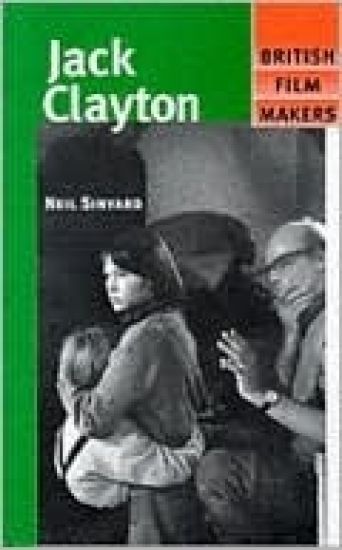
Jack Clayton

Jack Clayton

Neil Sinyard

Manchester University Press
2000
nidottu
In François Truffaut’s opinion The Innocents was ‘the best English film after Hitchcock goes to America’. Tennessee Williams said of The Great Gatsby: ‘a film whose artistry even surpassed the original novel’. The maker of both films was Jack Clayton, one of the finest English directors of the post-war era and perhaps best remembered for the trail-blazing Room at the Top which brought a new sexual frankness and social realism to the British screen. This is the first full-length critical study of Clayton's work. The author has been able to consult and quote from the director's own private papers which illuminate Clayton’s creative practices and artistic intentions. In addition to fresh analyses of the individual films, the book contains new material on Clayton's many unrealised projects and valuably includes his previously unpublished short story ‘The Enchantment’ – as poignant and revealing as the films themselves.This is a personal and fascinating account of the career and achievement of an important, much-loved director that should appeal to students and film enthusiasts.
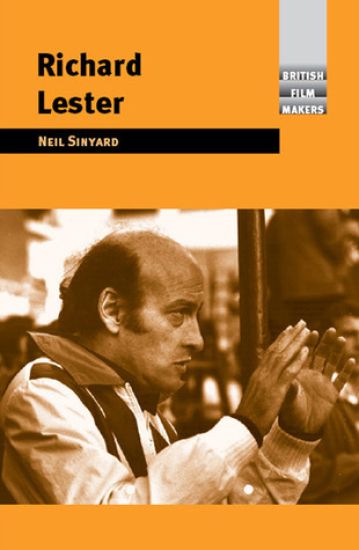
Richard Lester

Richard Lester

Neil Sinyard

Manchester University Press
2010
sidottu
Richard Lester is of the most significant yet misunderstood directors of the post-war era. Indelibly associated with the Beatles and the ‘swinging Sixties’ because of his direction of A Hard Day’s Night and Help and his joyous sex comedy The Knack, Lester has tended to be categorised as a modish director whose heyday passed when that decade’s optimism slid into disillusionment and violence.This book offers a critical appreciation and reappraisal of his work, arguing that it had much greater depth and variety than he has been given credit for. His versatility encompasses the Brechtian anti-heroics of How I Won the War; the surreal nuclear comedy of The Bed-Sitting Room and the swashbuckling adventure of The Musketeers films. He has even, in his instinctively iconoclastic manner, cut Superman down to size.The book should win new admirers for a director with a gift of making movies whose visual wit and imaginative imagery reveal an intelligent and enquiring scepticism about heroes and society. Including comments from Lester himself and illustrations from his own private collection, the book is a must for film scholars and enthusiasts alike.
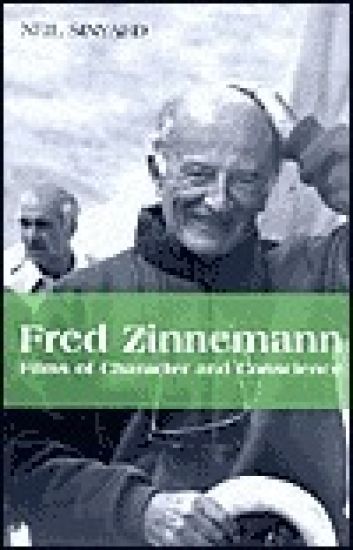
Fred Zinnemann

Fred Zinnemann

Neil Sinyard

McFarland Co Inc
2003
pokkari
Director Fred Zinnemann was one of the most honored and revered directors of Hollywood's golden age. Peter Ustinov said, "Working with him was a permanent lesson in integrity." Zinnemann will always be remembered for such award-winning classics as High Noon, From Here to Eternity and A Man for All Seasons, and for his direction of such stars as Marlon Brando, Montgomery Clift, Rod Steiger, Spencer Tracy, Gary Cooper, Burt Lancaster, Audrey Hepburn, Robert Mitchum, Jane Fonda, Meryl Streep and Sean Connery. Above all, he deserves to be appreciated for raising the intelligence of popular cinema, making individualist dramas of conscience that could appeal to mass audiences without condescending to them and without compromising the director's vision. This book, the first single-author survey of Zinnemann's career, draws on the author's personal interviews with Zinnemann and reveals the coherence and subtlety of the director's work. The first part of the book deals with Zinnemann's struggle to make films of his own choosing in his own way, up to his breakthrough with The Search. The remainder of the text discusses Zinnemann's post-Search films according to major themes, including the ravages of war, the "sovereignty of selfhood," character as destiny, the outsider in society, and politics and the liberal conscience. A list of Zinnemann's awards is provided.
A Wonderful Heart

A Wonderful Heart

Neil Sinyard

McFarland Co Inc
2013
pokkari
Revered by his cinematic peers, William Wyler (1902-1981) was one of the most honored and successful directors of Hollywood's Golden Age, with such classics as Dead End, Wuthering Heights, The Little Foxes, Roman Holiday and Ben-Hur. He won three directing Oscars and elicited over a dozen Oscar-winning performances from his actors. Such exacting performers as Bette Davis, Laurence Olivier and Charlton Heston counted him the best director they had worked with. Yet during the era of the "auteur" theory his films fell out of fashion, lacking, it was said, a distinctive stylistic and thematic signature. This new critical study of Wyler's work, the first in more than thirty years, challenges the notion of Wyler's impersonality and offers a comprehensive reappraisal of his work, particularly of the underrated postwar films. It also provides a rebuttal of the auteurist criticism whose rigid categorization of directors cannot adequately encompass the range of someone like Wyler, who put substance above style and had a breadth of human understanding that was not reducible to a cluster of characteristic themes. Supported by archival research in Los Angeles, the book traces the important milestones in Wyler's career, the context of his films, the importance of legendary producer Sam Goldwyn, his distinguished war record and his principled opposition to blacklisting during the McCarthy era.
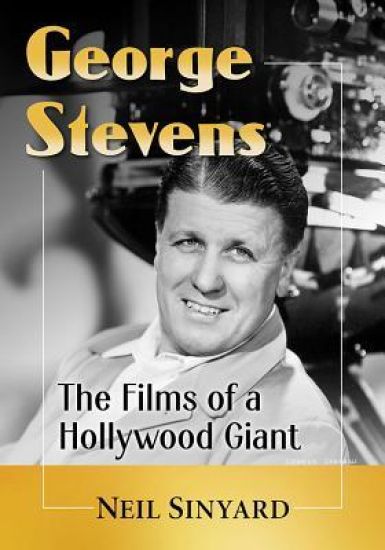
George Stevens

George Stevens

Neil Sinyard

McFarland Co Inc
2019
pokkari
"George Stevens could do anything," said veteran Hollywood producer Pandro S. Berman, "break your heart or make you laugh." Winner of two Best Director Oscars--for A Place in the Sun (1951) and Giant (1956)--Stevens excelled in a range of genres, gave luster to some of Hollywood's brightest stars and was revered by his peers. Yet his work has been largely neglected by critics and scholars. This career retrospective highlights Stevens' achievements, particularly in his sweeping "American Dream" trilogy (A Place in the Sun, Shane (1953) and Giant). His recurrent themes and characteristic style reveal a progressive attitude towards women's experiences and highlight the continued relevance of his films today.
Filming Literature

Filming Literature

Neil Sinyard

Routledge
2015
nidottu
This is a comprehensive survey of the relationship between film and literature. It looks at the cinematic adaptations of such literary masters as Shakespeare, Henry James, Joseph Conrad and D.H. Lawrence, and considers the contribution to the cinema made by important literary figures as Harold Pinter, James Agree and Graham Greene. Elsewhere, the book draws intriguing analogies between certain literary and film artists, such as Dickens and Chaplin, Ford and Twain, and suggests that such analogies can throw fresh light on the subjects under review. Another chapter considers the film genre of the bio-pic, the numerous cinematic attempts to render in concrete terms the complexities of the literary life, whether the writer be Proust, Joyce, Oscar Wilde, Dashiel Hammett, Agatha Christie or Boris Pasternak.Originally published in 1986, this is a book to appeal to any reader with an interest in film or literature, and is of especial value to those involved in the teaching or study of either subject.