Kirjojen hintavertailu. Mukana 11 244 527 kirjaa ja 12 kauppaa.

Kirjahaku

Etsi kirjoja tekijän nimen, kirjan nimen tai ISBN:n perusteella.

23 kirjaa tekijältä Neil Smith

Boo

Boo

Neil Smith

Cornerstone
2015
pokkari
When Oliver 'Boo' Dalrymple wakes up in heaven, the eighth-grade science geek thinks he died of a heart defect at his school. But soon after arriving in this hereafter reserved for dead thirteen-year-olds, Boo discovers he's a 'gommer', a kid who was murdered. What's more, his killer may also be in heaven.
The New Urban Frontier

The New Urban Frontier

Neil Smith

Routledge
1996
sidottu
Why have so many central and inner cities in Europe, North America and Australia been so radically revamped in the last three decades, converting urban decay into new chic? Will the process continue in the twenty-first century or has it ended? What does this mean for the people who live there? Can they do anything about it? This book challenges conventional wisdom, which holds gentrification to be the simple outcome of new middle-class tastes and a demand for urban living. It reveals gentrification as part of a much larger shift in the political economy and culture of the late twentieth century. Documenting in gritty detail the conflicts that gentrification brings to the new urban 'frontiers', the author explores the interconnections of urban policy, patterns of investment, eviction, and homelessness. The failure of liberal urban policy and the end of the 1980s financial boom have made the end-of-the-century city a darker and more dangerous place. Public policy and the private market are conspiring against minorities, working people, the poor, and the homeless as never before. In the emerging revanchist city, gentrification has become part of this policy of revenge.
The New Urban Frontier

The New Urban Frontier

Neil Smith

Routledge
1996
nidottu
Why have so many central and inner cities in Europe, North America and Australia been so radically revamped in the last three decades, converting urban decay into new chic? Will the process continue in the twenty-first century or has it ended? What does this mean for the people who live there? Can they do anything about it? This book challenges conventional wisdom, which holds gentrification to be the simple outcome of new middle-class tastes and a demand for urban living. It reveals gentrification as part of a much larger shift in the political economy and culture of the late twentieth century. Documenting in gritty detail the conflicts that gentrification brings to the new urban 'frontiers', the author explores the interconnections of urban policy, patterns of investment, eviction, and homelessness. The failure of liberal urban policy and the end of the 1980s financial boom have made the end-of-the-century city a darker and more dangerous place. Public policy and the private market are conspiring against minorities, working people, the poor, and the homeless as never before. In the emerging revanchist city, gentrification has become part of this policy of revenge.
The Endgame of Globalization

The Endgame of Globalization

Neil Smith

Routledge
2014
nidottu
The recent American invasion of Iraq represents the endgame of America's decades-old effort to impose its vision of globalization-a system dominated by multinational firms and buttressed by the liberalism of John Locke and Adam Smith. Whereas the war surely ended Saddam Hussein's regime, the storm of countervailing forces it unleashed points to another end: that of America's latest global project. This is not the first time that the US has tried to reshape the world in its own liberal image, but the third. The first effort stretched from the late nineteenth century to 1920, ending when America rejected entry into the League of Nations. The FDR administration engineered the second attempt in the 1940s, but it withered in the Cold War. The third moment-the era of globalization-began in the late 1960s, when the US transformed the Bretton Woods financial institutions and used its own economic power to enforce a worldwide neoliberal orthodoxy tied to an ideal of liberal democracy. But the effort is failing for the same reasons the preceding attempts failed. As Neil Smith shows, the Lockean liberalism that animates American globalism has always been undercut by a crippling nationalism that exposes the contradictions built into the ideal. In each instance, a hard-edged nationalism-evident in the rejection of the League of Nations, in the policies of the Cold War, and in the current Iraq war-always surfaces and drives US actions despite America's self-perception as a champion of benign universal values. Moreover, it always generates opposition. Attuned to history, political economy, and geography, The Endgame of Globalization is a sweeping and powerful account of America's century-long quest for global dominance and the nationalism within that invariably unravels the dream.
The Endgame of Globalization

The Endgame of Globalization

Neil Smith

Routledge
2005
sidottu
The recent American invasion of Iraq represents the endgame of America's decades-old effort to impose its vision of globalization-a system dominated by multinational firms and buttressed by the liberalism of John Locke and Adam Smith. Whereas the war surely ended Saddam Hussein's regime, the storm of countervailing forces it unleashed points to another end: that of America's latest global project. This is not the first time that the US has tried to reshape the world in its own liberal image, but the third. The first effort stretched from the late nineteenth century to 1920, ending when America rejected entry into the League of Nations. The FDR administration engineered the second attempt in the 1940s, but it withered in the Cold War. The third moment-the era of globalization-began in the late 1960s, when the US transformed the Bretton Woods financial institutions and used its own economic power to enforce a worldwide neoliberal orthodoxy tied to an ideal of liberal democracy. But the effort is failing for the same reasons the preceding attempts failed. As Neil Smith shows, the Lockean liberalism that animates American globalism has always been undercut by a crippling nationalism that exposes the contradictions built into the ideal. In each instance, a hard-edged nationalism-evident in the rejection of the League of Nations, in the policies of the Cold War, and in the current Iraq war-always surfaces and drives US actions despite America's self-perception as a champion of benign universal values. Moreover, it always generates opposition. Attuned to history, political economy, and geography, The Endgame of Globalization is a sweeping and powerful account of America's century-long quest for global dominance and the nationalism within that invariably unravels the dream.
American Empire

American Empire

Neil Smith

University of California Press
2004
pokkari
An American Empire, constructed over the last century, long ago overtook European colonialism, and it has been widely assumed that the new globalism it espoused took us "beyond geography." Neil Smith debunks that assumption, offering an incisive argument that American globalism had a distinct geography and was pieced together as part of a powerful geographical vision. The power of geography did not die with the twilight of European colonialism, but it did change fundamentally. That the inauguration of the American Century brought a loss of public geographical sensibility in the United States was itself a political symptom of the emerging empire. This book provides a vital geographical-historical context for understanding the power and limits of contemporary globalization, which can now be seen as representing the third of three distinct historical moments of U.S. global ambition. The story unfolds through a decisive account of the career of Isaiah Bowman (1878--1950), the most famous American geographer of the twentieth century. For nearly four decades Bowman operated around the vortex of state power, working to bring an American order to the global landscape. An explorer on the famous Machu Picchu expedition of 1911 who came to be known first as "Woodrow Wilson's geographer," and later as Frankin D. Roosevelt's, Bowman was present at the creation of U.S. liberal foreign policy. A quarter-century later, Bowman was at the center of Roosevelt's State Department, concerned with the disposition of Germany and heightened U.S. access to European colonies; he was described by Dean Acheson as a key "architect of the United Nations." In that period he was a leader in American science, served as president of Johns Hopkins University, and became an early and vociferous cold warrior. A complicated, contradictory, and at times controversial figure who was very much in the public eye, he appeared on the cover of Time magazine. Bowman's career as a geographer in an era when the value of geography was deeply questioned provides a unique window into the contradictory uses of geographical knowledge in the construction of the American Empire. Smith's historical excavation reveals, in broad strokes yet with lively detail, that today's American-inspired globalization springs not from the 1980s but from two earlier moments in 1919 and 1945, both of which ended in failure. By recharting the geography of this history, Smith brings the politics--and the limits--of contemporary globalization sharply into focus.
Acquiring Phonology

Acquiring Phonology

Neil Smith

Cambridge University Press
2009
sidottu
Children often mispronounce words when learning their first language. Is it because they cannot perceive the differences that adults make or is it because they can't produce the sounds involved? Neither hypothesis is sufficient on its own to explain the facts. On the basis of detailed analyses of his son's and grandson's development, Neil Smith explains the everyday miracle of one aspect of first-language acquisition. Mispronunciations are now attributed to performance rather than to competence, and he argues at length that children's productions are not mentally represented. The study also highlights the constructs of current linguistic theory, arguing for distinctive features and the notion 'onset' and against some of the claims of Optimality Theory and Usage-based accounts. Smith provides an important and engaging update to his previous work, The Acquisition of Phonology, building on ideas previously developed and drawing new conclusions with the aid of fresh data.
The Twitter Machine

The Twitter Machine

Neil Smith

Blackwell Publishers
1989
nidottu
This unique book provides an introductory overview of modern theoretical linguistics which manages to be both accessible and humorous without sacrificing either scholarship of insight. In a series of magisterial vignettes Smith emphasizes the perennial necessity of appealing to linguistic theory if we are to gain any real understanding of the phenomena of language. However profound or however trivial the questions we raise and try answer - What exactly does one have to know to count as a speaker of a language? What would it mean for a language to have no vowels? Why do little children call lorries 'lollies'? Precisely what with this sentence is wrong? - we need to recourse to a theory even to make them coherent. In particular, the author argues that we can find solutions to our puzzles, and explanations for these phenomena, if we exploit on the one hand Chomsky's theory of Generative Grammar, and on the other Sperber and Wilson's theory of Relevance.
Language, Bananas and Bonobos

Language, Bananas and Bonobos

Neil Smith

Blackwell Publishers
2001
nidottu
Language, Bananas, and Bonobos presents a series of engaging reflections on concerns such as our knowledge and use of language, political correctness, and the linguistic abilities of chimpanzees. In doing so, this volume provides new insights into linguistics that are of universal interest.
Acquiring Phonology

Acquiring Phonology

Neil Smith

Cambridge University Press
2014
pokkari
Children often mispronounce words when learning their first language. Is it because they cannot perceive the differences that adults make or is it because they can't produce the sounds involved? Neither hypothesis is sufficient on its own to explain the facts. On the basis of detailed analyses of his son's and grandson's development, Neil Smith explains the everyday miracle of one aspect of first-language acquisition. Mispronunciations are now attributed to performance rather than to competence, and he argues at length that children's productions are not mentally represented. The study also highlights the constructs of current linguistic theory, arguing for distinctive features and the notion 'onset' and against some of the claims of Optimality Theory and Usage-based accounts. Smith provides an important and engaging update to his previous work, The Acquisition of Phonology, building on ideas previously developed and drawing new conclusions with the aid of fresh data.
Language, Frogs and Savants

Language, Frogs and Savants

Neil Smith

Wiley-Blackwell (an imprint of John Wiley Sons Ltd)
2005
sidottu
With topics ranging from language death to sign language, Language, Frogs and Savants offers a glimpse into the fascinating world of linguistics. Written by one of the most senior figures in linguistics. Features fascinating topics ranging from language death to sign language. Includes an introduction to the current vision of linguistics most closely associated with Noam Chomsky. Contains a glossary of all technical terms and interpretations.
Language, Frogs and Savants

Language, Frogs and Savants

Neil Smith

Wiley-Blackwell (an imprint of John Wiley Sons Ltd)
2005
nidottu
With topics ranging from language death to sign language, Language, Frogs and Savants offers a glimpse into the fascinating world of linguistics. Written by one of the most senior figures in linguistics. Features fascinating topics ranging from language death to sign language. Includes an introduction to the current vision of linguistics most closely associated with Noam Chomsky. Contains a glossary of all technical terms and interpretations.
The History Teacher's Handbook

The History Teacher's Handbook

Neil Smith

Continuum Publishing Corporation
2010
nidottu
This comprehensive handbook combines up-to-date research - including Ofsted reports and pupil surveys - with road-tested classroom techniques to suggest how you can make your classroom a dynamic and productive learning environment. Advice is given on all aspects of history teaching, from how to plan for successful outcomes and maximise meaningful assessment, through to exciting ways to examine evidence and develop pupil interest outside of the classroom. The chapter on making effective use of ICT to teach history tackles one of the biggest challenges for teachers today: how to ensure new technologies are utilised to improve learning, without allowing the technology to detract from the history being taught. This book is perfect for trainee teachers and NQTs, but will also help experienced history teachers to make lessons inspiring and accessible to pupils with a range of specific educational needs, including pupils for whom English is not their first language, and those who are regarded as being gifted and talented.
Robin Hood

Robin Hood

Neil Smith

Osprey Publishing
2014
nidottu
He robbed from the rich to give to the poor, or so the legend goes. But who was the outlaw known as Robin Hood? How did his legend develop, and how has it changed over the passing centuries? This new title in the Osprey Myths and Legends series takes a detailed look at the famous outlaw, beginning with a retelling of the early ballads that established his stories. From there, the book explores how the legend grew and how famous names such as Little John, Friar Tuck, Maid Marian, and Alan-a-Dale became associated with Robin Hood. It also enters the perilous world of Robin Hood scholarship with a critical analysis of the case for a ‘historical’ Robin Hood and a review of the mostly likely candidates. A perfect primer for young and old alike, this book covers both the fact and the fiction of Britain’s most famous outlaw.
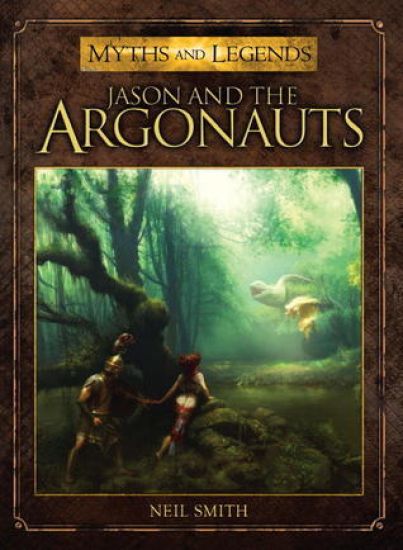
Jason and the Argonauts

Jason and the Argonauts

Neil Smith

Osprey Publishing
2013
nidottu
The voyage of Jason and the Argonauts and their hunt for the Golden Fleece is one of the most enduringly popular of all of the Ancient Greek heroic myths. Accepting the quest in order to regain his kingdom, Jason assembled a crew of legendary heroes, including Hercules, Orpheus, Atalanta, and the twins Castor and Polydeuces. With this band of warriors and demi-gods, Jason set sail in the Argo on a journey across the known world. During their quest, the Argonauts faced numerous challenges including the Harpies, the Clashing Rocks, the Sirens, Talos, the bronze giant, the sleepless dragon that guarded the fleece, and, of course, the fickle will of the gods of Olympus. Filled with magic, monsters, sword fights, and sacrifice, this ancient adventure story is given new life by Neil Smith who also examines its historical context, its classical sources and its enduring legacy.