Kirjojen hintavertailu. Mukana 11 244 527 kirjaa ja 12 kauppaa.

Kirjahaku

Etsi kirjoja tekijän nimen, kirjan nimen tai ISBN:n perusteella.

4 kirjaa tekijältä Neil W. Bernstein

Poppaea Sabina

Poppaea Sabina

Neil W. Bernstein

OXFORD UNIVERSITY PRESS INC
2025
sidottu
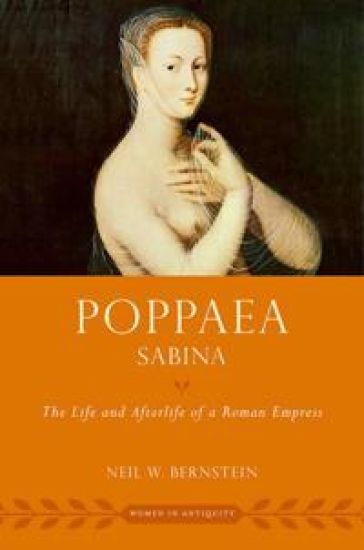
Like many famous figures from antiquity, we must work through layers of fantasy in order to uncover the life of Poppaea Sabina (c. 30-65 CE). As the ancient sources tell it, Poppaea pushed the young emperor Nero to murder his mother, execute his wife Octavia, marry her and make her his empress--and then, a few years later, kick her to death in a drunken rage. Poppaea's genuine motives and actions, however, cannot be easily recovered from the extant sources. Her narrative comes to us already fictionalized by ancient authors employing her story to induce moral panic. In this book, Neil Bernstein critically examines these sources to produce the first modern biography of Poppaea Sabina. Her brief marriage to the emperor Nero occasioned political, religious, and social innovation. Nero was the first emperor to represent his wife as a near-equal on his official coinage, and the couple was also celebrated by a group of claquers called "Neropoppaeans." Their daughter Claudia would be the first child to receive posthumous divine honors. Poppaea also received a unique form of posthumous commemoration. Nero castrated Sporus, one of his male slaves, and addressed them thereafter as "Poppaea". For many scholars and creative artists, however, Poppaea's brief life also epitomizes the scandal of Nero's reign. Gossip about her began from the moment she appeared in the emperor's court. Her scandalous parentage, affair with the emperor, and implication in a murder plot presented an unforgettable narrative template, and is principally why we continue to see Poppaea, Nero, and Octavia recur throughout plays, operas, novels, and movies.
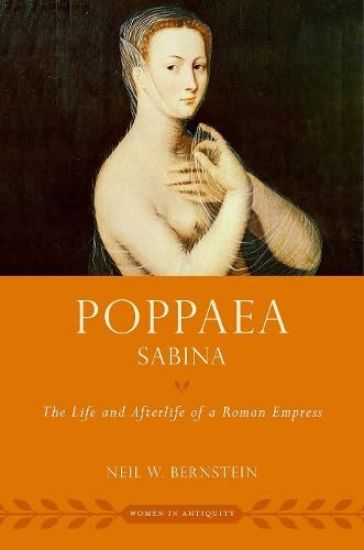
Poppaea Sabina

Poppaea Sabina

Neil W. Bernstein

OXFORD UNIVERSITY PRESS INC
2025
nidottu
Like many famous figures from antiquity, we must work through layers of fantasy in order to uncover the life of Poppaea Sabina (c. 30-65 CE). As the ancient sources tell it, Poppaea pushed the young emperor Nero to murder his mother, execute his wife Octavia, marry her and make her his empress--and then, a few years later, kick her to death in a drunken rage. Poppaea's genuine motives and actions, however, cannot be easily recovered from the extant sources. Her narrative comes to us already fictionalized by ancient authors employing her story to induce moral panic. In this book, Neil Bernstein critically examines these sources to produce the first modern biography of Poppaea Sabina. Her brief marriage to the emperor Nero occasioned political, religious, and social innovation. Nero was the first emperor to represent his wife as a near-equal on his official coinage, and the couple was also celebrated by a group of claquers called "Neropoppaeans." Their daughter Claudia would be the first child to receive posthumous divine honors. Poppaea also received a unique form of posthumous commemoration. Nero castrated Sporus, one of his male slaves, and addressed them thereafter as "Poppaea". For many scholars and creative artists, however, Poppaea's brief life also epitomizes the scandal of Nero's reign. Gossip about her began from the moment she appeared in the emperor's court. Her scandalous parentage, affair with the emperor, and implication in a murder plot presented an unforgettable narrative template, and is principally why we continue to see Poppaea, Nero, and Octavia recur throughout plays, operas, novels, and movies.
Silius Italicus: Punica, Book 9

Silius Italicus: Punica, Book 9

Neil W. Bernstein

Oxford University Press
2022
sidottu
Book 9 of Silius Italicus' first-century Latin epic poem Punica begins the narrative of the Battle of Cannae (August 216 BC). This book is an integral part of the epic's three-book movement that narrates one of the largest battles in Roman history. It opens with the dispute between the consuls Paulus and Varro over giving battle, in the face of hostile omens and Hannibal's record of successful combat. On the eve of the battle, the Roman soldier Solymus accidentally kills his father Satricus, thereby presenting an omen of disaster for the Roman army. After Hannibal and Varro encourage their troops, the initial phase of the battle commences. The gods descend to the battlefield, and Mars and Minerva fight the sole full-scale theomachy in Latin epic. Aeolus summons the Vulturnus wind at Juno's request to devastate the Roman ranks. After the gods have departed, Hannibal's elephant troops advance and scatter the Roman forces. The book ends by recapitulating the opening episode: Varro admits his mistake in giving battle and flees the battlefield. This volume is the first full-scale commentary in English devoted exclusively to Punica 9. It features the Latin text with a critical apparatus and a parallel English translation. Detailed commentary notes provide information on literary style, use of language, poetic intertexts, and scholarly interpretation. The Introduction offers further context and background, including sections on Silius Italicus and his era, the historiographic and rhetorical traditions that he adopted, the inter- and intra-textuality of the Cannae episode, and the book's use of diction and metre.
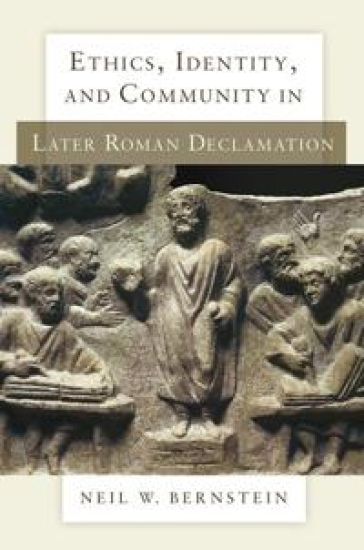
Ethics, Identity, and Community in Later Roman Declamation

Ethics, Identity, and Community in Later Roman Declamation

Neil W. Bernstein

Oxford University Press Inc
2013
sidottu
Rhetorical training was the central component of an elite Roman man's education. Controversiae (declamations), imaginary courtroom speeches in the character of a fictional or historical individual, were the most advanced exercises in the standard rhetorical curriculum. The Major Declamations is a collection of nineteen full-length Latin speeches attributed in antiquity to Quintilian but most likely composed by a group of authors in the second and third centuries CE. Though there has been a recent revival of interest in Greco-Roman declamation, the Major Declamations has generally been neglected. Ethics, Identity, and Community in Later Roman Declamation is the first book devoted exclusively to the Major Declamations and its reception in later European literature. It argues that the fictional scenarios of the Major Declamations enable the conceptual exploration of a variety of ethical and social issues. These include the construction of authority (Chapter 1), the verification of claims (Chapter 2), the conventions of reciprocity (Chapter 3), and the ethics of spectatorship (Chapter 4). Chapter 5 presents a study of the reception of the collection by the Renaissance humanist Juan Luis Vives and the eighteenth century scholar Lorenzo Patarol. A brief postscript surveys the use of declamatory exercises in the contemporary university and will inform current work in rhetorical studies.