Kirjojen hintavertailu. Mukana 12 548 545 kirjaa ja 12 kauppaa.

Kirjahaku

Etsi kirjoja tekijän nimen, kirjan nimen tai ISBN:n perusteella.

4 kirjaa tekijältä Neil Websdale

Familicidal Hearts

Familicidal Hearts

Neil Websdale

Oxford University Press Inc
2013
nidottu
Oscar, physically and sexually abusive, stabbed his partner and two stepdaughters to death, buried the bodies, and fled the state with his two younger children. Paul, a respected investment banker, donned a Halloween mask and shot his wife and two children before turning the gun on himself. What drives individuals as different as Oscar and Paul to kill their families? Why does familicide appear to be on the rise? In Familicidal Hearts, award-winning author and sociologist Neil Websdale uncovers the stories behind 196 male and 15 female perpetrators of this shocking offense, situating their emotional styles on a continuum, from the livid coercive to the civil reputable. With highly detailed and riveting case studies, Websdale explores the pivotal roles of shame, rage, fear, anxiety, and depression in the lives and crimes of the killers. His analysis demonstrates how internal emotional conflict, against a backdrop of societal pressures, is at the root of familicide, challenging the widely accepted argument that murderers kill family members to assert power and control. Websdale contends instead that most perpetrators struggle with intense shame, many sensing that they failed to live up to the demands of modern gender prescriptions, as fathers and lovers, wives and mothers. What emerges is a compelling theory about the haunting effects of modern emotional struggles on perpetrators, controlling and upstanding alike. Captivatingly written and expertly researched, this provocative book weaves a gripping tale of modern-era "haunted hearts." Blending the social, the historical, and the emotional into a new way of making sense of a horrific crime, Familicidal Hearts is a provocative meditation on gender roles, social forces, and modern life itself.

Rural Women Battering and the Justice System

Rural Women Battering and the Justice System

Neil Websdale

SAGE Publications Inc
1998
nidottu
Addressing a significant void in the extant literature on the topic of domestic violence, Rural Woman Battering and the Justice System presents a thorough and arresting look at the experiences of battered women in rural communities. While living in the rural areas of Kentucky, Neil Websdale conducted his ethnographic research, and he situated the voices of rural battered women at the center of his ethnography. He clearly demonstrates how rural patriarchy and the insidious "good ol' boy network" of law enforcement and local politics sustain and reproduce the subordinate, vulnerable, isolated position of many rural women. Taking into account that traditional patterns of intervention can often put women in isolated communities at further risk, the author recommends a coordinated multiagency approach to rural battering that is spearheaded by state feminist agencies. The chapter on the difficulties of an educated male researcher working with rural battered women offers a definite methodological plus. Illuminating and accessible, Rural Woman Battering and the Justice System makes a most important and timely contribution to the field. An excellent training resource for anyone working with battered women, especially in rural areas, Rural Woman Battering and the Justice System is highly recommended for law enforcement and criminal justice professionals, practitioners, advocates, shelter personnel, and advanced students in related courses of study, as well as academics and researchers.
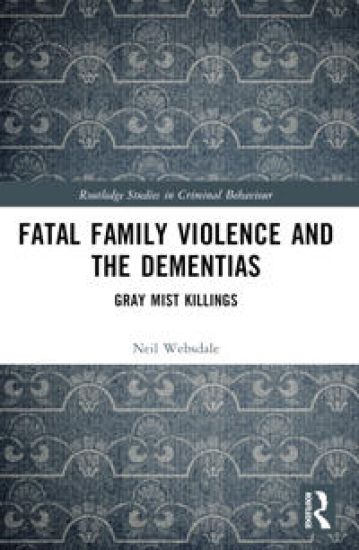
Fatal Family Violence and the Dementias

Fatal Family Violence and the Dementias

NEIL WEBSDALE

TAYLOR FRANCIS LTD
2024
sidottu
This book explores dementia-related aggression, violence, and homicide through a detailed analysis of “gray mist killings.” The term gray mist killing refers to intimate partner homicides (IPHs) committed by spouses/partners suffering from dementia, homicides of dementia sufferers committed by their caregiving spouses/partners or other family members, and IPHs attributable to the complications of caring for a co-resident family member suffering from dementia.Killings by people with dementia raise questions about the role of biological, psychological, and sociological forces. This book therefore encourages discussions around the relative weighting of these interrelated forces, and why the criminal justice system and the courts have a hard time handling these killings. It also adds to our understanding of the social responses to people with dementia, the orchestration of services, the nature of caring, and the interaction between sufferers and those familial, community, and state actors that provide support and care. The vividly detailed case studies (from the US, UK and Australia) uniquely inform criminological debates about violence, homicide, and the social responses to these complex phenomena. They are organized around the apparent motives for the killing, such as mercy, theft, prior intimate partner violence, mental illness, and exhaustion. The social responses of families, communities, and state actors are examined and contextualized against what researchers and dementia specialists suggest are promising or best practices for intervention. Apparent triggers or circumstantial precipitants for the killings invite discussion of signals, risks, and preventive interventions. The book culminates in an attempt to make sense of gray mist killings, as well as a discussion of broader implications and significance in relation to globalization, violence against women, the rising prevalence of the dementias, declining birthrates, climate change, and sustainable economic development.Drawing from a variety of disciplines, this book will be of great interest to students and scholars of criminology, sociology, psychology, psychiatry, anthropology, gender studies, social work, law, public policy, and gerontology. It should also appeal to judges, prosecutors, lawyers, social workers, gerontologists, law enforcement, adult protective services, physicians, psychologists, and psychiatrists.The Open Access version of this book, available at http://www.taylorfrancis.com, has been made available under a Creative Commons Attribution-Non Commercial-No Derivatives (CC-BY-NC-ND) 4.0 license.
Fatal Family Violence and the Dementias

Fatal Family Violence and the Dementias

Neil Websdale

TAYLOR FRANCIS LTD
2025
nidottu
This book explores dementia-related aggression, violence, and homicide through a detailed analysis of “gray mist killings.” The term gray mist killing refers to intimate partner homicides (IPHs) committed by spouses/partners suffering from dementia, homicides of dementia sufferers committed by their caregiving spouses/partners or other family members, and IPHs attributable to the complications of caring for a co-resident family member suffering from dementia.Killings by people with dementia raise questions about the role of biological, psychological, and sociological forces. This book therefore encourages discussions around the relative weighting of these interrelated forces, and why the criminal justice system and the courts have a hard time handling these killings. It also adds to our understanding of the social responses to people with dementia, the orchestration of services, the nature of caring, and the interaction between sufferers and those familial, community, and state actors that provide support and care. The vividly detailed case studies (from the US, UK and Australia) uniquely inform criminological debates about violence, homicide, and the social responses to these complex phenomena. They are organized around the apparent motives for the killing, such as mercy, theft, prior intimate partner violence, mental illness, and exhaustion. The social responses of families, communities, and state actors are examined and contextualized against what researchers and dementia specialists suggest are promising or best practices for intervention. Apparent triggers or circumstantial precipitants for the killings invite discussion of signals, risks, and preventive interventions. The book culminates in an attempt to make sense of gray mist killings, as well as a discussion of broader implications and significance in relation to globalization, violence against women, the rising prevalence of the dementias, declining birthrates, climate change, and sustainable economic development.Drawing from a variety of disciplines, this book will be of great interest to students and scholars of criminology, sociology, psychology, psychiatry, anthropology, gender studies, social work, law, public policy, and gerontology. It should also appeal to judges, prosecutors, lawyers, social workers, gerontologists, law enforcement, adult protective services, physicians, psychologists, and psychiatrists.The Open Access version of this book, available at http://www.taylorfrancis.com, has been made available under a Creative Commons Attribution-Non Commercial-No Derivatives (CC-BY-NC-ND) 4.0 license.