Kirjojen hintavertailu. Mukana 11 342 296 kirjaa ja 12 kauppaa.

Kirjahaku

Etsi kirjoja tekijän nimen, kirjan nimen tai ISBN:n perusteella.

7 kirjaa tekijältä Nicholas A. Phelps

Multinationals and European Integration

Multinationals and European Integration

Nicholas A. Phelps

Routledge
1997
nidottu
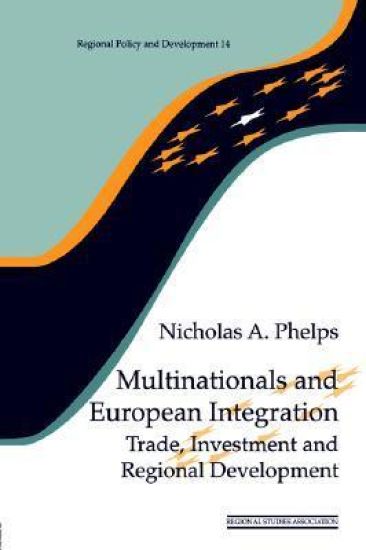
This book examines the role of the multinational firms in processes of European integration. It is primarily concerned with the implications of market integration and industrial restructuring for peripheral European regions. Nicholas Phelps argues that, because of the complex relationship between competition and economies of scale, the persistence of market segmentation, and because of the embeddedness of multinational investment in established production locations, there is considerable inertia in the existing trade and investment patterns of multinationals in the EU. This argument is explored empirically in relation to multinationals operating in Wales. This study suggests that processes of restructuring accompanying market integration are slow to take effect and based on a diversity of motives.
Interplaces

Interplaces

Nicholas A. Phelps

Oxford University Press
2017
sidottu
Much of the world's economic activity takes place in between cities and nations - the geographical containers that we have taken for granted for hundreds of years now. In this book Nicholas Phelps provides a guide to this uncharted territory within urban and economic geography. He highlights the importance of intermediary actors and processes in shaping this economy in between. From the airports, shopping malls, and office parks that have sprung up on the road between cities, to work done on the move in cars and trains, to the decisions made by internationally mobile networks of experts in conferences and negotiations. The geography of the economy in between is revealed as one involving four recurring and coexisting economic geographical formations - the agglomeration, the enclave, the networks, and the arena. Phelps sets out a multidisciplinary perspective and agenda on the question of the how, why, and where much contemporary economic activity takes place.
An Anatomy of Sprawl

An Anatomy of Sprawl

Nicholas A. Phelps

Routledge
2012
sidottu
Despite the combined efforts of British planners, politicians, the public and interest groups, the ‘Solent City’ stands as one of a number of instances of a peculiar instance of urban sprawl – muted, and slow to emerge – yet produced paradoxically by very strong interests in promoting conservation and restraint.This unique and valuable case study, while focusing on the planning and development of South Hampshire in particular, enables an in-depth study of the issues surrounding planning strategies with regards to growing populations.
An Anatomy of Sprawl

An Anatomy of Sprawl

Nicholas A. Phelps

Routledge
2012
nidottu
Despite the combined efforts of British planners, politicians, the public and interest groups, the ‘Solent City’ stands as one of a number of instances of a peculiar instance of urban sprawl – muted, and slow to emerge – yet produced paradoxically by very strong interests in promoting conservation and restraint.This unique and valuable case study, while focusing on the planning and development of South Hampshire in particular, enables an in-depth study of the issues surrounding planning strategies with regards to growing populations.
Multinationals and European Integration

Multinationals and European Integration

Nicholas A. Phelps

Routledge
2017
sidottu
This book examines the role of the multinational firms in processes of European integration. It is primarily concerned with the implications of market integration and industrial restructuring for peripheral European regions. Nicholas Phelps argues that, because of the complex relationship between competition and economies of scale, the persistence of market segmentation, and because of the embeddedness of multinational investment in established production locations, there is considerable inertia in the existing trade and investment patterns of multinationals in the EU. This argument is explored empirically in relation to multinationals operating in Wales. This study suggests that processes of restructuring accompanying market integration are slow to take effect and based on a diversity of motives.

The Urban Planning Imagination

The Urban Planning Imagination

Nicholas A. Phelps

Polity Press
2021
sidottu
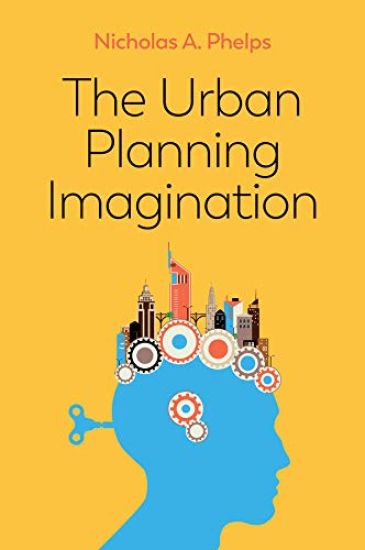
Urban planning is not just about applying a suite of systematic principles or plotting out pragmatic designs to satisfy the briefs of private developers or public bodies. Planning is also an activity of imagination, with a stock of wisdom and an array of useful methods for making decisions and getting things done. This critical introduction uncovers and celebrates this imagination and its creative potential. Nicholas A. Phelps explores the key themes and driving questions in the circulation of planning ideas and methods over time and across spaces, identifying the contrasts and commonalities between urban planning systems and cultures. He argues that the tools for inclusive urban planning are today, more than ever, not solely restricted to the hands of planning bodies, but are distributed across citizens, a variety of organizations (what Phelps calls ‘clubs’) and states. As a result, the book sets the ground for the new arrangements between these groups and actors which will be central to the future of urban planning. By unsettling standard accounts, this book compels us towards more critical and creative thinking to ensure that the imagination, wisdom and methods of urban planning are mobilized towards achieving the aspiration of shaping better places.
The Urban Planning Imagination

The Urban Planning Imagination

Nicholas A. Phelps

Polity Press
2021
nidottu
Urban planning is not just about applying a suite of systematic principles or plotting out pragmatic designs to satisfy the briefs of private developers or public bodies. Planning is also an activity of imagination, with a stock of wisdom and an array of useful methods for making decisions and getting things done. This critical introduction uncovers and celebrates this imagination and its creative potential. Nicholas A. Phelps explores the key themes and driving questions in the circulation of planning ideas and methods over time and across spaces, identifying the contrasts and commonalities between urban planning systems and cultures. He argues that the tools for inclusive urban planning are today, more than ever, not solely restricted to the hands of planning bodies, but are distributed across citizens, a variety of organizations (what Phelps calls ‘clubs’) and states. As a result, the book sets the ground for the new arrangements between these groups and actors which will be central to the future of urban planning. By unsettling standard accounts, this book compels us towards more critical and creative thinking to ensure that the imagination, wisdom and methods of urban planning are mobilized towards achieving the aspiration of shaping better places.